There’s a moment every aspiring brewery owner knows well: you’ve perfected your IPA recipe, you’ve got a name that sticks, and you can already picture the taproom humming with happy customers. Then reality hits. Permits, equipment sizing, floor drains, working capital—the list feels endless. Rent and interest don’t pause while you figure things out.
The good news? The path is well-worn at this point. Countless founders have navigated these waters before you, and the smart ones follow a disciplined sequence. Here’s a field-tested roadmap to get you from dream to pour—without burning through your budget or your sanity.
Start with a Plan That Means Something
A business plan isn’t a formality for bankers. It’s your build sheet. This document forces you to map your concept, understand your local market, and—crucially—prove to yourself that the numbers work. You’ll define your revenue model, sketch out your opening beer lineup, and outline whether you’re going keg-only or adding a small canning run.
The Brewers Association publishes solid planning resources that cover operations, brand positioning, and financials. But don’t overthink it. Your plan doesn’t need to be a novel. It needs to show, clearly and honestly, how beer becomes sales in your space. If you can’t articulate that, lenders and partners won’t be able to see it either.
The Licensing Maze
In the U.S., you can’t produce a drop of beer for sale until you clear the federal TTB Brewer’s Notice. There’s no application fee, but the process takes patience—typically four to six months. You cannot operate until approved. State alcohol beverage control rules add another layer, and local permits (occupancy, health, fire, wastewater) all need attention.
Key terms to know: TTB (Alcohol and Tobacco Tax and Trade Bureau), state ABC (Alcohol Beverage Control), and brewpub privileges if you plan to serve food. Check your state’s rules carefully—some allow self-distribution, others don’t. And if your facility includes a taproom for on-site consumption, you’ll need a specific retail liquor license or brewpub license on top of your manufacturing permit.
Choosing Equipment That Fits—Now and Later
This is where many founders stumble. Buy too small, and you’re turning away sales. Buy too big, and you’ve burned capital you’ll never recover.
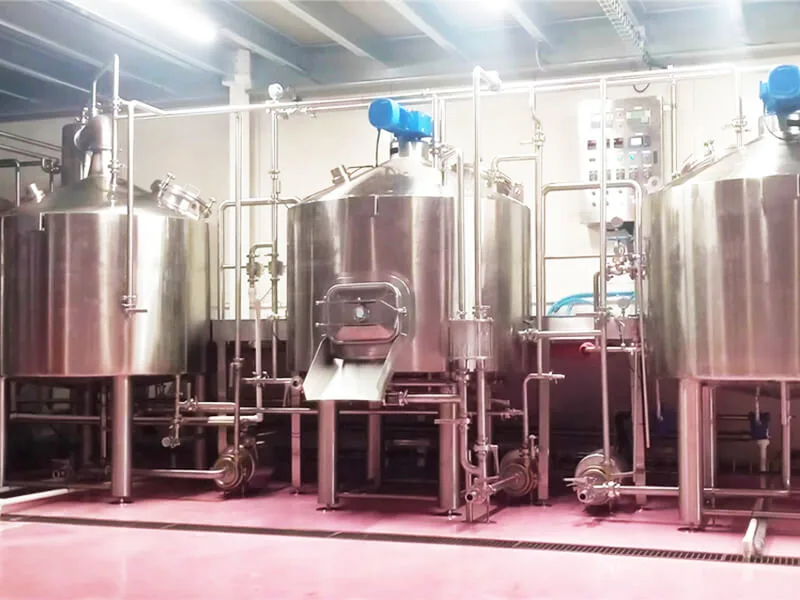
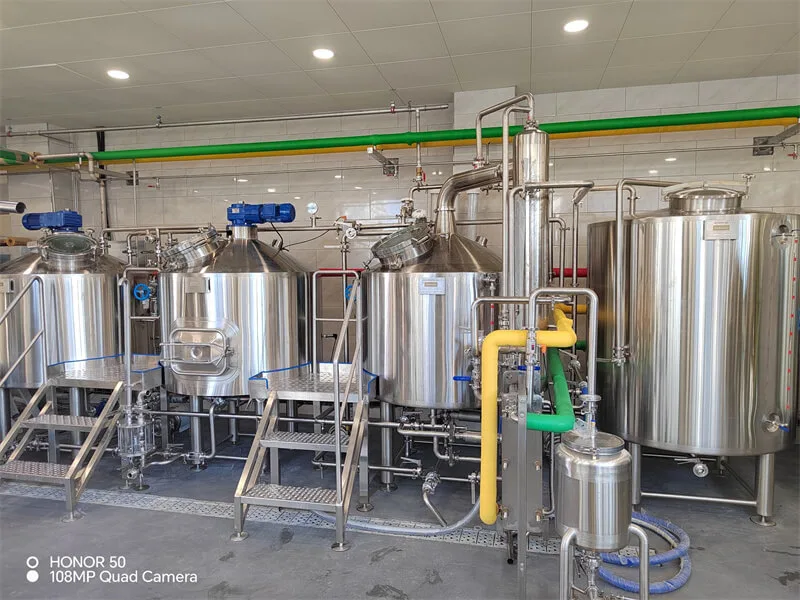
Most small breweries start with a 200L –1500 L brewhouse. A 500 L system is a popular sweet spot for taprooms—it balances batch size with labor and lets you keep taps fresh while testing new recipes. If you’re confident in demand, a 1000L or 1500 L system gives you more turns and revenue potential.
Here’s a practical sizing guide:
| Target Weekly Output | Recommended Brewhouse | Fermenteurs | Notes |
|---|---|---|---|
| 2000L–5000L | 200 L-500, 2/3-vessel | 3×500L | Efficient double-batching |
| 5000L–10000L | 500L-1000L , 3/4-vessel | 4–6×1000 L | Faster turns, clearer wort |
| 20000L –30000 L | 1000L–1500 L, 3/4/5-vessel | 6–8×3000 L | Room to grow |
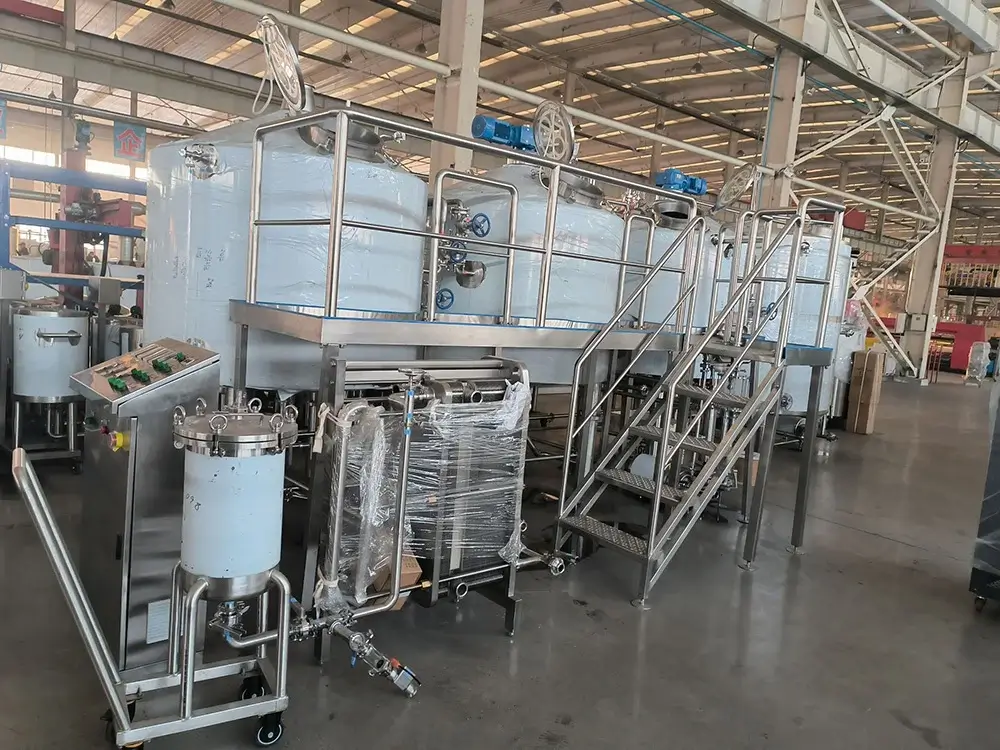
Choose equipment that scales. A modular brewhouse lets you add fermenters as demand grows without replacing your entire hot side. And always leave physical space in your layout for extra tanks—that’s the cheapest expansion you’ll ever make.
Designing the Taproom Experience
Your taproom is more than a sales floor. It’s your brand’s physical expression. Think about the guest journey: entry to bar, seating to restrooms, merchandise display to patio access. Every step should feel intuitive.
The best taprooms balance aesthetics with brutal practicality. Lighting, acoustics, and sightlines matter, but so does operational flow. The bar should minimize bartender steps. Cold storage near the bar shortens draft line runs. A clear path from cellar to bar prevents bottlenecks on busy nights.
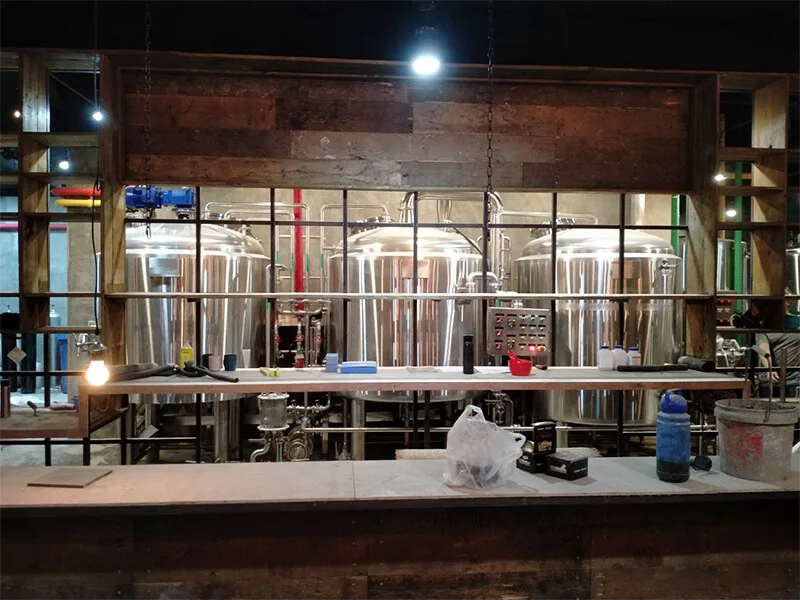
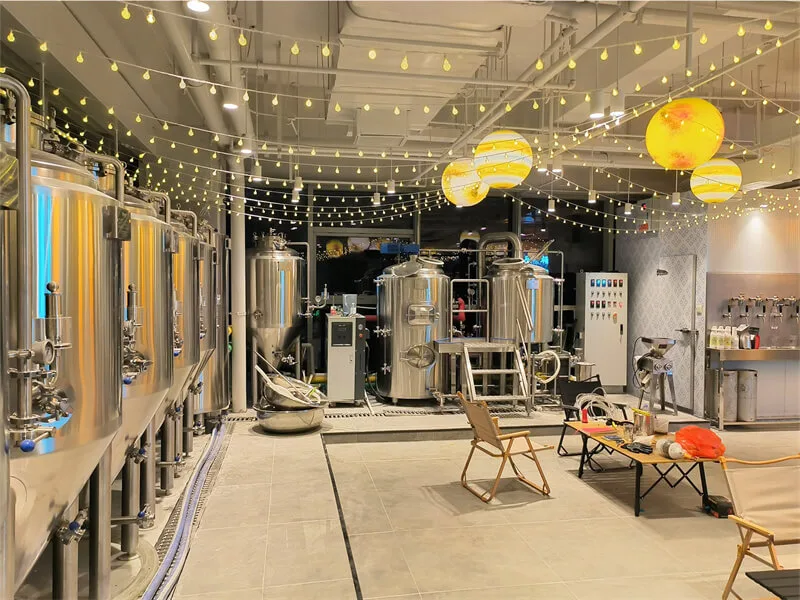
Industrial finishes—exposed concrete, metal, reclaimed wood—can work beautifully, but only if they support the operational reality of the space. Materials that look good but can’t handle moisture, keg traffic, or frequent cleaning are the wrong choice. A visible brewhouse adds energy and trust; just make sure production and guest circulation stay separated for safety.
Production Fundamentals: Hot Side to Glass
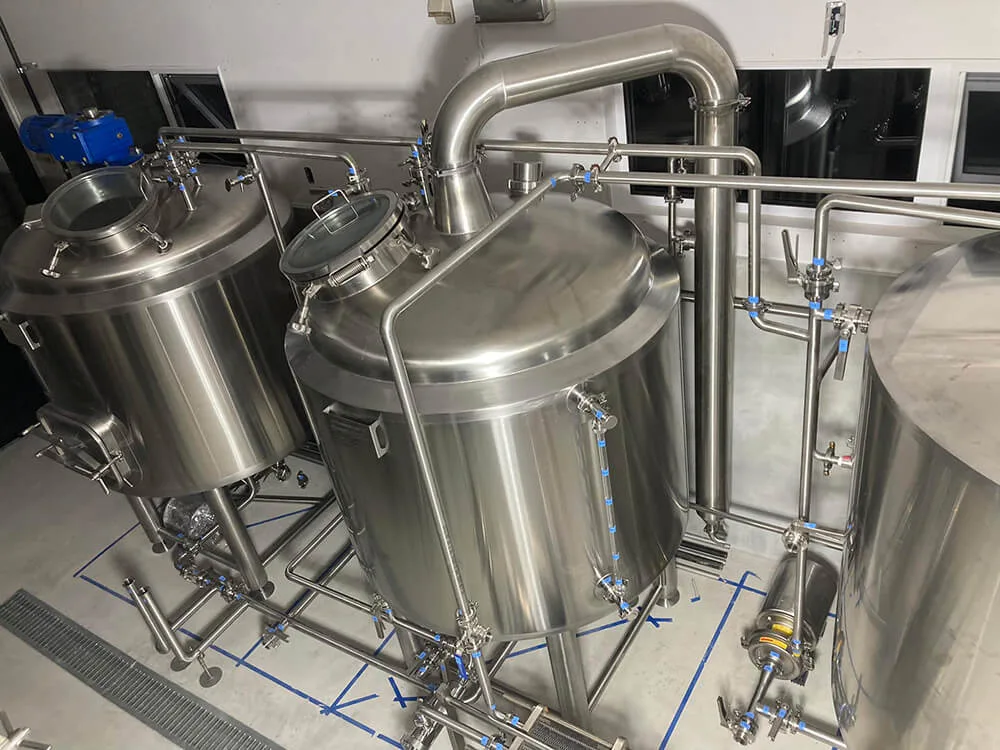
Côté chaud: mash, lauter, boil, whirlpool. This is where you convert grain to wort. A dedicated lauter tun improves clarity and speed if you’re brewing frequently. A good brew kettle with vigorous boil improves hop utilization and drives off unwanted compounds like DMS.
Cold side: oxygen-free transfer to fermenter, temperature control, dry-hopping where needed, then maturation. After fermentation, you crash-chill, transfer to a brite tank for carbonation, and package to keg or can. Quality touches—dissolved oxygen monitoring, line purges, daily cellar checks—separate good beer from great beer.
A few non-negotiables for freshness: control oxygen at every transfer, clean draft lines every two weeks, maintain cold storage at -2 to 0°C, and rotate inventory first-in-first-out. These routines keep beer stable and delicious from tank to glass.
Marketing Without a Budget
You don’t need a billboard. You need a story. Define what makes your brewery different—a single-malt series, a crisp lager program, a sour lab. Tell that story everywhere: menus, tours, social media, conversations across the bar.
A taproom-first model gives you a massive advantage. You can engage guests directly, test new recipes in real-time, and build a community of fans who’ll spread the word. Limited releases, collaboration brews, and tap takeovers keep things fresh. And when you’re ready, small beer-pairing dinners can showcase your craft to the right audience.
The Team Behind the Bar
Your taproom staff are your front line. Hire people who are friendly, curious, and genuinely excited about craft beer. Train them on style basics, off-flavor recognition, and proper pour technique. They should be able to guide a first-timer through a flight and talk nerdy with a seasoned regular.
Service standards matter. Greeting within 30 seconds, clean glassware, accurate pours—these details turn one-time visitors into regulars. A great taproom runs like a great café: fast pacing, warm conversation, consistent quality.
Timeline: Start Small, Grow Smart
Front-load permits and utilities. They take longer than you think. Order equipment once you have clarity on your space and approvals. Build standard operating procedures for brewing, cleaning, and quality assurance before you fire up the system.
A compressed checklist:
- Validate your business plan with mentors or partners
- File TTB Brewer’s Notice; apply for state and local permits
- Order equipment (brewhouse, cellar, cold room, draft system)
- Build SOPs for brewing, QA, and cleaning
- Draft opening menu and taproom service plan
- Launch with a focused set of styles; protect your cold chain
A Real-World Path
Consider a founder who opens a 500L system in a 230-square-meter space. They pour in-house and self-distribute a few kegs each month. Six months in, demand exceeds tank turns. They add two 1000 L fermenters and a brite tank. Later, they bring in a compact canning line to support to-go sales.
The key insight: they chose scalable equipment from day one. Their brewhouse stayed the same; they just added cellar capacity. That’s the difference between a smooth expansion and a costly rebuild.
Final Word
Start small. Master your systems. Build a loyal following. Expand when the demand is real and your operations can handle it. Great beer is the price of entry. A sustainable business is the goal.
Meto is a brewery equipment manufacturer with 13 years of experience and over 3000 installations worldwide. We design and build customizable brewing systems—from 50L pilot rigs to 20000L commercial brewhouses—and provide turnkey solutions tailored to your space, volume, and growth plan.