No two production lines are exactly alike. A standard tank may have the right volume but the wrong height, outlet position, heating method, pressure rating, or connection layout. These mismatches can create problems during installation, cleaning, material transfer, and future production.
For breweries, food processing plants, beverage manufacturers, and other process industries, tank selection should begin with the process—not simply with a catalog capacity.
As a stainless steel equipment manufacturer, METO works from the customer’s process requirements through engineering, fabrication, testing, documentation, and delivery. The objective is not simply to manufacture a vessel, but to provide equipment that fits the production system around it.
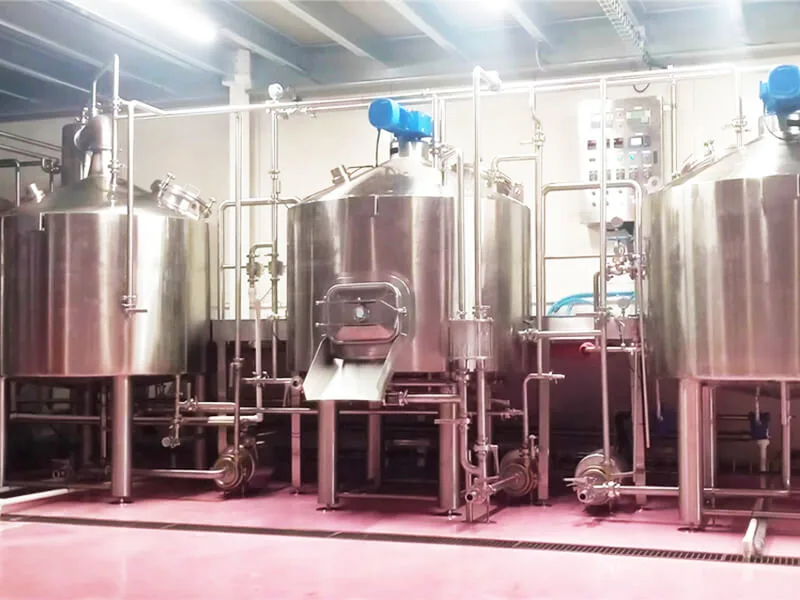
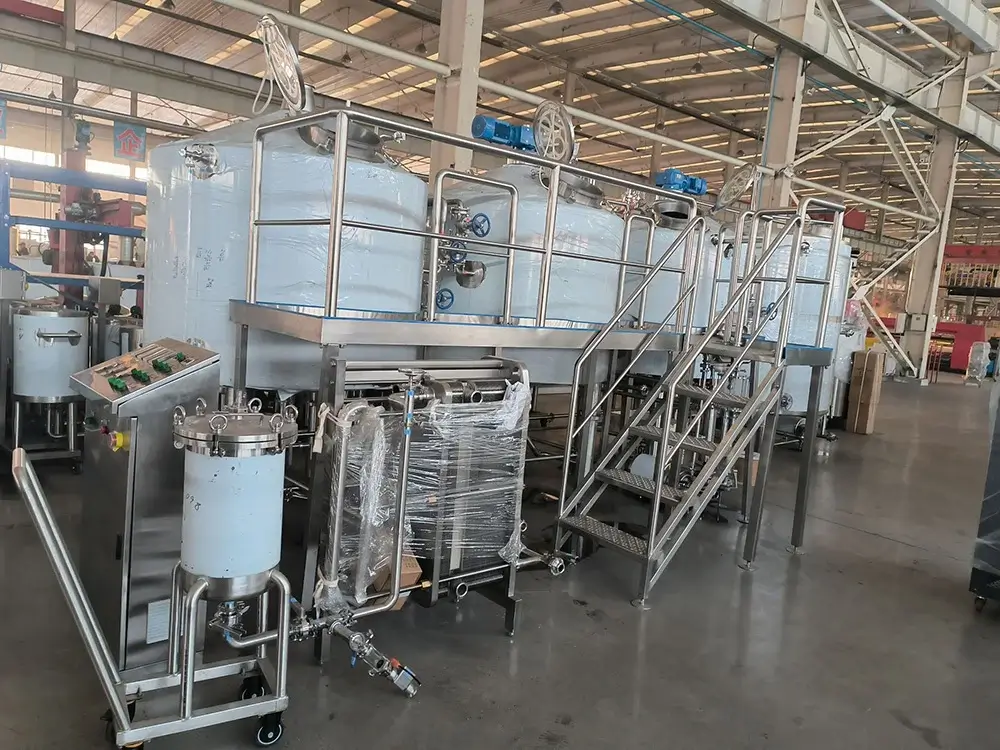
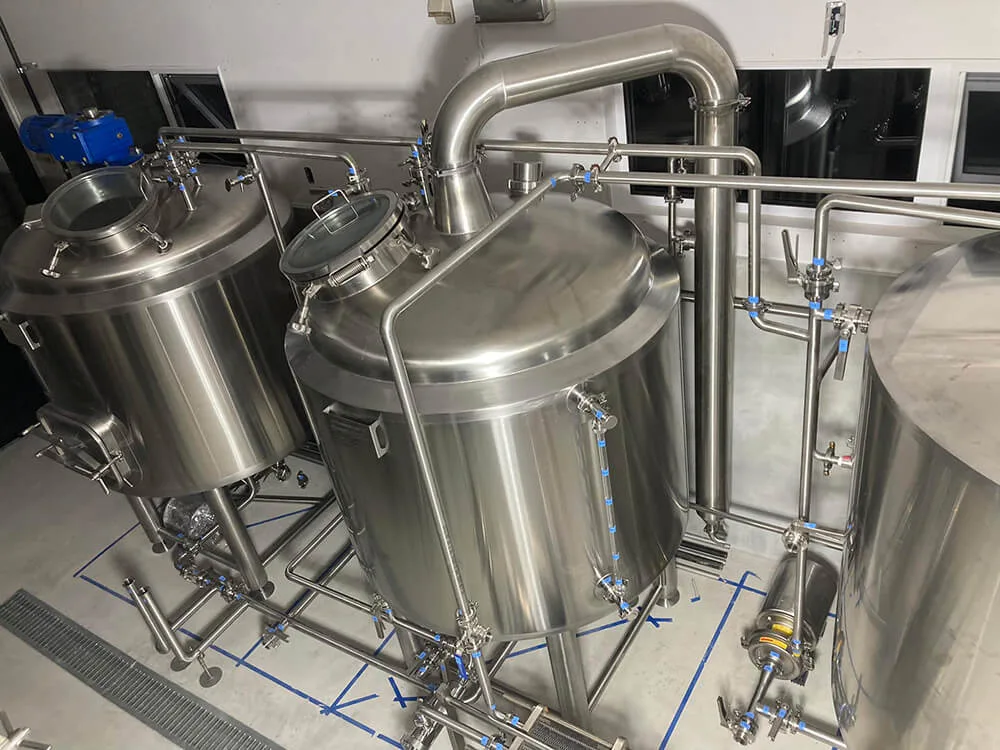
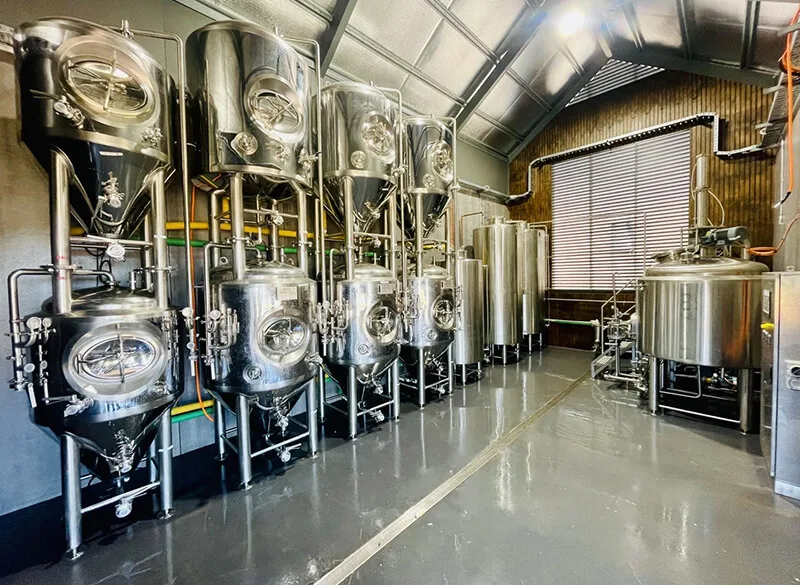
The same engineering approach applies to brewery equipment, fermentation tanks, mixing tanks, storage vessels, and turnkey brewery solutions.
Step 1: Engineering and Design Before Fabrication
A reliable custom tank starts with accurate technical information. Before selecting materials or cutting stainless steel, our engineers need to understand how the vessel will actually be used.
Defining the Process Requirements
Typical design information includes:
- Working and total volume
- Product or process medium
- Specific gravity and viscosity
- Operating and design temperature
- Working and design pressure
- Heating or cooling requirements
- Cleaning method and CIP requirements
- Installation area and available height
- Inlet, outlet, drain, and utility connection locations
- Agitator type and required mixing performance
- Electrical voltage and frequency
- Applicable local or international standards
For brewery projects, this may include the complete production flow from the brewhouse system to fermentation, conditioning, storage, and packaging. Brewery equipment capacity must therefore be considered as part of the entire process rather than as an isolated tank specification.
For example, increasing brewhouse capacity without providing adequate fermentation capacity can create a production bottleneck. Likewise, selecting a fermentation tank based only on nominal volume may leave insufficient headspace for the intended beer and fermentation process.
3D Modeling and Drawing Approval
Once the technical requirements are confirmed, the vessel can be developed using CAD tools such as AutoCAD or SolidWorks.
Three-dimensional modeling allows the customer to review important details before fabrication begins, including:
- Overall dimensions
- Manhole location
- Nozzle orientation
- CIP spray device position
- Agitator arrangement
- Cooling jacket configuration
- Ladder and platform interfaces
- Product and utility connections
- Drainage points
Production should begin only after the technical drawing has been reviewed and approved.
This step is particularly important for customized brewery equipment and commercial brewery equipment, where a few centimeters of dimensional error can affect pipe routing, platform clearance, or equipment installation.
Vessel and Agitator Engineering
The vessel structure is designed according to its operating conditions and applicable standards. For pressure vessels, design calculations may be carried out according to standards such as ASME Section VIII or the applicable PED requirements, depending on the project and destination market.
Agitator selection requires a separate engineering assessment.
Low-viscosity liquids may require a turbine or pitched-blade impeller, while viscous products may need an anchor or other specialized mixing arrangement. High-shear applications require different impeller geometry and motor characteristics.
The objective is to achieve the required mixing performance without unnecessarily increasing motor power, mechanical loading, or operating cost.
Customization Options
Depending on the application, METO can engineer tanks with customized:
- Capacities from pilot-scale vessels to large industrial tanks
- Heating or cooling jackets
- Half-pipe coils
- Insulation systems
- Agitators and mechanical seals
- Sanitary Tri-Clamp or customized connections
- Manholes and sight glasses
- CIP spray devices
- Temperature and pressure instrumentation
- Electrical configurations such as 440V/60Hz
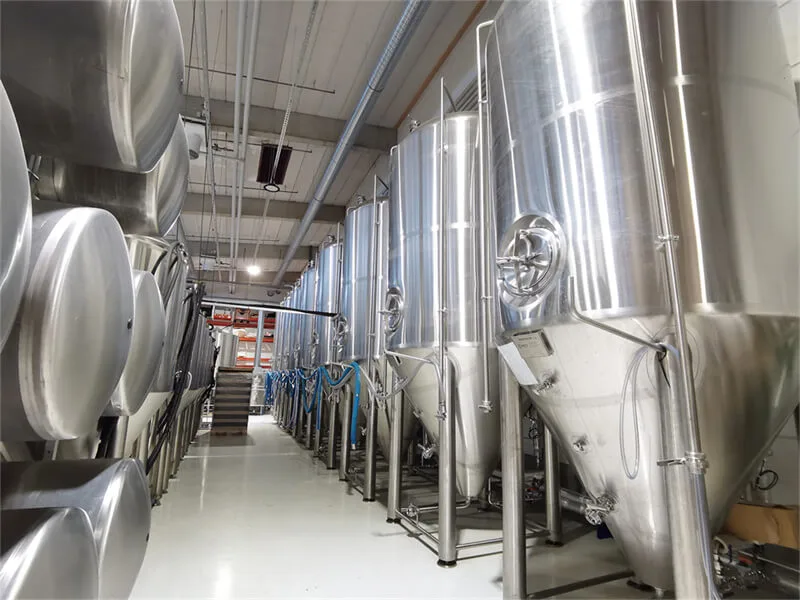
The same principle applies when configuring fermentation tanks for a brewery: capacity, geometry, cooling surface, working pressure, headspace, and connection layout should be determined by the brewing process and production target.
Step 2: Fabrication and Stainless Steel Workmanship
Engineering drawings define what needs to be built. Fabrication determines whether the finished vessel actually meets those requirements.
Stainless Steel Material Control
Material selection depends on the product, temperature, cleaning chemicals, pressure, and hygiene requirements.
SUS304 is widely used for general food, beverage, and brewery applications. SUS316L may be specified where higher corrosion resistance or more demanding hygienic requirements are involved.
Material documentation can include mill certificates and material test reports, allowing the stainless steel used in the project to be traced through production.
Precision Cutting and Forming
Plate cutting and forming must maintain dimensional accuracy because errors at this stage can affect tank roundness, nozzle alignment, jacket installation, and welding quality.
Laser or plasma cutting can be selected according to material thickness and fabrication requirements. CNC plate rolling is used to form cylindrical shells with controlled diameter and roundness.
TIG Welding and Sanitary Fabrication
Welding quality is one of the most important factors in stainless steel tank manufacturing.
TIG/GTAW welding is widely used for sanitary product-contact surfaces and piping because it provides precise control of the weld pool. MIG or other welding processes may be used where appropriate for structural components and heavier fabrication.
For sanitary vessels, the internal weld profile matters as much as structural strength. Poorly finished welds can create crevices that retain product residue and make cleaning more difficult.
Depending on the specification, internal welds can be ground, polished, pickled, and passivated to produce a cleanable surface.
For demanding applications, surface roughness requirements can also be specified. A pharmaceutical or high-purity process may require a significantly lower Ra value than a conventional industrial storage tank, so the final specification should always be based on the actual process.
Surface Finishing
Surface treatment is selected according to the application rather than appearance alone.
Mechanical polishing can provide a controlled hygienic finish for many food and beverage vessels. Electropolishing may be considered for applications requiring enhanced surface smoothness and cleanliness.
For brewery equipment, fermentation tanks, and food-processing vessels, the focus is on a surface that is corrosion-resistant, cleanable, and compatible with the required CIP process.
Step 3: Quality Assurance and Testing
A stainless steel tank should not be judged only by its appearance after polishing. Testing and documentation provide evidence that the vessel meets its technical specification.
Inspection During Manufacturing
Quality control can include dimensional inspection, weld inspection, material verification, and surface inspection at different stages of fabrication.
Depending on the project requirements, weld examination may include visual inspection, dye penetrant testing (PT), radiographic testing (RT), or other appropriate non-destructive testing methods.
The inspection method should be selected according to the vessel design, weld category, applicable standard, and customer requirements.
Pressure, Vacuum and Functional Testing
Before shipment, tanks are tested according to their design and application.
Typical tests may include:
- Hydrostatic or pressure testing
- Leak inspection
- Vacuum testing where negative pressure is part of the operating condition
- Jacket pressure testing
- Agitator rotation and functional testing
- Motor current, vibration, and noise checks
- Instrument and valve verification
For a fermentation vessel, for example, pressure performance and cooling-system integrity are critical because the tank must maintain stable fermentation conditions while handling the specified operating pressure.
Technical Documentation
A complete quality dossier can provide customers with a traceable record of the manufacturing process.
Depending on project requirements, documentation may include:
- Certificats de conformité des matériaux
- Registres de soudage
- Inspection reports
- Pressure-test records
- Surface-finish records
- Documentation électrique
- Equipment drawings
- Operating and maintenance manuals
- Spare-parts lists
For international projects, documentation is particularly important because equipment may need to be reviewed by the customer’s engineering team, third-party inspectors, or local authorities.
Step 4: Export Packing, Delivery and Installation Support
Manufacturing is only part of an international equipment project. A correctly built tank still needs to arrive at the customer’s facility without damage and be installed correctly.
Export Packaging
Packaging is designed according to vessel dimensions, transportation method, and destination.
Connections and exposed components are protected against impact and contamination. Large vessels may be secured using steel frames, while smaller components and accessories can be packed in export-grade plywood cases.
Photographs of completed equipment and packaging can be provided before loading so the customer can verify the shipment condition.
Global Logistics
METO supports international shipments using common trade terms such as FOB and CIF, with transportation arrangements adapted to the project.
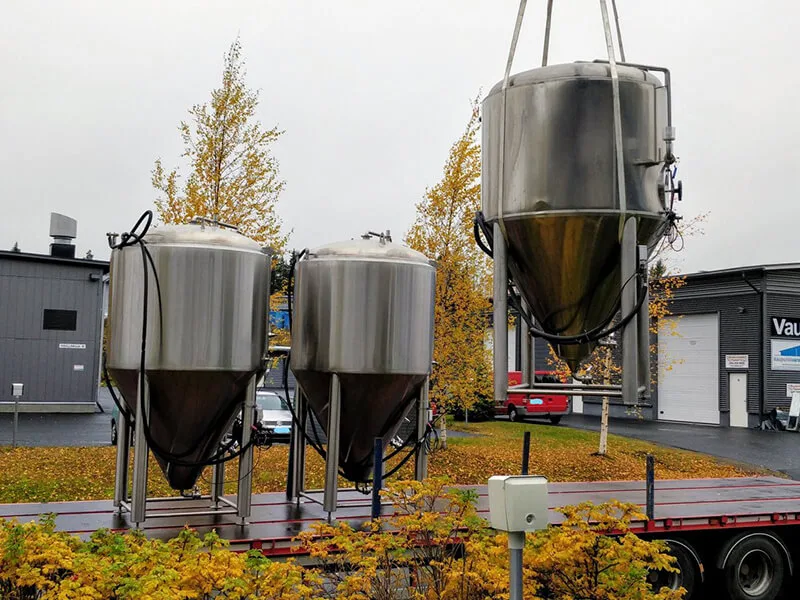
Large brewery equipment and stainless steel vessels may require open-top containers, flat racks, or other specialized transportation methods when their dimensions exceed standard container limits.
Early logistics planning is therefore part of equipment engineering. Tank diameter, vessel height, removable components, and shipping configuration can all affect transportation cost.
Installation et mise en service
Installation support can be arranged according to project complexity.
For standard vessels, customers can receive English installation instructions, drawings, manuals, and remote technical support.
For larger brewery projects or turnkey brewery solutions, on-site engineering support can be arranged for equipment installation, piping connections, commissioning, and operator training.
The objective is to ensure that the equipment performs as designed after it reaches the customer’s facility—not simply to complete the shipment.
Why Equipment Selection Matters More Than Tank Capacity Alone
When planning brewery equipment, it is tempting to start with a number such as 500L, 1,000L, or 5,000L. Capacity is important, but it is only one part of equipment selection.
A properly engineered system considers:
Production target → batch size → brewhouse system → fermentation capacity → cooling capacity → CIP → utilities → packaging → future expansion
This is particularly important for commercial brewery equipment. The correct brewery equipment capacity should support the expected production schedule while leaving practical room for maintenance, seasonal demand, recipe flexibility, and future expansion.
The same engineering logic applies to custom mixing tanks. A 5,000L tank with the wrong agitator or insufficient heat-transfer area may perform worse than a correctly designed smaller vessel.
From Engineering Drawing to Global Delivery
Custom stainless steel equipment is a process of engineering decisions, controlled fabrication, testing, and communication.
From the initial process data and CAD drawing to welding, surface treatment, pressure testing, documentation, export packing, and commissioning, each stage affects the final performance of the vessel.
For METO, customization means more than changing dimensions. It means adapting the equipment to the customer’s process, site conditions, production requirements, applicable standards, and future expansion plans.
Whether you are developing a brewery, upgrading commercial brewery equipment, adding fermentation tanks, or planning a complete turnkey brewery solution, the project should start with the process requirements—not a standard product number.
Ready to Discuss Your Project?
Send us your tank specifications, process requirements, equipment layout, or even a preliminary sketch.
Our engineering team can review the application, recommend an appropriate vessel configuration, and prepare an initial technical proposal and quotation.
METO — Stainless Steel Equipment Designed Around Your Process.