As the global craft beer market continues to expand, craft beer has evolved beyond a beverage—it represents innovation, culture, and premium lifestyle. For entrepreneurs and brewery owners looking to enter or scale in this industry, building a high-performance, flexible, and future-proof brewery is a critical foundation for long-term success.
This article introduces a complete 1,000 hectoliter (100,000 liters) annual craft brewery solution, designed to balance production efficiency, recipe flexibility, cost control, and scalability—making it ideal for emerging and growing craft beer brands.
1. Project Overview: Production Capacity & Market Fit
Target Output & Commercial Positioning
The proposed brewery is designed for an annual production capacity of 1,000 HL, equivalent to approximately 200,000 bottles (500 ml) of packaged beer per year.
This production scale is well suited for:
- Regional and independent craft breweries
- Brewpub brands expanding into packaged beer
- Small-to-mid city market distribution
- Breweries launching premium or specialty beer lines
It enables stable production of core flagship beers, while maintaining flexibility for seasonal, limited-edition, and experimental releases.
2. Brewery Design Philosophy: Efficiency Meets Flexibility
This solution follows a modular, scalable, and brewer-centric design approach, ensuring:
- Reliable production of classic and modern beer styles
- Quick recipe changeovers to meet market trends
- Expandable layout for future tank additions
- Smart automation to reduce labor and operational cost
The system supports a “one brewery, multiple beer styles, rapid market response” production model—highly valued in today’s competitive craft beer industry.
3. Smart & Compact Brewery Layout
Space Optimization with Visitor Experience
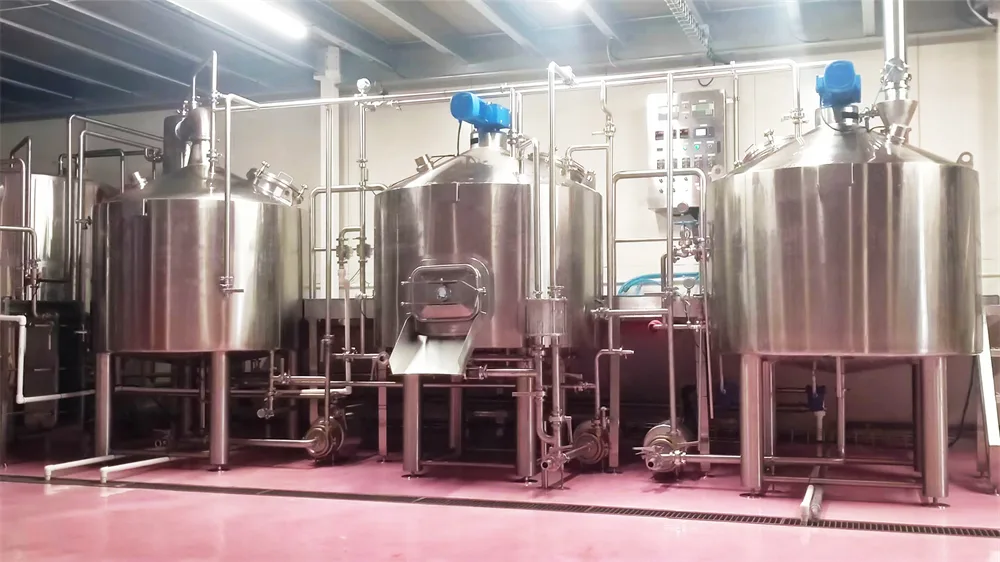
The brewery typically requires 600–800 m² of floor space, depending on packaging format and storage capacity. Key functional areas include:
- Malt handling & milling
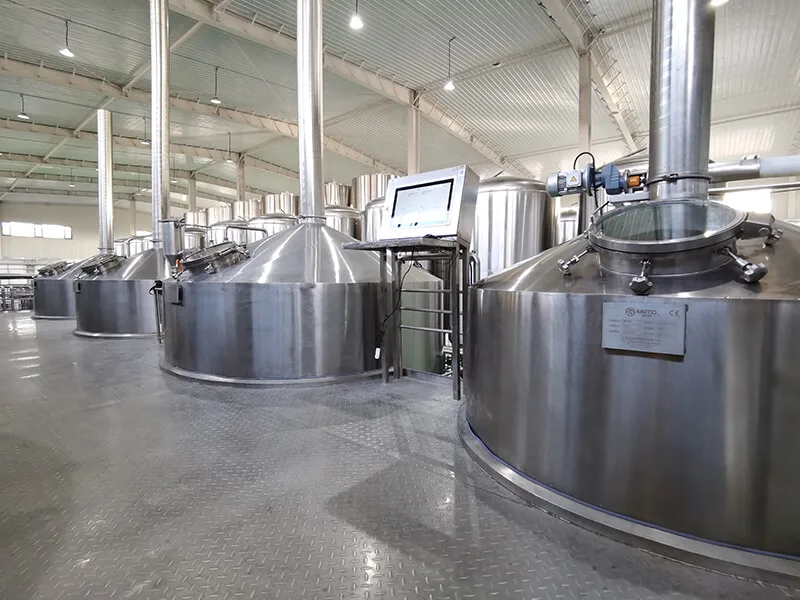
- Brewhouse operations
- Fermentation & cold storage
- Packaging & finished goods storage
- Utility systems
Optional architectural features such as glass walls, guided visitor walkways, and branded storytelling zones can transform the brewery into a compelling brand and tourism asset.
4. Brewer-Friendly Equipment & Automation
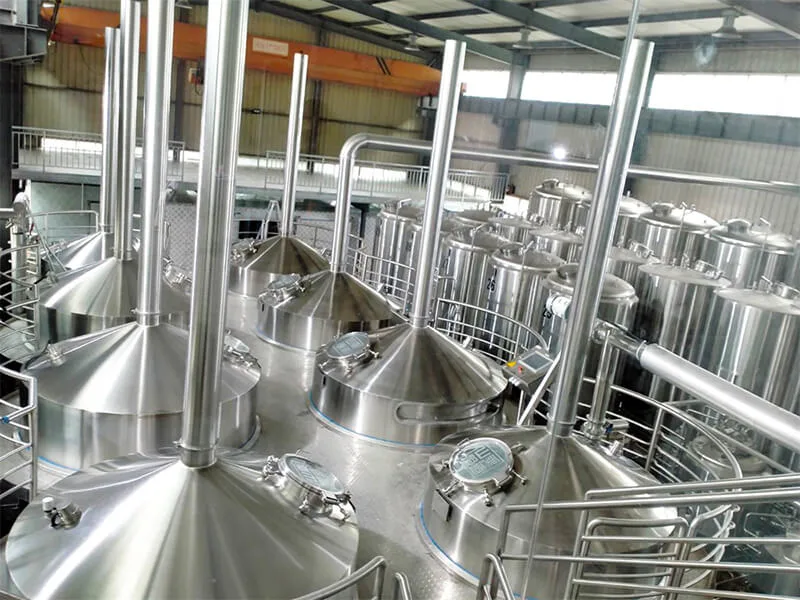
All equipment is engineered to combine industrial durability with operator-friendly usability, including:
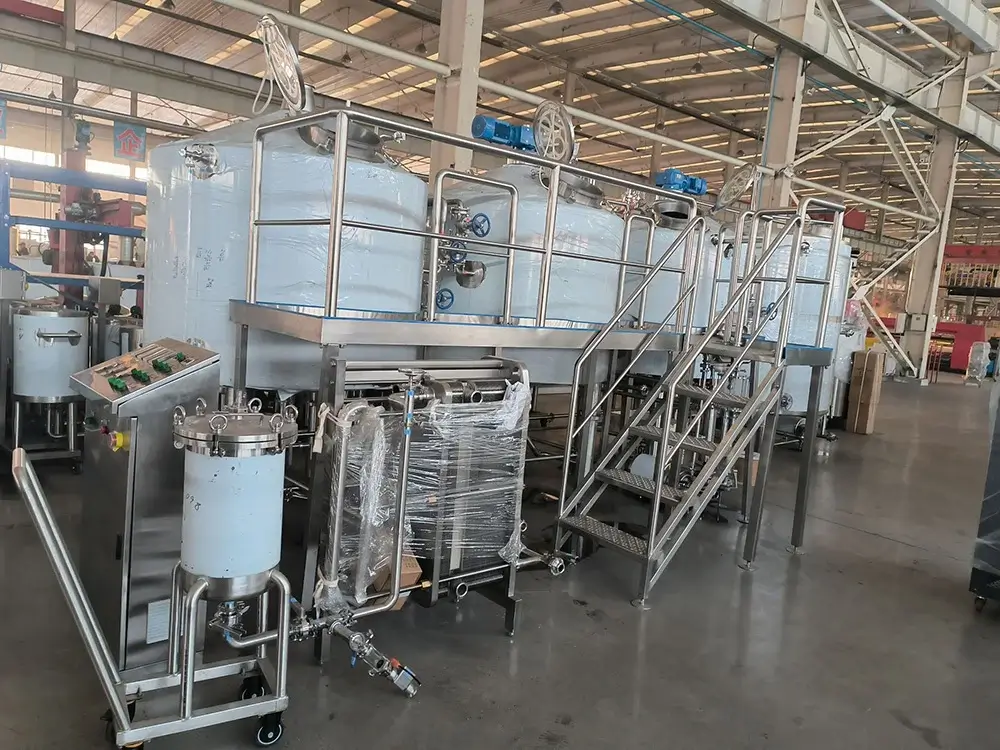
- Ergonomic working platforms to reduce physical strain
- Fully automated CIP (Clean-in-Place) systems for hygiene consistency
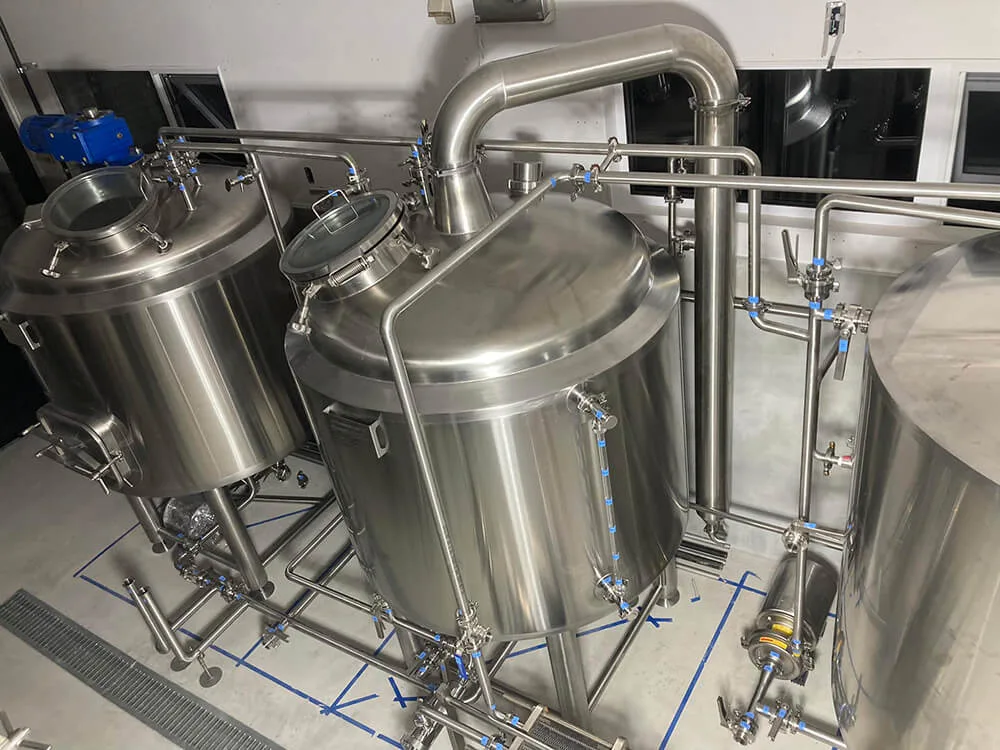
- Unified pipe racks and tri-clamp connections for flexible tank scheduling
- PLC + HMI control systems enabling centralized and remote operation
These features improve operational efficiency, safety, and brewing consistency, even with small brewing teams.
5. Brewing Process & Beer Style Flexibility
Supported Beer Styles
This Annual 1000 HL system supports a wide range of global and craft beer styles:
Lager Styles
- Pilsner
- Helles
- Vienna Lager
Ale Styles
- American IPA
- Hazy / NEIPA
- Pale Ale
- Amber Ale
Specialty & Dark Beers
- Dry Stout
- Oatmeal Stout
- Belgian Dubbel
- Wheat Beer
Sour & Wild Styles
- Berliner Weisse
- Gose
- Kettle-soured beers
- Mixed-fermentation ales
This flexibility allows breweries to adapt quickly to evolving consumer preferences.
6. Custom Recipe Development & Flavor Innovation
Beyond traditional beer styles, we support custom flavor creation using:
- Alternative grains such as oats, rye, and specialty malts
- Natural adjuncts including coffee, cocoa, honey, and maple syrup
- Fruit additions and botanical infusions
- Barrel-aging and specialty fermentation options
This enables breweries to develop signature beers and limited releases that strengthen brand identity and market differentiation.
7. Full-Process Quality Control
Quality management is integrated throughout the entire production chain:
- Raw material sourcing & inspection
- Wort production monitoring
- Fermentation control & yeast management
- Cold conditioning & filtration
- Packaging sanitation & oxygen control
These measures ensure consistent flavor, stable shelf life, and high product reliability.
8. Core Equipment Configuration (Example)
| Système | Equipment | Spécifications | Quantity | Key Features |
|---|---|---|---|---|
| Fraisage | Hammer mill or 2-roller mill | ≥150 kg/hr | 1 | Stainless housing, dust extraction |
| Salle de brassage | Mash Tun | 3,000 L working volume | 1 | Insulated, agitator, PT100 sensor |
| Lauter Tun | 3,000 L working volume | 1 | False bottom, raking system | |
| Brew Kettle | 3,500 L (3 KL batch size) | 1 | Calandria or external heater | |
| Whirlpool | 3,500 L | 1 | Tangential inlet, hop dosing port |
Additional systems such as fermentation tanks, glycol chilling, CIP stations, compressed air, steam boilers, and packaging lines are customized based on production planning.
9. Designed for Future Expansion
This Annual 1000 HL brewery solution supports long-term scalability, allowing:
- Easy expansion of fermentation capacity
- Upgrade to higher automation levels
- Integration with bottling or canning lines
- Energy-efficient upgrades and sustainability optimization
It provides a solid technical foundation for growth, whether launching a new brewery or expanding an existing one.
Conclusion: Build a Brewery That Grows with Your Brand
A Annual 1000 HL craft brewery is more than an equipment investment—it is a strategic step toward building a competitive and sustainable beer brand.
With intelligent engineering, flexible production capabilities, and professional technical support, this solution enables you to enter the craft beer market with confidence and scale efficiently over time.
If you have questions about brewery planning, equipment selection, or cost estimation, our team is ready to support your project from concept to commissioning.
Let’s build your brewery—smarter, stronger, and future-ready.