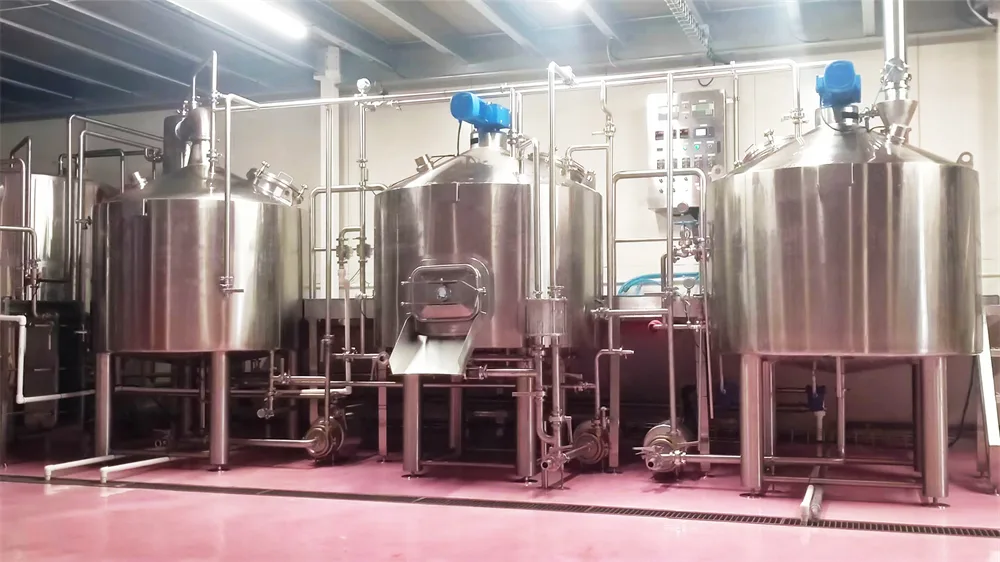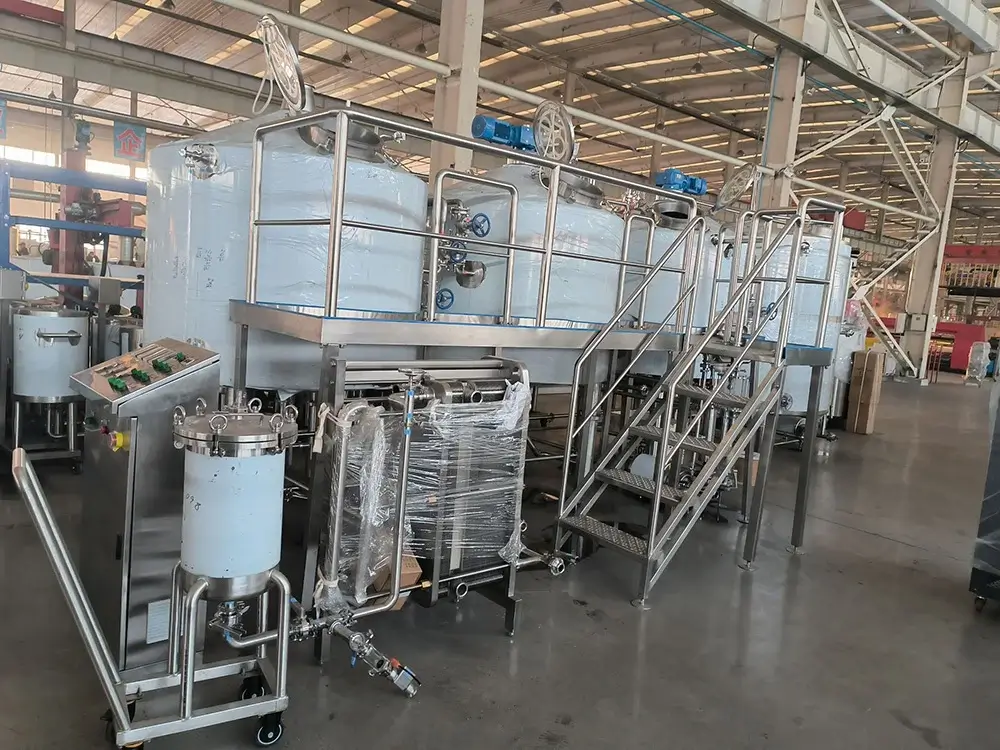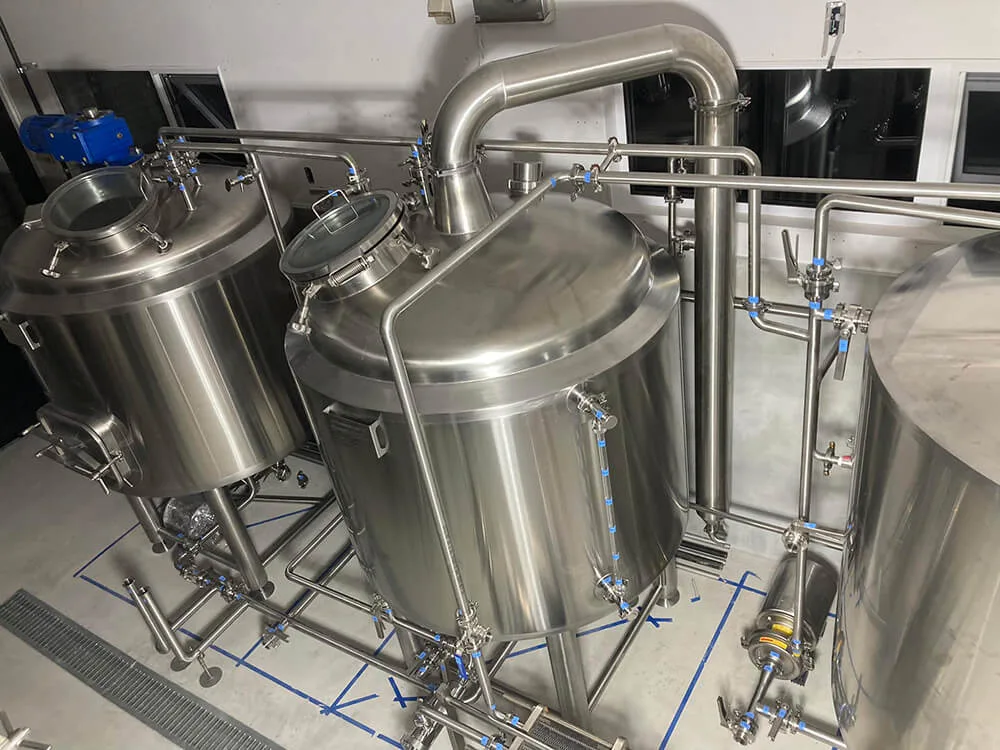
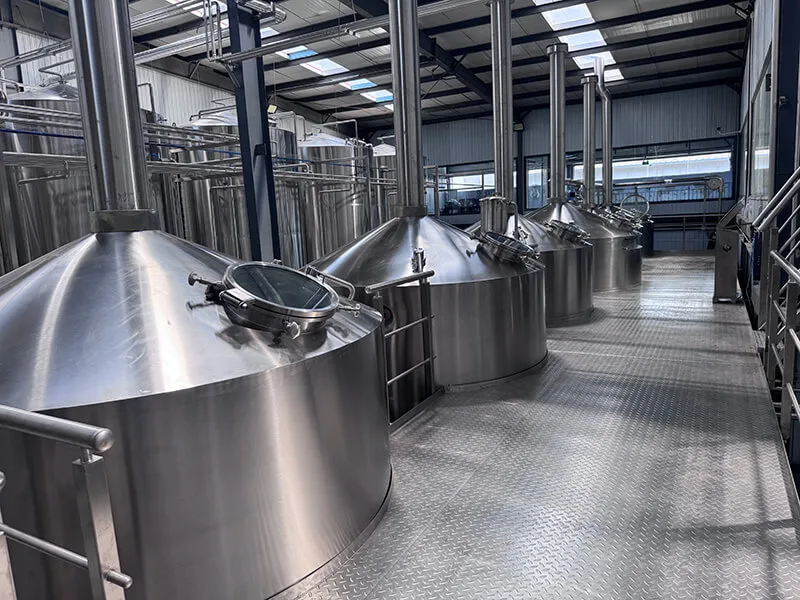
As craft beer becomes more popular, many breweries are looking for a brewery system that is efficient, flexible, beautiful, and makes high-quality beer. Today, we look at the Meto 5000L brewery project to see the technology and design behind this modern craft factory.
Project Overview: High Capacity and Flexibility
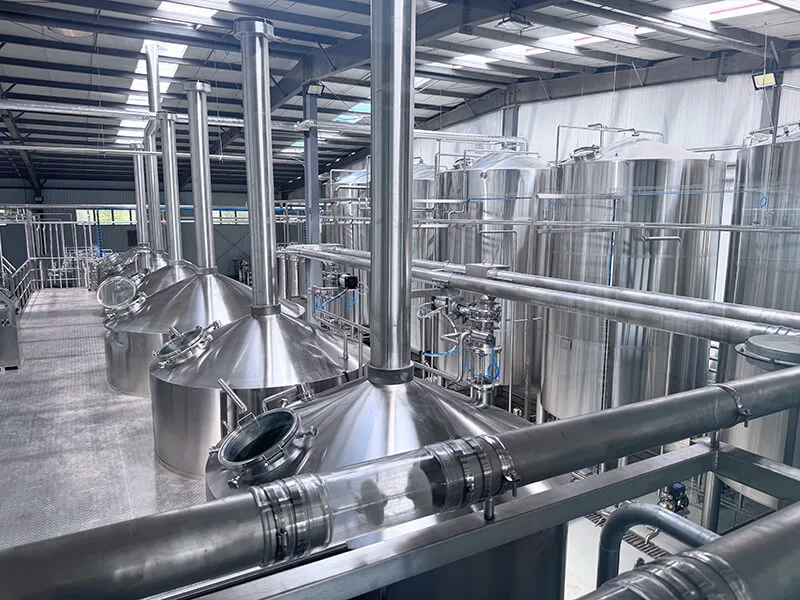
This 5000L brewery project uses a six-vessel brewhouse system. It can make 5000 liters per batch and run 6-8 batches a day, reaching 10,000 tons per year. The system is not only powerful but also very flexible. It can quickly change to meet market needs, which is perfect for craft brands that often create new beers.
Milling System: Precise Control to Keep Flavor
- Dual Dry Milling: One machine with a wetting device cracks barley malt without crushing it too much. Another machine dry mills wheat and other grains for easier cooking.
- Chain Conveyor with Windows: Looks industrial and works well, letting you see the grain moving.
- Mixing Device: Stops malt from clumping and improves sugar extraction.
- Dust Collection: Meets environmental rules for green production.
Brewhouse System: Innovative and Energy Saving
- Nitrogen Protection: Prevents oxidation during brewing to protect flavor. This is a unique and leading design.
- Condensate Recovery: Recycles hot water (over 80°C) back to the boiler, saving over 20% energy.
- Hot Trub Recovery: Pumps hot solids to the filter tank and then outside to a spent grain tank for recycling.
Fermentation System: Multiple Tanks for Controlled Flavor
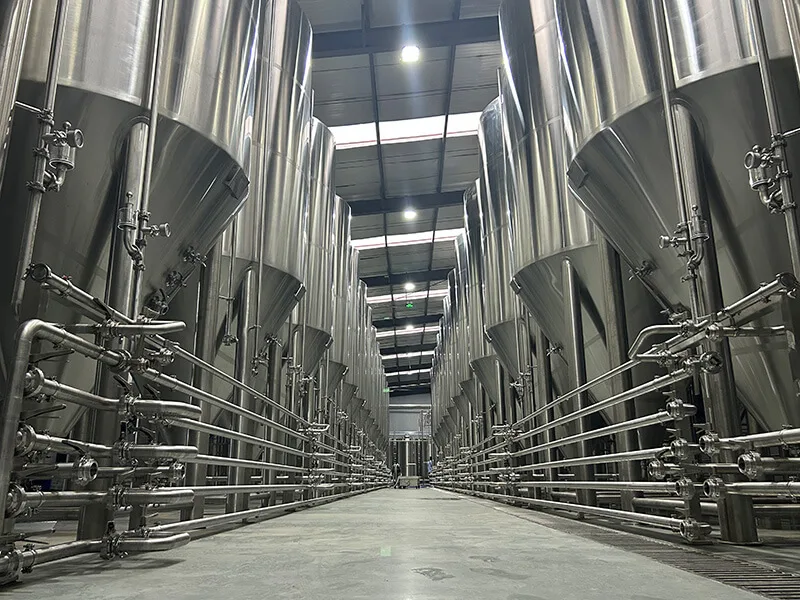
The fermentation area has 5T, 10T, and 15T fermentation tanks, plus a 15T bright beer tank. This allows multiple batches to ferment at the same time for steady yearly output. By controlling temperature and time exactly, the yeast works perfectly to create unique aromas, tastes, and body for every beer.
Water and Cooling Systems: Stable Support for Quality
- Water Tanks: Includes 30 tons each of ice water, pure water, hot water, and brewing water. Constant pressure pumps provide stable water for cleaning (CIP) and brewing.
- Cooling System: Uses a 50P chiller and a 30-ton glycol tank to control temperatures for cooling wort, fermentation, and cold storage. This locks in fresh flavor and keeps yeast active.
CIP Cleaning System: Professional and Sterile
The project has two separate CIP systems (one for brewing, one for fermentation). They include tanks for caustic, acid, sanitizer, and hot water, plus automatic controls. This ensures full automatic cleaning and disinfection, keeping the brewery sterile and improving efficiency.
Control System: Smart Center and Data Tracking
The system uses Siemens PLC and WINCC software with two 28-inch screens:
- One screen controls the brewing process.
- The other controls fermentation and other systems.
It monitors equipment, adjusts settings, and records data in real-time. This makes the whole process automatic and traceable, ensuring every batch tastes the same.
Support Equipment: Complete and Efficient
The project includes all necessary support systems:
- Piping for wort, beer, CIP, and CO₂
- Steam boiler
- Yeast propagation system
- Air compressor
- Filling and keg washing machines
This creates a full loop from raw materials to finished beer, helping the brewery run smoothly.
The Meto 5000L brewery case is not just about technology; it honors the spirit of craft beer. It mixes traditional brewing with modern smart manufacturing, offering a scalable, sustainable, and high-quality solution for craft brands.
Special Topic: How to Reduce Sourness in Craft Beer Using the Brewhouse System
Sourness can affect the balance of craft beer. If not controlled, the beer can taste sharp. Here are simple ways to reduce sourness:
1. Raw Materials and Water Control
- Malt Selection: Use light, fresh malt with high extract. It has less acid. Keep wheat malt under 40% of the total mix to avoid too much sourness.
- Water Management: Brewing water should be clear, odorless, and have a pH of 6.8-7.2. Avoid water with high iron or manganese. If water is too acidic, treat it to raise the pH.
2. Optimizing the Brewhouse Process
- Temperature Steps:
- Protein rest: Keep under 50°C for 0-15 minutes to stop too much acid formation.
- Saccharification: Set at 65°C for 60-90 minutes to turn starch into sugar while reducing acid.
- Mash out: Raise to 78°C to stop enzyme activity.
- Shorten Time: Reducing total mash time (e.g., from 120 to 90 minutes) lowers acid buildup while keeping malt aroma.
- Control pH: Adjust wort pH to 5.2-5.4 during mashing to stop acid creation and help enzymes work.
3. Fermentation Control
- Temperature: Keep main fermentation at 18-22°C. Avoid high temps (over 30°C) which cause yeast to make too much acid. Keep storage at 4-6°C to stop bacteria growth.
- Yeast Management: Use strong, healthy yeast with no bacteria. Check yeast activity regularly.
- Hops: Add bitter hops early (60 min boil) to stop bacteria. Add aroma hops later or use dry hopping to add flavors that hide slight sourness.
4. Equipment Hygiene
- Cleaning: Clean and disinfect the brewery system, fermentation tanks, and pipes regularly. Keep pipes short (under 10 meters) for easy cleaning.
- Environment: Keep the fermentation room temperature stable. Test for bacteria often and disinfect immediately if found.
5. Emergency Fix
If beer is already sour, a tiny amount of baking soda can neutralize it. However, this is only a temporary fix. The best way is to control the process and hygiene from the start.
By using these steps along with Meto 5000L features like nitrogen protection, smart temperature control, and automatic CIP, you can reduce sourness and make high-quality, smooth craft beer. If you are planning or upgrading your line, contact the Meto team to visit and start your craft beer journey!