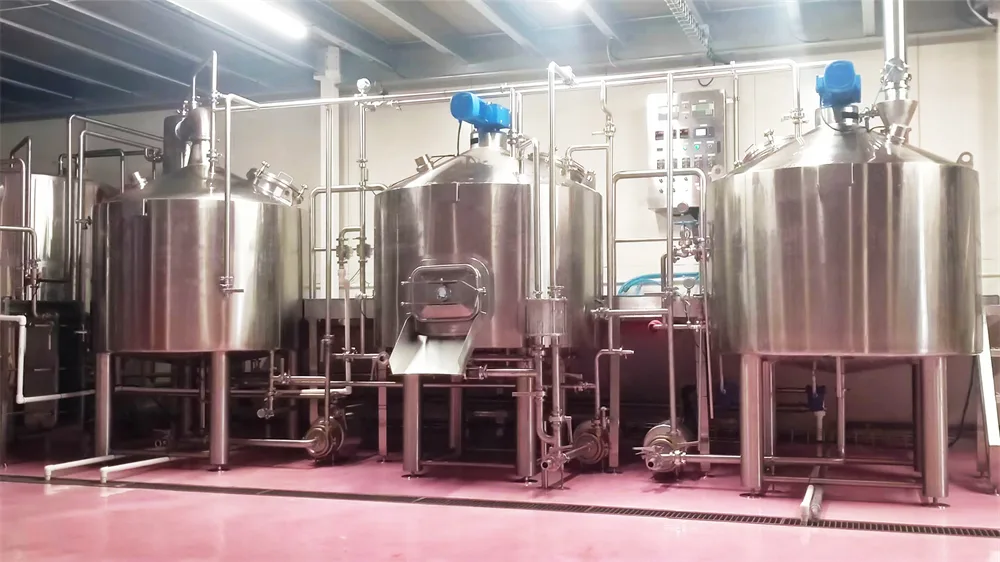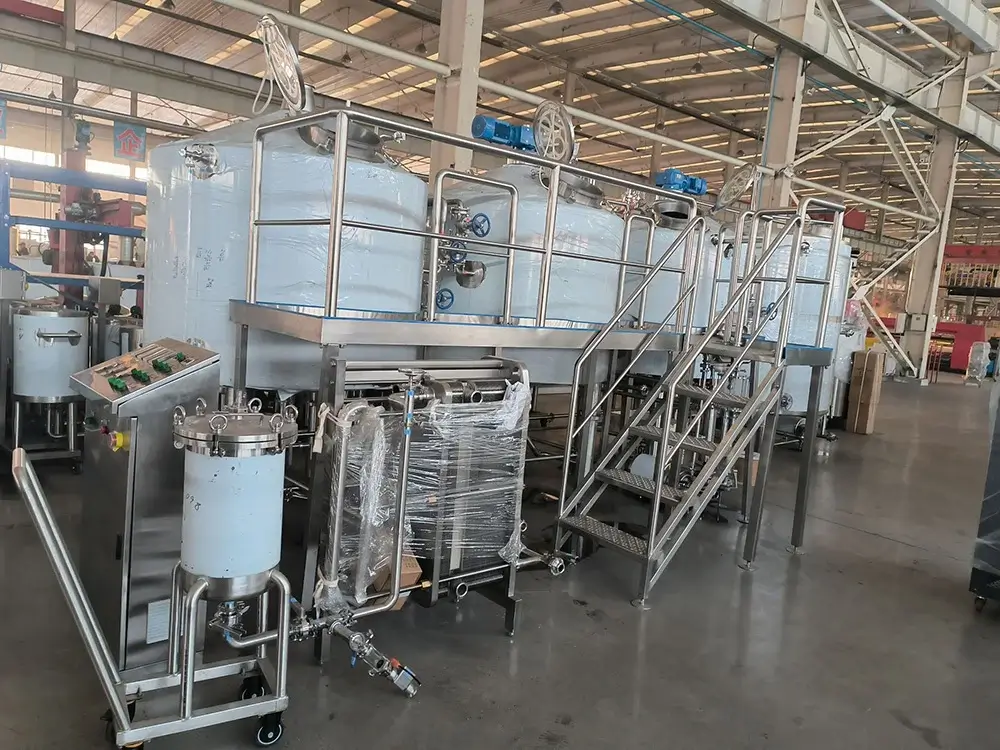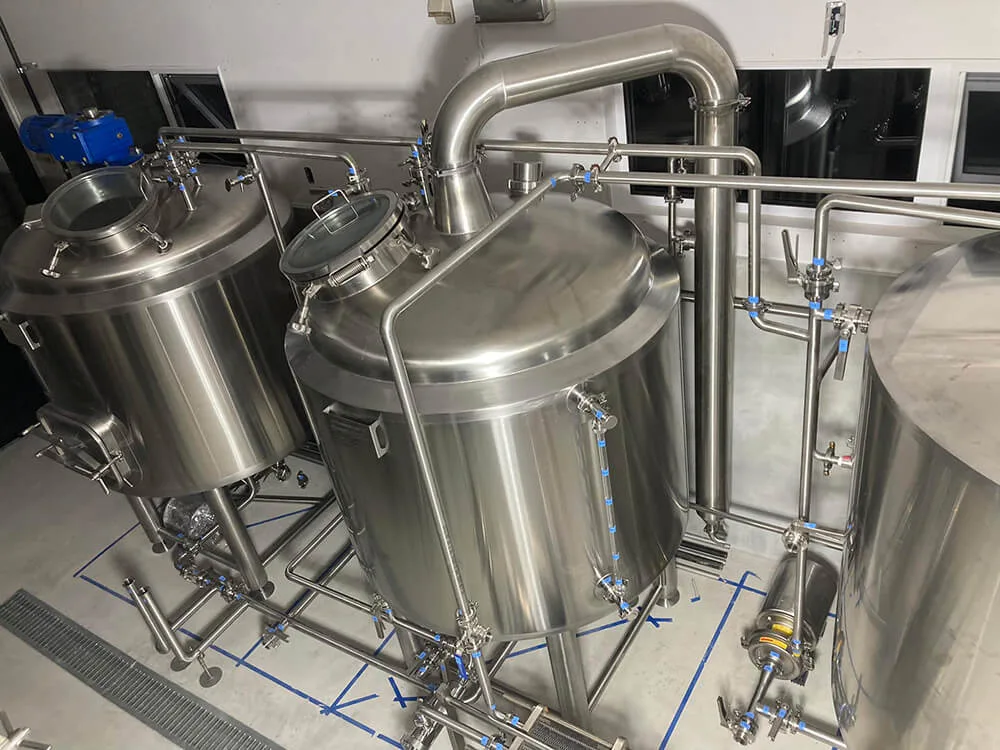
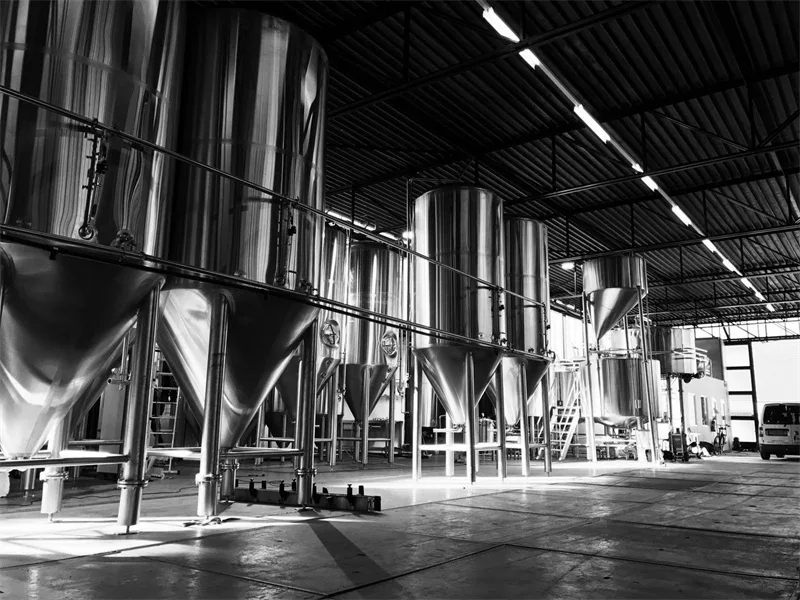
Choosing the right fermentation tanks is not just about tank size or quantity.
A well-designed fermenter configuration directly affects brewhouse efficiency, beer quality, production flexibility, and future expansion.
In this article, we’ll focus on three key questions most brewery owners ask:
- How should fermentation tank capacity match the brewhouse?
- Side manway vs top manway — what’s the real difference?
- Why multiple smaller fermenters often outperform fewer large tanks
1. How Fermentation Tank Capacity Should Match the Brewhouse
One of the most common mistakes in brewery planning is mismatching fermenter size with brewhouse output.
The Basic Rule: 1.2–2× Brewhouse Size
In most cases, fermentation tank capacity should be 1.2 to 2 times the brewhouse size to allow for:
- Wort expansion
- Yeast activity
- Krausen formation
- Safe headspace
Typical examples:
- 500L brewhouse → 600–1000L fermenters
- 1000L brewhouse → 1200–2000L fermenters
- 2000L brewhouse → 2400–4000L fermenters
This ratio allows brewers to:
- Brew full batches without overflow risk
- Maintain stable fermentation conditions
- Improve yeast health and consistency
Matching Brew Frequency with Fermenter Quantity
Capacity alone is not enough. The number of fermenters must match your brewing schedule.
For example:
- A brewery brewing 3–4 times per week typically needs at least 4–6 fermenters
- Faster fermentation styles (ales) allow higher tank turnover
- Lager-focused breweries require more fermenters due to longer fermentation and conditioning time
A properly matched system avoids:
- Brewhouse downtime
- Overloaded fermenters
- Production bottlenecks
2. Side Manway vs Top Manway: What’s the Difference?
Manway design may look like a small detail, but it has a big impact on daily operation, safety, and cleaning efficiency.
Side Manway (Most Common Choice)
Advantages:
- Easier access for cleaning and inspection
- More ergonomic for dry hopping and tank entry
- Better for breweries with limited ceiling height
- Faster maintenance and safer operation
Best for:
- Brewpubs
- Commercial craft breweries
- Breweries with frequent tank access
Side manways are generally preferred in professional brewing environments where efficiency and safety matter.
Top Manway
Advantages:
- Slightly simpler tank structure
- Often used in very small systems
Limitations:
- Requires working at height
- Less convenient for cleaning and inspection
- Higher safety requirements
Best for:
- Pilot systems
- Nano breweries
- Facilities with overhead platforms
Practical Recommendation
For most commercial breweries, side manway fermentation tanks offer better usability, safety, and long-term efficiency, especially as production scales.
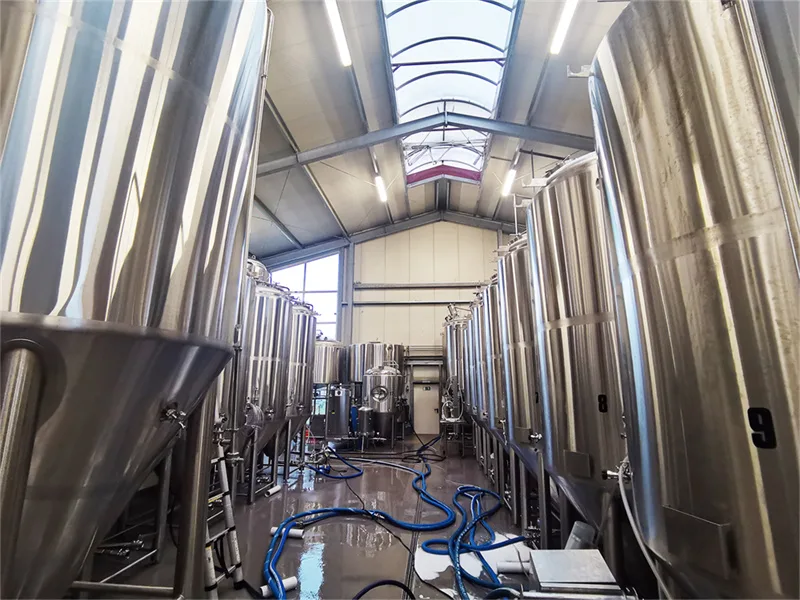
3. Why Multiple Smaller Fermenters Offer More Flexibility
Many new brewery owners assume that fewer large tanks mean higher efficiency.
In reality, the opposite is often true.
Production Flexibility
With multiple smaller fermenters, brewers can:
- Produce multiple beer styles simultaneously
- Adjust batch sizes based on demand
- Reduce risk if one batch has issues
For example:
- 4 × 1000L fermenters are often more flexible than 1 × 4000L fermenter
Better Scheduling and Cash Flow
Smaller fermenters allow:
- Staggered fermentation cycles
- More frequent packaging
- Faster product rotation
This improves:
- Inventory management
- Cash flow stability
- Market responsiveness
Easier Expansion
Starting with multiple smaller fermenters makes future expansion simpler:
- New tanks can be added without changing the entire system
- Fermenters can be dedicated to specific beer styles
- No single tank becomes a production “single point of failure”
Conclusion: Design Fermentation Tanks for Today and Tomorrow
A well-designed fermentation tank system is about more than capacity:
- Match fermenter size to brewhouse output
- Choose manway designs that support daily operations
- Use multiple fermenters to maximize flexibility and growth potential
When fermentation tanks are designed as part of an integrated brewery solution, brewers gain better control, higher efficiency, and long-term scalability.
If you have any questions about fermentation tanks or brewery equipment, feel free to contact us.