If you’ve ever dreamed of brewing your own craft beer, you might be wondering where to start. Whether you’re looking to set up a small commercial nano-brewery or simply want to try your hand at homebrewing, having the right gear is essential. In this guide, we’ll walk you through everything you need to know about mini brewery equipment, the brewing process, and how to keep your setup in top condition.
What is a Mini Brewery?
A mini brewery (often referred to as a microbrewery, nano-brewery, or homebrewing setup) is a small-scale beer production system. Unlike massive industrial breweries, mini breweries are designed for smaller batch sizes—ranging from a few gallons for home use to several hundred liters for local bars, restaurants, or small commercial brands.
The beauty of mini brewing lies in its flexibility. It allows brewers to experiment with unique recipes, high-quality ingredients (like specialty malts and aromatic hops), and traditional techniques without the constraints of mass production.
What is Mini Brewery Equipment?
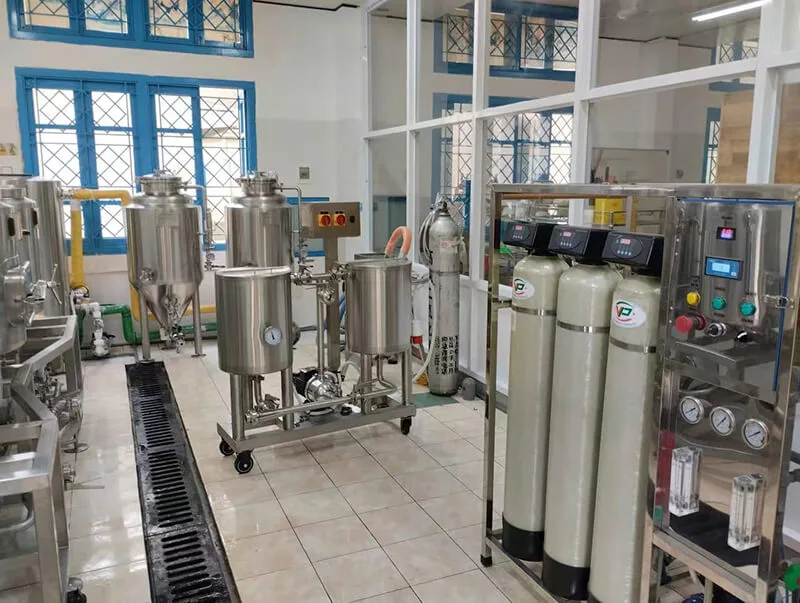
The equipment you need depends heavily on your scale. Generally, mini brewery setups fall into two categories: Homebrewing Kits (for hobbyists) and Commercial Microbrewery Systems (for small businesses).
1. Homebrewing Equipment (Beginner Friendly)
If you are just starting out at home, you don’t need a massive investment. A basic setup usually includes:
- Brühkessel: A large stainless steel pot (usually 5 to 10 gallons) to boil your wort (unfermented beer).
- Fermenter: A food-grade bucket, glass carboy, or plastic vessel where the yeast turns sugar into alcohol. It must be sealed with an airlock to let CO2 escape without letting oxygen in.
- Thermometer: Crucial for monitoring temperatures during steeping and fermentation.
- Hydrometer: A tool used to measure the specific gravity of your beer to calculate alcohol content.
- Siphon & Tubing: For transferring beer from the fermenter to bottles without disturbing the sediment.
- Sanitizer: The most important tool! Keeping everything sterile prevents bacteria from ruining your batch.
- Bottling Gear: Bottles, caps, and a capper to seal your final product.
2. Commercial Mini Brewery Equipment (Professional Grade)
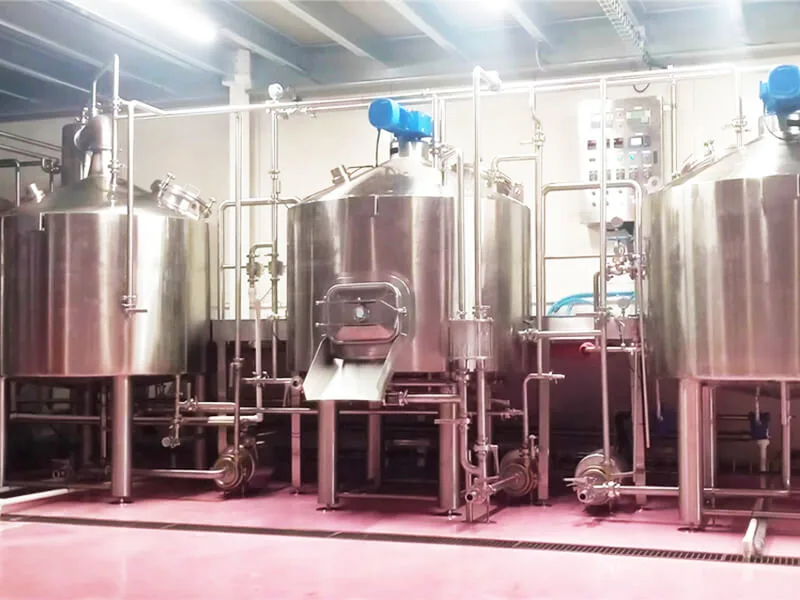
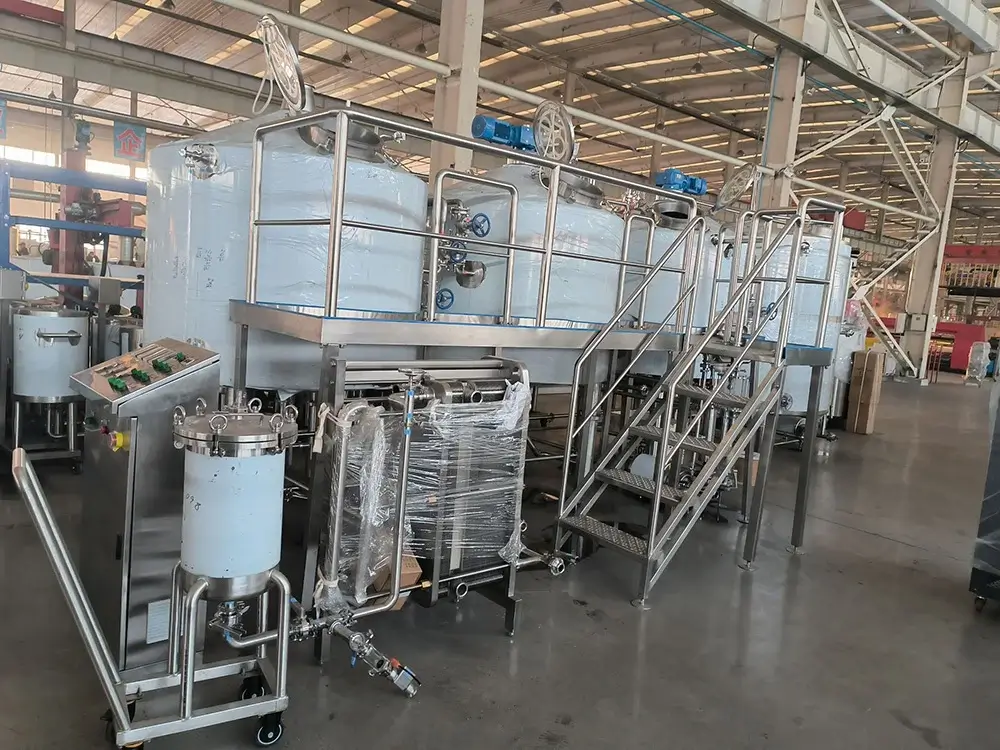
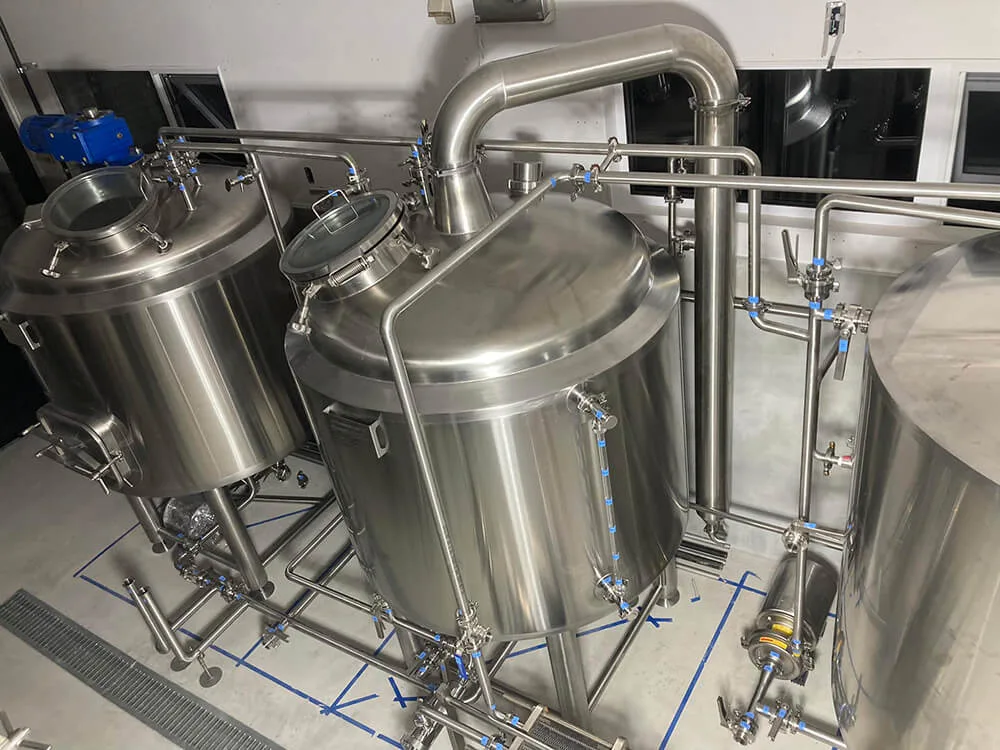
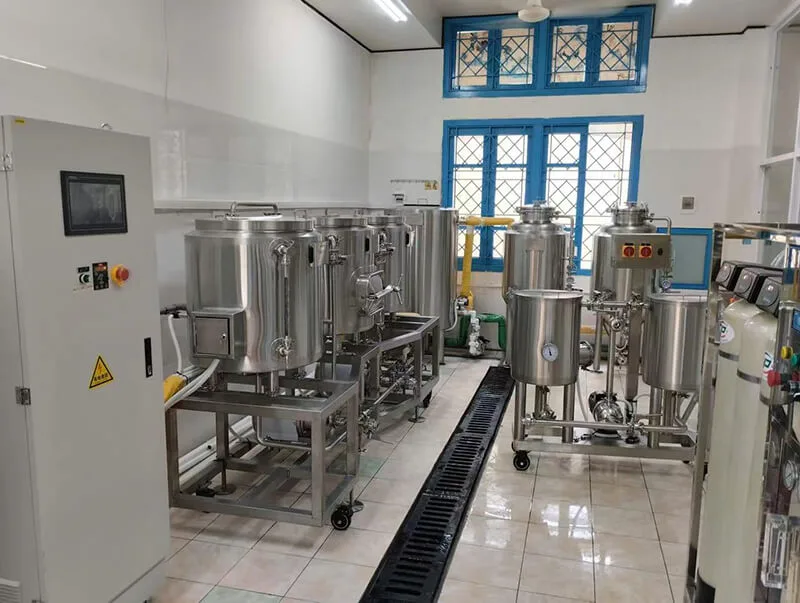
For those looking to open a brewpub or sell locally, the equipment is more advanced and typically made of stainless steel (304 or 316 grade). Key components include:
- Malt Mill: Crushes the malted barley to prepare it for mashing.
- Mash Tun & Lauter Tun: Vessels used to convert starches into sugars and separate the liquid wort from the grain husks.
- Brew Kettle & Whirlpool: Where the wort is boiled with hops. A whirlpool helps separate solid hop residues.
- Plate Chiller / Heat Exchanger: Rapidly cools the boiling wort down to fermentation temperature to prevent contamination.
- Fermentation Tanks (Unitanks): Conical stainless steel tanks equipped with cooling jackets and temperature controllers. These allow for precise temperature management and easy yeast harvesting.
- CIP System (Clean-in-Place): An automated cleaning system that sprays cleaning solutions inside tanks and pipes, saving time and ensuring hygiene.
Mini Brewery Brewing Process
Regardless of the scale, the fundamental process of brewing beer remains the same. Here is a simplified look at the workflow:
- Milling & Mashing: The malt is crushed and mixed with hot water in the Mash Tun. This activates enzymes that convert grain starches into fermentable sugars, creating a sweet liquid called “wort.”
- Lautering & Sparging: The wort is separated from the spent grains. Hot water is often sprayed over the grains (sparging) to rinse out any remaining sugars.
- Boiling: The wort is transferred to the Brew Kettle and brought to a rolling boil. Hops are added at specific times to provide bitterness, flavor, and aroma. Boiling also sterilizes the wort.
- Cooling: The hot wort is rapidly cooled down using a heat exchanger (for commercial setups) or an immersion chiller (for homebrewers) to a temperature safe for yeast.
- Fermentation: The cooled wort is moved to the Fermenter, and yeast is pitched (added). Over 1 to 3 weeks, the yeast consumes the sugars, producing alcohol, CO2, and distinct flavor compounds.
- Conditioning & Packaging: Once fermentation is complete, the beer may be conditioned (aged) to refine its flavor. Finally, it is filtered (optional) and packaged into kegs, cans, or bottles.
How to Maintain Mini Brewery Equipment?
Proper maintenance is the secret to consistent, high-quality beer. “Brewers make wort; cleaners make beer.” Here is how to keep your equipment running smoothly:
- Clean Immediately: Never let wort or beer residue dry on your equipment. Sugars and proteins can harden and become breeding grounds for bacteria. Rinse everything as soon as you are done.
- Sanitize, Don’t Just Clean: Cleaning removes visible dirt; sanitizing kills invisible microbes. Use food-grade sanitizers (like Star San or iodine-based solutions) on all “cold-side” equipment (fermenters, siphons, bottles) that touches the beer after boiling.
- Inspect Seals and Gaskets: Rubber gaskets and seals on fermenters and valves can wear out or crack over time. Check them regularly and replace them to prevent leaks and oxygen exposure.
- Descale Heating Elements: If you use electric heating elements, mineral deposits (scale) can build up and reduce efficiency. Soak them in a descaling solution (like citric acid) periodically.
- Lubricate Moving Parts: For commercial systems, regularly lubricate valves, pumps, and motors with food-grade lubricants to ensure smooth operation.
- Storage: If storing equipment for a long time, ensure it is completely dry to prevent mold or corrosion.
Starting a mini brewery journey is incredibly rewarding. Whether you are brewing a 5-gallon batch in your kitchen or a 500-liter batch in a local brewpub, the right equipment and strict hygiene practices will set you up for success. Cheers to your brewing adventure!
Sie können sagen Sie uns Ihre Anforderungen an die Brauerei, und wir werden Ihnen innerhalb von 24 Stunden eine schlüsselfertige Lösung anbieten.