A Complete Guide to the Essential Ingredients Behind Every Beer Style
Beer is one of the oldest and most widely enjoyed beverages in human history, dating back thousands of years. Despite the endless diversity of modern beer styles—from crisp lagers to hazy IPAs, rich stouts, and barrel-aged sours—the foundation of beer remains surprisingly simple. Almost every beer in the world begins with five fundamental raw materials: water, malted grains, hops, yeast, and optional adjuncts or additives.
Each ingredient plays a unique role in determining flavor, aroma, color, body, clarity, and alcohol content. Understanding these materials is the first step toward mastering brewing science and appreciating beer craftsmanship.
1. Water — The Backbone of Beer
Water is the largest component of beer, making up 90–95% of the final beverage. Because it is the main ingredient, its quality significantly influences brewing outcomes.
Why water matters
- Mineral composition affects flavor and mouthfeel
Ions like calcium, magnesium, sulfate, chloride, sodium, and bicarbonate impact enzyme performance during mashing, hop bitterness perception, and the beer’s smoothness or sharpness. - Different beer styles developed from local water chemistry
Traditional brewing regions historically adapted recipes to their water. For example:- Pilsen (Czech Republic) — soft water ideal for clean, elegant lagers
- Burton-on-Trent (UK) — sulfate-rich water perfect for hoppy ales
- Dublin (Ireland) — high bicarbonate suited for dark stout brewing
Modern brewers often adjust water with salts to match these famous profiles and improve consistency.
2. Malted Grains — The Heart of Beer’s Body, Color, and Sweetness
Malted barley is the primary brewing grain, although wheat, rye, oats, corn, and rice are also used. Grains are malted by soaking, germinating, and kilning to activate enzymes that convert starch into fermentable sugars.
Functions of malt
- Provides sugars required for yeast fermentation
- Contributes flavor (bread, caramel, chocolate, coffee, biscuit, nutty notes)
- Defines color, ranging from pale gold to deep black
- Builds body and mouthfeel
- Supports foam stability and protein content
Base malts vs specialty malts
| Type | Role | Impact |
|---|---|---|
| Base malts (e.g., Pale, Pilsner, Vienna) | Major sugar source | Light color, mild malt flavor |
| Specialty malts (Crystal, Chocolate, Roasted Barley, Munich) | Flavor and color | Sweet caramel, roasted coffee, dark chocolate, smoky complexity |
Balancing these ingredients allows brewers to create everything from light lager to imperial stout.
3. Hops — Bittering, Flavoring, Aroma, and Preservation
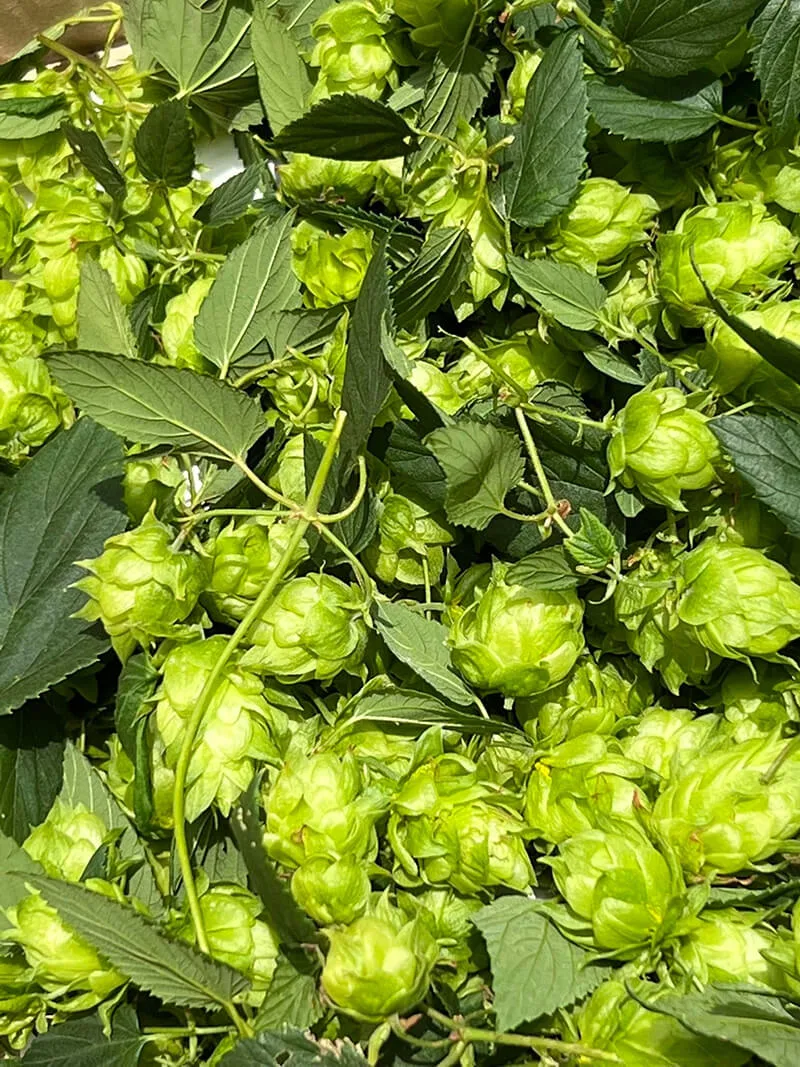
Hops are the cone-shaped flowers of Humulus lupulus. They bring essential bitterness to counter malt sweetness and add fresh herbal, floral, fruity, or resinous character.
Why hops are important
- Bitterness from alpha acids balances sweetness
- Aroma oils contribute flavor and scent profiles
- Act as natural preservatives, inhibiting bacteria
- Provide clarity and foam stability
Different hop uses
| Hop addition stage | Purpose |
|---|---|
| Bittering hops added early in boil | Strong bitterness |
| Flavor hops halfway through | Layered flavor development |
| Aroma hops late or post-boil | Intense aroma retention |
| Dry hopping in fermentation | Citrusy, fruity, hop-forward aroma |
Modern hop-forward styles like IPA, NEIPA, and Double IPA rely heavily on late hop additions and dry-hopping.
4. Yeast — The Microorganism That Creates Alcohol and CO₂
Yeast is a living fungus that ferments sugars into ethanol and carbon dioxide. Without yeast, wort would remain a sweet syrup—fermentation turns it into beer.
Main yeast categories
| Type | Gärung | Example styles | Flavor profile |
|---|---|---|---|
| Ale yeast (Saccharomyces cerevisiae) | Top-fermenting at 18–25°C | IPA, Stout, Belgian Ales | Fruity, estery, complex |
| Lager yeast (Saccharomyces pastorianus) | Bottom-fermenting at 8–13°C | Lager, Pilsner, Bock | Clean, crisp, smooth |
| Wild/Brett/Sour yeast | Spontaneous or mixed | Lambic, Gose, Sour Ale | Funky, sour, earthy |
Yeast greatly influences aroma—creating notes like banana, clove, tropical fruit, vanilla, pepper, or farmhouse funk.
5. Adjuncts and Specialty Additions — Creativity Beyond Tradition
While traditional beer uses the four core ingredients, modern craft brewing often incorporates additional materials for flavor innovation and differentiation.
Common adjuncts
- Adjunct grains: rice, corn, oats, rye, sorghum, buckwheat
- Sugar sources: honey, maple syrup, lactose
- Flavor additions: fruit, spices, cocoa, coffee, herbs, vanilla, barrel-aged wood
These ingredients:
- Enhance uniqueness and market appeal
- Modify body and drinkability
- Add signature regional character
Zum Beispiel:
- Gose uses salt and coriander
- Fruit sours use berries, peach, or passionfruit
- Milk stout uses lactose for sweetness and creaminess
Conclusion: Simple Ingredients, Endless Possibilities
Even though beer is built on five basic materials—water, malt, hops, yeast, and adjuncts—the combinations are nearly infinite. Small adjustments to grain type, hop timing, yeast strain, or water chemistry can transform a recipe completely. This is why the world enjoys thousands of beer styles, each reflecting the creativity and technical skill of the brewer.
Beer is both an ancient craft and a modern science, where mastery comes from understanding ingredients and shaping them into something balanced, expressive, and enjoyable.
Wenn Sie Fragen zum Bierbrauen haben, wenden Sie sich bitte an Kontaktieren Sie uns Meto-Ausrüstung.