For entrepreneurs, investors planning to enter the brewing industry (craft beer, fruit wine, white wine, etc.), or established breweries looking to upgrade their production lines, “turnkey brewing equipment” is undoubtedly a worry-free and efficient choice — there is no need to assemble equipment from scratch or coordinate multiple resources. With just one contact with a supplier, you can achieve full-process implementation from planning to production. However, many people still have doubts about turnkey services: what services can a supplier provide? What does a complete set of turnkey brewing equipment include? How to choose a reliable manufacturer? Today, combining industry experience, we will thoroughly explain these three core issues at once to help you avoid detours and achieve efficient production.
I. Turnkey Brewing Equipment Suppliers: More Than Just Selling Equipment, But Full-Process “Escorts”
Many people mistakenly believe that turnkey suppliers only “sell equipment + provide on-site installation”, but this is not the case. A truly professional turnkey brewing equipment supplier provides a full-chain service of “from 0 to 1 + long-term guarantee”, with the core goal of enabling customers to “put into production upon acceptance and have no worries about production”, completely solving the industry pain points of “mismatched equipment, time-consuming installation, and lack of operation and maintenance support”. Specifically, it can be divided into five core services covering the entire project life cycle:
1. Preliminary Customized Planning and Scheme Design
This is the starting point of turnkey services and the core advantage that distinguishes it from ordinary equipment sales. The supplier will send a professional team to in-depth connect with the customer’s needs, including production capacity goals (covering 0.5 tons to 50 tons per day), site conditions (special-shaped space or standard workshop), product direction (IPA, sour beer, white wine, fruit wine, etc.), budget range, and even expansion plans for the next 3 years, avoiding the waste of “buying too small to meet needs or too large to be idle”. At the same time, a visual scheme will be output, including 3D equipment layout drawing and process flow scheme, marking equipment size, water and electricity interfaces, and production lines. The scheme can be modified free of charge until the customer is satisfied, ensuring that the equipment layout fits the site and adapts to the process.
2. Equipment Production, Manufacturing and Quality Control
Reliable suppliers mostly have their own production workshops instead of OEM/ODM, so they can control the equipment quality throughout the process. From the selection of food-grade 304/316L stainless steel to CNC laser welding and pressure testing, each link has strict standards. All equipment must undergo 72 hours of no-load operation before leaving the factory to ensure no leakage or failure. At the same time, intelligent configuration will be adapted according to the production capacity scale: small-capacity equipment retains core manual operation functions to reduce costs, while medium and large-scale equipment is equipped with a central control system that supports remote monitoring and parameter presets, balancing practicality and production efficiency.
3. On-Site Installation, Commissioning and Production Acceptance
After the equipment leaves the factory, the supplier will send a professional engineer team to the site for modular and efficient installation according to the 3D layout drawing — small-scale equipment can be completed in 3-5 days, and large-scale production lines can be delivered in 20-30 days, ensuring that water and electricity connection and equipment spacing meet the production line. After installation, 72 hours of no-load operation will be carried out first, followed by 24 hours of material-carrying brewing test to verify core indicators such as temperature control accuracy (usually within ±0.5℃) and saccharification efficiency (≥85%). The equipment will be officially handed over only after passing the test, ensuring that the customer has no worries about putting into production.
4. Technical Training and Resource Support
Worried about not being able to operate the equipment or keep up with the process? The supplier will provide hierarchical customized training, conducting teaching for operators, technicians and managers respectively. The content covers equipment start-up and shutdown, parameter adjustment, fault diagnosis, process optimization, data traceability, etc., adopting a combination of theory and practical operation to ensure that everyone can use it. At the same time, brewing formula manuals and equipment operation video tutorials will be provided, and free process upgrade training can be attended later to help customers improve product competitiveness.
5. Lifelong Operation and Maintenance and Follow-Up Upgrade Guarantee
Turnkey is not the end, but the beginning of long-term cooperation. Professional suppliers will provide 24-hour after-sales response, 24-hour on-site maintenance in local and surrounding areas, and arrival within 48 hours in other provinces, with an average fault repair time of no more than 6 hours to reduce downtime losses. At the same time, proactive regular inspections will be provided: on-site calibration of temperature control systems and inspection of equipment tightness every quarter, comprehensive maintenance every six months, and annual evaluation of equipment operation status and provision of upgrade suggestions to avoid potential faults in advance; the main body of the equipment is guaranteed for 10-15 years, wearing parts are supplied at long-term cost price, and the original equipment can be seamlessly expanded for later production capacity upgrade without overall replacement, saving secondary investment.
II. What Does Turnkey Brewing Equipment Include? Core Modules Explained in One Article
The core of turnkey brewing equipment is “full-process integration”, covering all links from raw material processing to wine fermentation and auxiliary guarantee. The specific configuration will be adjusted according to the production capacity scale, product type (beer, fruit wine, white wine) and process route. However, a fully functional system usually includes the following nine core modules, and customers do not need to purchase additional accessories or equipment:
1. Raw Material Pretreatment System
This is the first process of brewing, and its core is to process raw materials to meet brewing standards. For grain-based wines (beer, white wine), it includes raw material silos, bucket elevators, double-roll crushers, vibrating screens and dust collectors to ensure uniform particle size of crushed grains; for fruit wines, it includes bubble cleaning machines, stem removal/pitting equipment and crushing and beating machines to meet the pretreatment needs of different fruits; small workshops can simplify the configuration and only retain core crushing or breaking equipment.
2. Main Equipment of Brewing Workshop (Hot End)
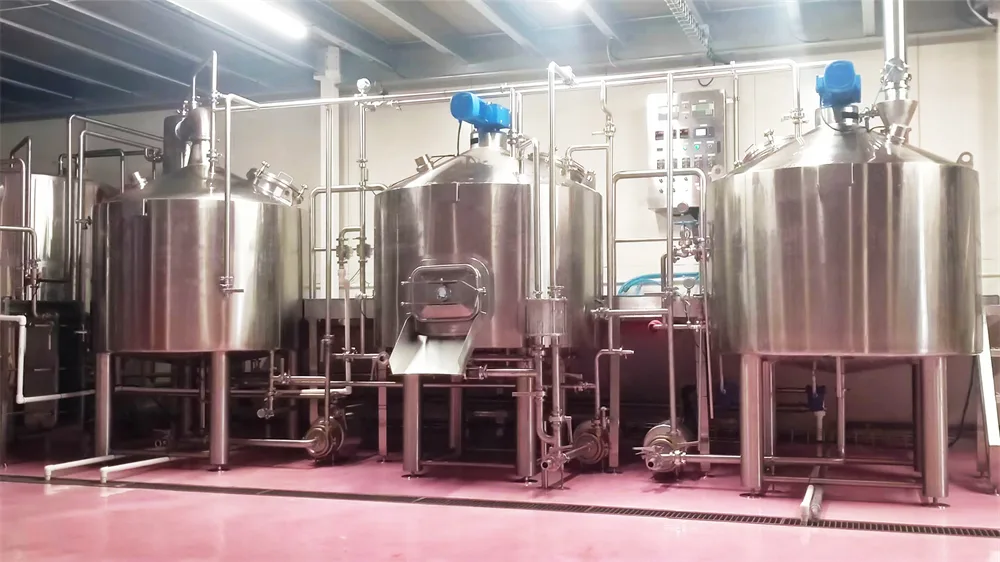
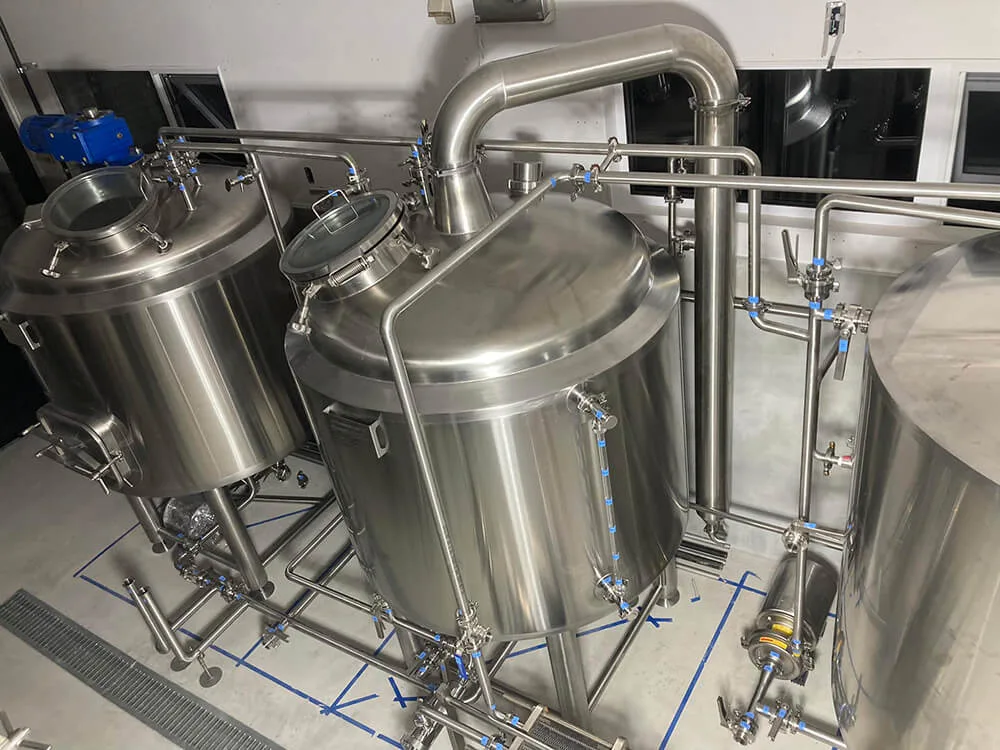
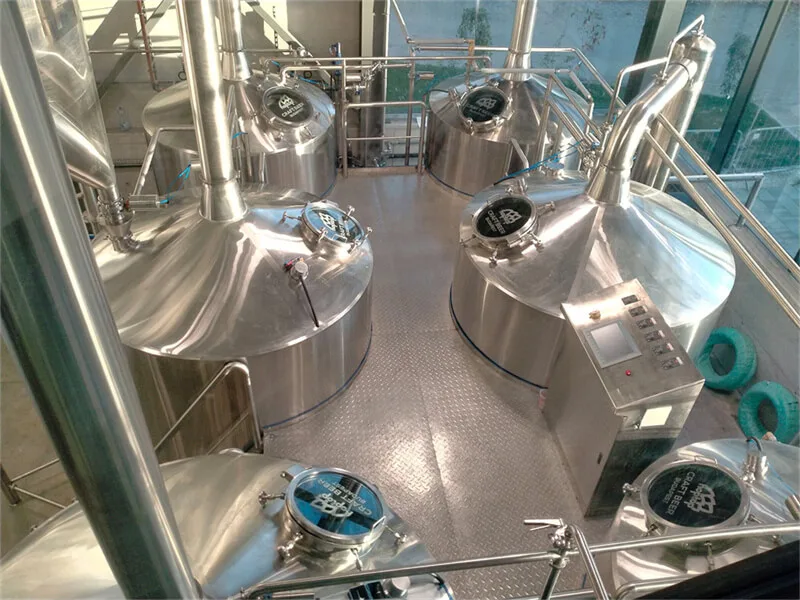
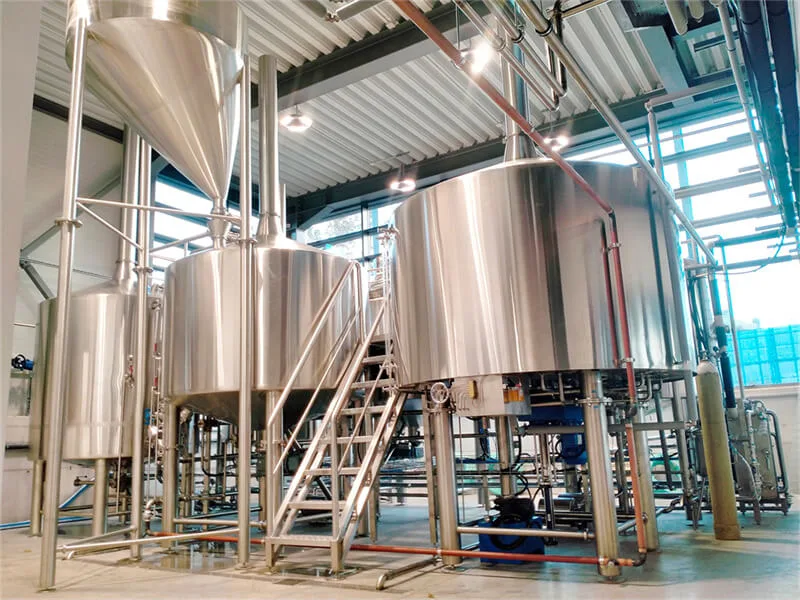
This is the core of the entire set of equipment, directly determining the quality of the wine body. It mainly includes: mash tun (equipped with stirring device and jacket temperature control system for hydrolyzing starch into fermentable sugars), filter tank or filter press (realizing solid-liquid separation to obtain clear wort or fruit juice mash), boiling kettle (integrated with heat source for boiling, enzyme inactivation and hop/auxiliary material addition), whirlpool (separating hot coagulants through centrifugal action), and hot water tank (storing and supplying process hot water required for saccharification, sparging and cleaning). A wort holding tank can be added as a buffer transition in some scenarios.
3. Wort/Fruit Juice Cooling and Oxygenation System
It is used to quickly cool the high-temperature treated wort or fruit juice to the temperature required for fermentation (usually 10–22℃). The core equipment includes plate or tube heat exchangers; at the same time, it is equipped with an oxygenation device (Venturi tube or titanium rod) to inject sterile air or pure oxygen into the cold wort/fruit juice to meet the oxygen demand for yeast reproduction; it is matched with all stainless steel transfer pumps and pipelines with CIP cleaning interfaces to ensure hygienic transportation.
4. Fermentation and Wine Storage System (Cold End)
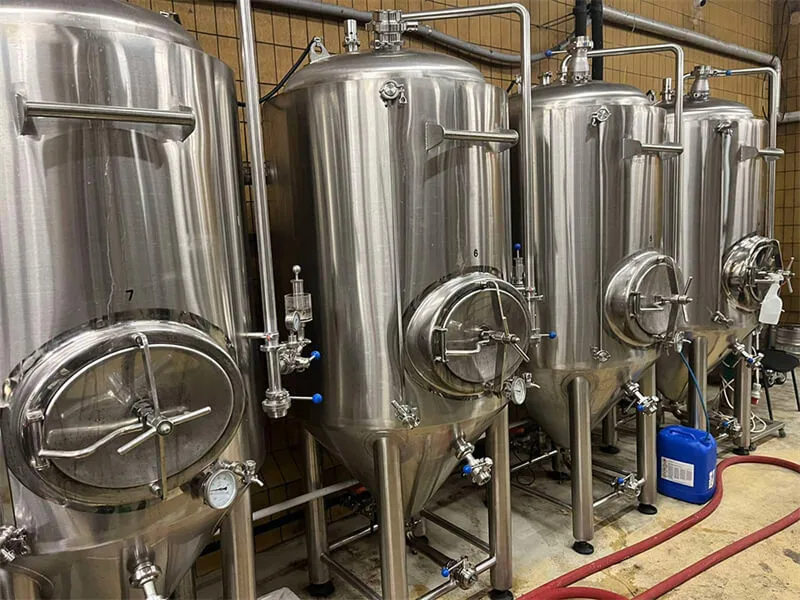
It is responsible for the fermentation and aging of the wine body. The core equipment is a conical fermenter (standard equipped with jacket refrigeration, pressure safety valve and sampling port to support the entire main fermentation process); at the same time, it is equipped with bright beer tanks, aging tanks or wine storage tanks for wine clarification, flavor stabilization or secondary fermentation; all tanks are made of food-grade stainless steel, and some can be equipped with temperature and pressure monitoring devices according to needs to ensure controllable fermentation process.
5. Utility Engineering and Auxiliary System
The “logistics support” to ensure the normal operation of the production line includes refrigeration system (ethylene glycol chiller to provide cold source for cooling and fermentation), steam boiler or electric heating system (providing process heat source), CIP cleaning system (in-situ cleaning, which can complete cleaning and disinfection without disassembling the equipment), compressed air or nitrogen system (used for tank pressurization, wine transfer and top inert gas protection), and water treatment equipment (ensuring that the brewing water meets the standards).
6. Automation and Control System
Adapted according to the production capacity scale, small-scale equipment adopts a simple electrical control system, which is easy to operate and low in cost; medium and large-scale production lines are equipped with PLC+HMI control systems, supporting automatic operations such as saccharification procedures, temperature curves and pump-valve linkage, combined with process sensors to real-time monitor key parameters such as temperature, pressure, liquid level and pH value. Some can realize cloud data synchronization and mobile terminal remote monitoring, reducing labor costs and improving production stability.
7. Pipes, Valves and Connectors
The whole set adopts hygienic stainless steel pipes (304/316L) with polished inner surface, meeting food-grade standards; it is matched with hygienic valves such as diaphragm valves, ball valves and butterfly valves, as well as connectors such as quick-install clamps, reducing joints and sampling valves. Some are equipped with food-grade hoses for temporary connection or mobile operation to ensure no hygiene dead corners and smooth connection.
8. Structural Support and Safety Facilities
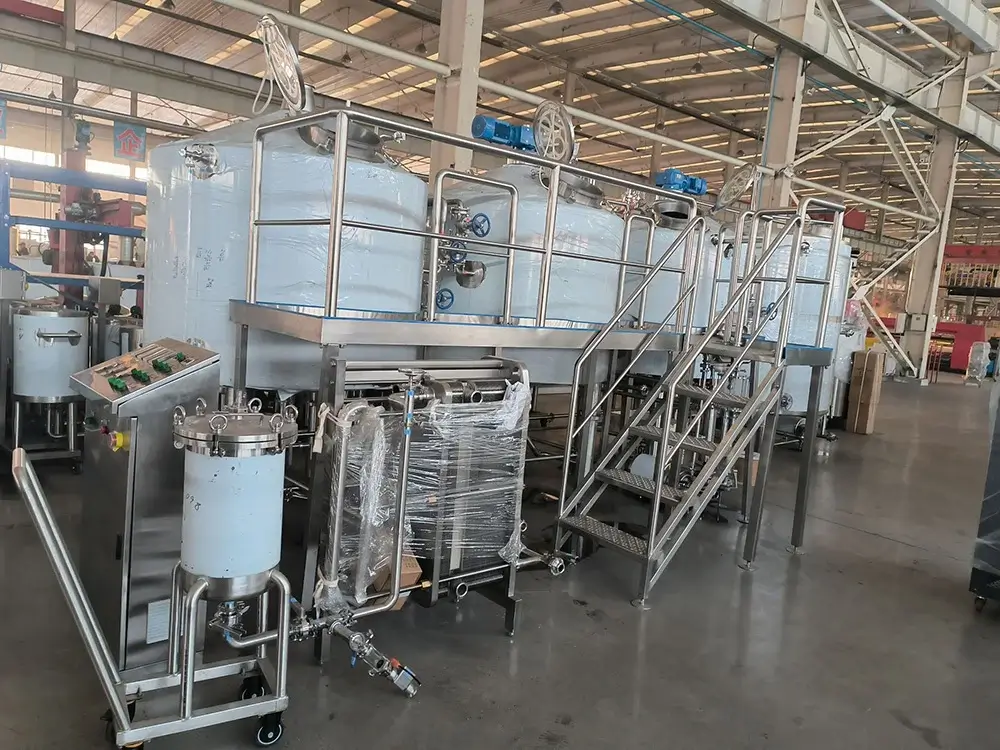
It includes stainless steel operating platforms, stairs and guardrails to meet the needs of daily operation, maintenance and safe passage; equipment skid bases facilitate overall installation and layout adjustment; at the same time, it is equipped with safety protection devices, complying with food-grade factory safety standards to avoid potential safety hazards in the production process.
9. Optional Expansion Modules
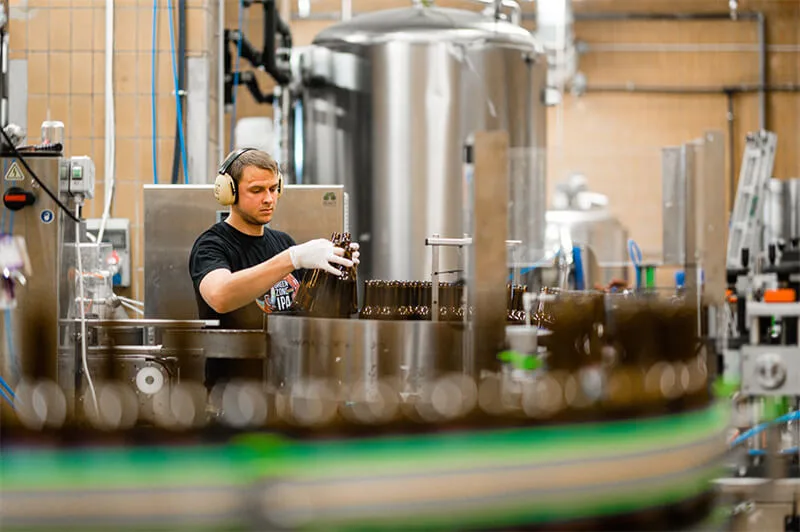
Customized according to customer process needs, including dry hopping system (for later hop or spice addition in styles such as IPA), SIP in-situ sterilization system (suitable for fruit wine production with high cleanliness requirements), online deoxygenation/decarbonation device (improving product stability), laboratory interface (reserving installation position for sample testing equipment), and filling equipment (bottle filling machine, barrel filling machine, etc., for wine packaging).
III. Core Suggestions for Choosing a Brewing Equipment Manufacturer: Pitfall Avoidance Guide + Practical Skills
The choice of brewing equipment quality directly determines the later production efficiency, wine quality and operation cost. There are mixed manufacturers on the market, and blind choice is easy to step on pits (such as low-quality at low prices, lack of after-sales service, inconsistent customization, etc.). Combining industry cases and experience, we summarize 6 core suggestions to help you choose a reliable manufacturer and reduce decision-making risks:
1. Prioritize “Entity Manufacturers” and Reject OEM/ODM
Try to choose manufacturers with their own production workshops and independent R&D and production capabilities, rather than pure trading companies or OEM/ODM manufacturers. You can ask the manufacturer to provide photos of the production workshop and a list of production equipment (such as laser cutting machines, automatic welding machines, etc.), and conduct on-site inspections if necessary to confirm that they can control the equipment material selection, production and testing links throughout the process, avoiding problems such as shoddy materials (such as using industrial-grade stainless steel instead of food-grade) and substandard processes. At the same time, check whether the manufacturer has relevant qualifications, such as ISO 9001 certification, EU CE certification, pressure vessel design and production qualifications, etc. Complete qualifications can ensure the compliance and safety of the equipment.
2. Focus on “Customization Capability” and Reject “Generic Model” Patching
Different brewing needs of different categories and production capacities have great differences in equipment requirements (such as sour beer needing a special temperature control system, and small workshops needing compact equipment). When choosing a manufacturer, focus on its customization capability: whether it can in-depth connect with your production capacity, process and site needs, whether it can issue a detailed customization plan and 3D layout drawing, and whether it has cross-category equipment customization experience (such as being able to make beer, fruit wine and white wine equipment at the same time), avoiding “patched customization” leading to mismatched equipment and process, resulting in problems such as wine taste mixing and low production efficiency.
3. Attach Importance to “After-Sales Guarantee” and Clarify Details in the Contract
Brewing equipment is heavy equipment used for a long time. The after-sales response speed and maintenance capability directly affect the continuity of production. Many entrepreneurs ignore after-sales service and encounter problems such as no one taking care of equipment failures and shutdown due to lack of wearing parts. When choosing, it is necessary to clarify the manufacturer’s after-sales policy: whether it provides 24-hour response service, on-site maintenance time limit (24 hours locally and 48 hours in other provinces is preferred), equipment warranty period (the main body should be guaranteed for at least 3 years), supply capacity of wearing parts, and whether it provides lifelong operation and maintenance and upgrade services. At the same time, be sure to write the after-sales terms into the contract, clarify the rights and obligations of both parties, and avoid disputes later (such as return and exchange if the material is not up to standard, compensation plan for overdue fault repair, etc.).
4. Refer to “Successful Cases” and Prioritize Matching Your Own Scenario
Cases are the most direct embodiment of the manufacturer’s strength. When choosing, you need to check its past successful cases, focusing on cases similar to your own scenario (production capacity scale, product category). For example, small craft workshops can refer to the equipment delivery cases of similar workshops, and medium and large breweries can pay attention to the delivery experience of 10,000-ton production lines. At the same time, you can contact the customers in the cases to obtain first-hand use feedback, understand the actual situation such as equipment operation stability and after-sales response speed, and avoid being misled by “false publicity”; in addition, you can pay attention to the customer repurchase rate and industry reputation of the manufacturer. Manufacturers with good reputation and high repurchase rate are usually more trustworthy.
5. Balance “Cost-Effectiveness” and Reject “Low-Price Traps”
Do not take “price” as the only selection standard. Low-price equipment often has problems such as poor quality, rough craftsmanship, high energy consumption and no after-sales service, which may increase operation costs later (such as high energy consumption and shutdown losses caused by frequent failures). When choosing, comprehensively evaluate “equipment quality + service + long-term operation cost”: for example, equipment adopting Miller plate jacket heating technology has a heating efficiency 30% higher than that of traditional equipment, higher wort extraction rate, and is more cost-effective in the long run; double-layer insulated fermenters can save energy by more than 20%, which can effectively reduce operation costs. At the same time, ask the manufacturer to provide energy consumption data, material testing reports, etc., and compare the cost-effectiveness of different manufacturers instead of just looking at the initial quotation.
6. Pay Attention to “Technical Strength” and Consider Long-Term Upgrade Needs
The brewing industry technology is constantly iterating, and the equipment also needs to be upgradeable to avoid the need for overall replacement of equipment when the production capacity is improved or the process is upgraded later. When choosing a manufacturer, investigate its technological innovation capability: whether it has an independently developed control system, whether it has relevant patents, whether it can provide process upgrade training, etc.; at the same time, confirm that the equipment adopts a modular design, which can be seamlessly expanded later to adapt to the demand of production capacity growth and reduce secondary investment costs. In addition, whether the manufacturer is equipped with a professional brewer team that can provide value-added services such as formula customization and process optimization is also an important consideration, which can help you improve product competitiveness.
Conclusion: Choose the Right Turnkey Service Provider to Make Brewing Entrepreneurship More Worry-Free
For brewing practitioners, the core value of turnkey brewing equipment is “worry-free, efficient and controllable” — there is no need to spend a lot of time coordinating multiple resources, no need to worry about mismatched equipment and process or lack of after-sales guarantee, and you only need to focus on product R&D and market promotion. And choosing the right manufacturer is the premise of all this.
In summary, professional turnkey suppliers provide full-process services, and complete turnkey equipment covers all links from raw material processing to after-sales guarantee. When choosing a manufacturer, you need to focus on entity strength, customization capability, after-sales guarantee, case reputation and cost-effectiveness, avoid low-price traps, so as to achieve “put into production upon turnkey delivery” and lay a solid foundation for the long-term development of the brewing business.
👉 Kontaktieren Sie uns heute for a custom brewhouse system design tailored to your production goals, budget, and future expansion plans.