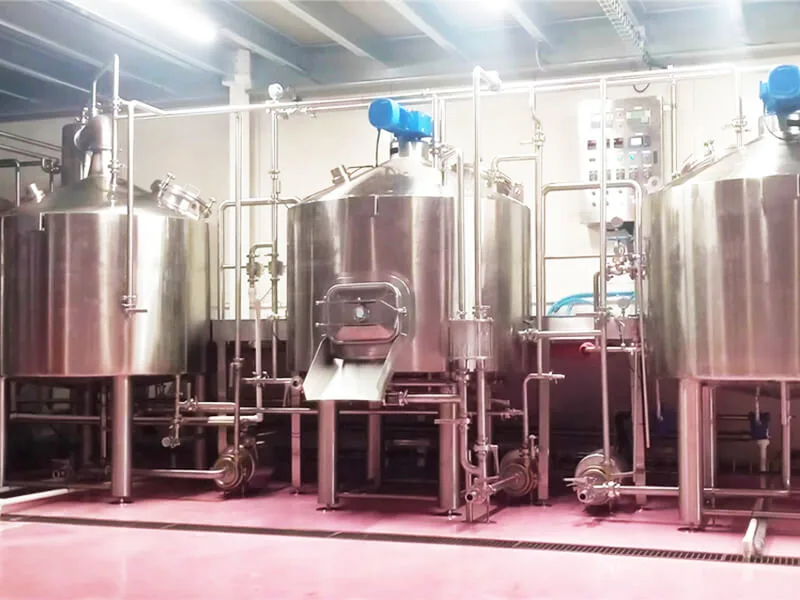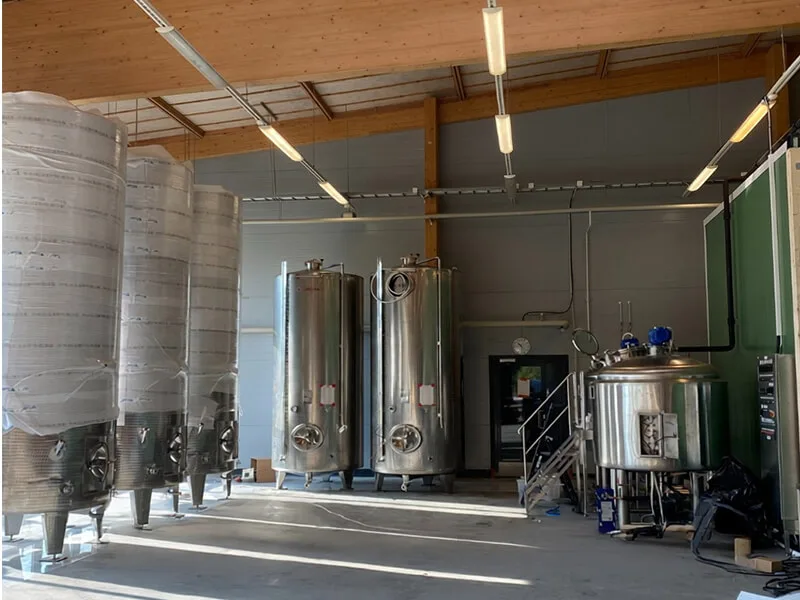
The global kombucha market continues to expand as consumers seek healthier, functional beverages with natural ingredients and probiotic benefits. While many kombucha brands begin with small-batch production in glass jars or plastic fermenters, scaling from artisanal brewing to commercial manufacturing presents an entirely different set of challenges.
Fermentation consistency, food safety compliance, alcohol control, cleaning efficiency, and production capacity all become critical factors as volume increases. At this stage, the choice of equipment is no longer simply a production decision—it becomes a business decision that directly impacts product quality, operational efficiency, and brand reputation.
For commercial kombucha producers, food-grade stainless steel equipment has become the industry standard. This guide explores why stainless steel matters, how to select the right kombucha brewing system, and what equipment is essential for successful commercial production.
Why Stainless Steel Is Essential for Commercial Kombucha Production
The Challenge of Brewing an Acidic Beverage
Kombucha is naturally acidic. During fermentation, organic acids such as acetic acid, gluconic acid, and lactic acid lower the pH to approximately 2.5–3.5.
This acidic environment creates unique equipment requirements. Materials that may perform adequately for water or beer production can degrade over time when exposed to kombucha.
Potential issues include:
- Corrosion and material degradation
- Metallic off-flavors
- Surface contamination
- Difficult cleaning procedures
- Reduced equipment lifespan
Food-grade stainless steel provides the corrosion resistance necessary for long-term contact with acidic beverages while maintaining product integrity and safety.
304 vs. 316L Stainless Steel: Which Is Better?
The two most common materials used in commercial kombucha equipment are 304 and 316L stainless steel.
304 Stainless Steel
304 stainless steel is the most widely used material in food and beverage manufacturing because it offers:
- Hervorragende Korrosionsbeständigkeit
- Strong mechanical properties
- Cost-effective investment
- Lange Lebensdauer
- Compliance with food-grade standards
For most kombucha breweries, 304 stainless steel is sufficient for fermentation, storage, and processing applications.
316L Stainless Steel
316L stainless steel contains additional molybdenum, providing enhanced resistance to aggressive acidic environments.
Zu den Vorteilen gehören:
- Hervorragende Korrosionsbeständigkeit
- Better performance in high-acid applications
- Improved longevity
- Enhanced resistance to cleaning chemicals
Many premium kombucha brands choose 316L for critical wetted surfaces, especially when producing highly acidic products or operating under intensive CIP schedules.
Light Protection and Product Stability
Unlike glass fermenters, stainless steel tanks are completely opaque.
This offers significant advantages because exposure to ultraviolet light can negatively affect:
- Beneficial microorganisms
- Organic acid stability
- Geschmackskonsistenz
- Product shelf life
Commercial producers require predictable fermentation outcomes. Stainless steel vessels eliminate light-related variability and help maintain batch-to-batch consistency.
Improved Alcohol Control and Regulatory Compliance
One of the most important challenges in commercial kombucha production is managing alcohol content.
Even traditional kombucha can exceed legal alcohol thresholds if fermentation conditions are not properly controlled.
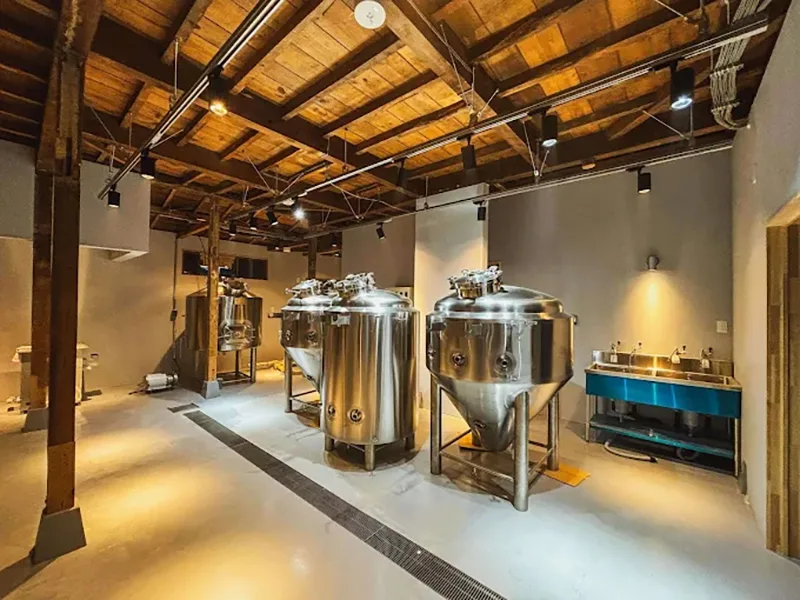
Modern stainless steel fermentation tanks allow brewers to regulate critical parameters including:
- Gärtemperatur
- Pressure
- Oxygen exposure
- Carbon dioxide release
- Fermentation duration
Professional systems often incorporate:
- Airlock assemblies
- Pressure-relief valves
- Sampling ports
- Automated temperature controls
These features help producers maintain consistent alcohol levels and comply with local beverage regulations.
Hygienic Design and Cleaning Efficiency
As production volumes increase, sanitation becomes one of the largest operational concerns.
A single contamination event can result in:
- Produktrückrufe
- Lost inventory
- Production downtime
- Brand damage
Commercial stainless steel equipment is designed with hygienic principles in mind.
Die wichtigsten Merkmale sind:
- Smooth internal surfaces
- Fully welded sanitary construction
- Tri-clamp connections
- Dead-leg-free piping
- CIP (Clean-In-Place) compatibility
- SIP (Sterilization-In-Place) capability
Many professional kombucha systems feature internal surface finishes below Ra 0.8 μm, minimizing microbial attachment and simplifying cleaning procedures.
Essential Types of Stainless Steel Kombucha Equipment
Stainless Steel Fermentation Tanks
Fermentation tanks are the heart of every kombucha brewery.
Depending on production goals, manufacturers can choose between several configurations.
Flat-Bottom Fermentation Tanks
Vorteile:
- Lower equipment cost
- Simple operation
- Suitable for primary fermentation
- Ideal for small and mid-sized producers
Conical-Bottom Fermentation Tanks
Vorteile:
- Easier yeast and sediment removal
- Improved harvesting capabilities
- Better process control
- Simplified cleaning
Conical tanks are increasingly popular among commercial kombucha facilities seeking higher efficiency and consistency.
Jacketed Fermentation Tanks
Temperature control is critical for maintaining SCOBY health and fermentation stability.
Jacketed tanks allow brewers to:
- Maintain consistent fermentation temperatures
- Reduce seasonal variability
- Improve product consistency
- Scale production more effectively
For commercial operations, glycol jacketed tanks typically offer greater precision than external heating wraps.
Commercial Kombucha Brewing Systems
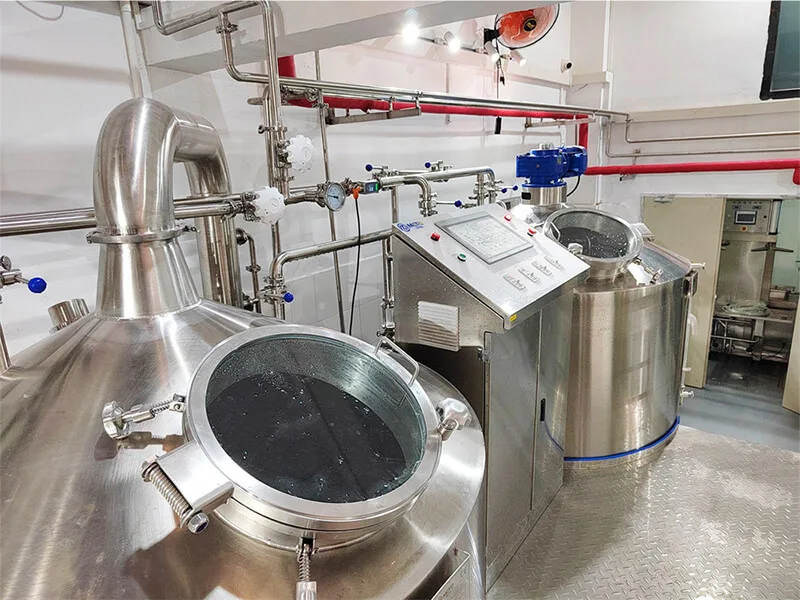
As production expands, many breweries transition from standalone fermenters to integrated brewing systems.
A complete kombucha brewing platform may include:
- Tea preparation tanks
- Sugar dissolution systems
- Mischbehälter
- Heat exchangers
- Fermentation tanks
- Helle Tanks
- CIP systems
- Automation controls
Integrated systems improve workflow efficiency while reducing labor requirements and production variability.
Filtration and Packaging Equipment
Filtration Systems
Some commercial producers choose filtration to improve clarity and extend shelf life.
Übliche Optionen sind:
- Plate-and-frame filters
- Cartridge filtration systems
- Membrane filtration systems
The appropriate solution depends on desired microbial activity and product positioning.
Filling Equipment
Packaging options generally include:
- Glasflaschen
- Aluminiumdosen
- PET-Flaschen
- Stainless steel kegs
Commercial filling systems help maintain carbonation levels while minimizing oxygen pickup during packaging.
Stainless Steel Kegs and Serving Tanks
Draft kombucha continues to grow in popularity within restaurants, cafés, breweries, and taprooms.
Stainless steel kegs provide:
- Excellent durability
- Light protection
- Reduced packaging waste
- Consistent carbonation retention
Many producers also utilize serving tanks for secondary conditioning and maturation before packaging.
How to Choose the Right Kombucha Equipment
Verify Material Quality
Not all stainless steel is equal.
Reputable manufacturers should provide:
- Material certificates
- Schweißdokumentation
- Surface finish specifications
- Food-grade compliance records
Buyers should verify that equipment uses genuine 304 or 316L stainless steel rather than lower-grade alternatives.
Calculate Proper Tank Capacity
A common mistake is selecting tanks that are too small.
Because kombucha fermentation generates foam and CO₂, fermentation vessels should generally provide approximately 20–30% headspace.
Zum Beispiel:
- 1,000 L batch volume → 1,300 L fermentation tank
- 2,000 L batch volume → 2,600 L fermentation tank
Adequate headspace improves process stability and reduces overflow risks.
Evaluate Surface Finish
Surface finish significantly impacts sanitation performance.
Typical finishes include:
2B Finish
- Standard industrial finish
- Cost-effective
- Suitable for external surfaces
BA Finish (Bright Annealed)
- Smoother appearance
- Improved cleanability
- Premium aesthetic quality
For internal product-contact surfaces, a polished finish with Ra ≤ 0.8 μm is generally recommended.
Consider Future Expansion
Many kombucha brands experience rapid growth after market acceptance.
When selecting equipment, evaluate:
- Additional tank capacity
- Automatisierungs-Upgrades
- Future packaging options
- Facility expansion requirements
Purchasing scalable equipment often reduces long-term capital expenditure.
Commercial Applications of Stainless Steel Kombucha Equipment
Small Craft Kombucha Breweries
Breweries producing 5–10 BBL batches often benefit from compact systems featuring:
- Multiple fermenters
- Glycol temperature control
- Semi-automatic CIP systems
- Flexible packaging options
Low-Alcohol Kombucha Production
Manufacturers targeting strict alcohol limits require precise fermentation control.
Temperature-regulated stainless steel fermenters help maintain consistent alcohol levels and regulatory compliance.
Hard Kombucha Production
Hard kombucha requires pressure-rated fermentation systems capable of handling higher alcohol content and carbonation levels.
These systems typically include:
- Reinforced tank construction
- Pressure monitoring
- Enhanced cooling capabilities
- Specialized carbonation equipment
Schlussfolgerung
As kombucha production evolves from small-batch experimentation to commercial-scale manufacturing, equipment quality becomes a critical factor in long-term success.
Food-grade stainless steel equipment delivers the durability, hygiene, corrosion resistance, and process control necessary for professional kombucha production. Whether producing traditional kombucha, low-alcohol formulations, or hard kombucha, investing in properly engineered stainless steel systems helps ensure product consistency, regulatory compliance, and sustainable growth.
For serious kombucha producers, stainless steel equipment is not simply a manufacturing upgrade—it is the foundation of a scalable and trusted beverage brand.
Looking for a custom stainless steel mixing tank solution?Contact our engineering team today.