Homebrewing is often driven by curiosity. Many brewers begin with small equipment, experimenting with different malt combinations, yeast strains and hop varieties. Over time, however, experienced brewers usually reach a point where basic equipment can no longer meet their expectations.
The challenges are familiar: inconsistent results between batches, limited production volume, difficult temperature control and fewer opportunities to improve recipes.
A professional brewing system provides a different approach. Instead of combining multiple processes into a single compact unit, a split brewing system separates each stage of production with dedicated vessels. This design gives brewers better control over mashing, boiling, cooling and fermentation.
For advanced homebrewers, beer educators and small craft beer projects, 50L, 100L and 200L split brewing systems offer a practical way to achieve commercial-style brewing performance without immediately investing in a large brewery.
What Is a Split Brewing System?
Independent Brewing Vessels for Better Process Control
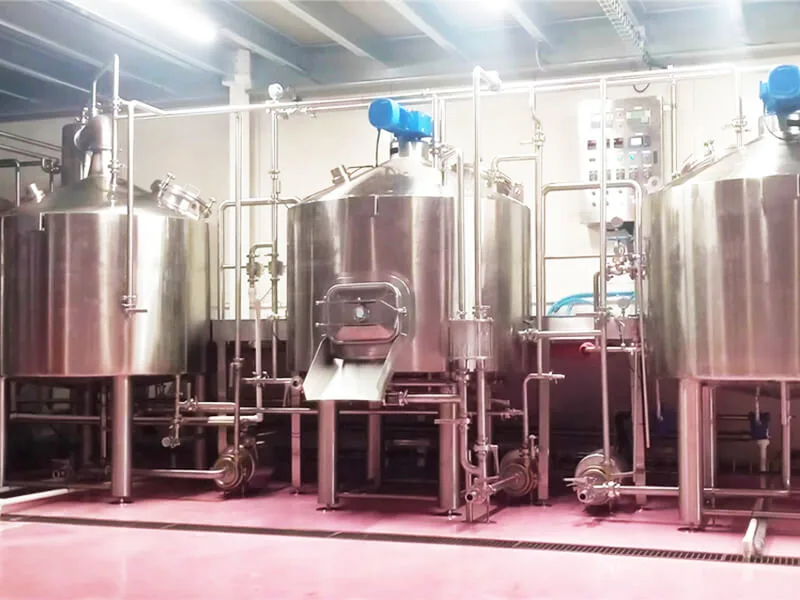
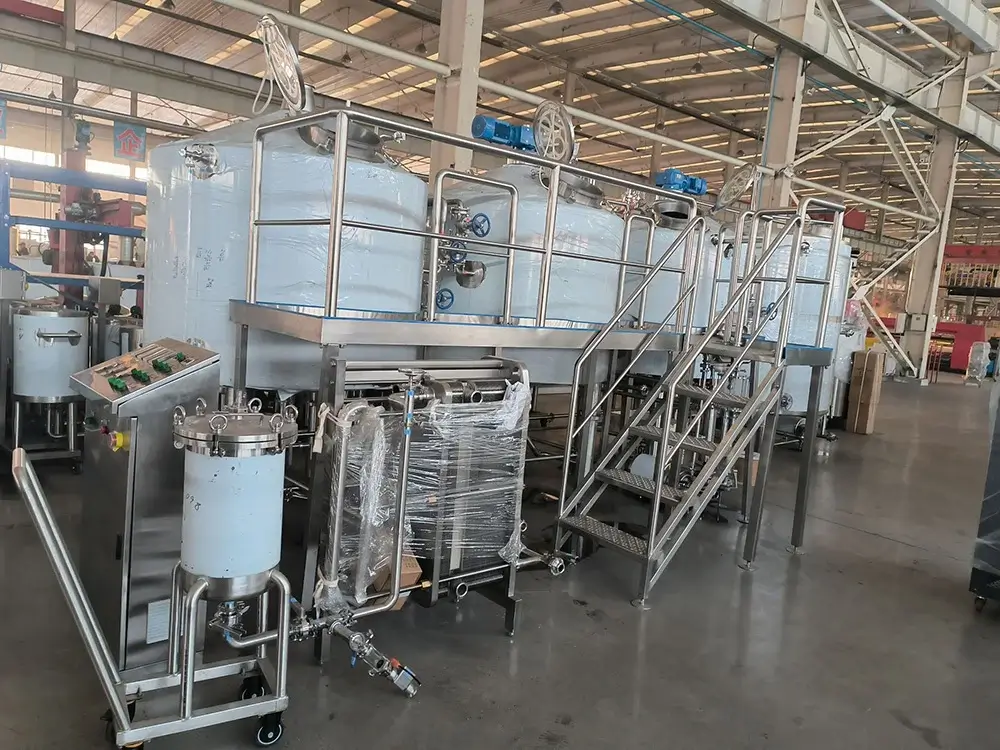
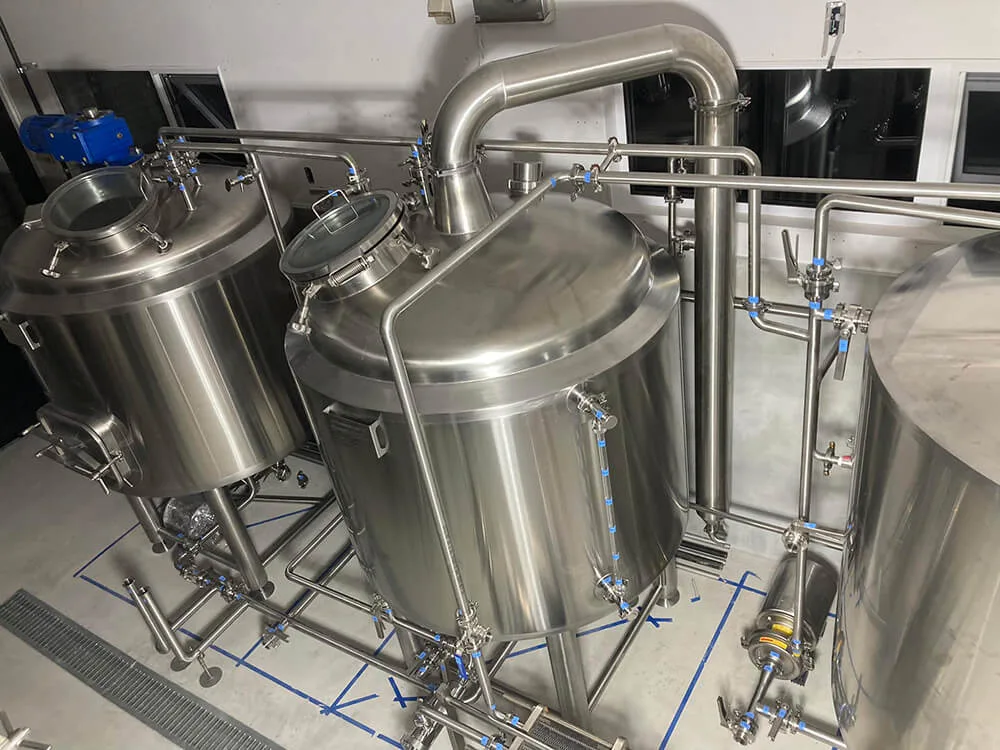
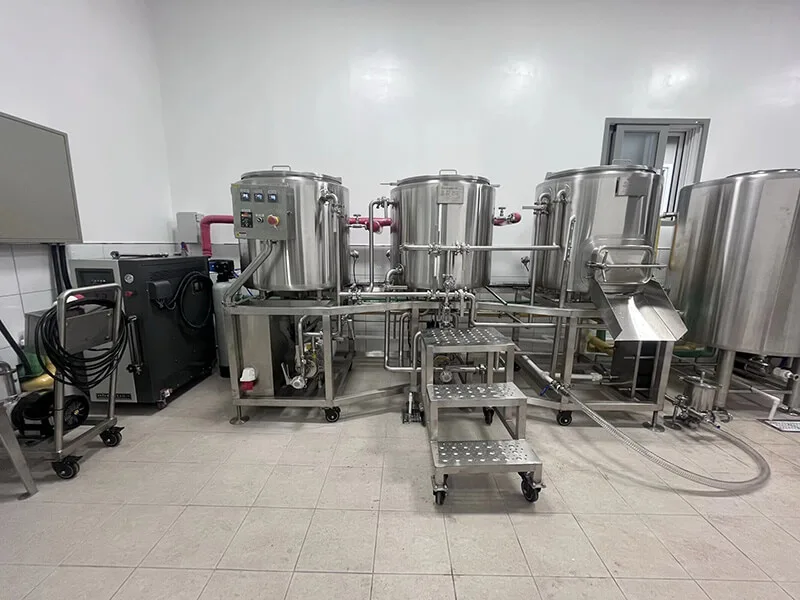
A split brewing system uses separate tanks for different brewing operations.
A typical configuration includes:
- Maischebottich
- Läuterbottich
- Boil Kettle
- Whirlpool-Tank
- Hot Liquor Tank
- Gärgefäße
- Glykol-Kühlsystem
- CIP-Reinigungssystem
Each vessel is designed for a specific function. This allows brewers to adjust individual parameters instead of relying on a fixed program.
For example, mash temperature, lautering speed and boiling intensity can all be optimized according to different beer styles.
This level of flexibility is especially valuable for brewers who frequently develop new recipes.
Split Brewing System vs. All-in-One Brewing Equipment
All-in-one brewing machines are popular because they are compact and easy to operate. They are suitable for beginners who are learning the fundamentals of brewing.
However, as brewing requirements increase, many users prefer a split system because of several advantages:
More efficient workflow
Independent vessels allow different preparation steps to happen simultaneously.
Better process consistency
Dedicated tanks provide more accurate control over each brewing stage.
Simpler maintenance
Individual components are easier to inspect, clean and replace.
Future expansion capability
Additional fermentation tanks or brewing equipment can be added without replacing the entire system.
For brewers planning long-term development, a split design provides greater value.
Choosing the Right Brewing Capacity
The ideal brewing capacity depends on production goals, available space and future plans.
METO provides 50L, 100L and 200L brewing systems designed for different applications.
50L Brewing System for Advanced Homebrewing and Recipe Development
Compact Size with Professional Brewing Functions
A 50L brewing system is designed for brewers who want to move beyond basic home equipment while maintaining flexibility.
Zu den typischen Anwendungsbereichen gehören:
- Advanced homebrewing
- Recipe testing
- Brewing education
- Beer clubs
- Experimental batches
The smaller batch size allows brewers to test different ingredients without consuming large amounts of raw materials.
For example, a brewer developing a new IPA recipe can quickly compare different hop combinations or fermentation methods with lower production costs.
The compact footprint also makes installation easier in home workshops, garages or small brewing spaces.
100L Brewing Equipment for Serious Craft Beer Enthusiasts
The Balance Between Flexibility and Production Capacity
The 100L brewing system is a popular choice for brewers who want higher output while keeping operation manageable.
Es ist geeignet für:
- Private taprooms
- Small beer studios
- Pilot production
- Community brewing projects
- Restaurant brewing concepts
Compared with smaller systems, 100L equipment provides improved temperature stability and more efficient production.
Many small craft breweries begin with this capacity because it offers enough volume for market testing while keeping investment under control.
200L Split Brewing System for Nano Brewery Applications
Professional Equipment for Small Commercial Production
A 200L split brewing system is often selected by customers preparing for commercial brewing.
Zu den typischen Anwendungsbereichen gehören:
- Nano-Brauereien
- Brauhäuser
- Restaurant breweries
- Seasonal beer production
- Limited-edition craft beers
This capacity provides a good starting point for entrepreneurs who want to validate their market before expanding into larger production systems.
With additional fermenters, bright beer tanks and packaging equipment, a 200L system can become the foundation of a complete small brewery.
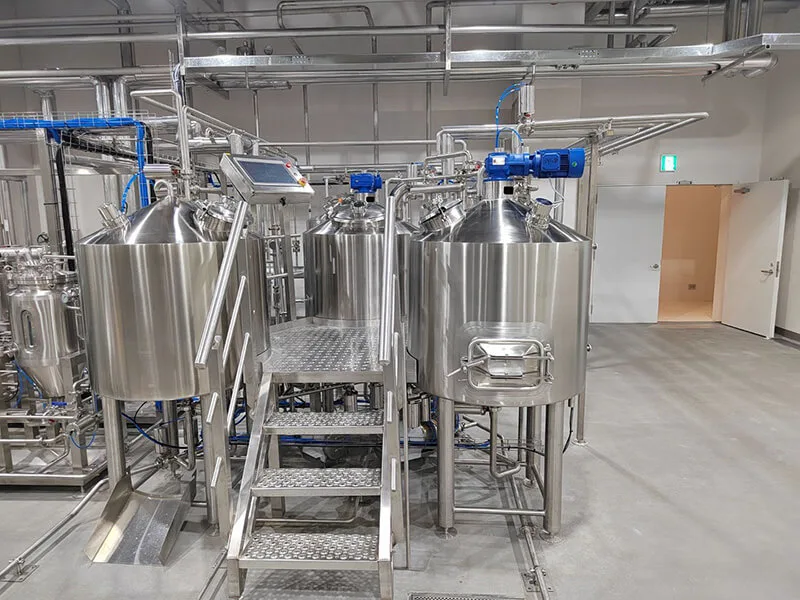
Professional Brewhouse Design
Mash and Lauter System
The mash and lautering process directly affects wort quality and extraction efficiency.
METO brewing systems are designed with features including:
- Stainless steel mash vessels
- Temperaturüberwachung
- Rührsystem
- Efficient filtration screen
- Sanitary internal surfaces
The agitator helps maintain uniform temperature distribution, while the filtration system improves wort separation.
Boil Kettle and Whirlpool System
The boiling stage influences:
- Hop utilization
- Flavor development
- Sterilization
- Wort concentration
The kettle design provides stable heating and efficient circulation.
After boiling, the whirlpool process helps separate trub and improve wort clarity before fermentation.
Wort Cooling System
Fast and controlled cooling is important for protecting wort quality.
The system can include:
- Plate heat exchanger
- Wort pump
- Temperature sensor
- Glycol or chilled water connection
A properly designed cooling system reduces contamination risk and creates better fermentation conditions.
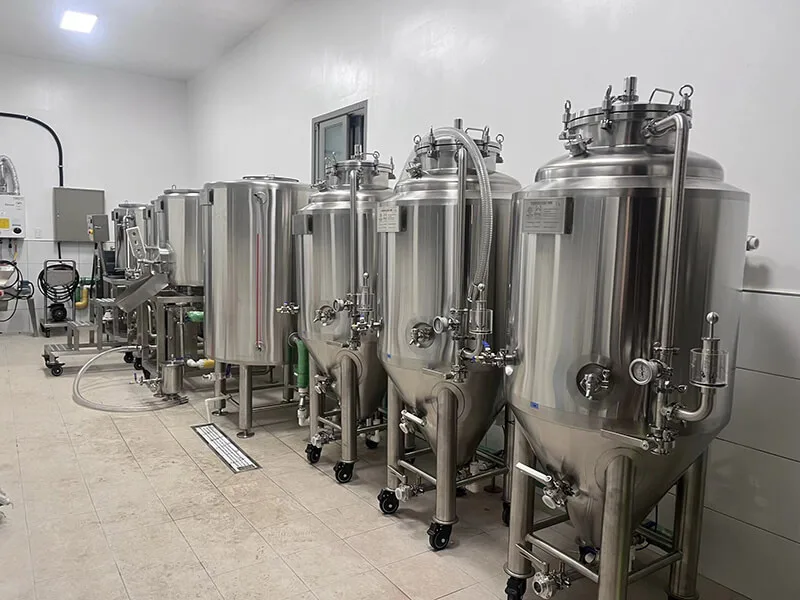
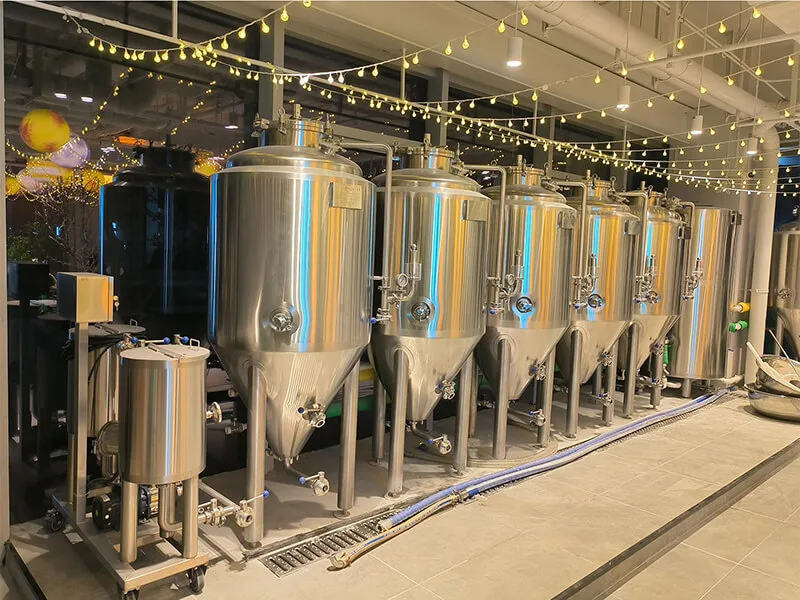
Fermentation System Designed for Consistent Results
Conical Fermenters with Glycol Cooling
Fermentation is where yeast transforms wort into finished beer.
Professional fermentation vessels provide:
- Accurate temperature control
- Improved sanitation
- Easier yeast collection
- Better repeatability
Zu den typischen Merkmalen gehören:
- Conical bottom design
- Glycol cooling jacket
- CIP spray ball
- Sampling valve
- Dry hopping port
- Pressure relief valve
- Carbonation stone option
These features allow brewers to produce different beer styles with greater control.
Hygienic Stainless Steel Construction
Food-Grade Materials and Sanitary Design
Equipment hygiene directly affects beer quality.
METO uses food-grade stainless steel including:
- SUS304 stainless steel
- Optional SUS316L stainless steel
Manufacturing standards include:
- TIG welding
- Smooth internal polishing
- Sanitary fittings
- Tri-clamp connections
- Pressure testing
A smooth internal surface reduces residue buildup and makes cleaning more effective.
Brewing Control and Automation Options
Manual, Semi-Automatic and PLC Control
Different users require different levels of automation.
Available control options include:
Manual Control
Suitable for experienced brewers who prefer direct operation.
Semi-Automatic Control
Provides assistance with heating, pumping and temperature management.
PLC Automation
Designed for users requiring repeatable production and data management.
PLC systems can support:
- Recipe storage
- Temperaturüberwachung
- Process recording
- Automatic control functions
For a pilot brewing system, data recording helps brewers evaluate recipe changes more accurately.
CIP System for Efficient Cleaning
Reducing Cleaning Time and Improving Sanitation
Cleaning is one of the most important parts of brewing operation.
A CIP system allows internal cleaning without frequent equipment disassembly.
Zu den Vorteilen gehören:
- Faster cleaning process
- Geringeres Kontaminationsrisiko
- Improved sanitation consistency
- Easier daily operation
A complete brewing setup may include:
- CIP tank
- Cleaning pump
- Spray balls
- Sanitary pipelines
- Cleaning accessories
Heating Options for Different Brewing Locations
Elektrische Heizung
Electric heating is commonly selected for smaller systems.
Vorteile:
- Easy installation
- Präzise Temperaturregelung
- Suitable for 50L and 100L systems
Dampfheizung
Steam heating is preferred for customers requiring faster heating and higher efficiency.
Vorteile:
- Strong heating performance
- Suitable for continuous brewing
- Common in commercial applications
Direktbeheizung
Direct fire systems provide a traditional brewing approach for customers with suitable fuel availability.
Why Choose METO as Your Brewery Equipment Manufacturer?
Manufacturing Experience and Quality Control
Choosing equipment from an experienced brewery equipment manufacturer helps ensure better quality control and technical support.
METO manages the complete production process, including:
- Engineering design
- Laser cutting
- Stainless steel fabrication
- TIG welding
- Polishing
- Pressure testing
- Factory inspection
This allows each system to be manufactured according to customer requirements.
Customized Pilot Brewing System Solutions
Every brewing project has different requirements.
METO provides customized solutions based on:
- Brewing capacity
- Beer styles
- Available installation space
- Local voltage standards
- Automatisierungsgrad
Whether customers need a small pilot brewing system or complete nano brewery equipment, the configuration can be adjusted according to actual production goals.
Turnkey Brewery Solution from Equipment to Operation
For customers building a complete brewing project, METO provides a turnkey brewery solution.
Services include:
- Brewing system design
- Gerätebau
- Installationsanleitung
- Technical training
- Brewing process support
- After-sales service
The goal is to help customers establish a reliable brewing operation, not just supply individual machines.
Häufig gestellte Fragen
Is a 50L brewing system suitable for commercial brewing?
A 50L system is mainly used for advanced homebrewing, recipe development and pilot production. It can also support small experimental commercial projects.
What is the main advantage of a split brewing system?
A split system provides better control, higher flexibility, easier cleaning and future expansion possibilities compared with compact systems.
Can a 100L brewing system be upgraded later?
Yes. Additional fermenters, bright beer tanks, cooling systems and packaging equipment can be added as production grows.
What materials are used for brewing equipment?
Brewing systems are normally manufactured from food-grade SUS304 stainless steel, with SUS316L available for customers requiring higher corrosion resistance.
Can this equipment brew different beer styles?
Yes. The system can produce IPA, lager, stout, porter, wheat beer, Belgian ale and other craft beer styles.
Does METO provide overseas support?
Yes. METO provides technical communication, installation guidance, commissioning support and operation training for international customers.
Can I customize the equipment configuration?
Yes. Capacity, heating method, automation level, tank configuration and accessories can be customized according to project requirements.
Schlussfolgerung
For advanced homebrewers, choosing the right equipment is about more than increasing batch size. It is about gaining better control, improving consistency and creating a brewing system that can support future growth.
50L, 100L and 200L split brewing systems provide professional brewing functions in a compact and flexible format. They are suitable for recipe development, brewing education, nano brewery projects and small craft beer businesses.
With manufacturing expertise, customized engineering and complete turnkey brewery solution services, METO helps brewers build reliable brewing systems that grow with their ambitions.Let us build your brewery. Let your beer tell the story.