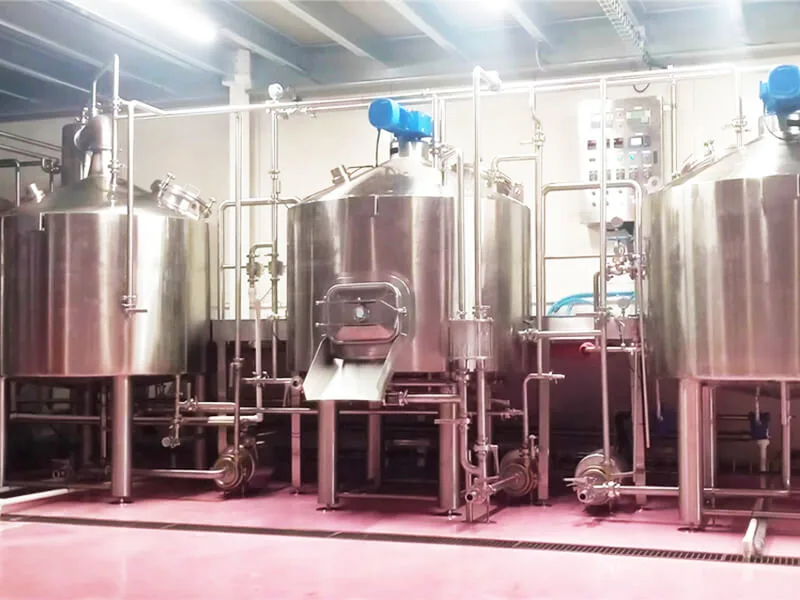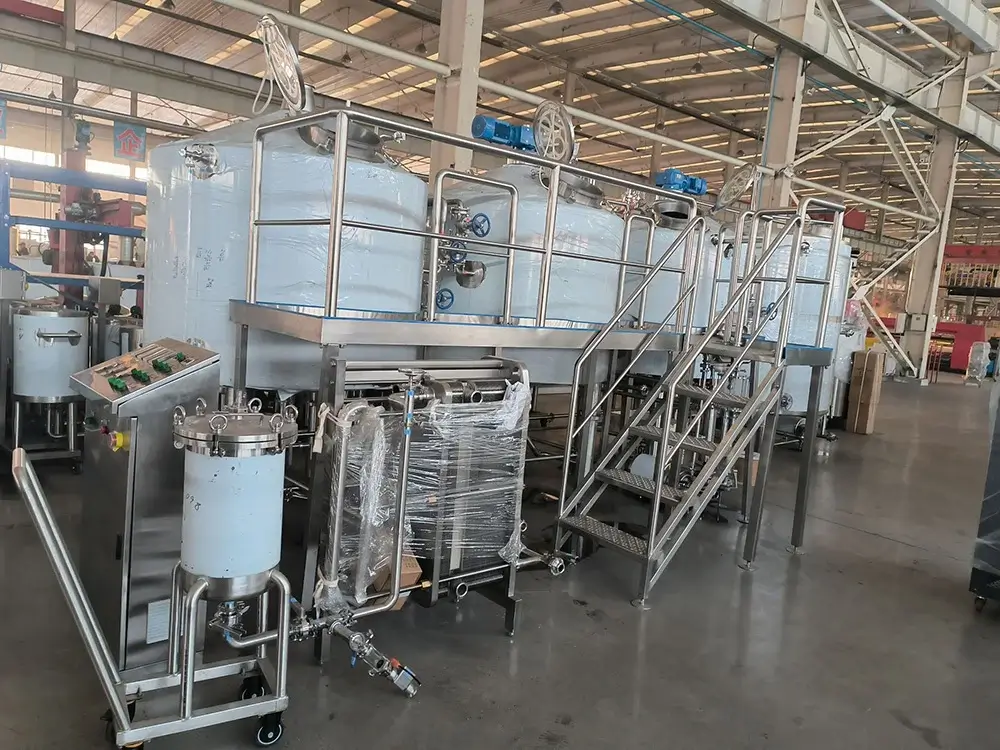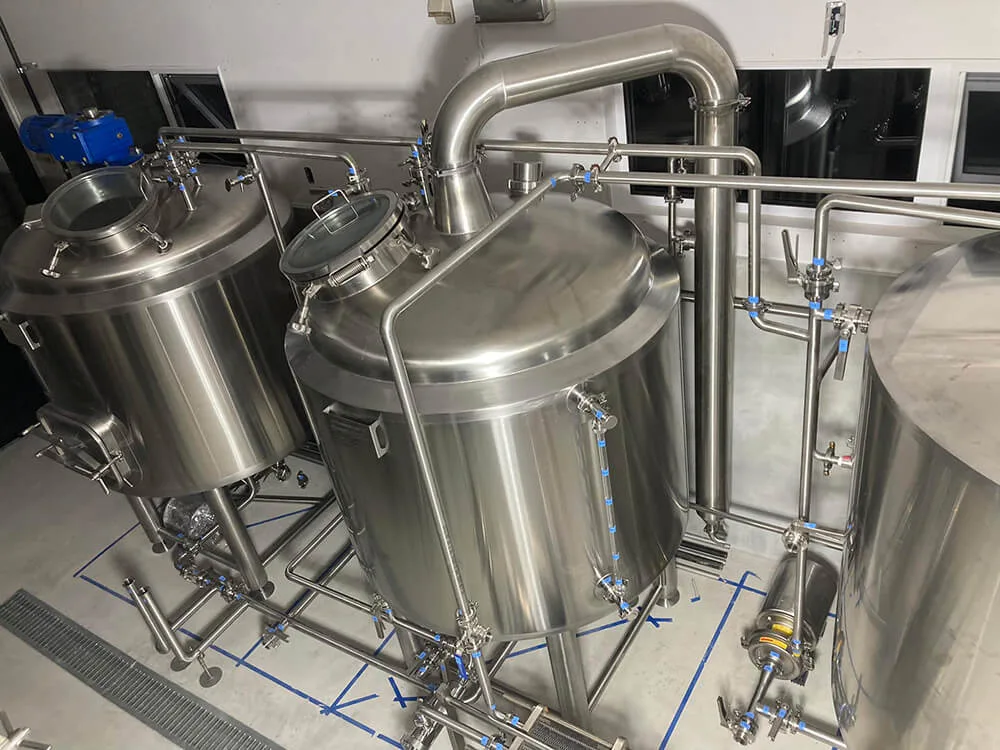
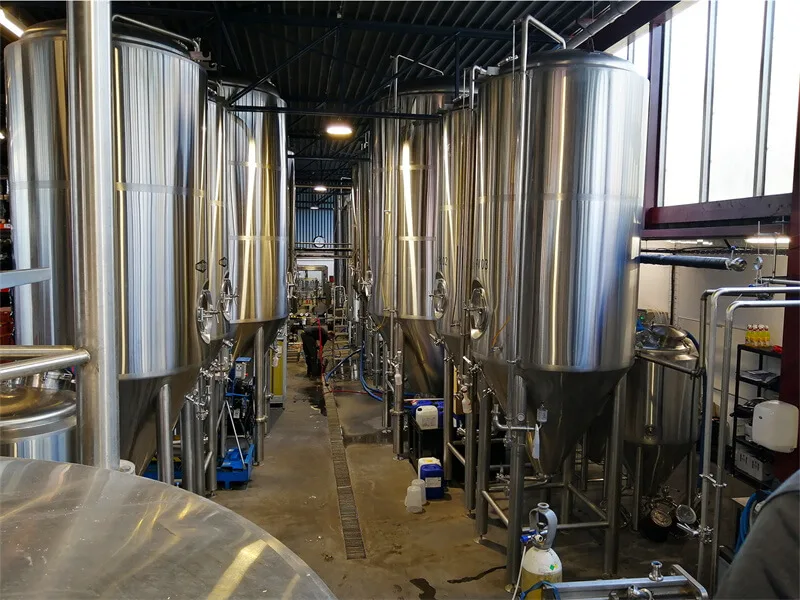
Large-scale fermentation is not simply a matter of increasing tank volume. Once a brewery or beverage plant moves from small production to several thousand liters per batch, tank geometry, cooling capacity, pressure control, cleaning performance, floor loading, piping and installation logistics all become part of the process design.
For commercial breweries, beverage producers, wineries and other fermentation-based manufacturers, a properly engineered large stainless steel fermentation tank must provide stable process conditions while remaining practical to clean, maintain and operate.
This is why selecting a large fermentation tank should begin with production requirements and process conditions rather than the tank price alone.
How to Determine the Right Fermentation Tank Capacity
Working Volume Is More Important Than Nominal Volume
A fermentation tank has both a total volume and a working volume. The difference provides headspace for fermentation activity, foam formation and pressure management.
For example, a tank described as a 10000-liter fermenter may not be intended to hold 10000 liters of product during normal operation. The usable volume depends on the process, fermentation characteristics and required headspace.
For brewery projects, capacity should therefore be calculated from:
- Brewhouse batch size
- Number of brews per day
- Fermentation time
- Tank turnover
- Target annual production
- Required production flexibility
- Future expansion plans
A common mistake is to select fermenters based only on the brewhouse volume. A 2,000L brewhouse, for example, may require fermentation vessels larger than 2000L if several brews are combined into one fermentation batch.
Tank Quantity Is Part of the Capacity Calculation
A fermentation cellar needs enough vessels to accommodate the complete fermentation cycle.
If a beer requires 7 days of primary fermentation plus 3–7 days of conditioning, the tank cannot simply be scheduled according to the brewhouse production day. Tank occupancy must include the entire process period.
For this reason, a brewery may choose several medium-sized fermenters rather than a few very large tanks. More tanks provide greater flexibility for different recipes, production volumes and fermentation schedules.
Stainless Steel Selection for Large Fermentation Tanks
304 Stainless Steel
SUS304 is widely used for commercial brewing and beverage applications because it offers good corrosion resistance, mechanical strength and fabrication performance.
It is suitable for many beer, cider, wine and fermented beverage projects when the process chemistry and cleaning regime are compatible with the material.
316L Stainless Steel
SUS316L provides improved corrosion resistance due to its molybdenum content. It can be a better choice where the process involves more aggressive cleaning conditions, higher chloride exposure or stricter hygienic requirements.
The decision between 304 and 316L should be based on the actual process rather than treating 316L as universally necessary.
Internal Surface Finish Matters
Material grade alone does not determine hygienic performance. Internal weld quality, surface finish, drainage and connection design are equally important.
A properly fabricated stainless steel fermenter should minimize crevices and dead legs where product residue or cleaning chemicals can accumulate.
For higher-specification projects, customers may also specify internal surface roughness requirements, weld polishing and passivation procedures.
Structural Design of Large Fermenters
Cylindrical Body and Conical Bottom
Most brewery fermenters use a cylindrical body with a conical bottom.
The cone provides practical advantages for yeast collection, sediment removal and product recovery. A commonly used cone angle is around 60°, although the final geometry should be determined by the intended process and tank dimensions.
The tank diameter-to-height ratio also affects manufacturing, transportation, internal volume and cooling performance.
Headspace and Tank Geometry
Large fermentation tanks require sufficient headspace rather than being filled to the maximum geometric volume.
The correct headspace depends on:
- Product type
- Yeast strain
- Gärtemperatur
- Original gravity
- Foam generation
- Fermentation pressure
- Process controls
Tank dimensions should therefore be developed from the process specification, not selected from a standard catalog alone.
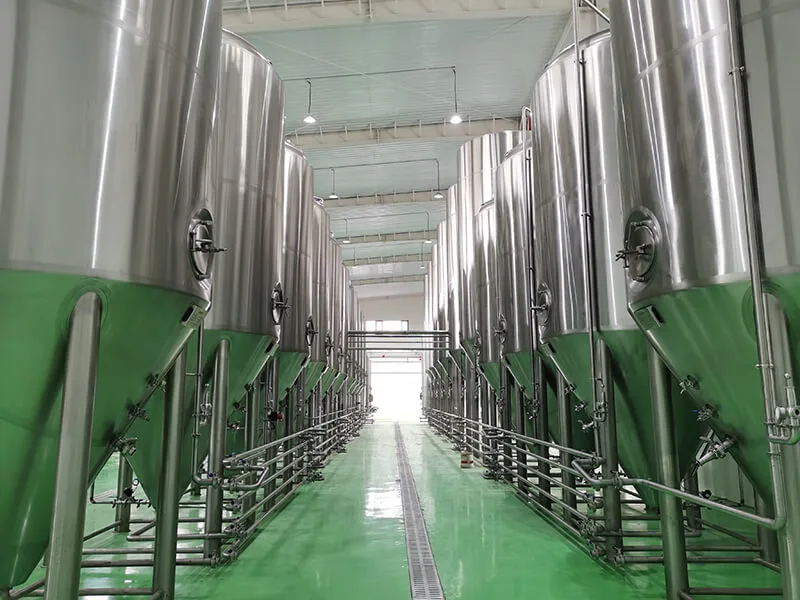
Cooling System Design for Large Fermentation Tanks
Cooling is one of the most important engineering considerations in a large fermentation system.
Fermentation generates heat, and that heat must be removed continuously enough to maintain the target temperature. As tank volume increases, the cooling load and thermal inertia become more significant.
Cooling Jacket Configuration
Large stainless steel fermentation tanks can use different jacket configurations, including dimple jackets and other jacket arrangements.
The required cooling area depends on:
- Tank capacity
- Product temperature
- Ambient conditions
- Gärtemperatur
- Heat generation
- Desired cooling rate
- Number of tanks cooling simultaneously
- Glycol temperature and flow rate
The jacket should not be sized independently from the glycol system. Chiller capacity, glycol tank volume, circulation pumps, control valves and piping must be considered as one system.
Individual Temperature Control
For commercial production, each fermenter should normally have independent temperature monitoring and cooling control.
A temperature sensor measures the product temperature, while a control system regulates glycol flow through the jacket.
For larger installations, PLC-based control can provide:
- Individual tank temperature settings
- Automatic cooling control
- Alarmmanagement
- Production data recording
- Centralized monitoring
Pressure Design and Safety
Pressure becomes increasingly important when fermentation tanks are designed for pressure fermentation, carbonation or closed transfer.
Working Pressure and Test Pressure
These are not interchangeable specifications.
Working pressure defines the pressure under which the tank is designed to operate during normal production. Test pressure is used during controlled inspection and testing to verify structural integrity.
The appropriate values depend on the tank design, materials, fabrication method and applicable regulations.
Pressure Protection
A pressure-rated fermenter may include:
- Pressure relief valve
- Safety valve
- Pressure gauge or transmitter
- Vacuum protection
- CO₂ connection
- Carbonation stone
- Pressure control system
The safety system must be designed together with the tank rather than added after fabrication.
For international projects, the applicable requirements may include CE/PED, ASME or local pressure-vessel regulations depending on the destination and project specification.
CIP and Hygienic Design
A large fermenter can contain several thousand liters of product, making manual cleaning impractical for commercial operation.
CIP (Clean-in-Place) should therefore be considered during tank design.
CIP Spray Device Selection
The appropriate spray device depends on tank diameter, height, internal geometry and required cleaning performance.
Possible configurations include fixed spray balls and rotary cleaning devices.
Cleaning performance depends not only on the spray head itself but also on:
- Cleaning pressure
- Durchflussmenge
- Chemical concentration
- Cleaning temperature
- Contact time
- Tank geometry
Hygienic Connections
Sanitary fittings, properly finished welds and good drainage are essential for large stainless steel fermentation tanks.
Product lines should avoid unnecessary dead legs, and tank outlets should allow effective drainage after cleaning.
For high-throughput plants, CIP piping and valve arrangements should be developed together with the tank layout.
Designing the Fermentation Cellar
The tank itself is only one part of the installation.
Tank Layout and Access
A large fermentation cellar should provide sufficient clearance for:
- Operator access
- Ventilbetrieb
- CIP connections
- Wartung
- Instrument inspection
- Hose and piping connections
Increasing tank diameter may reduce the required number of vessels, but it can create transportation and installation challenges.
Floor Loading
A filled fermentation tank can weigh substantially more than the empty vessel.
The structural calculation should consider:
Tank weight + product weight + fittings + insulation + operating loads
For large projects, foundation and floor loading should be reviewed before equipment fabrication begins.
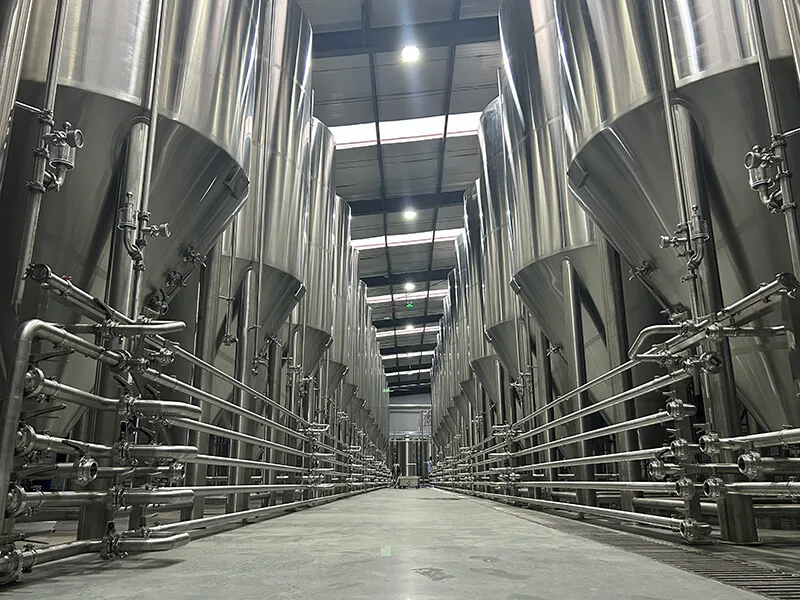
Manufacturing Large Stainless Steel Fermentation Tanks
Large tanks require manufacturing controls that are difficult to replicate with low-quality fabrication.
A professional fermentation tank manufacturer should control the complete process from engineering design to final inspection.
Fabrication Process
A typical manufacturing sequence includes:
Engineering → Material Preparation → Cutting → Forming → Welding → Surface Finishing → Assembly → Pressure Testing → Inspection → Passivation → Final QC
TIG welding is widely used for sanitary stainless steel fabrication. Internal weld quality is particularly important because poorly finished welds can become difficult-to-clean areas.
Inspection and Testing
Depending on the project, inspection may include:
- Material verification
- Dimensional inspection
- Weld inspection
- Pressure testing
- Leak testing
- Surface inspection
- Passivation verification
- Functional testing of valves and instruments
Documentation should match the customer’s project and regulatory requirements.
Transportation and Installation
Large fermentation tanks create another engineering challenge: getting the finished vessel from the factory to the production site.
Before manufacturing, the project team should confirm:
- Container dimensions
- Road transportation restrictions
- Site entrance dimensions
- Crane capacity
- Installation height
- Floor or foundation conditions
For exceptionally large vessels, sectional fabrication and on-site assembly may be more practical than transporting a fully assembled tank.
Customization Options
A commercial large stainless steel fermenter should be configured around the process.
Typical options include:
- Custom working volume
- 304 or 316L stainless steel
- Kühlmäntel
- PU insulation
- Top or side manway
- CIP spray device
- Sampling valve
- Dry-hop port
- Carbonation stone
- Pressure control
- Temperatursensoren
- Sanitary piping
- PLC automation
The right configuration depends on the product and production process rather than the number of optional components.
How to Choose a Large Fermentation Tank Manufacturer
Price should not be the first selection criterion for a large fermentation project.
Evaluate the manufacturer in four areas.
Engineering Capability
Can the manufacturer calculate tank dimensions, cooling requirements, pressure parameters and process connections based on your production requirements?
Fabrication Quality
Check welding quality, polishing, material traceability, pressure testing and inspection procedures.
System Integration
A capable supplier should understand how fermenters connect with glycol cooling, CIP, product piping and control systems.
International Project Experience
For overseas customers, documentation, electrical specifications, applicable certifications, shipping arrangements, installation support and spare parts are all important.
A tank that is technically correct but difficult to install or maintain can create much higher costs after delivery.
Why Work With METO for Large Stainless Steel Fermentation Tanks?
METO manufactures stainless steel fermentation equipment for breweries and other fermentation-based production facilities, with projects ranging from individual vessels to complete fermentation systems.
Our engineering approach starts with the customer’s production capacity, process requirements and installation conditions. Tank volume, geometry, cooling area, pressure rating, CIP configuration and automation are then developed around those requirements.
Depending on the project, METO can supply:
- Large stainless steel fermentation tanks
- Konische Fermenter
- Brite tanks
- Glycol cooling systems
- CIP systems
- Sanitary piping
- Temperaturkontrollsysteme
- Brewery and fermentation cellar solutions
For international projects, equipment specifications and compliance requirements can be adapted to the destination market and project conditions.
FAQ
What is considered a large stainless steel fermentation tank?
There is no single industry definition. In commercial brewing, tanks from several thousand liters upward are commonly considered large fermentation vessels, while industrial facilities may use tanks of tens of thousands of liters or more.
How much headspace does a fermenter need?
The required headspace depends on the product, fermentation method, yeast behavior and operating conditions. It should be defined during process design rather than using one universal percentage.
Is 304 or 316L stainless steel better?
304 is suitable for many commercial brewing applications. 316L offers higher corrosion resistance and may be preferred for more demanding processes. The correct material depends on process chemistry and hygiene requirements.
Can large fermenters operate under pressure?
Yes, if the vessel is specifically engineered and certified for pressure operation. Working pressure, safety devices and applicable pressure-vessel regulations must be established before fabrication.
Can METO manufacture custom fermentation tanks?
Yes. Tank dimensions, volume, cooling configuration, fittings, pressure rating, CIP system and control configuration can be customized according to the customer’s process and site requirements.
Planning a Large-Scale Fermentation Project?
Selecting a large fermentation tank should start with production capacity, fermentation cycle, cooling demand and site conditions—not simply tank volume.
If you are building a new fermentation cellar or expanding an existing production line, METO can engineer and manufacture stainless steel fermentation tanks around your process requirements, from individual custom vessels to integrated fermentation systems.
Share your target capacity, product, fermentation cycle, available space and required automation level with our engineering team to develop a practical tank configuration for your project.