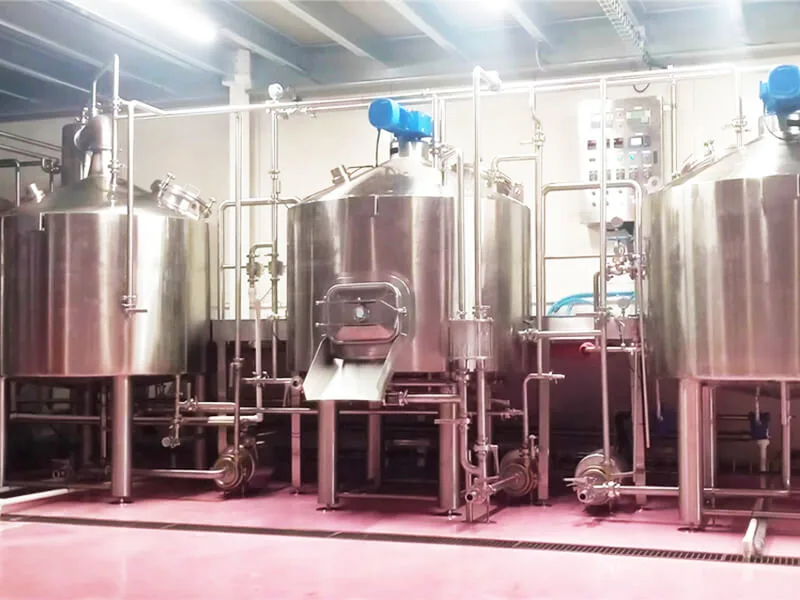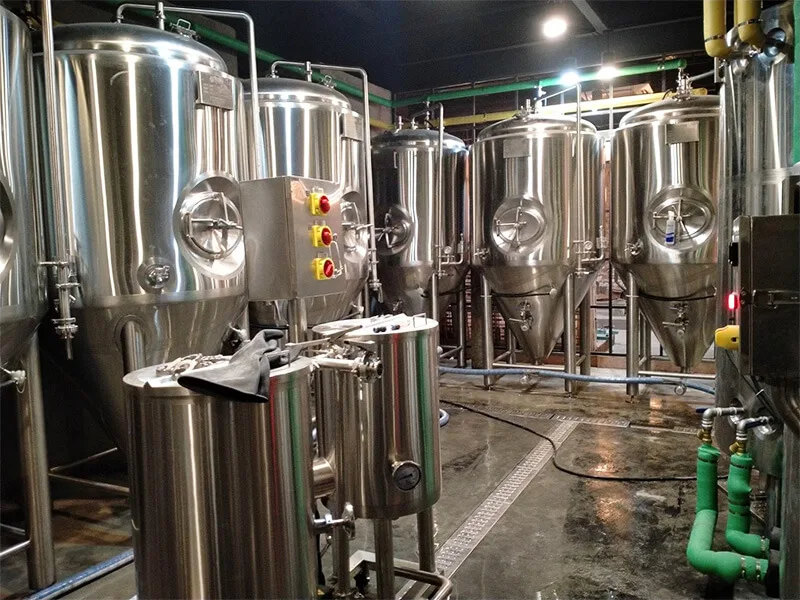
Expanding a brewery from 1000L to 2000L is an important step for a growing craft beer business. It can increase brewing output, improve production efficiency and support more beer styles. However, doubling brewhouse capacity does not automatically mean that the entire brewery’s production capacity will double.
The brewhouse, fermentation tanks, cooling system, CIP system, packaging equipment, utilities and plant layout must work together. A successful expansion should therefore be planned as a complete production system rather than a single equipment upgrade.
What Does a 1000L to 2000L Expansion Mean?
A 1000L brewhouse usually produces approximately 1000L of wort per batch, while a 2000L brewhouse produces approximately 2000L per batch.
However, actual beer output depends on several factors:
- Number of brews per day
- Wort loss during brewing
- Fermentation tank working volume
- Fermentation time
- Beer styles
- Packaging losses
- Available production days
- Cooling capacity
- Anzahl der Gärtanks
For example, a 1000L brewhouse producing four batches per day may produce a similar daily wort volume to a 2000L brewhouse producing two batches per day.
The expansion plan should therefore be based on the brewery’s target annual production, not only the nominal brewhouse size.
Why Expand from 1000L to 2000L?
A brewery may consider this expansion for several reasons.
Higher Production Capacity
A 2000L brewhouse can produce more wort per batch and reduce the number of brewing cycles needed to meet demand.
This can be useful when:
- Existing equipment is operating near full capacity
- Customer orders are increasing
- More packaged beer is required
- The brewery wants to supply additional bars or distributors
- The business plans to enter new markets
Better Brewing Efficiency
Larger batches can reduce the time spent on repeated preparation, cleaning and changeovers.
A brewery may also improve labor efficiency because the same team can produce a larger volume during one brewing cycle.
More Consistent Production
A properly designed 2000L system can provide more stable production planning. With the right control system, the brewery can manage mashing, lautering, boiling, wort transfer and cleaning more efficiently.
Room for Future Growth
A 2000L brewhouse can provide a practical intermediate step before moving to a larger commercial production system.
However, future expansion should be considered before ordering the new equipment. Tank spacing, utility capacity and piping routes should allow additional fermenters or larger service equipment where possible.
Step 1: Review the Existing 1000L Brewery
Before selecting new equipment, review the current brewery in detail.
Important questions include:
- How many batches are produced per day?
- What is the current annual production?
- Which equipment is limiting output?
- Is the fermentation area full?
- Is the glycol system large enough?
- Can the existing boiler or electrical supply support a larger brewhouse?
- Is the existing CIP system sufficient?
- Is the packaging line operating at full capacity?
- Is there enough space for larger tanks?
- Which equipment can be reused?
The main bottleneck may not be the brewhouse. In many breweries, fermentation capacity, cooling capacity or packaging speed limits production.
For example, installing a 2000L brewhouse without adding sufficient fermentation tanks may increase wort production but create a backlog in the fermentation area.
Step 2: Select the Right 2000L Brewhouse Configuration
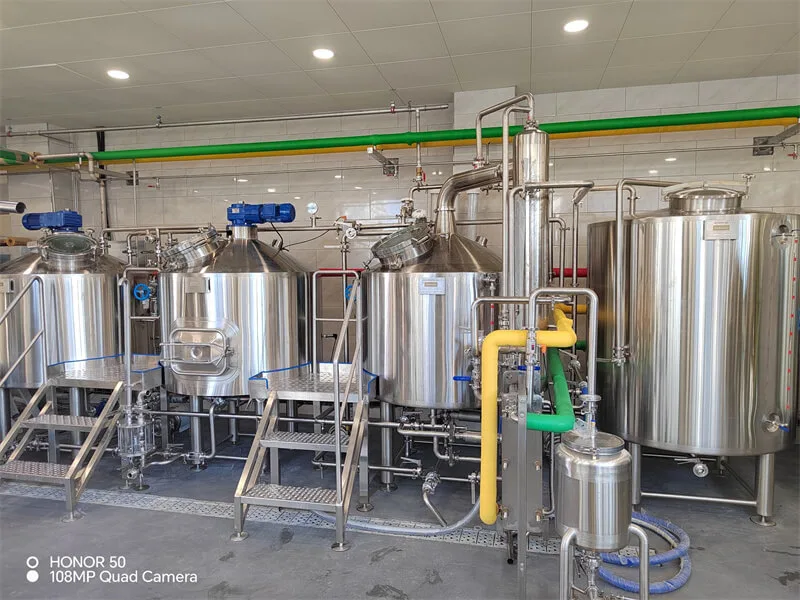
A 2000L brewery can be designed with different vessel configurations.
Vier-Kessel-Sudhaus
A typical four-vessel system may include:
- Mash tun
- Lauter tun
- Brew kettle
- Whirlpool tank
This configuration provides independent process vessels and is suitable for commercial craft beer production.
Advantages may include:
- Flexible brewing operations
- Good separation of process stages
- Suitable lautering performance
- Better support for multiple beer styles
- Verbesserte Produktionseffizienz
Five-Vessel Brewhouse
A five-vessel system may include a separate pre-mash tank or additional process vessel.
This configuration can be useful when the brewery requires:
- More flexible recipes
- High-frequency brewing
- Special mashing processes
- Better process separation
- More advanced production planning
The choice between four and five vessels should be based on brewing recipes, production frequency, available floor space and budget.
Step 3: Calculate Fermentation Tank Capacity
Fermentation tanks are one of the most important parts of a brewery expansion.
A 2000L brewhouse does not necessarily require only 2000L of fermentation capacity. The brewery must consider fermentation time and the number of batches produced.
A basic calculation is:
Required fermentation capacity = wort production per day × average fermentation and conditioning days
For example, if the brewery produces 4000L of wort per day and the average tank occupancy is 14 days, the theoretical fermentation requirement is:
4000L × 14 days = 56,000L
This is a simplified calculation. The final tank capacity should also include:
- Headspace
- Transfer losses
- Different fermentation schedules
- Tank cleaning time
- Beer style requirements
- Packaging schedule
- Production peaks
- Future growth
Example Fermentation Configuration
A possible 2000L brewery configuration may include:
- 6 × 2000L fermentation tanks
- 4 × 4000L fermentation tanks
- 8 × 2000L fermentation tanks
- A combination of smaller and larger tanks for different beer styles
The final quantity depends on how many batches are brewed per day and how long each beer remains in the tank.
Smaller tanks provide more flexibility for seasonal beers and recipe development. Larger tanks may improve production efficiency for high-volume core products.
Step 4: Check Working Volume and Tank Size
The nominal tank volume and working volume are not always the same.
For example, a tank described as 2000L may have a lower recommended working volume to allow sufficient headspace during fermentation.
Headspace is necessary because fermentation creates foam and carbon dioxide. Filling a tank to its maximum geometric volume may cause foaming, pressure or cleaning problems.
When ordering fermentation tanks, confirm:
- Total volume
- Working volume
- Tank diameter and height
- Cone angle
- Design pressure
- Working pressure
- Cooling jacket area
- Insulation thickness
- CIP spray device
- Sampling valve
- Pressure relief valve
- Carbonation connection
- Temperature sensor
- Fittings and standards
The tank dimensions should also match the available building height, door size and lifting equipment.
Step 5: Upgrade the Cooling System
A larger brewhouse produces more hot wort, and the cooling system must be able to handle the increased load.
A typical cooling system may include:
- Glycol water tank
- Glykolkühler
- Glycol circulation pump
- Cooling pipelines
- Fermentation tank jackets
- Wort heat exchanger
- Temperature control valves
The cooling system must support both wort cooling and fermentation temperature control.
Würzekühlung
The heat exchanger should be sized according to:
- Wort flow rate
- Inlet wort temperature
- Target wort temperature
- Cooling water temperature
- Glycol temperature
- Required cooling time
Fermentation Cooling
Fermentation tanks generate heat during yeast activity. The glycol system must remove this heat while maintaining stable fermentation temperatures.
When expanding from 1000L to 2000L, check whether the existing chiller can support:
- The larger wort volume
- Additional fermentation tanks
- Peak fermentation activity
- Summer ambient temperatures
- Simultaneous cooling demand
If the existing chiller is too small, the brewery may experience slow cooling, unstable fermentation temperatures or extended production cycles.
Step 6: Review Heating Requirements
The heating system must also be upgraded or confirmed.
The suitable heating method may include:
- Dampfheizung
- Elektrische Heizung
- Direktbefeuerte Heizung
For a 2000L commercial brewhouse, steam heating is often considered when the brewery requires frequent brewing, stable indirect heating or steam for CIP and other processes.
Electric heating may be possible when sufficient electrical power is available. However, the customer must check transformer capacity, cable size, power distribution and local electrical requirements.
Direct-fire heating may be suitable for some projects where gas is available and the vessel and burner system are designed correctly.
The heating system should be selected according to:
- Target heating time
- Batches per day
- Local energy prices
- Available utilities
- Floor space
- Automatisierungsgrad
- Local safety requirements
- Future expansion plans
Step 7: Upgrade the CIP System
A larger brewery also requires an appropriate cleaning system.
The CIP system should be able to clean:
- Mash tun
- Lauter tun
- Brew kettle
- Whirlpool tank
- Fermentation tanks
- Tanks für helles Bier
- Wort pipelines
- Beer transfer lines
- Heat exchanger
- Packaging equipment
A CIP system may include:
- Caustic tank
- Acid tank
- Hot water tank
- Sanitizing solution tank
- CIP pump
- Spray balls
- Return lines
- Temperaturkontrolle
- Conductivity or concentration monitoring
The cleaning sequence should be designed according to the equipment material, process requirements and cleaning chemicals.
For a 2000L brewery, a larger CIP pump and sufficient cleaning solution volume may be required. In some projects, two CIP circuits can improve cleaning efficiency and reduce production downtime.
Step 8: Check the Packaging Line
Increasing brewing capacity is only useful if the brewery can package and sell the additional beer.
Review the capacity of the existing:
- Keg filling system
- Bottle filler
- Can filler
- Labeling machine
- Pasteurization system
- Packaging conveyor
- Carton packing equipment
- Cold storage area
If the brewhouse output doubles but the packaging line remains unchanged, finished beer may accumulate in bright beer tanks or cold storage.
The packaging upgrade should be based on the expected daily and weekly output.
For example, a brewery may need a faster canning line, more keg filling heads or additional bright beer tanks to support the new production target.
Step 9: Evaluate Utilities and Building Conditions
A 2000L brewery may require more utilities than a 1000L system.
The expansion plan should review:
Wasserversorgung
Water is required for:
- Brewing
- Cleaning
- Kühlung
- Boiler operation
- Sanitizing
- Verpackung
The water supply should provide sufficient flow and pressure during peak demand.
Entwässerung
The drainage system must handle hot water, cleaning chemicals and process wastewater.
Floor drains, slopes and wastewater treatment requirements should be reviewed before equipment installation.
Stromversorgung
Confirm:
- Spannung
- Frequency
- Dreiphasenstrom
- Transformer capacity
- Main distribution cabinet
- Cable routing
- Equipment protection
- Local electrical standards
Steam and Fuel
If steam heating is selected, the brewery may need space for a boiler or steam generator, fuel supply, ventilation and condensate drainage.
Druckluft
Compressed air may be required for:
- Pneumatic valves
- Filling equipment
- Control systems
- Packaging machines
- Instrumentation
The compressor should be sized according to the complete system rather than one machine.
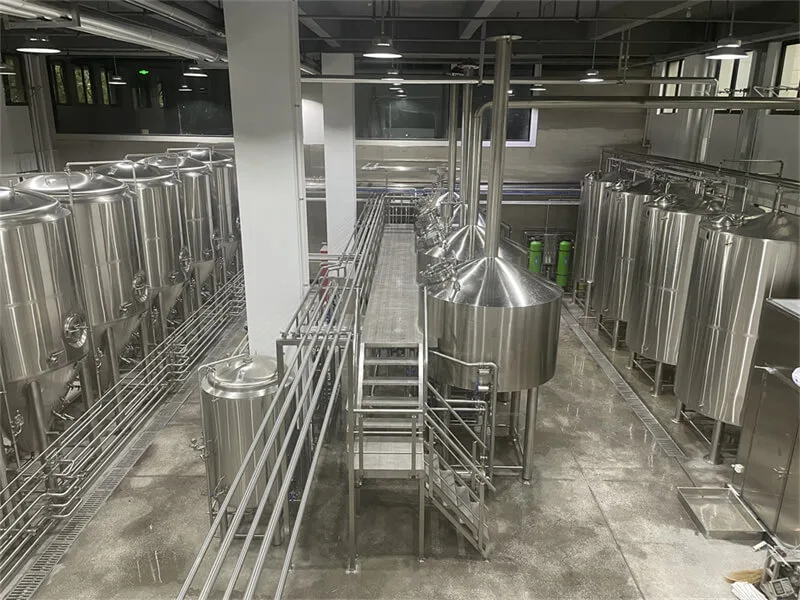
Floor Space and Height
The layout must allow:
- Equipment installation
- Operator access
- Tank cleaning
- Wartung
- Pipe routing
- Forklift movement
- Product transfer
- Future expansion
Tank height is especially important when installing large fermentation tanks inside an existing building.
Step 10: Decide Which Existing Equipment Can Be Reused
Not every piece of equipment must be replaced during the expansion.
Depending on its condition and capacity, the brewery may be able to reuse:
- Water treatment equipment
- Some hot water tanks
- Keg washers
- Small packaging machines
- Laboratory equipment
- Air compressors
- Storage tanks
- Existing control interfaces
- Certain pumps and valves
However, reuse should be based on technical compatibility, not only initial cost.
Check:
- Equipment condition
- Kapazität
- Material quality
- Pressure rating
- Connection standards
- Control compatibility
- Cleaning performance
- Verfügbarkeit von Ersatzteilen
- Maintenance history
A component that is too small or incompatible may create a bottleneck in the new system.
Step 11: Plan the Brewery Layout
A 2000L expansion is an opportunity to improve the brewery layout.
The production flow should be logical:
Raw materials → Milling → Mashing → Lautering → Boiling → Whirlpool → Wort Cooling → Fermentation → Conditioning → Packaging → Finished Beer Storage
The layout should reduce unnecessary transfers and allow safe operator movement.
Important layout factors include:
- Raw material storage
- Malt mill location
- Brewhouse position
- Fermentation tank arrangement
- Glycol piping distance
- CIP station location
- Packaging area
- Cold storage
- Entwässerung
- Zugang zur Wartung
- Emergency exits
- Future tank positions
If the existing building is too small, an expansion may require an additional fermentation room, packaging room or utility area.
Step 12: Upgrade the Control System
A larger brewery benefits from a well-designed control system.
The control system may manage:
- Vessel temperature
- Heizung
- Pumpenbetrieb
- Valve switching
- Wort transfer
- Gärtemperatur
- Glycol circulation
- CIP-Sequenzen
- Tank pressure
- Alarm functions
- Production records
A PLC-based system can improve process consistency and reduce operator workload.
The automation level may range from basic manual control to semi-automatic or fully integrated control.
The right level depends on:
- Production volume
- Number of operators
- Haushalt
- Required consistency
- Beer styles
- Future expansion
- Data and traceability requirements
Common Mistakes When Expanding a Brewery
Focusing Only on the Brewhouse
A larger brewhouse cannot increase total production if fermentation, cooling or packaging capacity remains unchanged.
Ignoring Fermentation Time
Different beer styles may require different fermentation and conditioning periods. Tank quantity should be calculated according to the actual production schedule.
Underestimating Cooling Demand
The existing glycol chiller may be insufficient for additional tanks and larger wort batches.
Not Checking Building Height
Large fermentation tanks may not fit through doors or under the existing ceiling.
Choosing Equipment Without Utility Review
Electrical power, gas supply, steam, water and drainage must be checked before final equipment selection.
Leaving No Space for Expansion
The new layout should allow additional fermentation tanks, bright beer tanks or packaging equipment where possible.
Replacing Equipment Without a Process Plan
Equipment should be selected according to the complete production flow. Purchasing individual machines without integration may create connection and control problems.
A Practical Expansion Checklist
Before ordering a 2000L brewery system, confirm the following:
- Target annual production
- Batches per day
- Beer styles
- Average fermentation time
- Number and size of fermentation tanks
- Brewhouse vessel configuration
- Heating method
- Wort heat exchanger capacity
- Glycol chiller capacity
- CIP system capacity
- Packaging line output
- Water supply
- Electrical supply
- Steam or gas availability
- Compressed air requirements
- Floor drainage
- Building height and access
- Equipment layout
- Kontrollsystem
- Future expansion requirements
- Destination-country standards and installation conditions
Why Work with an Experienced Brewery Equipment Manufacturer?
Expanding from 1000L to 2000L involves more than purchasing a larger brewhouse. The new system must be matched with fermentation, cooling, cleaning, utilities, packaging and plant layout.
An experienced brewery equipment manufacturer can help evaluate the existing system and identify which components should be upgraded, reused or replaced.
METO can support brewery expansion projects with:
- 2000L brewhouse systems
- Four-vessel and five-vessel configurations
- Fermentation tanks
- Tanks für helles Bier
- Glycol cooling systems
- Wort heat exchangers
- CIP systems
- Steam, electric and direct-fire heating options
- PLC control systems
- Piping and equipment integration
- Installation and commissioning support
- Future expansion planning
The equipment proposal can be developed according to the customer’s production target, existing equipment, available utilities, building conditions and destination-country requirements.
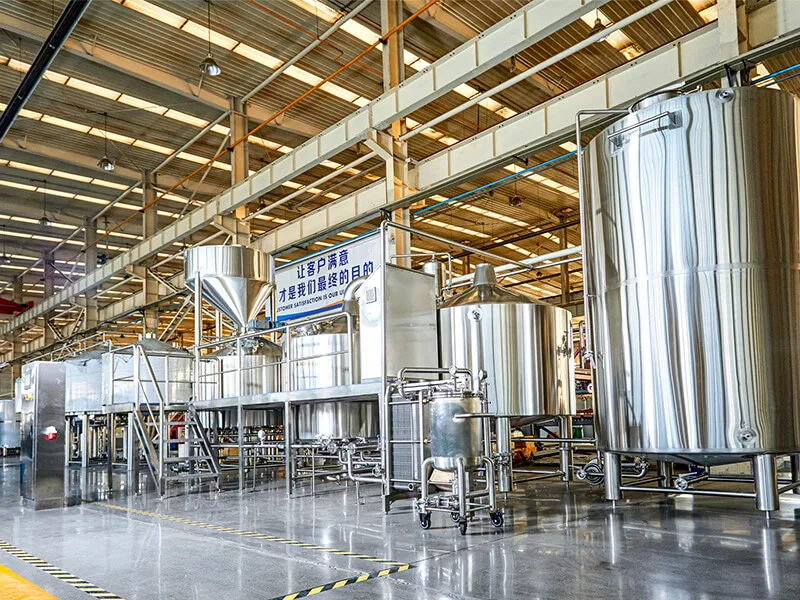
Schlussfolgerung
Expanding a brewery from 1000L to 2000L can improve production capacity and operational efficiency, but the project should be planned as a complete system.
The key areas to review are:
- Brewhouse configuration
- Fermentation tank capacity
- Das Kühlsystem
- Heating system
- KVP-Anlage
- Packaging equipment
- Utilities
- Building layout
- Kontrollsystem
- Future expansion
The most important principle is to identify the current production bottleneck before making an investment. A larger brewhouse may be the right solution, but additional fermentation tanks, cooling capacity or packaging equipment may be equally important.
Planning to expand from 1000L to 2000L? Share your current equipment list, target production, fermentation time, available utilities and installation location with METO. Our engineers can review your brewery and recommend a practical expansion configuration.