
Walk into any craft distillery, and the still is the star of the show. It’s the centerpiece of your tasting room, the focal point of your marketing, and the visual identity of your brand. But behind every successful launch, there’s often a story of a first still that was too small, too complex, or too cheaply built—a mistake that costs not just money, but months of lost production and wasted batches.
Selecting your equipment shouldn’t be based on looks alone. It is about matching your hardware to your spirits, your available space, and your daily budget. A shiny copper still that cannot meet your daily production goals or costs too much to heat is just an expensive piece of furniture.
Whether you are planning a small 100-gallon pilot system for gin or a multi-column setup for commercial vodka, the core principles of equipment selection remain the same. This practical guide cuts through the hype to help you choose equipment that grows your business instead of slowing it down.
1. Choosing the Right Still: Pot, Column, or Hybrid?
The type of still you choose determines the style of spirit you can make, how fast you can make it, and how much hands-on control you will have over the final flavor. There is no single “best” type of still—only the right tool for your specific spirit recipe.
The Pot Still: For Deep, Rich Flavors
If your business plan focuses on whiskey, bourbon, aged rum, or fruit brandy, the pot still is your traditional starting point.
- How it Works: Pot stills run in single batches. As you heat the liquid wash inside the boiler, alcohol vapors rise and travel directly to the condenser. This simple path keeps many of the natural flavor compounds (called congeners) from the original grain or fruit intact.
- The Distiller’s Role: Because flavor carries over so easily, the operator must make precise manual “cuts”—separating the early, harsh liquids (heads) from the sweet middle portion (hearts) and the heavy tail-end liquids (tails).
- Am besten geeignet für: Craft producers who want full control over batch character and classic, full-bodied aged spirits.
The Column Still: For High Volume and Purity
If your revenue model relies on clean, high-proof neutral spirits like vodka or a light base for gin, a column still is the standard workhorse.
- How it Works: Instead of processing one isolated batch at a time, a column still runs continuously. Liquid wash flows down through a vertical tower while steam rises up through internal trays or plates. Each plate acts like a mini-distillation step, stripping out heavy flavors and increasing the alcohol purity as the vapor rises.
- The Key Benefit: A tall column can reach very high purity (up to 95%+ ABV) in a single continuous pass, removing almost all rough off-flavors.
- Am besten geeignet für: High-volume operations, vodka producers, or businesses that need consistent neutral spirits on a large scale.
The Hybrid Still: The Flexible All-Rounder
For most new craft distilleries, flexibility is key. You might want to release a dark whiskey this year, but you need an unaged gin or vodka to bring in quick cash flow next month. This is where a hybrid system shines.
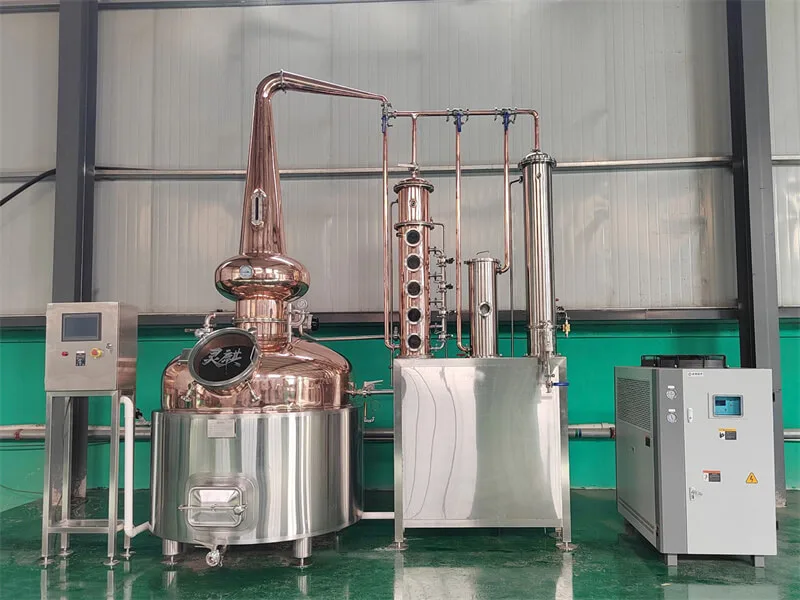
- How it Works: A hybrid still combines a traditional pot still boiler with a side-mounted column containing individual plates. Using built-in valves, you can choose the path your vapor takes.
- The Best of Both Worlds: You can bypass the column entirely on Monday to make a rich bourbon, then open the valves to route vapor through the column plates on Wednesday to produce a clean gin base.
- The Bottom Line: While a hybrid setup costs a bit more upfront than a simple pot still, it prevents you from having to buy two entirely separate machines down the road.
2. Copper vs. Stainless Steel: Balancing Flavor and Budget
Buyers often get caught up in how a still looks, but choosing your metals is actually a functional decision that impacts both spirit flavor and equipment lifespan.
Why You Need Copper in the Vapor Path
When grain or fruit ferments, yeast naturally creates small amounts of sulfur compounds. If these compounds make it into your bottle, they add unpleasant smells—like rubber, cooked cabbage, or eggs.
Copper acts as a natural cleaning agent. When hot alcohol vapor touches warm copper surfaces, the metal reacts with the sulfur, binding it and removing it from the vapor stream before it reaches your collection tank.
- Where Copper Belongs: You want copper in areas where hot vapor travels—the dome head, the neck, the column trays, and internal bubble caps.
Why Stainless Steel is Best for Tanks and Vessels
While copper is essential for flavor cleanup, it is softer, more expensive, and harder to clean with industrial soaps. Stainless steel (specifically 304 or 316L grade) is far superior for structural parts and liquid containers.
- Durability and Hygiene: Stainless steel handles high heat, acidic liquids, and harsh cleaning chemicals without degrading or pitting. It is tough, easy to sanitize, and lasts for decades.
- Where Stainless Belongs: The boiler shell, outer jackets, fermentation tanks, mash tuns, and storage vessels should ideally be made of stainless steel.
The Winning Combination
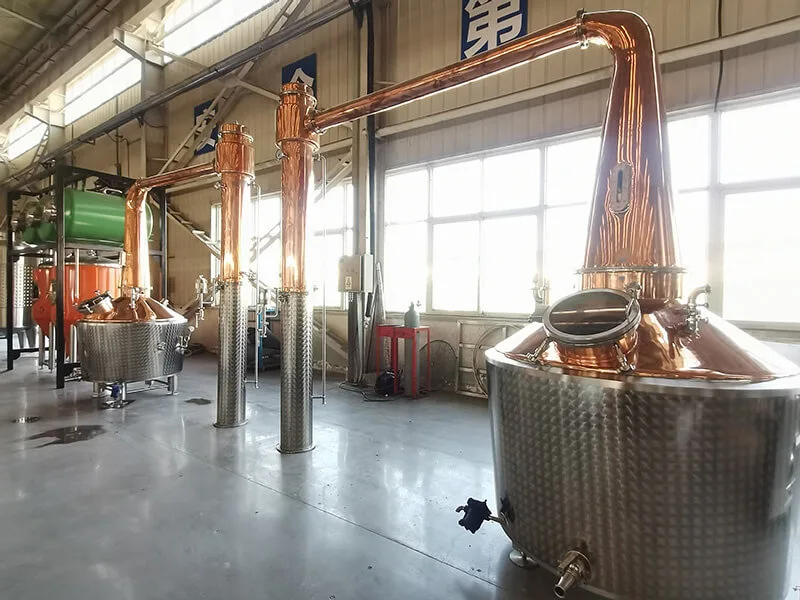
Don’t build your entire system out of pure copper—it is unnecessary, expensive, and difficult to maintain. The industry standard for craft distilleries is a stainless steel boiler paired with a solid copper vapor dome and column internals. This gives you all the flavor-cleansing benefits of copper while keeping the strength and easy maintenance of stainless steel.
3. Sizing Your System: Don’t Forget Your Fermenters
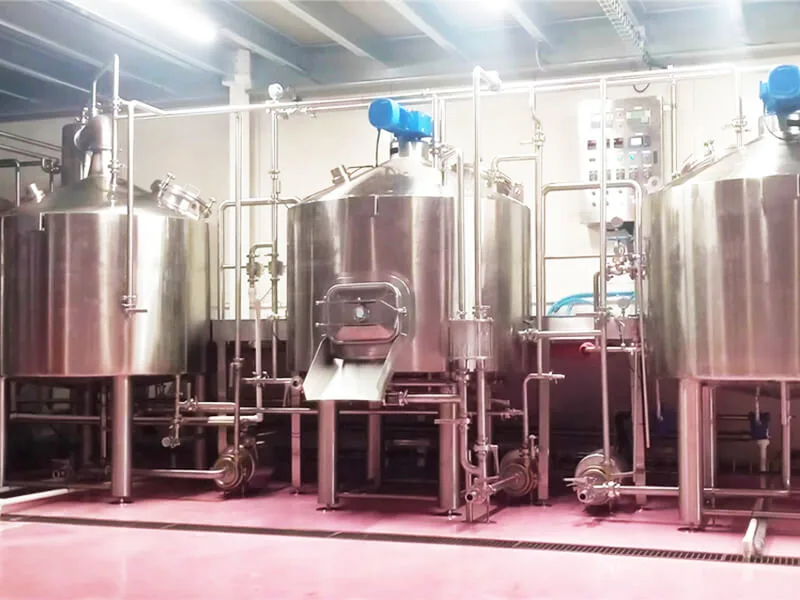
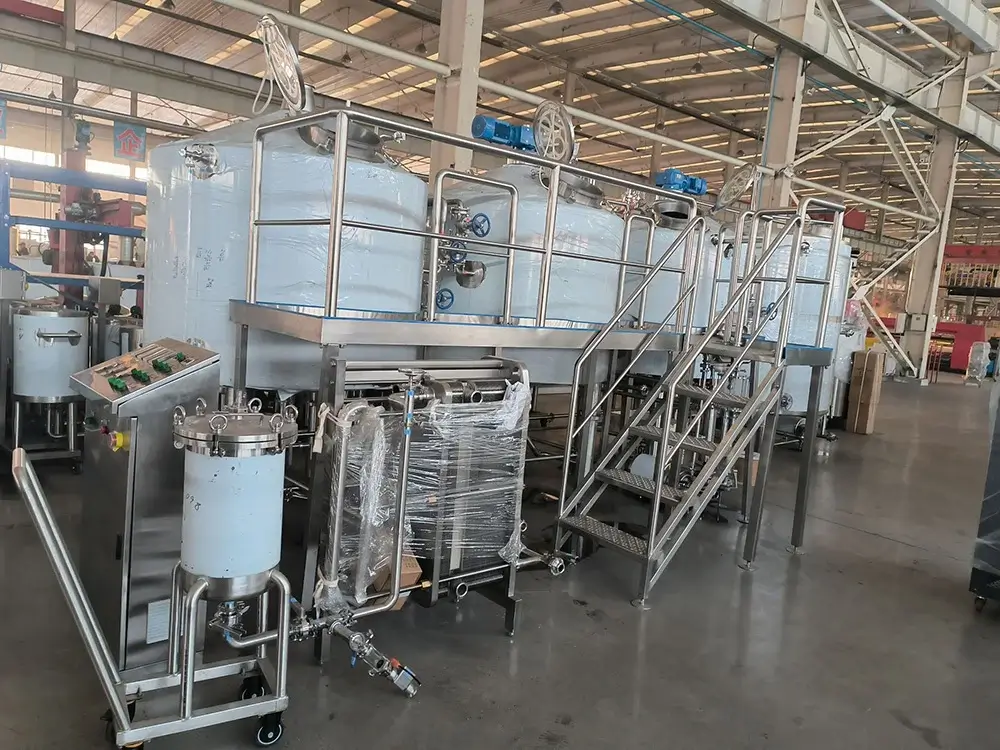
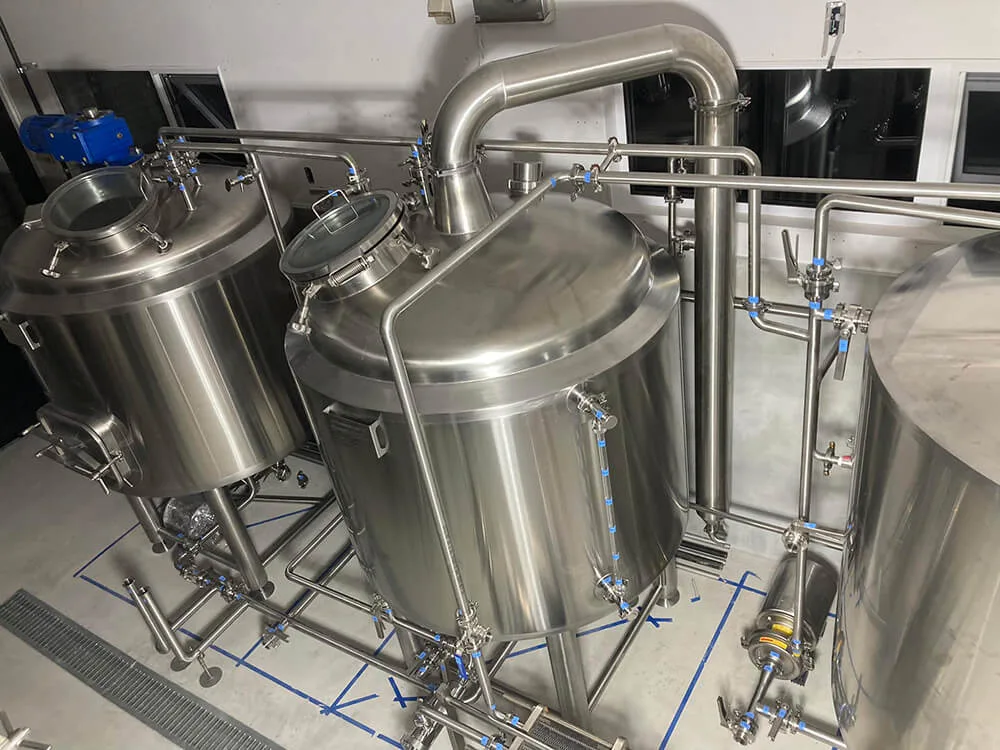
The most common sizing mistake new distillers make is buying a still without thinking about their fermentation space or building utilities. A still can run every day, but if your fermenters take a week to finish a batch, your expensive still will sit empty and cold.
The 3:1 Fermentation Rule
Fermentation takes time—usually anywhere from 3 to 6 days depending on your recipe. Distillation, on the other hand, only takes a few hours.
To keep a steady operational rhythm, you need 3 to 4 times more fermentation capacity than your still boiler volume.
- Example: If your still holds 1,000 liters per batch, you should aim for at least 3,000 to 4,000 liters of active fermentation space. This allows you to fill and run your still continuously on a rolling weekly schedule without waiting for a single fermenter to finish.
Check Your Building Utilities First
Before signing a contract for a still, audit your facility’s utilities. Heating hundreds of gallons of cold liquid to a boil requires a huge amount of energy.
- Steam Heating: Most commercial stills use a low-pressure steam boiler connected to a jacket around the still shell. Make sure your building has adequate gas lines and ventilation for a steam boiler.
- Electric Heating: If you use electric heating elements, check your electrical panel. An undersized electrical service will cause long, slow heat-up times, turning a simple distillation shift into a 14-hour workday.
- Cooling Water: You will need a reliable source of cold water or a fluid chiller to run through your condenser to knock hot vapor back into liquid. If your cooling system is too small, you risk losing alcohol vapor into the room—which is both wasteful and dangerous.
4. Key Quality Details to Look for Before Buying
When comparing quotes from different manufacturers, look beyond the main price tag. Small construction details can make a huge difference in your daily workload, safety, and product quality.
Efficient Condensers
A poorly designed condenser wastes water and can fail to knock down all your vapor. Look for modern shell-and-tube condensers, where vapor passes through multiple inner tubes surrounded by flowing cold water. They are far more efficient and compact than old-fashioned coiled copper pipes in a water tub.
Clear Sight Glasses
Sight glasses are not just decorative windows; they are essential operating tools. They allow you to watch the liquid inside the boiler and column in real-time. Good distillers use sight glasses to spot foaming early (preventing messy boil-overs) and to monitor how liquid is bubbling on column trays.
Easy Cleaning Systems (CIP)
Cleaning by hand is a quick way to burn out your crew. Ensure your equipment comes with built-in Clean-in-Place (CIP) spray balls inside the boiler dome and columns. Sanitary fittings (like quick-release Tri-Clamp connections) and smooth, well-polished internal welds are critical. Rough or pitted welds trap old liquid and bacteria, which can spoil future batches.
Built-in Safety Valves
Distillation vessels undergo big changes in temperature and pressure. Your still boiler and steam jacket should always be fitted with certified Pressure Relief Valves and Vacuum Relief Valves. These simple safety features protect your equipment from building up unsafe pressure or accidentally collapsing under a sudden vacuum when cooling down.
5. Planning for Growth: Buy Equipment That Expands With You
Your distillery’s product lineup today might look very different three years from now. Replacing an entire still system as soon as sales grow is an expensive way to scale. Instead, look for a setup designed for modular expansion.
- Standard Connections: Make sure your manufacturer uses standard flanged or clamped fittings on main vapor pipes. This allows you to add extra equipment later—like a gin basket for vapor-infused botanicals, or an extra column section for higher proof spirits—without cutting or welding your main boiler.
- Utility Pipe Sizing: When installing steam, water, and electrical supply lines during your initial buildout, install slightly larger pipe sizes than you currently need. Paying a tiny bit more for larger utility pipes on day one will save you thousands of dollars when it’s time to install a second still in Phase 2.
Build Your Distillery with Meto
At Meto, we design and manufacture distillation equipment tailored to your real-world business plan, available floor space, and local utility limits. We know that building a distillery is a major investment, and our goal is to supply reliable, precision-built hardware that makes your daily operations simple and profitable.
Our equipment combines heavy-gauge, catalytic copper craftsmanship where flavor matters most with rugged, easy-to-clean stainless steel construction for long-term durability. From modular craft stills to complete fermentation line expansion, we build systems designed for smooth output and hassle-free maintenance.
Ready to Start Building?
Whether you are laying out your first floor plan, expanding your cellar, or upgrading your current still line, our engineering team is here to help with layout drawings, utility planning, and custom quotes built for your local market.
Contact Meto today to discuss your project parameters and start building the heart of your distillery.