Opening a brewpub, craft beer bar, or small brewery is not simply a matter of buying a brewhouse and filling the room with stainless steel tanks. Equipment should follow the business model, expected sales volume, menu, available utilities, and expansion plan.
For a new operator, the most important question is not “Which equipment is the best?” but “What equipment capacity can support my business without tying up too much capital?”
A practical equipment plan normally covers four areas:
- Bar and draft beer equipment
- Brewery equipment and fermentation tanks
- Kitchen and food-service equipment
- Water, electricity, drainage, ventilation, and workflow
Getting these relationships right before construction begins can prevent expensive modifications later.
Bar Equipment: Plan for Daily Service, Not Just Appearance
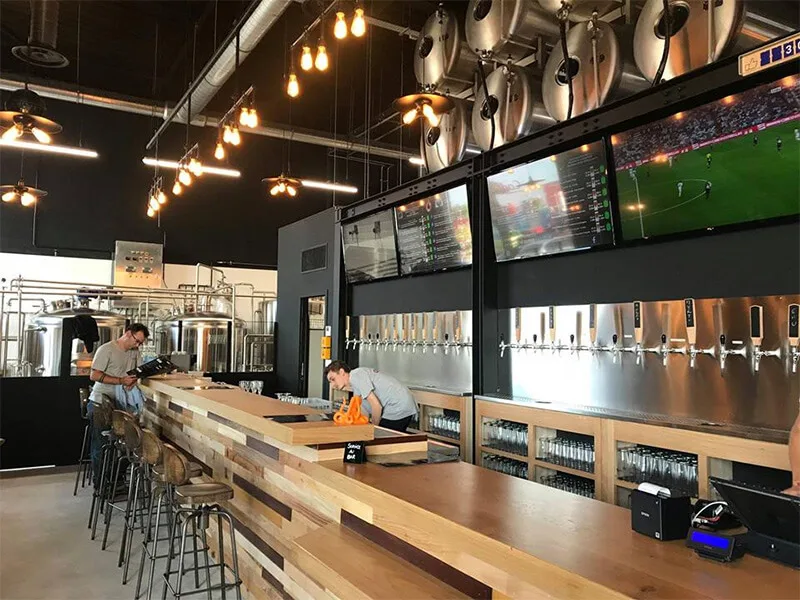
The draft system is the heart of a craft beer bar. A typical installation includes CO₂ cylinders, regulators, beer towers, faucets, beer lines, cooling equipment, and a beer-line cleaning system.
Draft Beer System
When selecting a draft system, consider the number of taps, expected beer turnover, line length, cooling method, and cleaning frequency.
A common mistake is to focus on the number of faucets while overlooking the supporting infrastructure. More taps mean more beer lines, more cleaning points, more connections, and potentially greater cooling demand.
The gas system also deserves attention. Regulators should match the gas configuration and operating pressure required by the beers being served. CO₂ cylinders need secure positioning and adequate ventilation, while gas lines should be installed where they can be inspected and maintained.
For a brewpub producing its own beer, integrating the draft system with the cellar layout can reduce unnecessary pipe runs and simplify cleaning.
Ice Machines, Refrigeration and Dishwashing
Ice equipment should be selected according to the actual menu rather than machine capacity alone.
- Cube ice: suitable for cocktails and general beverage service.
- Crescent or nugget-style ice: useful where faster chilling and easier chewing are important.
- Crushed ice: suitable for cocktails, blended drinks, and specialty beverages.
Before ordering an ice machine, confirm its electrical load, water supply, drainage, heat rejection, and installation clearance. A machine that fits physically under the counter may still create problems if its drain cannot be connected correctly.
The same principle applies to under-counter refrigerators, back-bar coolers, glass washers, and commercial dishwashers. Check power requirements, drainage, ventilation, noise, and service access before finalizing the bar layout.
Brewery Equipment: Choose Capacity Around Production Demand
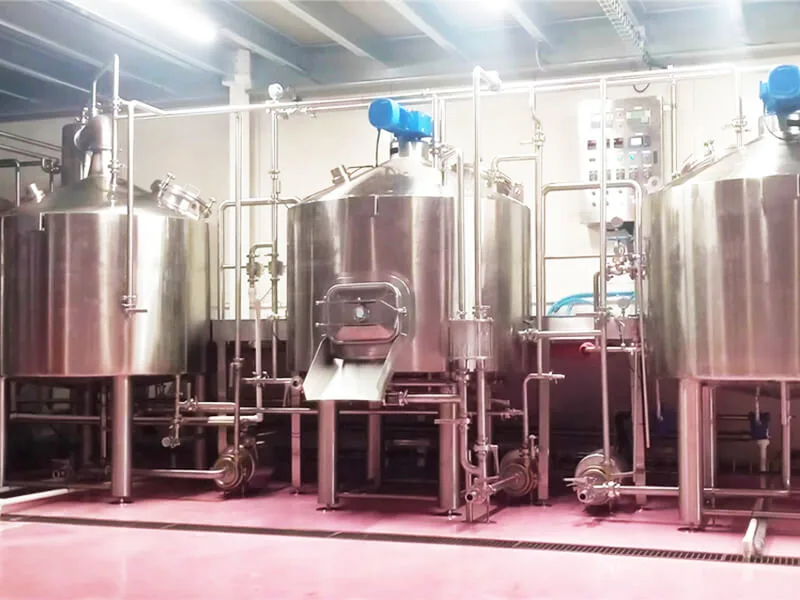
For a brewpub or small commercial brewery, brewery equipment capacity should be calculated from expected beer sales and brewing frequency rather than simply choosing the largest system that fits the budget.
500L vs. 1000L Brewery Equipment
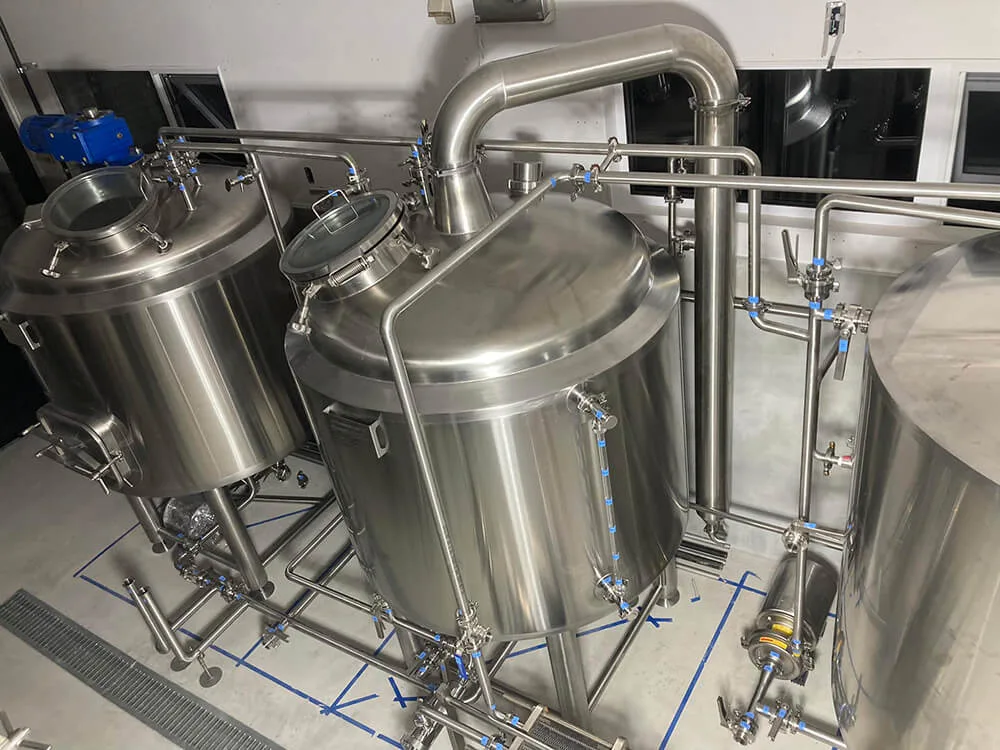
A 500L brewhouse can be a practical starting point for a new brewpub. It requires less initial investment and can provide greater flexibility for recipe development and smaller production runs.
Its limitation is production frequency. If demand grows quickly, the brewery may need to operate more brews per week, increasing labor and utility consumption.
A 1000L system provides substantially greater production per brew and can be more appropriate for a venue with strong taproom sales, packaged beer, or wholesale distribution.
The decision should therefore consider:
- Expected monthly beer sales
- Number of brews per week
- Fermentation time
- Available cellar space
- Labor requirements
- Utility capacity
- Future expansion
A well-designed Sudhaussystem should leave a realistic path for expansion rather than forcing the owner to replace the entire production system after the first growth phase.
Fermentation Tanks Are Just as Important as the Brewhouse
New operators often spend too much attention on the brewhouse and underestimate the cellar.
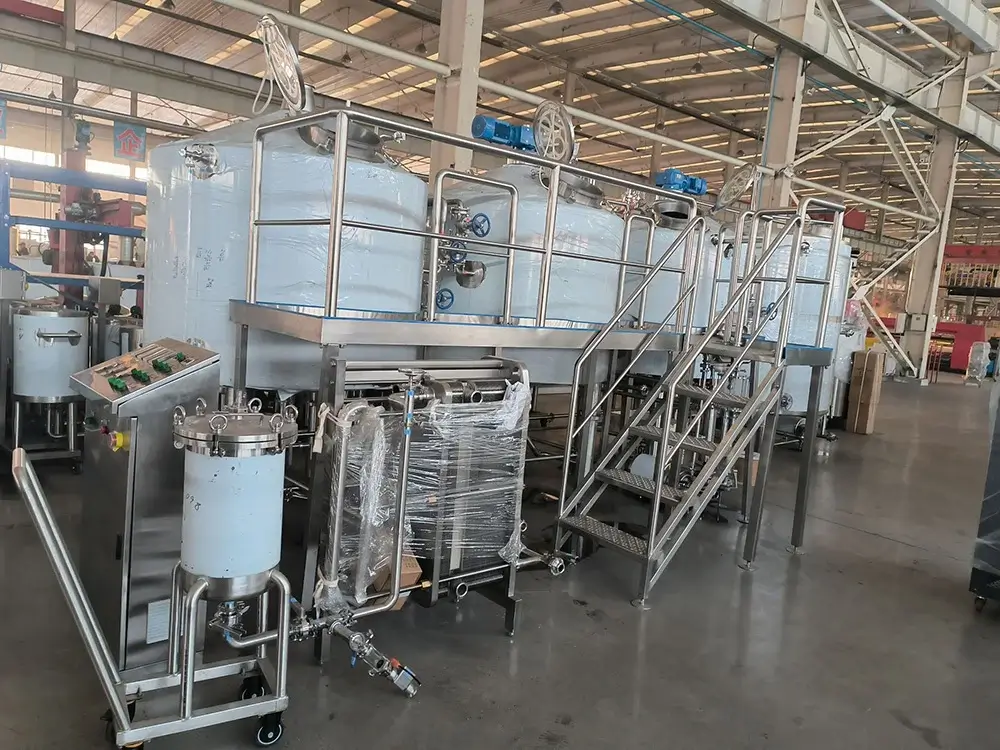
The number of fermentation tanks should be calculated according to batch size, fermentation and maturation time, beer styles, and desired production frequency.
For example, a 1000L brewhouse does not automatically mean that two 1000L fermenters are enough. If fermentation takes two weeks and the brewery wants several brews every week, additional tanks may be necessary to avoid bottlenecks.
Conical fermenters with independent temperature control provide greater flexibility for yeast management, fermentation temperature, dry hopping, and beer transfer.
A typical cellar plan should also consider:
- Glycol cooling capacity
- Temperature-control valves
- Tank working volume and headspace
- CIP connections
- CO₂ management
- Tank spacing and service access
- Future tank additions
Kitchen Equipment Should Match the Beer Business
If the bar serves food, kitchen equipment should be planned together with the beverage operation.
A compact menu may only require a fryer, convection oven, induction cooker, refrigeration, preparation tables, and ventilation. A larger food menu may require additional cooking equipment and greater exhaust capacity.
The key is workflow.
Food preparation, cooking, plating, dishwashing, and beer service should not compete for the same narrow working area. For example, a busy bar should not require staff to repeatedly cross the kitchen entrance to collect food or glassware.
Equipment selection should also account for peak-hour demand rather than average demand. A fryer that is adequate during a quiet afternoon may become the bottleneck during Friday-night service.
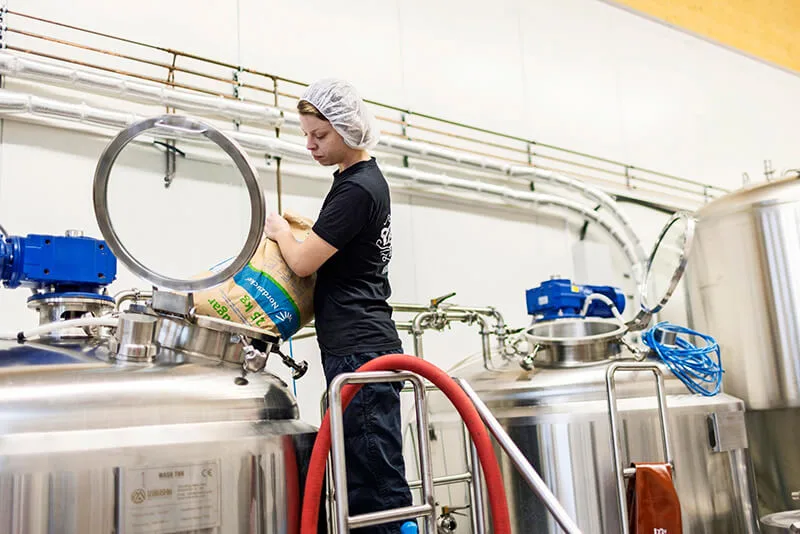
Plan Utilities Before Equipment Arrives
Equipment installation should begin with a utility plan, not with moving machines into the room.
Electrical Requirements
Create a load schedule covering brewery equipment, refrigeration, ice machines, dishwashers, pumps, glycol chillers, ventilation, lighting, and kitchen equipment.
Depending on the equipment and local electrical code, installations may involve 220V or 380V three-phase power. The exact configuration must be confirmed with the equipment manufacturer and local electrician.
Do not assume that a building’s existing electrical service can support a brewery.
Water and Drainage
Water consumption can be significant in both brewing and cleaning.
Provide appropriately sized water connections for the brewhouse, heat exchanger, CIP system, ice machine, dishwasher, and cleaning stations. Drainage should account for both flow rate and wastewater temperature.
Ice machines generally require dedicated drainage and appropriate backflow protection. Brewery areas should have durable floor drains and, where appropriate, drainage channels designed for frequent cleaning and exposure to acidic or alkaline cleaning solutions.
Ventilation and Exhaust
Steam and heat from the brewhouse can quickly make a small production room uncomfortable.
Steam condensate, brewing vapors, kitchen exhaust, and heat from refrigeration equipment should be considered as separate ventilation requirements. The final design should comply with local building, fire, and mechanical codes.
Bar Ergonomics: Reduce Steps During Peak Service
A beautiful bar can still be inefficient if employees have to walk constantly.
Arrange frequently used items according to frequency of use:
Ice → glassware → beer/spirits → garnish → serving area
The exact arrangement depends on the menu, but the principle is simple: high-frequency tasks should require the fewest movements.
Draft towers should be positioned where bartenders can pour without blocking customers or other staff. Refrigerated storage should remain within easy reach, while cleaning and waste areas should be separated from the main service zone.
For a brewpub, consider the relationship between the brewhouse, cellar, bar, and keg storage. Shorter and cleaner material-flow routes generally make daily operation easier.
Build the Equipment Plan Around Future Growth
A new brewery does not need the largest commercial brewery equipment package on day one. It needs equipment that fits the first stage of the business while allowing sensible expansion.
A practical approach is to identify three capacity levels:
Stage 1: opening-day production
Stage 2: expected production after 12–24 months
Stage 3: long-term production target
Then determine which components can be expanded independently. Fermentation tanks, glycol capacity, packaging equipment, utilities, and controls may often be expanded without replacing the entire brewhouse.
This is where a turnkey brewery solution can provide value. A competent equipment manufacturer should consider the brewhouse, cellar, utilities, piping, controls, CIP, and installation as one production system rather than selling individual machines in isolation.
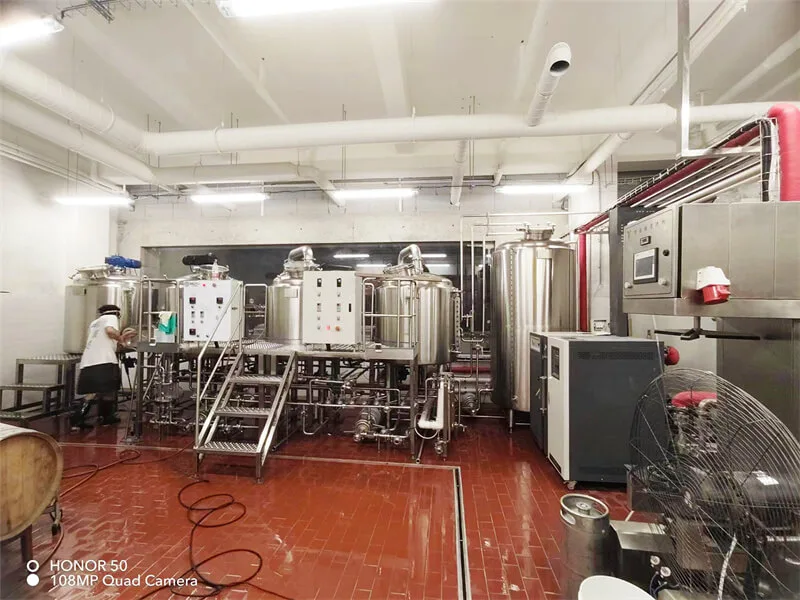
What to Confirm With Your Brewery Equipment Manufacturer
Before signing an equipment order, ask for more than a quotation.
Confirm:
- Equipment working and total volumes
- Electrical specifications
- Steam, electric, or direct-fire heating requirements
- Cooling load and glycol requirements
- Water consumption
- Drainage requirements
- CIP configuration
- Material specifications
- Control system and automation level
- Applicable certifications
- Installation requirements
- Spare parts and after-sales support
- Expansion options
For a new entrepreneur, these details can be more important than the equipment’s appearance or headline capacity.
The right brewery equipment is not necessarily the biggest or most automated package. It is the system that matches your sales forecast, building infrastructure, production schedule, labor model, and expansion strategy. Planning these factors together before construction can reduce installation costs, avoid operational bottlenecks, and give a new brewpub a much stronger foundation for growth.
Planning a Brewpub or Craft Beer Bar ? Kontakt zu METO for a brewery equipment capacity assessment and customized layout proposal.