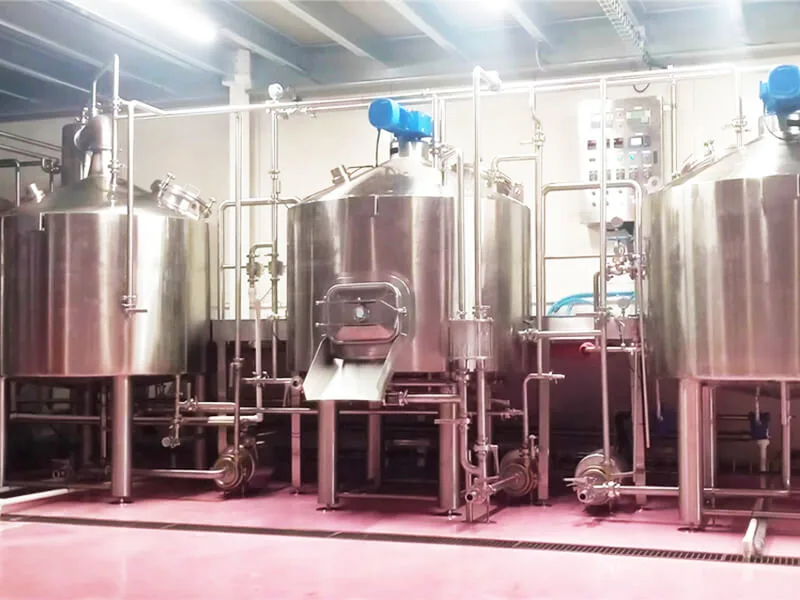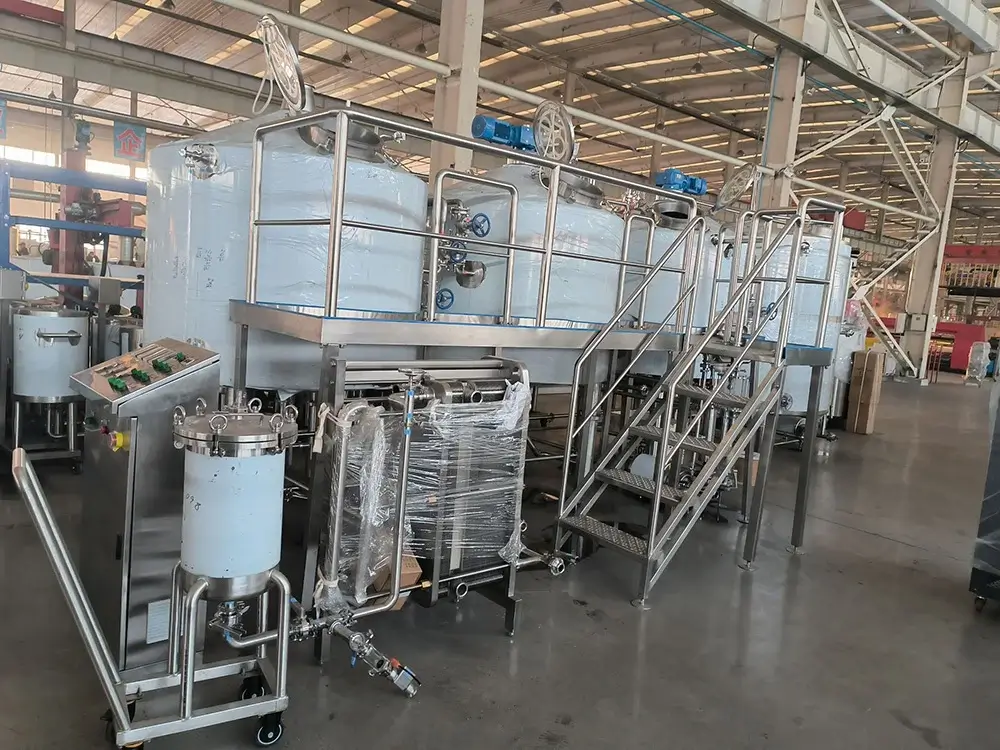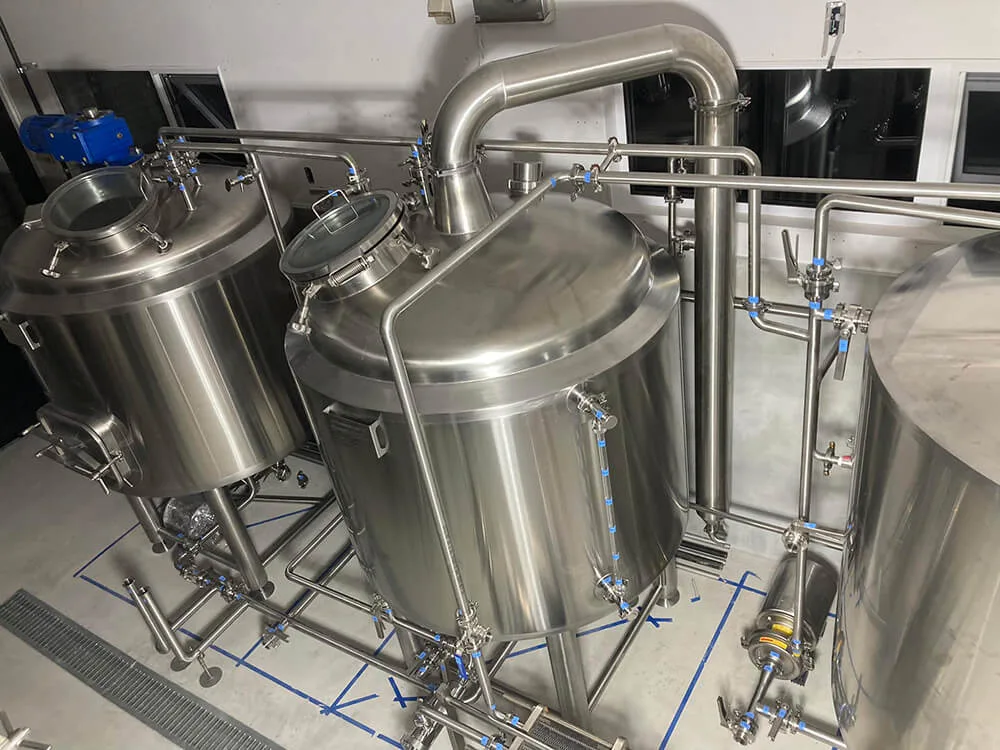
A turnkey brewery equipment package is designed to help investors and brewing businesses establish a brewery with coordinated equipment systems, from wort production to fermentation and beer processing. For small craft breweries, brewpubs, and growing commercial breweries, 500L and 1000L brewing systems are two common capacity options.
However, the right brewery package involves more than selecting a brewhouse. Fermentation tanks, cooling systems, cleaning equipment, pumps, pipelines, and control systems must work together to meet the brewery’s production targets.
As a brewery equipment manufacturer, METO provides customized solutions based on production requirements, beer styles, available space, and local utility conditions. This guide explains what may be included in a 500L or 1000L turnkey brewery equipment package and what buyers should confirm before placing an order.
What Is a Turnkey Brewery Equipment Package?
A turnkey brewery equipment package is an integrated equipment solution designed around a brewery’s production process. Depending on the project scope, it may include the brewhouse, fermentation system, cooling equipment, cleaning system, transfer equipment, and automation components.
Some packages also include beer filtration, bright beer tanks, kegging or bottling equipment, installation, commissioning, and operator training.
The term “turnkey” does not automatically mean that every item required to operate a brewery is included. Buyers should confirm the supply scope, utility requirements, installation responsibilities, and commissioning services with the manufacturer before finalizing the project.
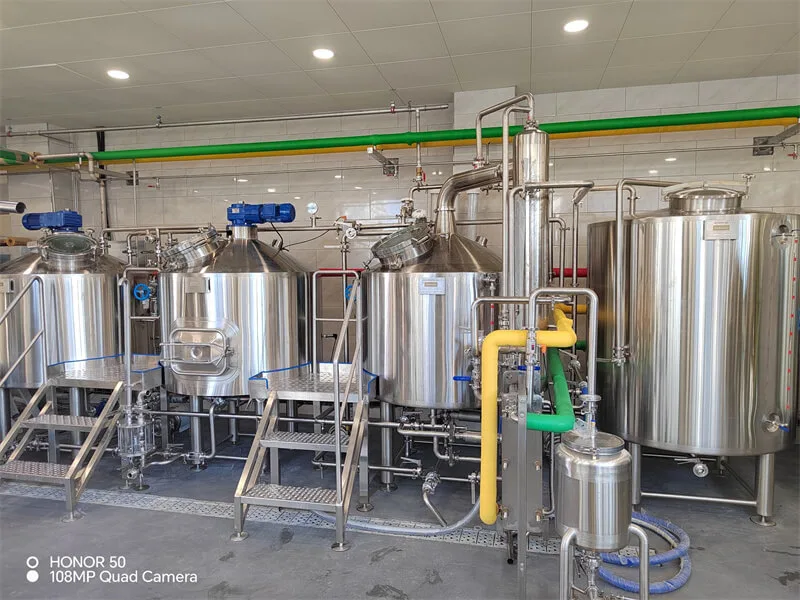
1. Brewhouse System: The Core of Beer Production
The brewhouse converts malt and brewing water into wort through mashing, lautering, boiling, and whirlpool separation. Its configuration affects brewing workflow, batch time, and production flexibility.
A 500L or 1000L brewhouse may use a two-vessel, three-vessel, or four-vessel configuration, depending on the required output, budget, and brewing schedule.
Typical equipment includes:
- Mash tun: Supports the mashing process, allowing malt enzymes to convert starches into fermentable sugars.
- Lauter tun: Separates wort from spent grain.
- Brew kettle: Boils wort with hops to develop the required bitterness and aroma.
- Whirlpool tank or integrated whirlpool function: Helps separate trub and hop particles from wort.
- Wort heat exchanger: Cools hot wort to the target fermentation temperature.
- Pumps, valves, and pipelines: Transfer liquids between vessels and process stages.
Not every system requires a separate vessel for each operation. Some compact breweries use multifunction vessels to reduce the equipment footprint and initial investment.
For a 500L brewery, a compact configuration may suit a brewpub or small craft brewery. A 1000L system may be appropriate for a business planning more frequent brewing or higher output, provided the fermentation and cooling systems are sized accordingly.
2. Fermentation Tanks: Matching Tank Capacity to Production
Fermentation tanks are essential components of a brewery equipment package. After wort cooling and yeast pitching, fermentation tanks provide a controlled environment for yeast activity and beer maturation.
A typical package may include stainless steel cylindrical-conical fermenters, temperature-control jackets, insulation, cleaning spray devices, pressure-rated fittings where required, and sampling connections.
The number and size of fermentation tanks depend on several factors:
- Brewhouse batch volume and brewing frequency
- Fermentation and maturation time
- Beer styles and recipe variety
- Required production continuity
- Whether different beers must ferment simultaneously
For example, a brewery producing several beer styles may need more fermentation tanks than a brewery producing a single core beer, even when both use the same brewhouse capacity.
Buyers should also distinguish between brewhouse capacity and fermenter capacity. A 500L brewhouse does not necessarily require fermenters with exactly 500L of total vessel capacity. The working volume, headspace, fermentation behavior, and intended process must be considered.
For a 1000L system, planning the fermentation cellar carefully is particularly important. Increasing brewhouse capacity without providing enough fermentation space can limit actual production.
3. Cooling System: Controlling Fermentation Temperature
A brewery cooling system helps maintain fermentation temperatures and supports the production of consistent beer.
A typical glycol cooling package may include:
- Glykolkühler
- Glycol storage or buffer tank, depending on system design
- Glycol circulation pumps
- Insulated glycol supply and return pipelines
- Temperature sensors and control valves
- Connections to fermentation tank cooling jackets
The required cooling capacity depends on the number of tanks, fermentation temperature profiles, ambient conditions, wort cooling requirements, and the number of tanks that may need cooling simultaneously.
For breweries operating in hot climates, the chiller should be selected with local ambient temperatures and heat loads in mind. An undersized cooling system can become a production bottleneck during periods of high demand.
When comparing turnkey brewery quotations, buyers should ask for the chiller’s cooling capacity, operating conditions, electrical requirements, and the number of tanks the proposed system is designed to serve.
4. Heating System: Steam, Electric, or Direct Fire
The brewhouse heating method affects installation requirements, energy consumption, temperature control, and maintenance.
Elektrische Heizung may suit compact systems where electrical capacity is sufficient and a separate steam boiler is not preferred.
Dampfheizung can support larger or more demanding brewing operations. The package may require a steam boiler, steam distribution lines, condensate management, and associated safety devices, depending on the agreed supply scope.
Direktbefeuerte Heizung may be an option for certain brewhouse designs, subject to the equipment configuration and applicable local requirements.
The best choice depends on energy availability, utility costs, local regulations, and the desired brewing schedule. Buyers should confirm whether the heating source and all necessary auxiliary equipment are included in the turnkey quotation.
5. CIP Cleaning System: Supporting Brewery Hygiene
Cleaning-in-place (CIP) equipment helps clean tanks and pipelines without dismantling the entire system.
A brewery CIP package may include one or more cleaning tanks, a CIP pump, spray devices, transfer hoses or pipelines, and valves. Depending on the process, it may also include separate storage for alkaline and acidic cleaning solutions.
The design should consider tank geometry, pipeline layout, cleaning flow rates, temperature, chemical compatibility, and drainage arrangements.
For a 500L or 1000L brewery, a properly designed CIP system can reduce manual cleaning work and support repeatable cleaning procedures. The final configuration should match the actual equipment layout rather than being selected solely according to brewhouse capacity.
Cleaning chemicals, water treatment, wastewater handling, and some operating accessories may be supplied separately unless specifically included in the project scope.
6. Water Treatment and Auxiliary Equipment
Water quality directly affects beer flavor and brewing consistency. A turnkey package may include a water treatment system if the source water requires adjustment to meet the brewery’s process requirements.
Depending on the project, auxiliary equipment may include:
- Water filtration or reverse osmosis equipment
- Hot liquor and cold liquor tanks
- Malt mill and grain handling equipment
- Grain transfer or spent-grain handling equipment
- Wort pumps and transfer pumps
- Hoses, valves, and sanitary connections
- Compressed air or other utility connections where required
These items are not automatically included in every turnkey package. The required equipment should be determined by the brewing process, water analysis, site conditions, and the customer’s preferred level of automation.
7. PLC Control and Automation
A brewery control system helps operators monitor and manage important brewing parameters.
Depending on the selected automation level, a package may include a PLC controller, touchscreen interface, temperature sensors, pumps, automated valves, and programmed process sequences.
A manual system offers greater direct operator control and may have a lower initial equipment cost. A semi-automatic system can automate selected operations, while a more advanced PLC system may coordinate multiple process stages.
For a 500L brewery, the right level of automation depends on the available staff, brewing frequency, and operating budget. For a 1000L brewery, automation may become more valuable when several batches, tanks, or recipes need to be managed within the same production schedule.
Buyers should confirm which functions are automated, which still require manual operation, and whether remote monitoring, data logging, or recipe management is included.
8. Beer Storage and Packaging Equipment
Fermentation is not always the final step in the production process. Depending on the beer style and sales model, additional equipment may be needed for maturation, carbonation, storage, and packaging.
Optional equipment may include:
- Bright beer tanks for carbonation and finished-beer storage
- Keg washing and filling equipment
- Bottling or canning machines
- Beer filtration equipment, where required
- Carbon dioxide supply and distribution equipment
- Finished-product transfer pumps and accessories
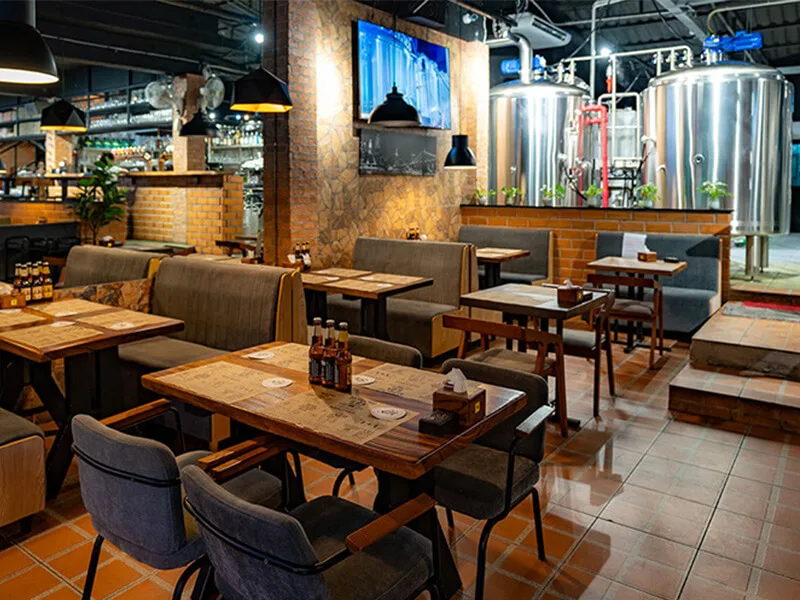
A brewpub serving beer directly from serving tanks may need a different setup from a brewery supplying packaged products to distributors and retailers.
Packaging equipment should therefore be selected according to the planned sales channels and target packaging speed. It is worth confirming whether the quotation includes only brewing and fermentation equipment or the complete process through to packaged beer.
9. Installation, Commissioning, and Technical Support
A turnkey project may also include engineering drawings, equipment layout planning, installation guidance, commissioning, and operator training.
The actual service scope varies by supplier and project. International buyers should clarify whether on-site installation is included, whether travel and accommodation are extra, and who is responsible for connecting utilities and preparing the production area.
Before delivery, the project team should confirm equipment dimensions, access routes, floor loading, drainage, electrical supply, water supply, ventilation, and any required boiler or pressure-system arrangements.
For overseas projects, it is also important to review the applicable local standards and import requirements. Certification and compliance needs depend on the equipment type, pressure rating, electrical configuration, destination, and installation conditions.
10. 500L vs. 1000L Turnkey Brewery Equipment: What Changes?
The difference between a 500L and a 1000L package is not simply the size of the brewhouse. The complete system must be designed to support the intended production schedule.
| Equipment or design factor | 500L system | 1000L system |
|---|---|---|
| Sudhaus | Compact configuration may be suitable | May require greater throughput and more process flexibility |
| Fermentation cellar | Sized for the planned batch frequency and fermentation cycle | Often requires more careful planning for higher production targets |
| Das Kühlsystem | Based on tank load and operating conditions | Must account for the larger process load and simultaneous cooling demand |
| Automation | Manual or semi-automatic options may be sufficient | Automation can help manage more frequent production |
| Verpackung | May suit brewpub or small-batch sales | May require higher packaging capacity as sales grow |
| Expansion planning | Allow room for additional tanks and utilities | Plan for future tank additions and packaging upgrades |
These are general planning considerations, not fixed rules. A well-designed 500L system may be appropriate for a demanding specialty operation, while a 1000L system may be unnecessary for a business with limited sales volume.
The final configuration should follow the production plan rather than the nominal brewhouse capacity alone.
How to Choose the Right Turnkey Brewery Package
Before requesting a quotation, buyers should prepare the following information:
- Target production: Expected annual output, weekly brewing days, and batches per day.
- Beer styles: The main products, fermentation requirements, and recipe variety.
- Fermentation plan: Required tank count, working volume, and expected fermentation time.
- Utilities: Available electricity, heating source, water supply, drainage, and cooling conditions.
- Packaging requirements: Draft beer, kegs, bottles, cans, or a combination.
- Installation location: Available floor area, ceiling height, access routes, and local compliance requirements.
- Project scope: Whether the quotation should cover brewing only, a complete brewery, installation, or commissioning.
Providing these details helps the manufacturer recommend a system that matches the actual project rather than offering a standard package that may not meet the customer’s needs.
Why Work with a Brewery Equipment Manufacturer?
Working directly with a manufacturer can make it easier to coordinate vessel design, equipment dimensions, process connections, cooling requirements, and automation.
As a brewery equipment manufacturer, METO develops customized equipment solutions for different production capacities and brewing applications. The project configuration can be planned around the customer’s production targets, beer styles, available utilities, and installation space.
From brewhouse vessels and fermentation tanks to cooling, cleaning, and control systems, the goal is to create an integrated solution that supports practical operation and future business development.
The exact supply scope, materials, technical specifications, and project services should be confirmed in the final technical proposal.
Häufig gestellte Fragen
What equipment is included in a 500L turnkey brewery package?
A typical package may include a brewhouse, fermentation tanks, a wort heat exchanger, pumps, pipelines, a cooling system, and cleaning equipment. Water treatment, packaging equipment, a boiler, and installation services may be optional, depending on the project scope.
Is a 1000L brewery suitable for commercial production?
Yes. A 1000L brewhouse can be suitable for commercial craft beer production when its brewing schedule, fermentation capacity, cooling system, and packaging equipment are designed to meet the target output. Actual production depends on the number of batches, process losses, and operating days.
How many fermentation tanks are needed for a 500L or 1000L brewery?
There is no single answer for every brewery. The required number depends on brewing frequency, fermentation and maturation time, beer styles, tank working volume, and production targets. A manufacturer can calculate a suitable configuration after reviewing the brewing schedule.
Does a turnkey brewery package include bottling or canning equipment?
Not necessarily. Some packages focus on wort production and fermentation, while others extend through finished-beer storage and packaging. Buyers should confirm whether kegging, bottling, canning, carbonation, and related utilities are included.
Can a 500L or 1000L brewery be customized?
Yes. Brewhouse configuration, tank dimensions, heating method, cooling capacity, control system, and auxiliary equipment can often be customized according to the project requirements and applicable technical constraints.
Plan Your Brewery Project with METO
Choosing a turnkey brewery package involves more than selecting a tank size. The brewhouse, fermentation cellar, cooling system, cleaning equipment, and packaging line must be planned as a coordinated production system.
If you are planning a 500L or 1000L brewery, METO can help you evaluate equipment configuration and develop a solution based on your production goals, site conditions, and budget.
Kontakt zu METO to discuss your brewery project and request a customized equipment proposal.