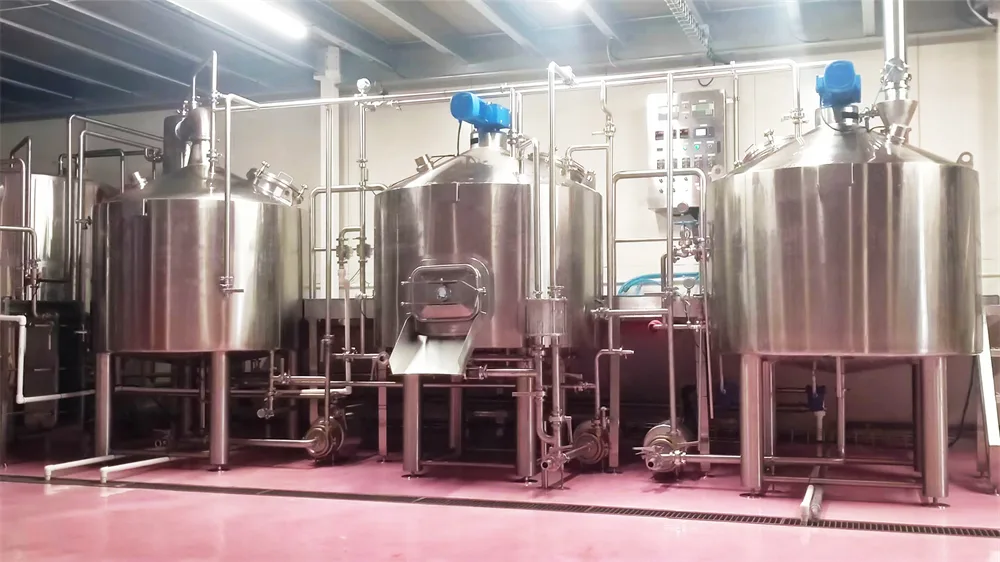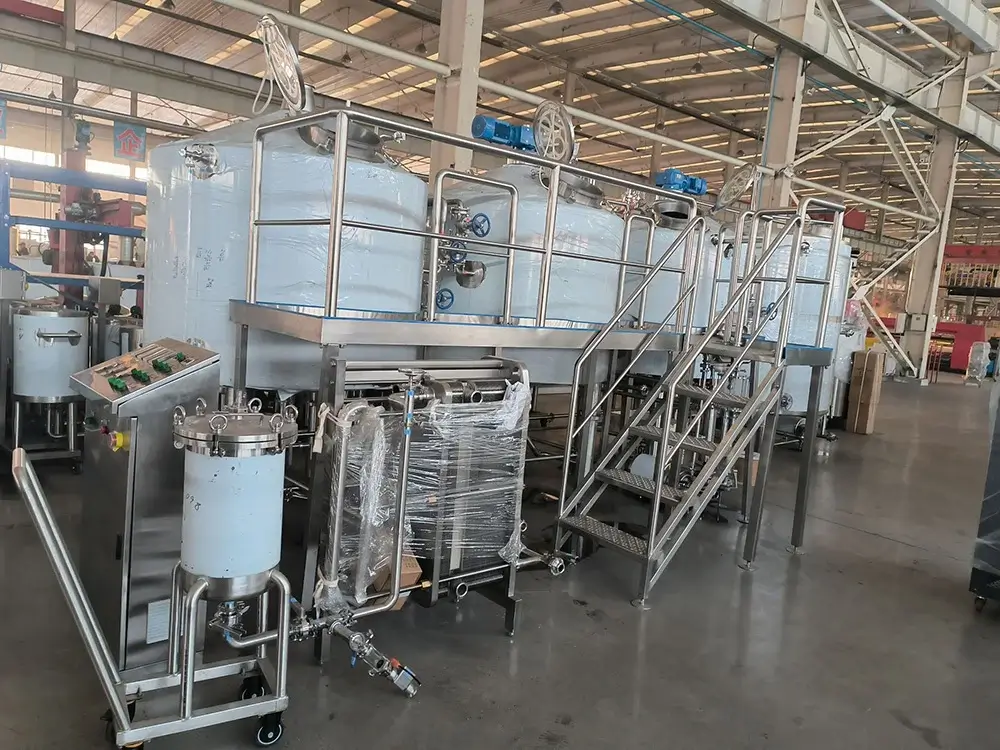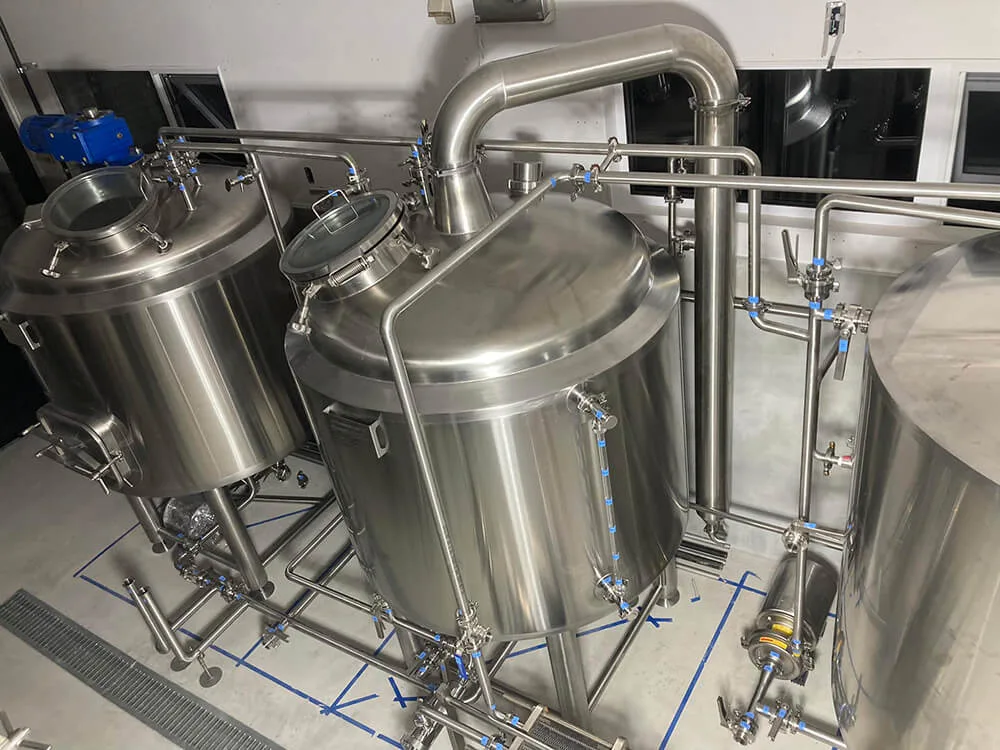
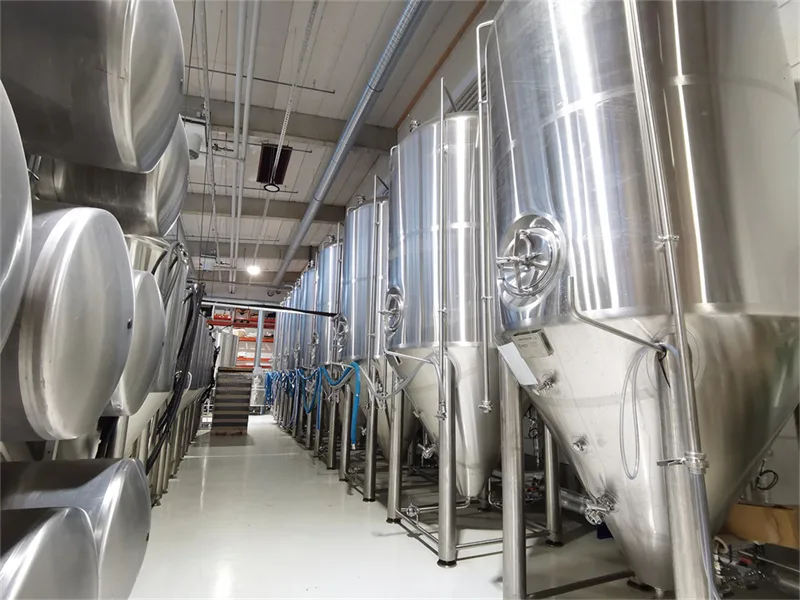
Fermentation tanks are the core of any brewery.
Whether you are launching a startup brewery or expanding an existing operation, the right fermenter design and maintenance strategy will directly impact beer quality, production efficiency, and long-term operating costs.
This article covers three key areas every brewery should understand:
- Different fermentation tank choices for startup vs expanding breweries
- Common fermentation tank problems—and how to avoid them
- Practical CIP cleaning tips to keep fermenters performing reliably
1. Fermentation Tank Choices: Startup Brewery vs Expanding Brewery
Startup Breweries: Flexibility Comes First
For new breweries, capital efficiency and flexibility are usually the top priorities. Production volumes are still being tested, beer styles may change, and future growth plans are not fully defined.
Recommended fermentation tank strategy for startups:
- Smaller-capacity fermenters (e.g. 500L–1000L)
- Multiple tanks rather than one large tank
- Standard pressure rating (0.15 MPa)
- Side manway design for easier access and cleaning
Why this works:
- Allows multiple beer styles to be produced simultaneously
- Reduces risk if a single batch fails
- Makes scheduling easier when demand is uncertain
- Simplifies future expansion by adding tanks gradually
For startup breweries, fermentation tanks should support experimentation—not limit it.
Expanding Breweries: Efficiency and Throughput Matter
As breweries grow, the focus shifts toward:
- Consistent output
- Optimized tank turnover
- Reduced labor cost per batch
Recommended fermentation tank strategy for expansion:
- Larger fermenters (e.g. 2000L–5000L)
- Combination of standard fermenters and unitanks
- Higher pressure ratings (0.3 MPa) for carbonation and conditioning
- Dedicated tank zoning for fermentation, maturation, and bright beer
Why this works:
- Fewer tanks needed to achieve higher output
- Improved workflow efficiency
- Better integration with packaging lines
- Lower cost per liter at scale
An expanding brewery benefits from fermentation tanks designed as part of a long-term production system, not just individual vessels.

2. Common Fermentation Tank Problems (and How to Avoid Them)
Even well-designed fermenters can cause issues if key details are overlooked.
Problem 1: Inconsistent Fermentation Temperature
Cause:
- Poor jacket design
- Insufficient cooling surface
- Uneven glycol flow
How to avoid it:
- Use multi-zone cooling jackets
- Ensure proper jacket placement (cone + body)
- Match chiller capacity to total fermentation volume
Problem 2: Overpressure or Safety Valve Issues
Cause:
- Incorrect pressure rating
- Poor-quality PRV or venting design
How to avoid it:
- Select tanks with certified pressure ratings
- Use reliable pressure relief valves
- Regularly inspect pressure-related fittings
Problem 3: Difficult Cleaning and Hygiene Risks
Cause:
- Poor internal weld quality
- Dead corners or shadow areas
- Incorrect spray ball positioning
How to avoid it:
- Ensure sanitary welds and polished interiors
- Design tanks with full drainability
- Use properly sized and positioned CIP spray devices
Most fermentation tank problems are design-related, not operational—and can be prevented during the planning stage.
3. CIP Cleaning Tips for Fermentation Tanks
An effective CIP (Clean-In-Place) process is essential for beer quality and tank longevity.
Tip 1: Use the Right Cleaning Sequence
A standard CIP cycle typically includes:
- Pre-rinse with warm water
- Caustic cleaning to remove organic residues
- Intermediate rinse
- Acid cleaning (periodic)
- Final rinse and sanitization
Skipping steps may save time—but increases contamination risk.
Tip 2: Control Temperature, Flow, and Contact Time
Effective CIP depends on:
- Correct cleaning solution temperature
- Sufficient pump flow rate
- Adequate contact time on all surfaces
Low flow or short cycles often lead to incomplete cleaning, especially in the cone and manway areas.
Tip 3: Pay Attention to Manways and Valves
Manways, sample valves, and racking arms are common contamination points.
Best practices:
- Regularly inspect gaskets and seals
- Disassemble and manually clean valves when needed
- Replace worn seals before leaks or hygiene issues occur
A well-maintained CIP system protects not only beer quality—but also tank lifespan.
Conclusion: Fermentation Tanks Are a Long-Term Investment
Choosing the right fermentation tanks—and maintaining them properly—requires thinking beyond capacity alone.
- Startup breweries need flexibility and room to experiment
- Expanding breweries need efficiency and scalable design
- Common problems can be avoided with proper engineering
- Effective CIP practices protect quality and reduce downtime
If you’re planning a new brewery or upgrading an existing one, a well-designed fermentation tank system can make a significant difference.
If you have any questions about fermentation tanks or brewery equipment, feel free to contact us.