As craft breweries move beyond pilot systems and early-stage production, the 2000L brewing system has become one of the most popular choices for growth-focused breweries worldwide. It offers a strong balance between production efficiency, operational control, and scalability—without the complexity of large industrial plants.
This complete guide explains what a 2000L craft brewery system is, who it is designed for, how it is typically configured, and what brewery founders should consider before making an investment.
1. Who Is a 2000L Brewing System Designed For?
A 2000L (20 hL) brewing system is not an entry-level solution. It is designed for breweries that already understand their market and are preparing for stable, repeatable production at scale.
A 2000L system is typically suitable for:
- Growing craft breweries expanding from 500L–1000L systems
- Regional breweries supplying multiple bars or distributors
- Established brewpubs upgrading to production brewing
- Contract brewers transitioning to their own facility
In terms of output, a 2000L system can generally support:
- 1,500–3,000 hL annual production (depending on brew frequency)
- 2–3 brews per day with proper cellar sizing
- Multiple core brands plus seasonal beers
If your current system is consistently running at capacity, a 2000L brewhouse often represents the most cost-effective next step.
2. 2000L vs Smaller and Larger Brewing Systems
Understanding where a 2000L system sits compared to other sizes helps avoid under- or over-investment.
Compared to 1000L Systems
- Higher output per labor hour
- Lower cost per liter of beer
- More demanding engineering and utility requirements
- Requires more disciplined process control
Compared to 3000L+ Systems
- Lower initial investment
- More flexible for recipe changes and seasonal production
- Easier to operate with a small brewing team
- Better suited to craft-focused rather than mass production
For many breweries, 2000L is the “sweet spot” between craftsmanship and commercial efficiency.
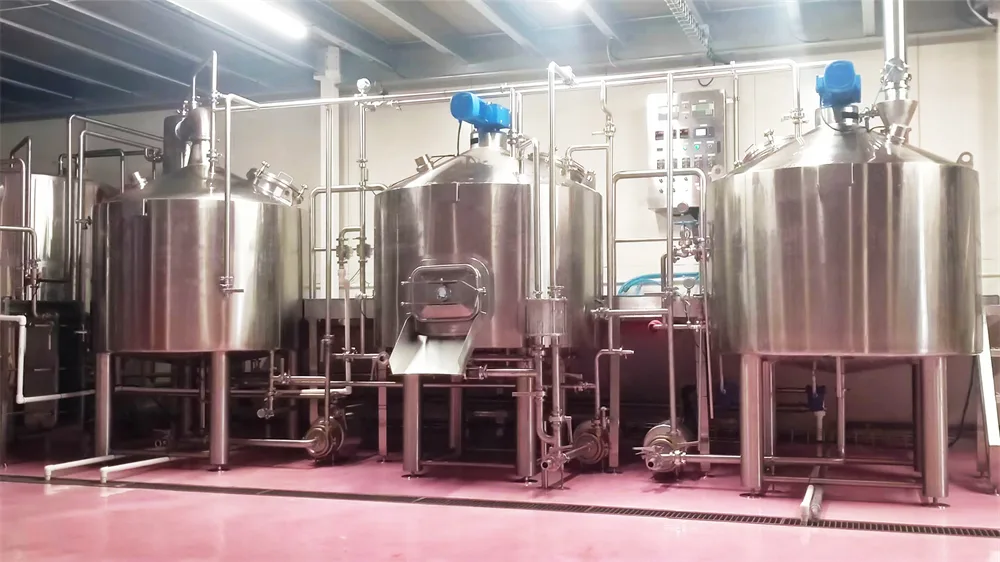
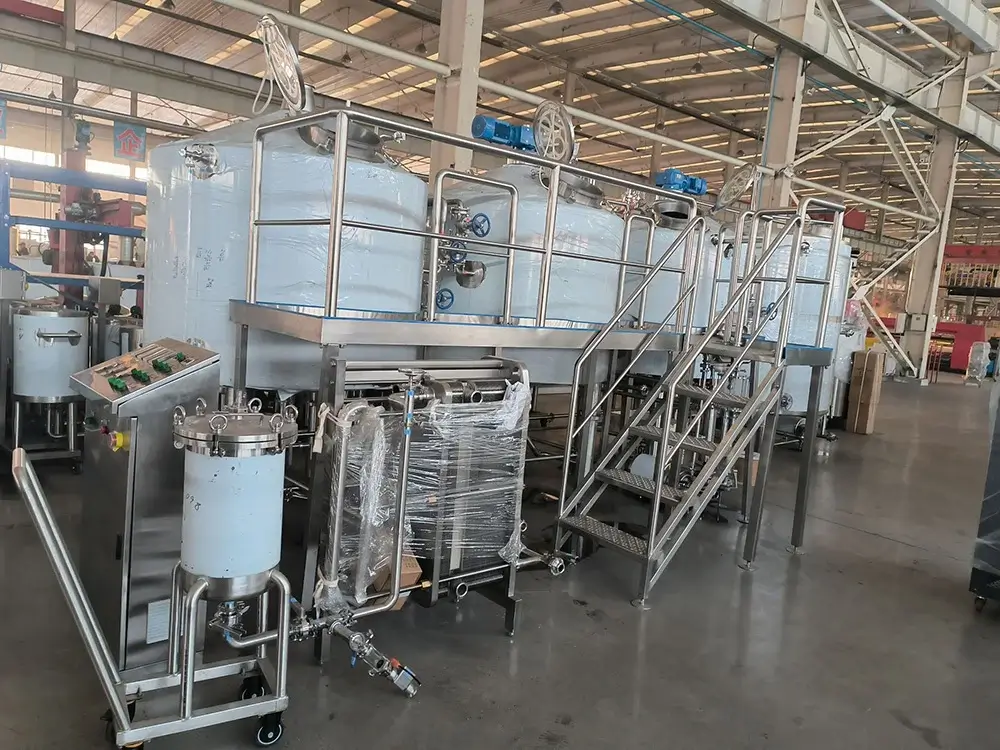
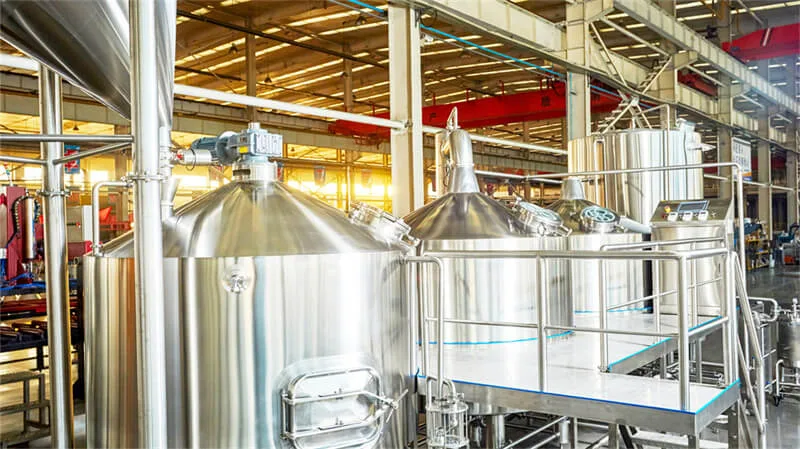
3. Typical Configuration of a 2000L Craft Brewery
A professional 2000L brewery is not just a brewhouse—it is a complete production system. Below is a typical configuration framework.
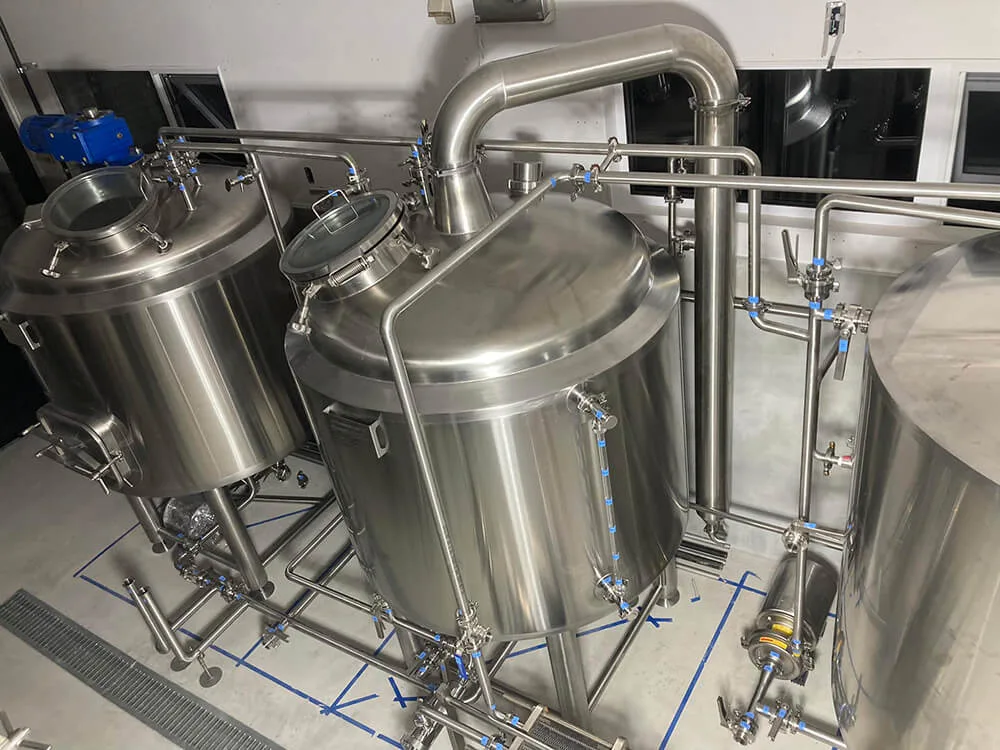
4. Brewhouse Design (The Core of the System)
Vessel Configuration
Common options include:
- Two-vessel brewhouse
Mash/Lauter Tun + Kettle/Whirlpool
(Space-efficient, cost-effective) - Three-vessel brewhouse
Mash Tun + Lauter Tun + Kettle/Whirlpool
(Higher efficiency, better lautering control) - Four-vessel brewhouse
Mash Tun + Lauter Tun + Kettle + Whirlpool
(Maximum throughput and flexibility)
For most 2000L breweries, three- or four-vessel designs are preferred to support double-batch brewing and higher daily output.
Heating Method
- Steam heating is the industry standard at this scale
- Provides fast temperature response and uniform heating
- Supports wort boiling consistency and energy efficiency
Electric heating is technically possible but often limited by local power availability at 2000L scale.
5. Fermentation Cellar Configuration
The fermentation cellar determines how efficiently your 2000L brewhouse can operate.
Fermentation Tank Strategy
Typical setups include:
- 6–12 fermentation tanks
- Tank sizes: 2000L, 4000L, or mixed sizes
- Unitanks for fermentation and conditioning
A common ratio is:
1 brewhouse : 6–8 fermentation tanks
This allows continuous brewing without bottlenecks.
Tank Design Considerations
- Jacketed cooling zones (cone + shell)
- Pressure-rated vessels
- Optimized height-to-diameter ratios
- Accurate temperature control and sampling
Well-designed fermenters are critical for consistency and yeast management.
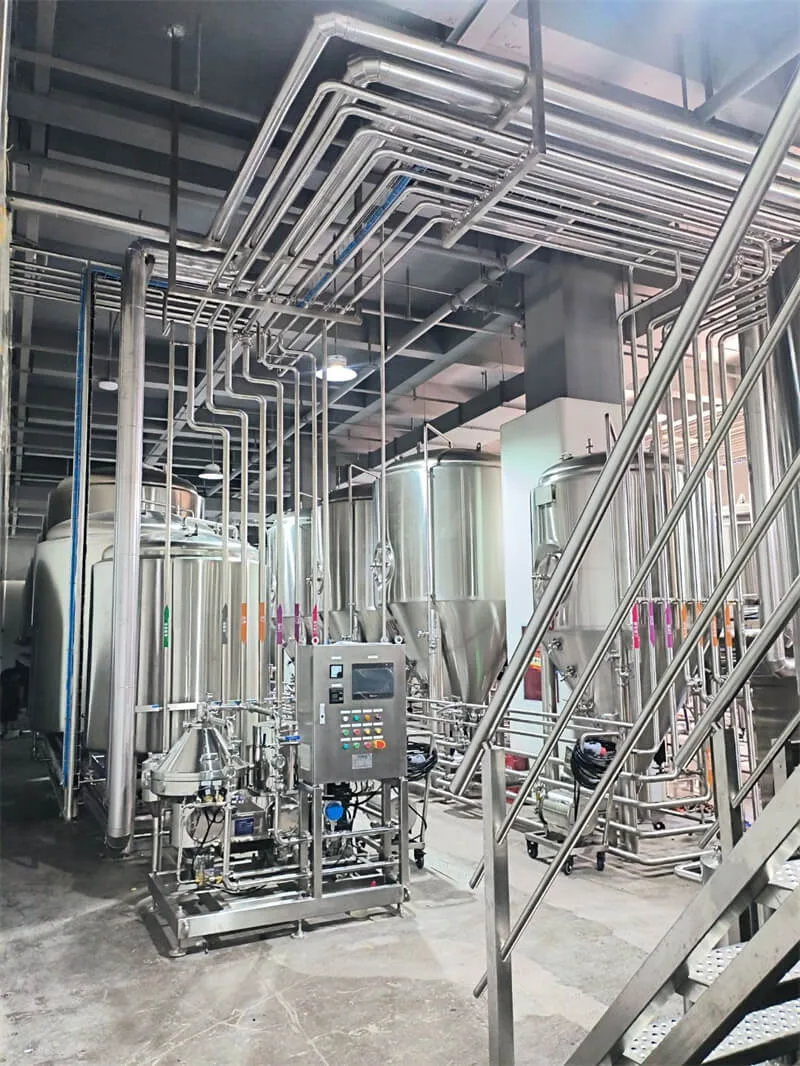
6. Utility Systems (Often Underestimated)
At 2000L scale, utilities are no longer secondary—they are essential.
Cooling System
- Glycol chiller sized for peak fermentation load
- Insulated piping with proper flow balancing
- Individual tank temperature control
Steam System
- Steam boiler matched to brewhouse heating demand
- Proper condensate return
- Safety valves and pressure control
CIP System
- Dedicated CIP tank(s)
- High-capacity CIP pump
- Automated or semi-automated cleaning programs
Control & Automation
- PLC-based control systems
- Recipe management and data logging
- Remote diagnostics (optional)
A reliable utility system protects beer quality and reduces downtime.
7. Engineering Challenges at the 2000L Scale
As system size increases, engineering quality becomes critical.
Key challenges include:
- Pipe sizing and flow balance
- Heat loss and energy recovery
- Dead zones in CIP coverage
- Pump selection for viscous fluids
- Consistent lautering at higher grain loads
At this level, breweries benefit greatly from custom engineering rather than standard layouts.
8. Space and Layout Considerations
A typical 2000L brewery requires thoughtful layout planning.
General Space Guidelines
- Brewhouse area: compact but serviceable
- Fermentation cellar: largest footprint
- Clear separation of hot and cold areas
- Adequate ceiling height for fermenters
Workflow Matters
- Short material paths
- Safe access for cleaning and maintenance
- Clear logistics for raw materials and finished beer
Good layout design improves efficiency, safety, and future expansion.
9. Staffing and Daily Operation
A 2000L brewery does not require a large team—but it does require structure.
Typical staffing:
- 1 head brewer
- 1–2 brewing assistants
- Shared staff for packaging and logistics
Operational considerations:
- Single-shift or double-shift brewing
- Planned CIP schedules
- Preventive maintenance routines
Modern automation allows small teams to run 2000L systems efficiently.
10. Investment Logic and ROI Expectations
Rather than focusing on equipment price alone, breweries should evaluate total investment logic.
Investment categories include:
- Brewing equipment
- Installation and commissioning
- Utilities (steam, cooling, electrical)
- Building modifications
ROI drivers:
- Increased batch efficiency
- Lower unit production cost
- Improved consistency and reduced losses
- Expanded distribution potential
Well-utilized 2000L systems often achieve healthy returns within a reasonable operating horizon, depending on market conditions and sales strategy.
11. How to Choose the Right 2000L Brewery Equipment Supplier
At this scale, the supplier is a long-term partner—not just a vendor.
Key evaluation criteria:
- Proven experience with 2000L+ projects
- Engineering customization capability
- Turnkey project support
- Installation and commissioning services
- Long-term technical and spare-parts support
A reliable supplier helps breweries avoid costly mistakes and scale with confidence.
Final Thoughts
A 2000L craft brewery system represents a major milestone in a brewery’s growth journey. It bridges the gap between small-batch creativity and commercial production efficiency.
With the right configuration, engineering support, and operational planning, a 2000L system can become the backbone of a sustainable, scalable craft brewery—capable of delivering consistent quality while supporting long-term brand growth.