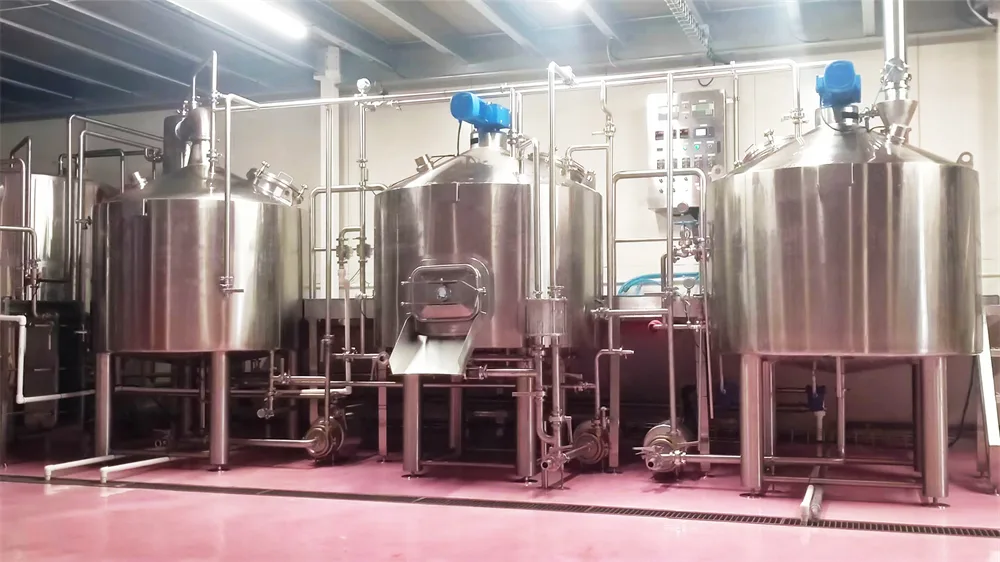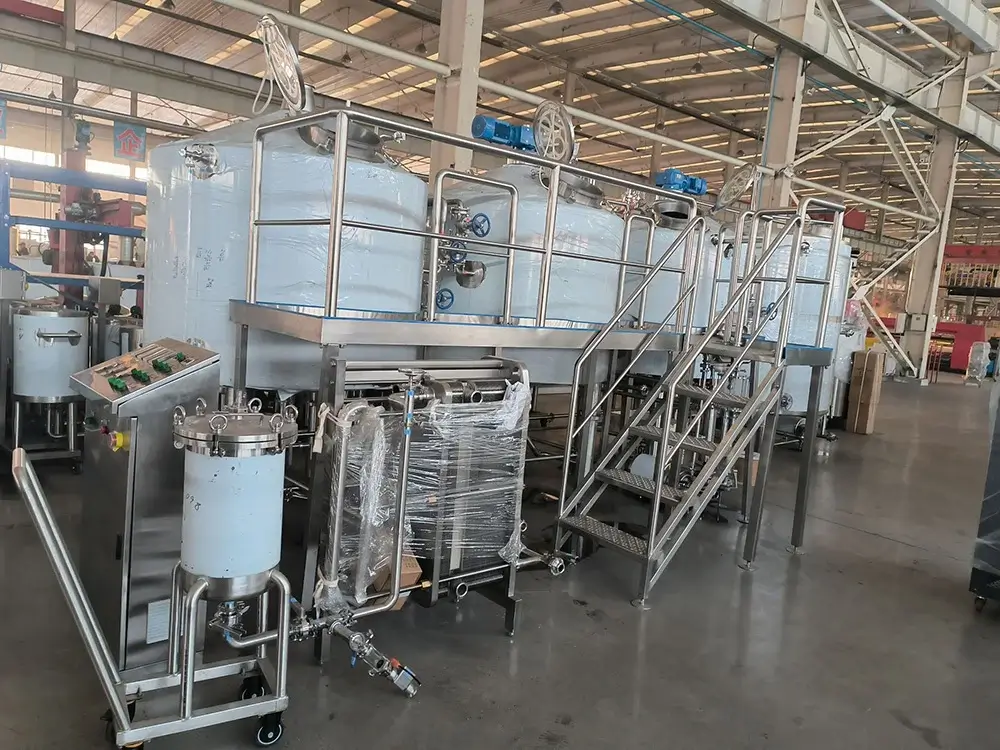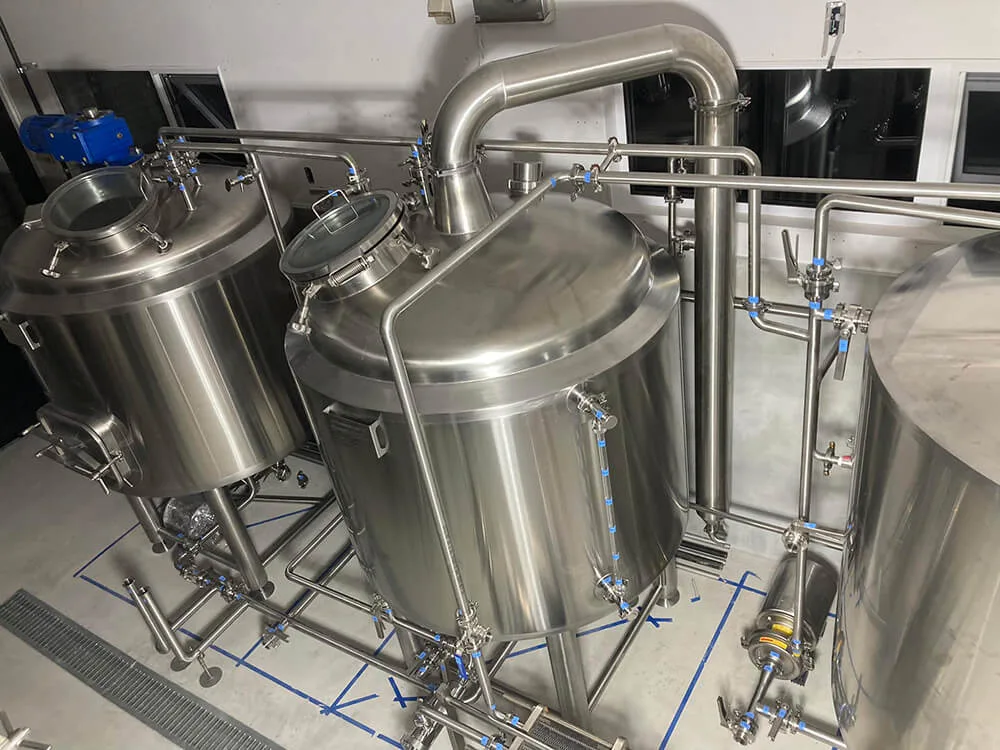
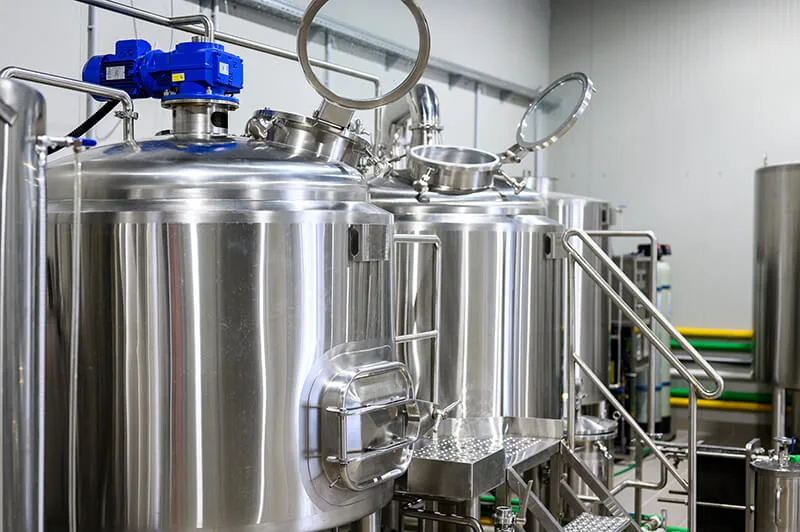
As the brewing industry continues to evolve, more producers are turning from traditional manual processes to automated brewing systems. Automatic brewing equipment allows breweries to increase production capacity, improve product consistency, and reduce labor requirements. By integrating intelligent control technology with advanced brewing hardware, the brewing process becomes more standardized, efficient, and highly controllable.
Key Features of Automatic Brewing Equipment
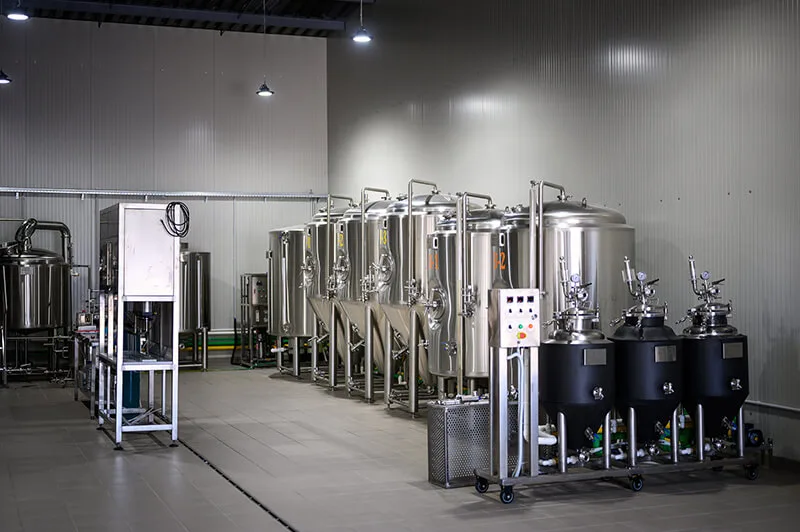
Automatic brewing equipment is designed to manage the entire brewing cycle—from raw material preparation to mashing, boiling, cooling, and fermentation—with minimal manual intervention. Once parameters are set, the system automatically executes every stage, greatly reducing operational errors and improving overall efficiency.
Core Functions Include:
- Automatic Material Processing
Handles malt milling, washing, and mixing to create uniform mash suitable for efficient conversion. - Precise Temperature & Time Control
Ensures accurate heating and cooling during mashing, boiling, and fermentation—critical for flavor stability. - Real-Time Monitoring & Data Tracking
Built-in sensors monitor gravity, temperature, pH, and fermentation progress, providing accurate digital control. - Intelligent Automation System
Central control panel or PLC system supports recipe programming, remote operation, and automated scheduling. - CIP Automatic Cleaning System
Enables efficient internal cleaning and sanitization without disassembly, ensuring hygiene and reducing downtime.
Main Components of Automatic Brewing Equipment
- Malt Crushing System
Prepares grain for optimal starch-to-sugar conversion. - Mash / Lauter / Kettle System
Automates mashing, filtering, boiling, hop addition, and whirlpool separation. - Heat Exchanging & Cooling
Rapidly cools wort to yeast-ready temperature, ensuring quality and preventing contamination. - 发酵罐
Controlled temperature fermentation to guarantee flavor stability and efficient yeast processing. - 明亮的啤酒罐
Clarifies beer and stabilizes carbonation before packaging. - PLC 控制系统
Acts as the brain of the entire system, coordinating continuous and precise production. - CIP 清洁装置
Supports safe and efficient maintenance with automatic chemical cleaning cycles.
Full-Automatic vs Semi-Automatic Brewing Systems
| System Type | Features | Suitable For |
|---|---|---|
| Fully Automatic System | PLC intelligent control, minimal manual work, high efficiency, consistent results | Medium-large commercial breweries and high-volume production |
| Semi-Automatic System | PID or manual control, requires operator adjustments, highly flexible | Craft breweries, small-scale production, home or pilot systems |
Fully automatic equipment significantly improves efficiency and consistency, while semi-automatic systems offer more hands-on control and lower cost.
How to Choose the Right Automated Brewing System
Before investing, consider the following factors:
- Production Scale – pilot testing or full commercial output?
- 自动化水平 – fully automated or semi-automated?
- Cleaning & Maintenance – equipment with integrated CIP saves time and ensures hygiene.
- Budget – balance cost with functionality and long-term productivity.
Applications of Automatic Brewing Equipment
Automatic brewing systems are widely used for:
- Craft beer production
- Wine and cider fermentation
- Distilled spirits preparation (with additional distillery modules)
- Kombucha and other fermented beverages
From small craft breweries to industrial producers, automation improves productivity and delivers stable quality across every batch.
结论
自动酿造设备已成为酿酒厂提高效率、减少劳动力需求和保持产品质量稳定的理想解决方案。通过智能控制、精确的酿造参数和集成的清洁系统,自动化将酿造转变为一个简化和可扩展的生产流程。根据规模和需求选择合适的设备可以显著提高性能和盈利能力。
如果您对酿酒有任何疑问,请随时 联系我们 Meto 设备。