Selecting the right fermentation tank is one of the most important decisions for any brewery, winery, cidery, or beverage producer. The two most common designs—single-wall fermenter and double-wall jacketed fermenter—may look similar on the surface, but their construction, performance, and long-term value differ significantly.
Whether you are starting a small home brewery or scaling up to commercial production, understanding these differences will help you choose equipment that boosts quality, efficiency, and profitability.
1. What Is a Single-Wall Fermentation Tank?
A single-wall fermentation tank features a straightforward, one-layer stainless-steel construction with no insulation and no cooling jacket.
Its simple design makes it popular among hobby brewers and small-scale producers.
Key Characteristics
- One stainless-steel layer (304/316)
- No insulation or glycol cooling jacket
- Minimal components—basic valves, manway, and airlock
- Low cost and easy to maintain
Advantages
- Budget-friendly for new brewers or startups
- Lightweight, easy to transport or reposition
- Simple operation with minimal maintenance
Limitations
- No temperature control
- Affected by ambient temperature, which limits fermentation stability
- Not suitable for cold crashing or lager fermentation
Best Applications
- Home brewing
- Experimental small batches
- Warm-fermented beer styles (e.g., saisons, Belgian ales)
- Kombucha, mead, or simple fruit fermentations
If you need an entry-level fermenter without sophisticated cooling, a single-wall fermenter offers excellent value.
2. What Is a Double-Wall Jacketed Fermentation Tank?
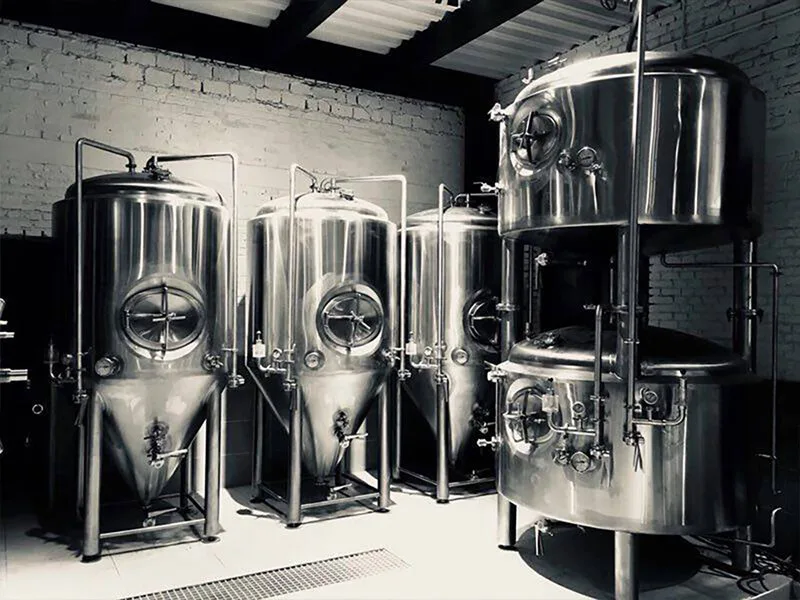
A double-wall fermentation tank, also known as a jacketed fermenter, is engineered for professional brewing.
Its structure includes an inner tank, an outer shell, and insulation between the layers. The key feature is the glycol cooling jacket, enabling accurate and consistent temperature control throughout fermentation.
Key Characteristics
- Double-layer stainless-steel construction
- Low thermal conductivity PU
- Glycol cooling jacket for precision temperature control
- Cone bottom for yeast collection
- CIP spray ball and pressure rating (for unitanks)
Advantages
- Precise fermentation temperature control
- Energy-efficient with excellent insulation
- Supports cold crash, lagering, maturation, and carbonation
- Improves yeast activity and flavor consistency
- Built for long-term commercial production
Limitations
- Higher investment cost
- Requires a glycol chiller system
- Heavier and less portable
Best Applications
- Craft breweries and microbreweries
- Cider, wine, and kombucha production
- Lager fermentation
- Any beverage requiring consistency and high-quality results
If your business depends on repeatable flavor and tight fermentation control, a jacketed fermenter is essential.
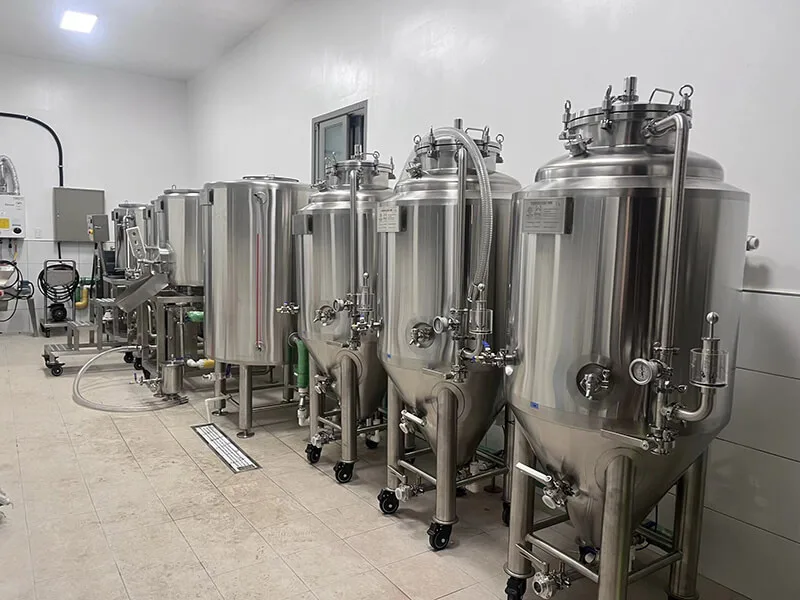
3. Structural and Performance Comparison
| 特点 | Single-Wall Fermenter | Double-Wall Jacketed Fermenter |
|---|---|---|
| Construction | One stainless-steel layer | Insulated double-layer with jacket |
| 温度控制 | None | Glycol cooling system |
| 能源效率 | Low | High |
| Fermentation Stability | Low | 优秀 |
| Suitable for Cold Crash | ❌ No | ✅ Yes |
| Cost | Low | Higher, long-term ROI |
| Recommended For | Home & hobby brewing | Commercial & craft production |
4. Why Temperature Control Matters in a Fermentation Tank
The success of your fermentation depends on accurate temperature management.
Yeast is highly sensitive—too warm and it produces off-flavors; too cold and fermentation stalls.
A jacketed fermenter gives brewers full control over the process, ensuring:
- Balanced ester and phenol production
- Consistent alcohol content
- Proper yeast attenuation
- Crystal-clear beer through cold crashing
For breweries aiming for stable, premium-quality beverages, temperature control is not optional—it’s a necessity.
5. Which Fermentation Tank Should You Choose?
Choose a Single-Wall Fermenter If:
- You are brewing at home or running small-scale production
- Your ambient environment has stable temperature
- You mainly produce warm-fermented beverages
- You want an economical solution
Choose a Jacketed Fermenter If:
- You are operating or planning a commercial brewery
- Precise fermentation temperatures are required
- You produce lagers, cider, wine, or cold-fermented beverages
- You need consistent batches and professional quality
- You want equipment that grows with your business
6. Final Thoughts
Both single-wall fermenters and double-wall jacketed fermenters play important roles in the brewing world. The best option depends on your production scale, budget, and quality goals.
- Single-wall fermenters offer simplicity and affordability—perfect for beginners and small operations.
- Jacketed fermentation tanks provide professional temperature control and long-term reliability—ideal for commercial breweries seeking premium results.
Choosing the right fermentation tank ensures stable performance, better flavor, and a more efficient brewing process.
如果您对酿酒有任何疑问,请随时 联系我们 Meto 设备。