商业啤酒生产需要专业的啤酒酿造设备,以确保稳定的产量、一致的质量和高效的配送。无论是新建啤酒厂还是升级现有设备,了解完整的啤酒厂生产线对于选择合适的系统都至关重要。
This guide summarizes the core equipment, key technical considerations, and supplier selection criteria for a large-scale brewhouse system designed for international commercial breweries.
1. Main Equipment in a Large Brewery Production Line
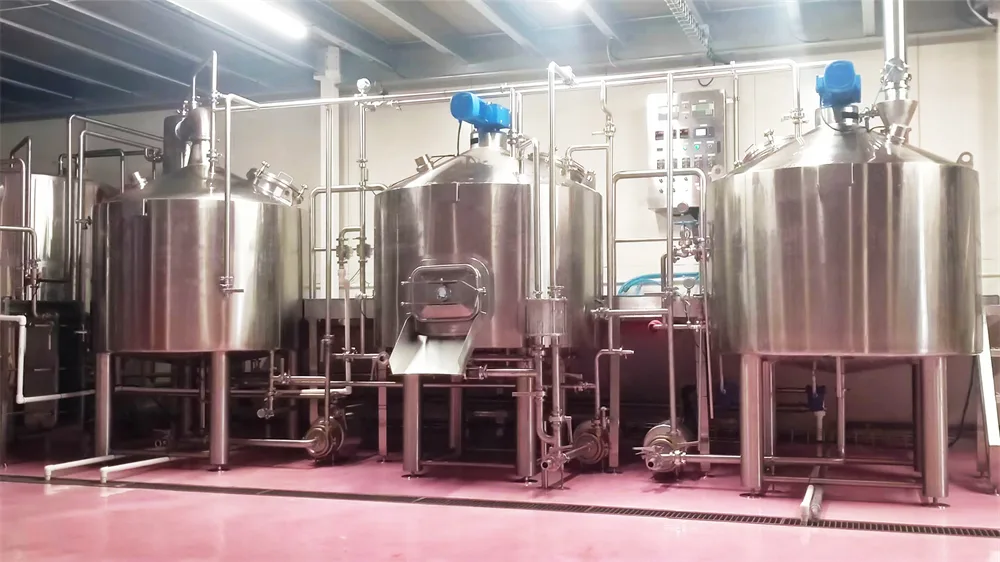
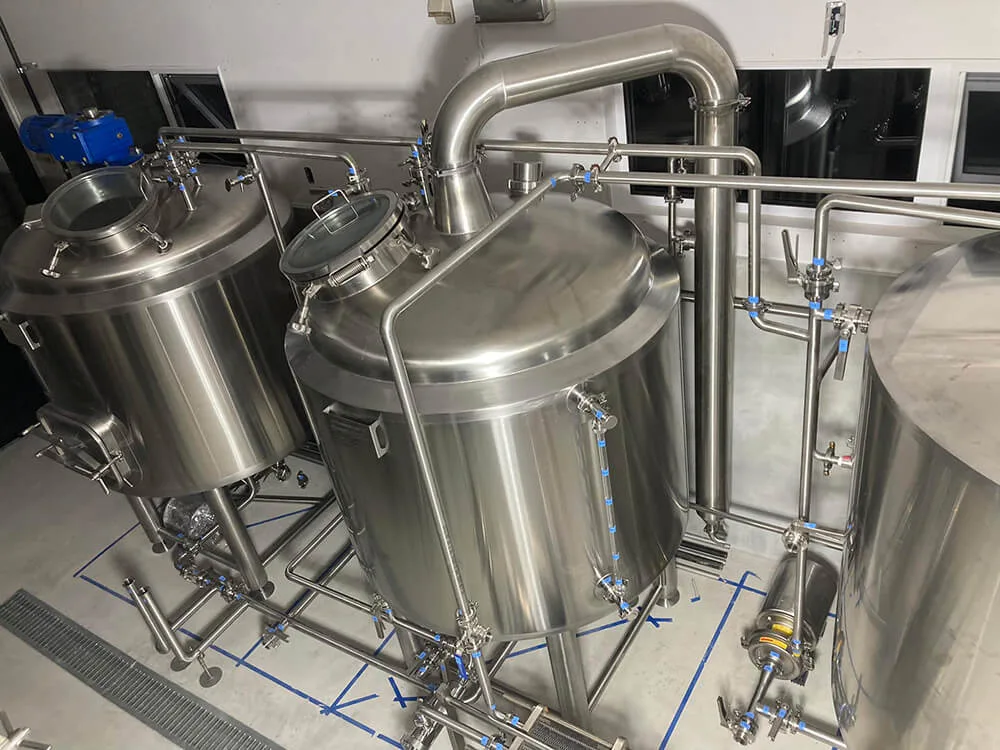
1️⃣ Brewhouse System
The brewhouse system is the heart of beer production, where wort is produced from malt.
Core Equipment:
- Mash Tun
- Lauter Tun
- Brew Kettle
- Whirlpool
- Wort Heat Exchanger
- Wort Aeration System
- Pumps & Valves
- Automatic Control System
Functions:
- Milling and mashing
- Wort separation
- Boiling and sterilization
- Trub separation
- Cooling before fermentation
Modern brewhouse systems can be steam-heated, electric-heated, or direct-fire, with manual, semi-automatic, or fully automatic PLC control options.
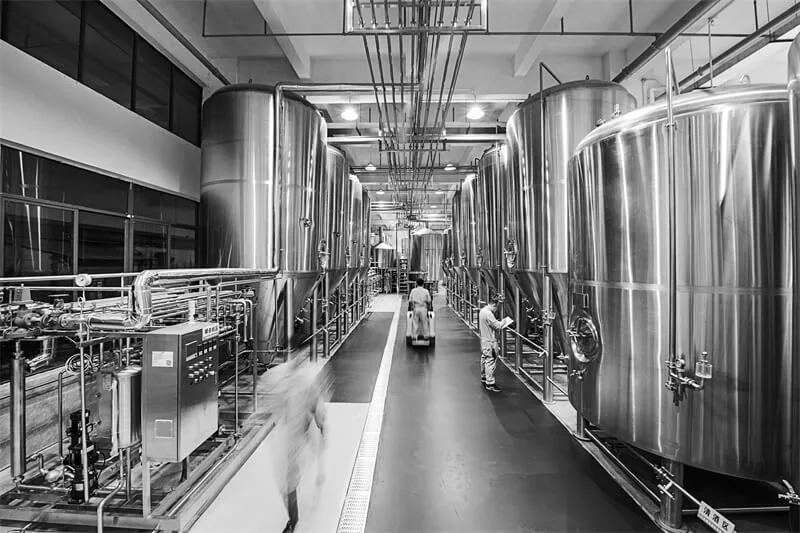
2️⃣ Fermentation & Maturation
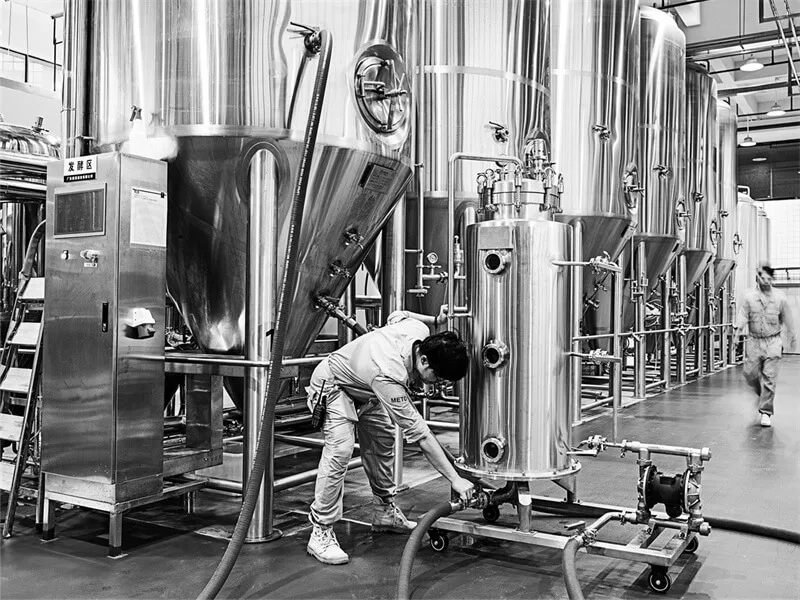
Fermentation converts wort into beer. Temperature control and tank design directly affect beer quality.
Main Equipment:
- Cylindroconical Fermenters (50HL–2500HL)
- Maturation Tanks
- Unitanks (fermentation + maturation combined)
- Yeast Management System
主要功能
- 不锈钢结构
- Glycol cooling jackets
- Pressure-rated design
- CIP 清洁系统
- 自动温度控制
Tank size and quantity must match your annual production target.
3️⃣ Filtration & Stabilization
To ensure clarity and microbiological stability, breweries may include:
- Kieselguhr Filters
- Plate & Frame Filters
- Crossflow Membrane Filters
- Pasteurization Systems
Not all breweries require filtration; system configuration depends on product positioning.
4️⃣ Bright Beer & Carbonation
After maturation, beer is transferred to Bright Beer Tanks (BBT) for:
- Carbonation
- Clarification
- Cold storage before packaging
- Oxygen protection
BBTs are pressure-rated and equipped with CO₂ injection systems and cooling jackets.
5️⃣ Packaging Lines
Packaging equipment ensures high-speed and hygienic filling.
选项:
- Bottling Line
- Canning Line
- Keg Filling Line
Automatic packaging lines can reach high output capacities and include:
- Rinser
- Filler
- Seamer/Capper
- Labeling Machine
- Carton Packer
- Palletizer
Packaging automation greatly reduces labor cost and increases consistency.
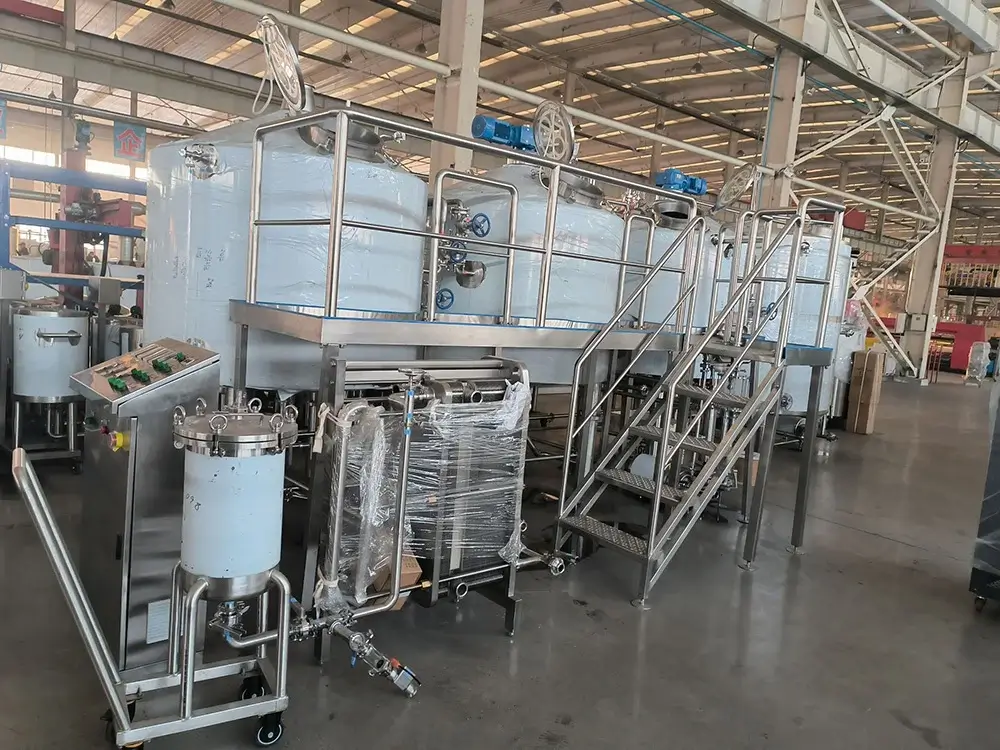
2. Auxiliary Systems
A complete brewery production line also requires:
- Grain Handling System
- 蒸汽锅炉
- Glycol Chiller
- Air Compressor
- CO₂ System
- CIP 系统
- Wastewater Treatment
- Electrical & PLC Control System
These systems ensure safe, efficient, and compliant brewery operation.
3. Key Considerations When Designing a Large Brewery
✔ Production Capacity
Tank size and quantity must match annual output goals.
✔ Facility Space & Height
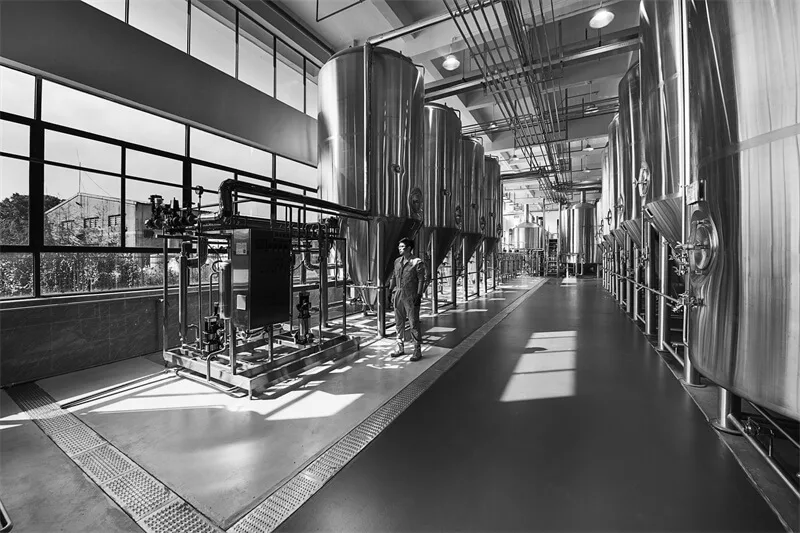
Large breweries typically require:
- 20–30 ft ceiling height
- Sufficient space for brewhouse, fermentation area, packaging hall, and warehouse
✔ Utilities
Stable supply of water, steam, electricity, compressed air, and cooling is essential.
✔ Automation Level
Higher automation improves consistency and reduces labor costs.
✔ Budget Planning
Prioritize investment in core assets:
- Brewhouse system
- 发酵罐
- Packaging line
Plan for future expansion.
✔ Local Regulations
Ensure compliance with pressure vessel standards, wastewater discharge, and safety requirements.
4. How to Choose a Brewery Equipment Supplier
When selecting a brewery equipment manufacturer, consider:
- Industry experience and project references
- Engineering capability and customization ability
- Manufacturing quality and testing standards
- Automation expertise
- After-sales service and global support
- On-time delivery
- Competitive lifetime cost
A reliable supplier will provide turnkey solutions from brewhouse design to installation and commissioning.
常见问题
Q: How much space is needed for a 50,000 HL brewery?
Approximately 27,000–40,000 sq ft, depending on layout and warehouse requirements.
Q: Recommended ceiling height?
Minimum 20 ft, ideally 25–30 ft for large fermentation tanks and piping.
Q: How many fermenters are required?
Typically designed for 2–3 turnovers per tank per year, depending on production schedule and beer styles.
Q: What are the highest-cost components?
Brewhouse system, fermentation tanks, filtration system, and packaging line.
结论
A well-designed brewery production line integrates brewhouse, fermentation, filtration, and packaging into one efficient system. Choosing the right brewery equipment supplier ensures stable beer quality, optimized investment, and long-term operational success.
If you are planning a new commercial brewery or expanding capacity, selecting a professional, customized brewhouse system is the foundation of your brewery’s growth. contact the Meto team to visit and start your craft beer journey!