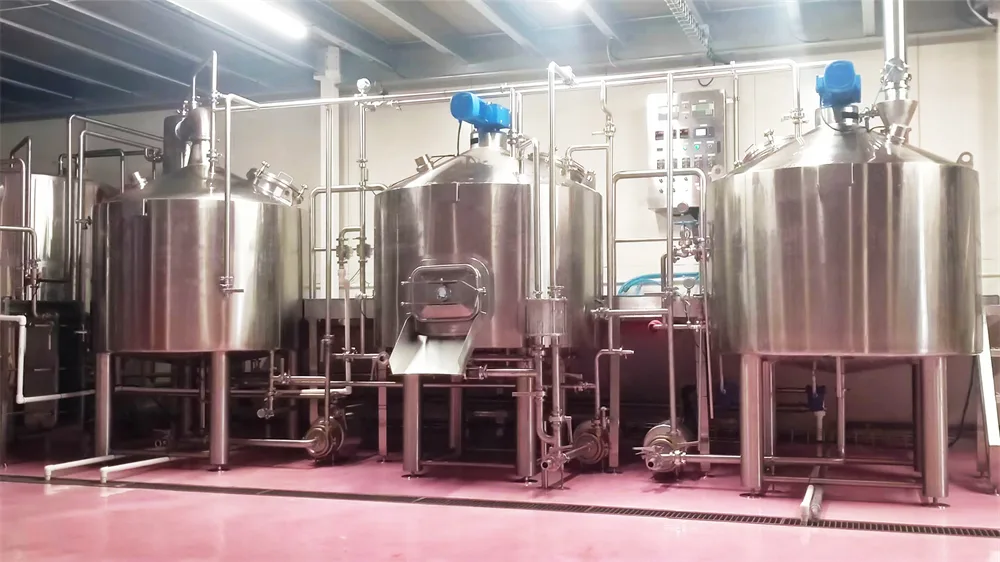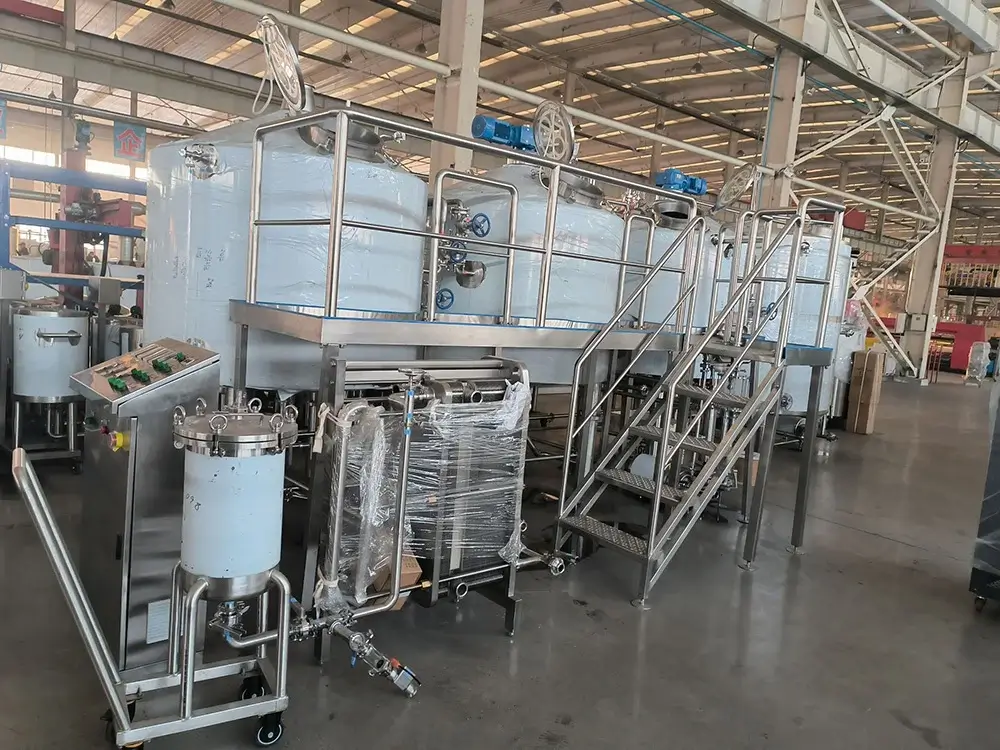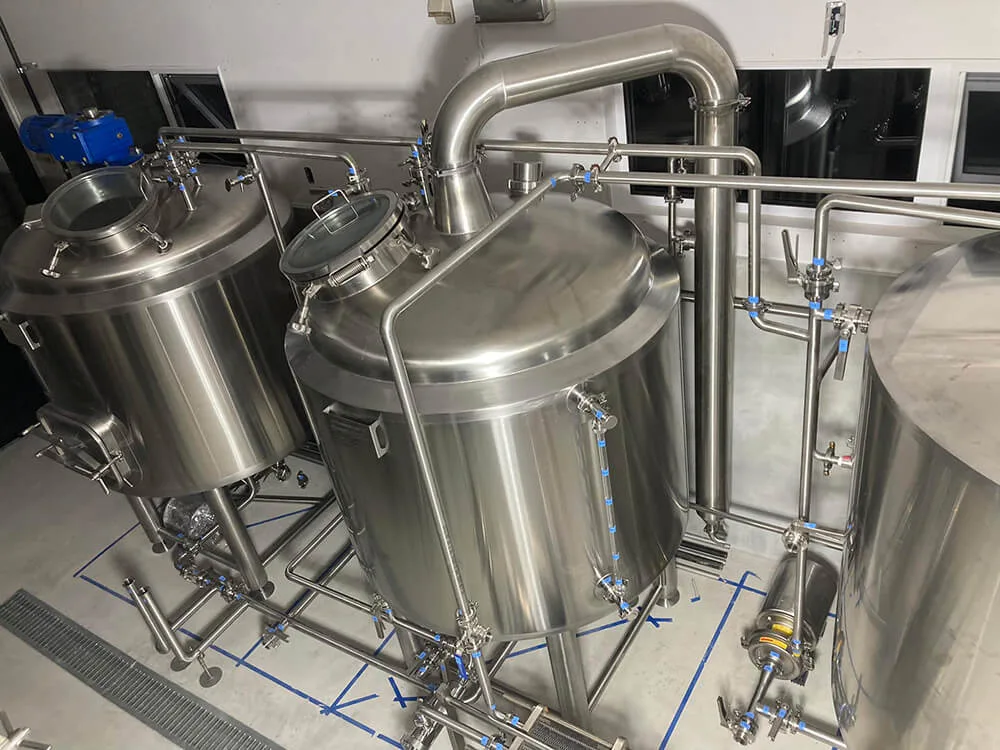
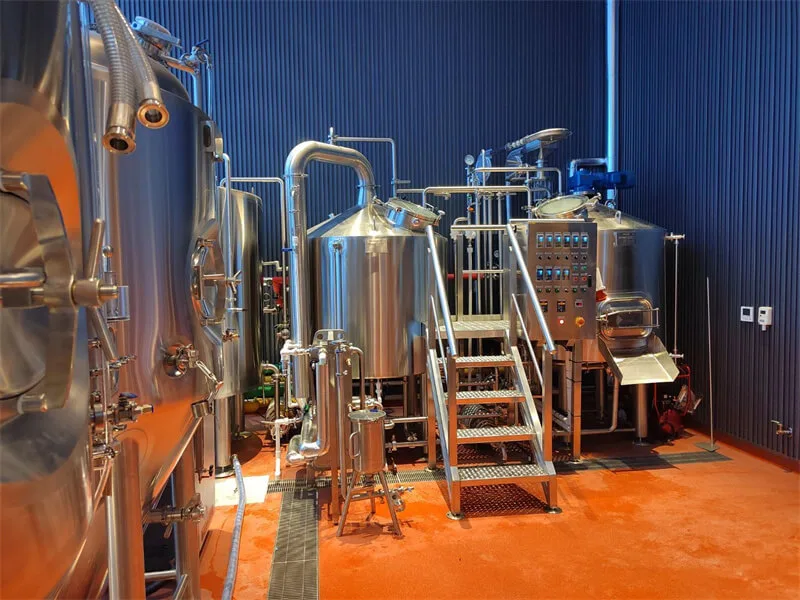
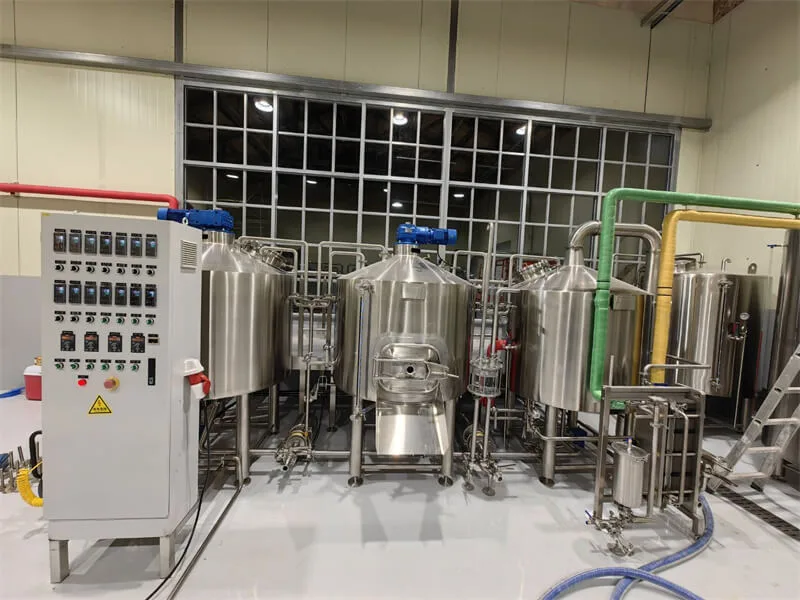
In a 500L craft beer brewing system, wort boiling is a critical step in the brewhouse process. It ensures hop isomerization, protein coagulation, sterilization, and flavor stability.
Today, Meto explains how breweries can shorten wort boiling time without compromising beer quality—by optimizing equipment design, adjusting process parameters, and applying auxiliary technologies.
1. Equipment Optimization: Improving Heat Transfer Efficiency
1.1 Upgrading the Heating System
Steam Heating or Electric Heating Elements
- Steam heating
Steam directly transfers heat to the wort, offering high thermal efficiency (heat transfer coefficient up to 0.025 W/cm²·K).
➜ Boiling time can be reduced by 30–50%. - Electric heating elements
Choose high power density elements (≥10 W/cm²) with increased heating surface area to shorten heating time.
Optimized Heating Element Layout
- Even distribution at the kettle bottom and sidewalls prevents hot spots and dead zones.
- Spiral or U-shaped heating tubes increase wort–surface contact, improving heat utilization.
1.2 Enhancing Agitation and Circulation
Mechanical Agitator
- Low-speed agitators (10–30 rpm) improve wort movement and reduce temperature gradients.
- Recommended material: 316L stainless steel for food safety and corrosion resistance.
External Circulation Pump
- Pumps wort from the bottom to the top for spray recirculation, creating forced convection.
- Heating time can be reduced by 5–10 minutes.
- Recommended circulation rate: 1–2× wort volume per hour, avoiding excessive shear that could damage hop compounds.
1.3 Optimizing Kettle Structure
Reduced Kettle Diameter
- A smaller diameter increases wort depth and reduces heat loss surface area.
- Example:
Reducing kettle diameter from 1.2 m to 1.0 m increases wort depth from 0.43 m to 0.64 m, reducing heat loss by 20%.
Enhanced Insulation
- Apply 5–10 cm insulation (ceramic fiber or polyurethane foam).
- Heat transfer coefficient can be reduced to below 0.03 W/m·K, minimizing energy loss.
2. Process Optimization: Precise Control of Boiling Parameters
2.1 Step Boiling Method
Pre-Boil Phase (0–10 min)
- Rapidly heat to 85–90°C, hold for 5–10 minutes.
- Promotes protein denaturation and early hop extraction.
Main Boil Phase (10–30 min)
- Raise to boiling point (~100°C, adjusted for altitude).
- Maintain for 20–30 minutes to complete hop isomerization.
- Late hop additions preserve aroma compounds.
Post-Boil Phase (30–40 min)
- Turn off heating and use residual heat for 5–10 minutes.
- Further protein coagulation and sterilization.
2.2 Increasing Initial Wort Temperature
Preheating Before Transfer
- Use coil heat exchangers in the mash tun or lauter tun to preheat wort to 70–75°C using 80–90°C hot water.
- Transfer to the kettle within 10 minutes to avoid temperature loss.
Using Hot Trub Residual Heat
- Whirlpool trub temperatures can exceed 95°C.
- Partial recirculation can raise kettle starting temperature by 5–10°C.
2.3 Optimizing Hop Addition Strategy
- High-alpha hops (≥15% alpha acids, e.g., Citra, Simcoe)
➜ Reduce hop quantity by 20–30% and shorten isomerization time. - Hop pellets instead of whole cones
➜ 30% faster isomerization, reducing boil time by 10–15 minutes. - Staged hop additions
- 50% during pre-boil
- 30% during main boil
- 20% post-boil
Maximizes bitterness, flavor, and aroma extraction efficiency.
3. Auxiliary Technologies to Accelerate Boiling
3.1 Vacuum Boiling Technology
Principle
Lower pressure reduces boiling point (e.g., at –0.08 MPa, boiling point ≈85°C).
Operation
- Install a vacuum pump on the kettle.
- Maintain vacuum boiling for 15–20 minutes.
- Restore atmospheric pressure and compensate for evaporation losses with hot water.
Advantages
- Boiling time reduced by 50%
- Hop utilization increased by 20%
- Higher equipment cost (≈30–50% increase)
3.2 Ultrasonic-Assisted Boiling
Principle
Ultrasound (20–40 kHz) creates cavitation, accelerating protein denaturation and hop compound dissolution.
Operation
- Install ultrasonic probes in the kettle.
- Power density: 0.5–1.0 W/cm²
- Activate for 10–15 minutes during boiling.
Advantages
- Shortens total boiling time by 20–30%
- Minimal equipment modification required
3.3 Enzyme-Assisted Clarification
Principle
Neutral proteases (e.g., Brewers Clarex) break down large protein molecules, reducing boil duration requirements.
Operation
- Add 0.5–1.0 g/hL neutral protease during the final 10 minutes of mashing.
- Boil time can be reduced to 30–35 minutes.
备注
Careful dosage control is required to avoid foam stability issues.
Industry Outlook
Major opportunities are emerging for the craft beer industry. New craft beer standards and regulations are expected to be introduced this year, aligning with European and American policies. These changes will allow small craft breweries to legally package and sell beer, opening the door to healthier and more sustainable industry growth.
关于梅托
Meto is a professional fermentation equipment manufacturer integrating R&D, production, and sales.Meto provides one-stop solutions including:
- Brewery and distillery project consulting
- Process design and optimization
- Equipment manufacturing
- Engineering installation
- Technical training and after-sales service
Our equipment is exported to the United States, Canada, Germany, Brazil, Australia, Northern Europe, Africa, and South America.
👉 Your satisfaction is our pursuit.
If you have any questions about brewing technology or equipment solutions, feel free to 联系梅托.