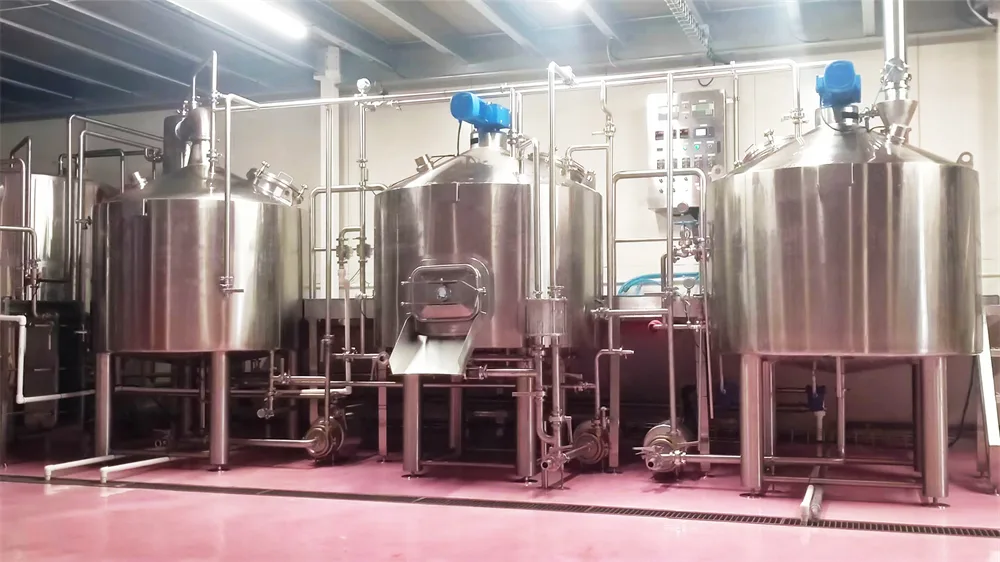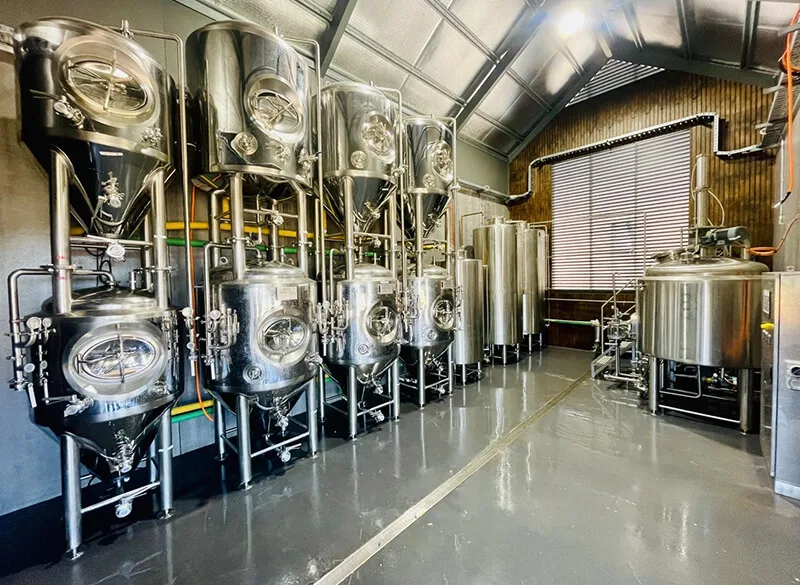
An innovative small batch craft brewery based in Australia, partnered with our company to build a highly efficient and scalable brewing facility. With a vision of producing premium-quality craft beer while maintaining production flexibility, the brewery selected a fully customized 500L brewing system designed to support both pilot brewing and commercial-scale output. The brewery focuses on small-batch creativity, experimental recipes, and consistently high standards of quality.
To meet their production goals, the project included a complete brewing system equipped with steam heating, automated controls, and versatile fermentation capacity.The brewery invested in a complete set of professional brewing equipment with the following configuration:
- Milling System 300-500Kg/h
- 500L 2 Vessel Brewhouse(MLT&KWT), steam heating
- 1000L Hot Water tank
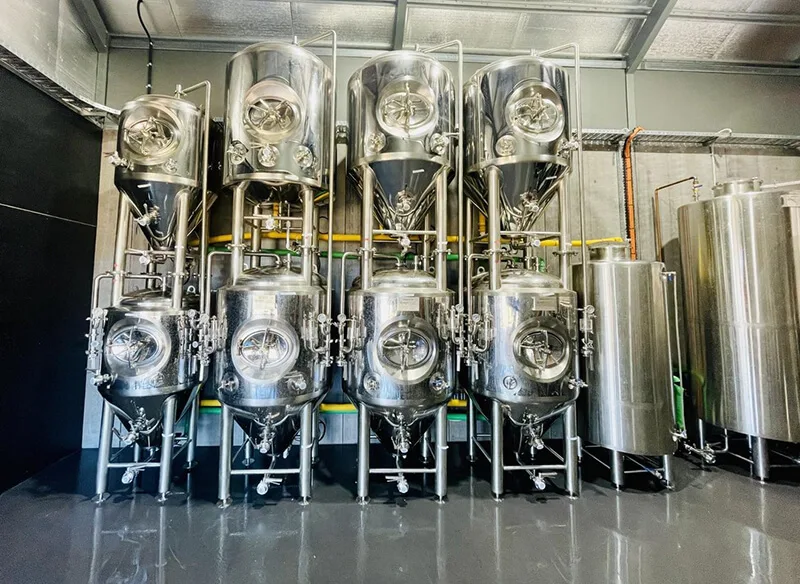
- 2.5HL Fermentation Tank/Unitank (Side manhole) *2
- 5HL Fermentation Tank (Side manhole )*5
- 5HL Brigth tank (Side manhole)
- 500L Glycol liquor tank
- 100 升 CIP 系统
- 50L Hop rocket/ Hop Gun(With pneumatic pump)
- 2 station 2 tanks keg washer and filler
- Canning Machine with bottle filling and capping function
- 3 stage water filter (carbon/micron and UV)
This turnkey solution empowered Small Batch Brew to streamline operations from milling through packaging, enhance production efficiency, and quickly expand their product range. Today, the brewery continues to produce distinctive craft beers that reflect creativity, quality, and professional brewing technology.
What is small batch brewing?
小批量酿造,顾名思义,指的是与大型商业酿酒厂相比,以较小的量生产啤酒。通常情况下,小批量啤酒的批量在 1 至 5 加仑之间。这种规模的酿造可以更好地控制酿造过程的每一个阶段,让酿酒师可以自由地尝试不同的配料、风格和口味。
Beyond the creativity it encourages, small batch brewing offers a practical and accessible approach to craft beer production. With compact equipment and manageable batch sizes, brewers can closely monitor each step and make adjustments in real time, gaining a deeper understanding of brewing techniques and how they influence the final beer.
Essential Equipment for Small Batch Brewing
Choose the Right Brewing Kit
Selecting the right brewing kit is the first step toward successful small batch brewing. Look for kits that include all the essential tools such as fermenters, airlocks, thermometers, hydrometers, and siphons. In addition, consider investing in a high-quality brew kettle and a reliable heat source to ensure a stable and efficient brewing process.
When selecting a 发酵罐, you can choose between plastic buckets and glass carboys. Plastic fermenters are lightweight and less likely to break, while glass carboys are easier to clean and sanitize. An airlock is essential—it allows carbon dioxide to escape during fermentation while preventing oxygen and contaminants from entering. A reliable thermometer ensures the correct temperature range for yeast activity, helping achieve a balanced and successful fermentation.
Brewing Equipment Cleaning & Maintenance
Proper cleaning and maintenance are vital for producing clean, flavorful beer. After each brew, thoroughly sanitize all brewing equipment with food-grade disinfectants to remove potential contaminants. Inspect and replace any worn or damaged parts to maintain consistent performance and avoid unwanted off-flavors.
Pay close attention to seals and gaskets to prevent leaks and maintain proper airtight conditions during fermentation. Keeping a written cleaning and maintenance log can help you stay organized and ensure your equipment stays in optimal condition. Well-maintained equipment not only lasts longer but also ensures consistent brewing results.
Small Batch Brewing Process
- Mash the grains – Steep crushed malt in hot water to extract sugars and create wort.
- Mash preparation – Place a mesh filter bag in the kettle, add crushed pale malt while stirring to avoid dough balls.
- Wort conversion – Allow the mash to rest so hot water converts starches into fermentable sugars.
- Wort extraction – Carefully remove the grain bag and squeeze to extract maximum liquid.
- Add hops – Bring the wort to a boil and add hops at scheduled intervals for bitterness, flavor, and aroma.
- Clean and sanitize – Maintain a clean workspace and sanitized equipment at all stages.
- Add yeast – Transfer cooled wort into the primary fermenter using sanitized equipment, then pitch the yeast.
- Primary fermentation – Ferment in a cool area for about one week.
- Secondary fermentation – Transfer to a clean fermenter to clarify flavor and improve mouthfeel. Store in a cool, dark place.
- Carbonation & bottling – Bottle the beer and allow carbonation to develop.
How to Avoid Common Brewing Mistakes
Even experienced brewers make mistakes, but learning from them is part of the craft. Common pitfalls include poor temperature control during fermentation, inadequate cleaning and sanitation, and rushing the process.
To avoid problems:
- Follow your recipe carefully and take your time.
- Ensure all post-boil equipment is properly sanitized to prevent contamination.
- Be patient—rushing fermentation can lead to off-flavors and incomplete results.
Give yeast enough time to work, and you’ll be rewarded with a great-tasting beer.
How to Choose Small Batch Brewing Equipment
Throughput – Determine how much beer you want to brew in a given time period.
Space Availability – Evaluate your brewing area including floor space, ceiling height, and equipment access.
Brewing Process & Batch Size – Align equipment with your brewing style, recipe complexity, and fermenter quantity needs.
Scalability – Choose equipment that can expand as production grows.
Budget – Clearly define financial limits to select cost-effective yet reliable solutions.
Supplier Selection – Choose a reputable supplier with reliable equipment, service, and technical support.
The right equipment choice lays the foundation for brewing success and improves both efficiency and product quality.
如果您对酿酒有任何疑问,请随时 联系我们 Meto 设备。