In modern brewing, equipment precision and temperature control are critical—but none of it matters without high-quality malt. As the primary raw material in beer production, barley malt directly determines mash efficiency, fermentation stability, clarity, and final flavor balance.
For breweries planning new installations or upgrading their systems, understanding malt quality parameters is essential for maintaining consistent production and maximizing brewhouse performance.
This article outlines the key malt specifications and practical control strategies that professional breweries should follow.
1. Core Malt Quality Indicators
1.1 Protein Content
Protein content is one of the most critical malt quality factors.
Why it matters:
- >12% protein
- Increased wort turbidity
- Excessive yeast nutrition
- Higher production of fusel alcohols (harsh flavor impact)
- <9% protein
- Insufficient yeast nutrients
- Incomplete fermentation
- Weak foam stability
Best Practice:
Select malt varieties with stable protein levels and maintain long-term supplier consistency to avoid frequent raw material fluctuations.
1.2 Starch Content (≥65%, Dry Basis)
Starch is the primary source of fermentable sugars.
Impact:
- Higher starch → Higher extract yield
- Target brewhouse extract efficiency: ≥80%
- Directly influences production output and cost efficiency
Professional Recommendation:
Use well-modified two-row barley varieties for higher starch concentration and better enzyme balance. Two-row barley typically provides more consistent extract performance compared to six-row barley.
1.3 Germination Rate & Germination Energy
- Germination rate: ≥95%
- Uniform sprouting required
Impact:
- Low germination → Reduced enzyme activity → Poor conversion
- Uneven germination → Wort composition instability
Stable enzyme activity ensures predictable mash conversion and shortens saccharification time.
1.4 Moisture Content (≤13%)
Moisture affects both storage safety and milling behavior.
- Too high → Mold risk, off-flavors
- Too low → Excessive friability, too much fine powder during milling
Proper storage conditions are essential to preserve enzymatic strength.
1.5 Thousand Kernel Weight (TKW)
- Two-row barley: ≥35 g
- Six-row barley: ≥30 g
Higher TKW indicates plump, well-filled kernels with strong starch and enzyme reserves, resulting in improved mash efficiency.
2. Process Adaptability Requirements
High-quality malt is not only about lab numbers—it must perform well in your brewing system.
2.1 Saccharification Performance
Conversion Time
- Pale malt conversion time: ≤15 minutes (iodine test negative)
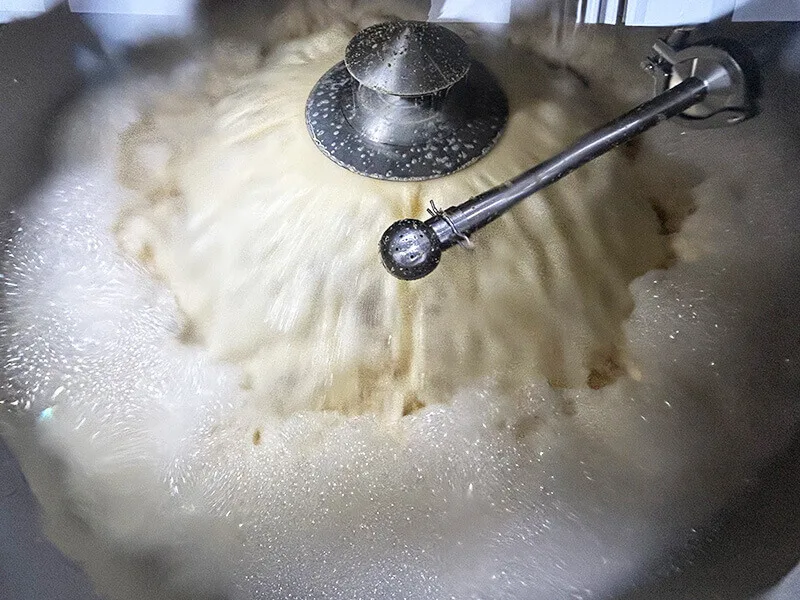
劳特灵表演
- Target wort filtration time: ≤65 minutes
Poor modification or weak enzymatic activity can:
- Extend mash time
- Increase energy consumption
- Slow down brewhouse turnover
- Reduce clarity
Optimization Strategy:
- Select malt with strong diastatic power
- Maintain mash temperatures at 65–68°C to optimize enzymatic activity
Modern temperature-controlled mash systems significantly improve consistency in enzyme conversion.
2.2 Flavor Precursor Control
Malt composition influences fermentation by-products and aroma development.
Higher Alcohols
Controlled protein solubility helps avoid excessive fusel alcohol formation, improving flavor smoothness.
Ester Formation
Proper fermentation temperature management (for example, around 20°C for ale fermentation) supports balanced ester development such as ethyl acetate, enhancing fruity aromas without harshness.
Consistent malt quality ensures flavor stability batch after batch.
2.3 Color & Clarity
Color (EBC Standard)
- Pale malt: 3.5–4.5 EBC
- Specialty malts: 50–100 EBC depending on style
Color consistency is essential for brand recognition and visual appeal.
Clarity
Target wort transparency ≥95%.
Protein-polyphenol imbalance can lead to haze formation and poor colloidal stability.
Proper malt selection combined with optimized protein rest steps improves final beer brightness.
3. Storage & Handling Best Practices
Even premium malt can deteriorate if stored improperly.
3.1 Storage Conditions
- Temperature: 0–10°C
- Humidity: ≤65%
- Avoid direct sunlight
Although hop compounds are more light-sensitive, malt enzymes can degrade under excessive heat and humidity.
Professional breweries use dedicated malt silos with temperature and humidity monitoring systems.
Follow the FIFO (First In, First Out) principle to ensure freshness.
3.2 Incoming Quality Inspection
Before production, each malt batch should undergo:
Sensory Evaluation
- Bright yellow color
- Clean grain aroma
- No mold or musty smell
- Impurities ≤1%
Laboratory Testing
- Moisture
- Protein content
- Extract yield
- Diastatic power
Establishing a malt quality archive allows breweries to correlate raw material data with finished beer performance.
4. Why Malt Quality Matters More in Modern Breweries
As breweries scale production, consistency becomes more important than ever. Automated brewhouse systems with precise temperature and process control can only perform at their full potential when paired with stable raw materials.
High-quality malt helps breweries achieve:
- Shorter mash times
- 萃取效率更高
- Stable fermentation cycles
- Improved foam retention
- Clearer beer
- Reduced production risk
- Lower long-term operating costs
For breweries using 500L, 1000L, or larger commercial systems, raw material consistency directly affects ROI and production scheduling.
最终想法
Malt is not just a raw ingredient—it is the structural backbone of beer.
By carefully controlling protein, starch, germination rate, moisture, and storage conditions, breweries can dramatically improve mash efficiency, fermentation performance, and final beer quality.
When selecting brewing equipment, it is equally important to ensure your system supports precise temperature control, efficient lautering, and stable fermentation environments.
If you are planning to build or upgrade your brewery, combining reliable brewing equipment with strict raw material standards is the key to long-term success.
联系我们 today to discuss how optimized brewing systems and professional design solutions can help you achieve higher efficiency and consistent beer quality.