Introduction: Why 3500L Is the Sweet Spot for Scaling Craft Breweries
In the craft beer industry, small breweries rely on craftsmanship—but scaling production depends on the right brewery equipment.
A well-designed 3500L craft brewery system is not just a collection of tanks. It directly impacts production capacity, beer consistency, new product development, and long-term operating costs.
For breweries transitioning from pilot batches to stable commercial supply, a 3500L brewhouse offers the ideal balance between scalability and flexibility.
1. Brewhouse System: 5-Vessel Design for Parallel Brewing Efficiency
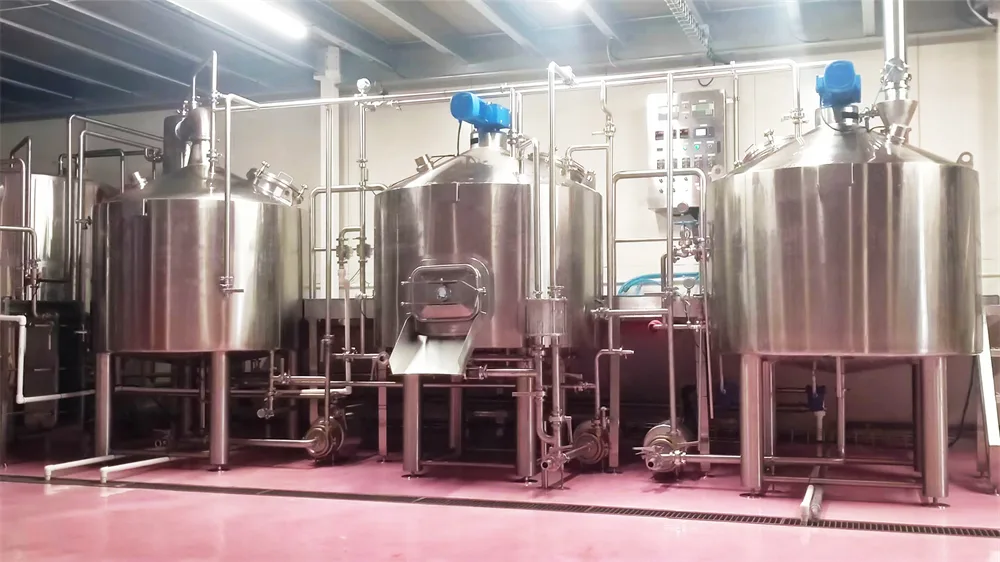
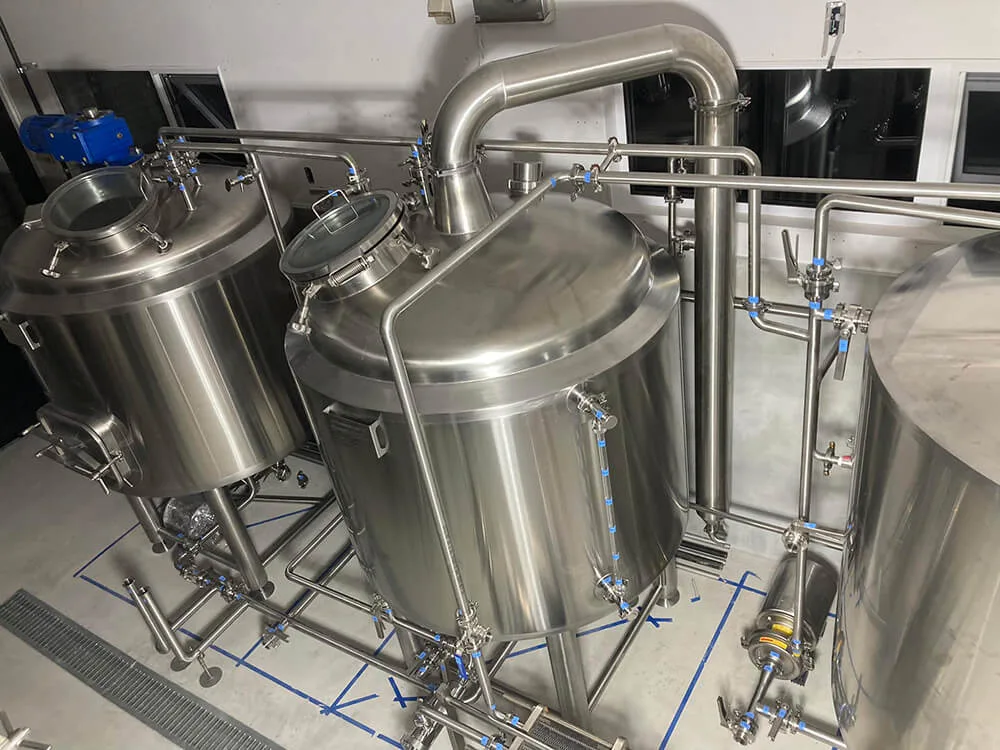
The brewhouse is the core of any craft brewery. This 3000L production line adopts a 3500L 5-vessel brewhouse system, including:
- Mash tun
- Lauter tun
- Hold tank
- Kettle
- Whirlpool
Unlike traditional 2-vessel or 3-vessel brewhouse systems, which operate sequentially, the 5-vessel design allows parallel processing.
Key Advantages
- Multiple batches processed simultaneously
- Reduced downtime between steps
- Higher daily brew cycles
- Stable output for continuous supply
For example, while one batch is boiling, the next batch can already begin mashing—significantly increasing overall efficiency.
2. Raw Material & Water System: Building a Stable Brewing Foundation
Malt Milling System (1000 kg/h)
A precise malt milling unit ensures optimal crush size:
- Maximizes sugar extraction
- Preserves husk integrity for natural filtration
- Improves wort clarity and lautering speed
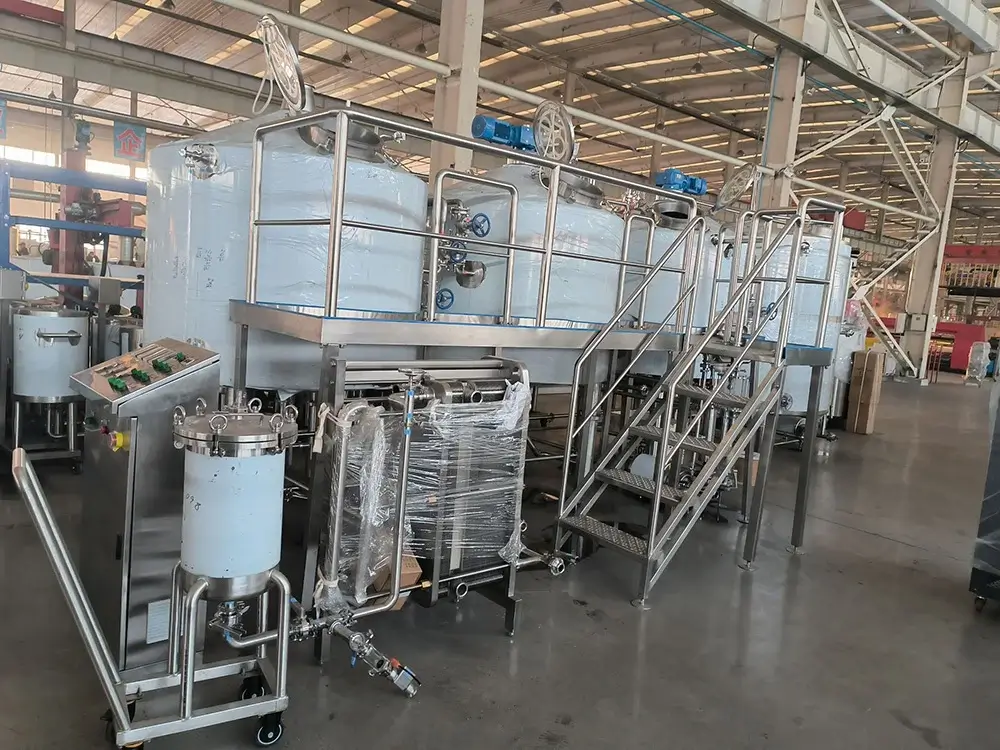
Hot & Cold Water Tanks (7000L + 6000L)
Separated water systems ensure:
- Stable temperature control during mashing
- Consistent water supply under peak demand
- No pressure or temperature fluctuations
This setup guarantees consistent wort quality batch after batch.
3. Fermentation System: Balancing Production and Innovation
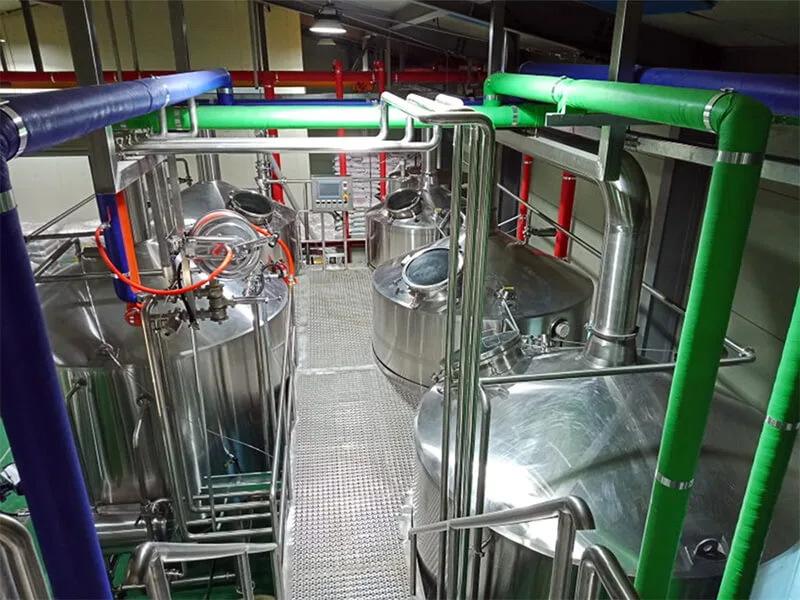
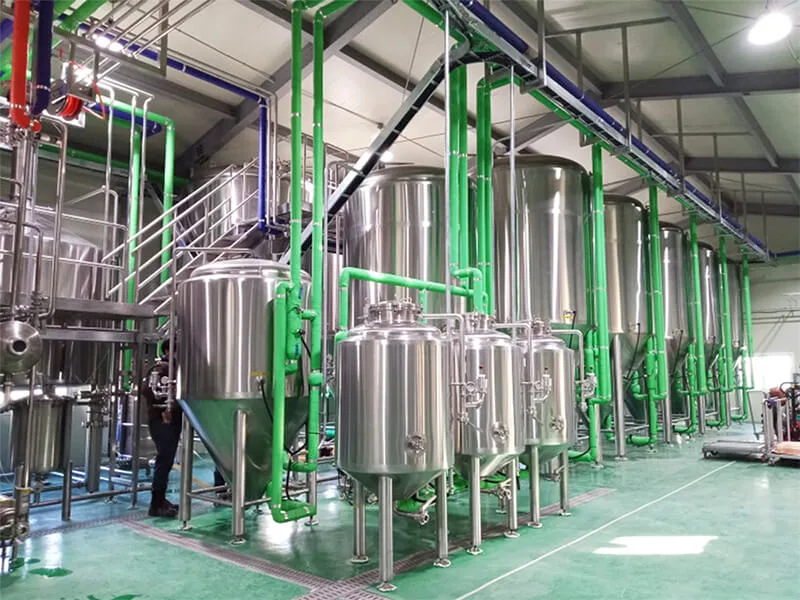
Fermentation is the crucial stage for developing beer flavor, and the combination of tank volume and quantity directly affects production capacity planning and product layout. This production line boasts a scientific fermentation configuration:
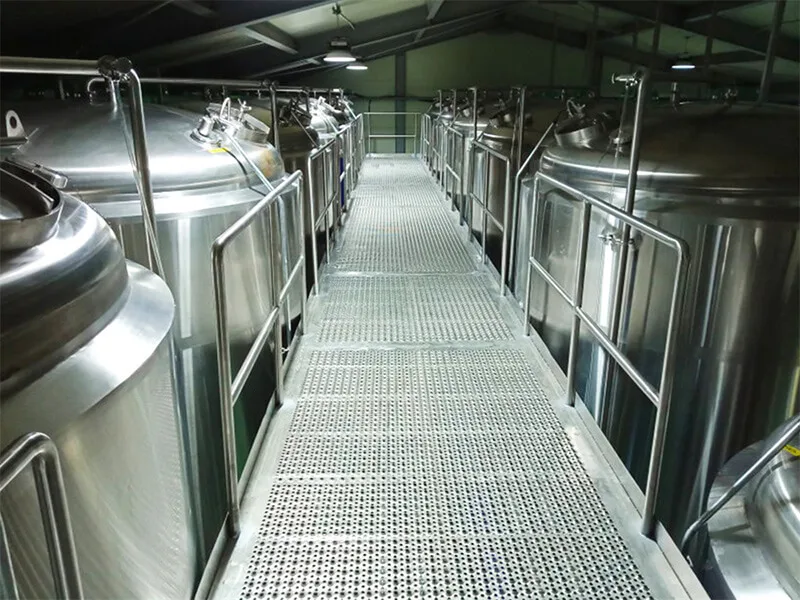
- 11 × 7000L fermentation tanks (main production)
- 1 × 3500L fermentation tank (pilot & R&D)
Production Tanks
Designed for flagship beers such as:
- Lager
- IPA
- Wheat beer
They ensure stable, large-scale fermentation and continuous supply for bars, restaurants, and distributors.
Pilot Tank
The smaller tank provides flexibility for:
- New recipe development
- Seasonal or limited releases
- Specialty ingredients testing
This allows breweries to innovate without disrupting core production.
4. Supporting Systems: Yeast, Bright Beer & Byproduct Handling
Bright Beer Tank (7000L)
Used for maturation and clarification:
- Improves beer clarity
- Smooths flavor profile
- Enhances final product quality
Yeast Propagation Tank (1000L)
- Reduces yeast purchasing costs
- Ensures yeast vitality and consistency
- Improves fermentation performance
Waste Yeast Tank (5000L)
- Centralized waste collection
- Cleaner production environment
- Enables byproduct reuse (e.g., animal feed)
5. Cooling & CIP System: The Invisible Backbone of Quality
Glycol Cooling System (12000L Tank)
Precise temperature control is critical during fermentation.
- Prevents off-flavors (diacetyl, fusel alcohols)
- Supports both lager and ale fermentation profiles
- Enables stable, repeatable brewing results
CIP Cleaning System (500L)
Automated cleaning ensures hygiene and consistency:
- Caustic + acid circulation cleaning
- No dead zones or residue
- Reduces contamination risks
- Standardized and repeatable process
Compared to manual cleaning, CIP significantly lowers labor and improves sanitation reliability.
6. Automation & Packaging: Efficiency from Brew to Market
Centralized Control System
The entire brewery process can be managed through automation:
- Temperature control
- Process timing
- 清洁周期
Benefits include:
- Reduced labor costs
- Minimized human error
- Data recording for process optimization
KEG Filling System
Designed for draft beer distribution:
- Automatic cleaning and sterilization
- CO₂ purging and filling
- Fast turnaround
KEG packaging is ideal for:
- Bars and restaurants
- Taprooms
- High-volume draft sales
It also preserves freshness better than bottled alternatives.
7. Core Design Logic: Practical, Scalable, and Cost-Efficient
This 3000L brewery system follows four key principles:
1. Balanced Capacity
Brewhouse and fermentation systems are perfectly matched—no bottlenecks.
2. Production + Innovation
Large tanks secure revenue, while small tanks enable creativity.
3. Smart Investment
Upfront investment in CIP, cooling, and yeast systems reduces long-term costs.
4. Complete Production Loop
From milling to packaging, the system forms a fully integrated workflow, ensuring compliance and operational efficiency.
8. Who Is This 3000L Brewery Suitable For?
This setup is ideal for:
- Growing craft breweries scaling from pilot to commercial production
- Breweries supplying bars, restaurants, and taprooms
- Brands developing both core beers and seasonal products
- Medium-sized breweries seeking consistency and automation
9. Startup Tips for 3500L Craft Brewery Projects
- Start with partial tank utilization before scaling up
- Optimize recipes and stabilize quality first
- Focus on yeast management and CIP processes
- Use pilot tanks for R&D without affecting production
Conclusion: The Right Equipment Drives Long-Term Brewery Success
Scaling a craft brewery is not about choosing the most expensive equipment—it’s about choosing the right configuration.
A 3000L craft brewery system offers:
- Scalable production capacity
- 稳定的啤酒质量
- Flexibility for innovation
With the right setup, breweries can achieve both operational efficiency and strong market competitiveness.
👉 立即联系我们 for a custom brewhouse system design tailored to your production goals, budget, and future expansion plans.