全球精酿啤酒行业持续快速增长,吸引了众多企业家和投资者希望创办自己的啤酒厂。然而,成功经营一家啤酒厂需要的不仅仅是酿造方面的专业知识。它还取决于高效的酿酒设备、精心设计的生产系统和有效的成本管理。
本指南以一个 2500L 精酿啤酒厂项目为例,解释了啤酒厂的核心设备配置,分析了啤酒厂的主要运营成本,并介绍了提高能效和降低运营成本的实用策略。
2500L Craft Brewery Equipment Configuration
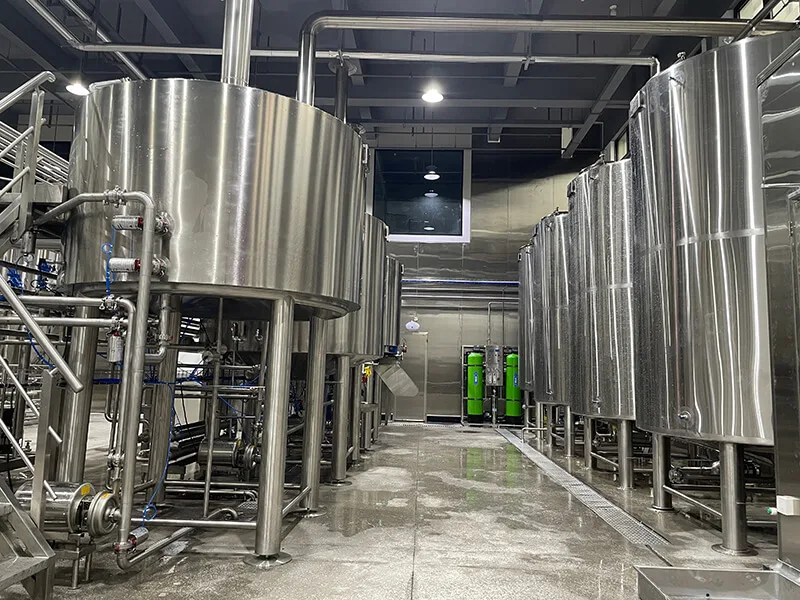
A modern brewery relies on multiple integrated systems, including malt milling, brewhouse equipment, fermentation tanks, cooling systems, CIP cleaning systems, and automation controls. Properly designed brewery equipment ensures consistent beer quality, improves production efficiency, and reduces long-term operating costs.
High-Efficiency Malt Milling System
The brewery uses a dry milling system consisting of a malt elevator, dry malt mill, and chain conveyor system. This automated setup allows efficient malt transport and crushing before the brewing process begins.
The system can process 1500–2000 kg of malt per hour, providing sufficient capacity for continuous brewing operations. Combined with a mash hydration system, the crushed malt mixes quickly with water, improving mash efficiency and increasing wort extraction rates.
2500L Four-Vessel Brewhouse System
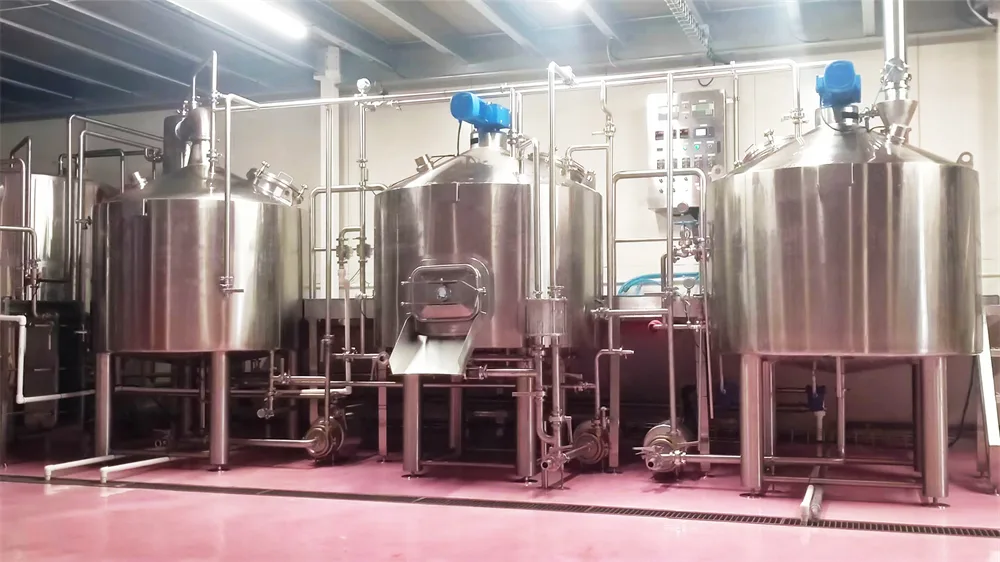
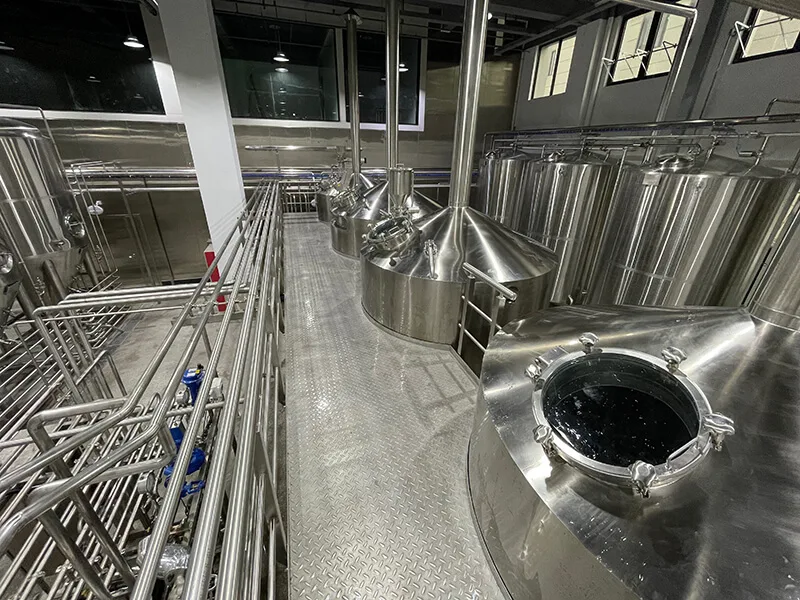
The brewhouse is designed as a 2500L four-vessel brewing system, including a mash tun, lauter tun, kettle, and whirlpool tank.
This configuration supports a complete brewing process while maintaining high flexibility and production efficiency. The brewhouse is equipped with a pneumatic spent grain discharge system and an advanced automation control platform.
Each brew produces approximately 2.5 KL of wort, allowing the brewery to complete four to five batches per day, significantly increasing production capacity.
Fermentation System and Production Expansion
The fermentation system is one of the most critical parts of any brewery, as it determines the flavor, aroma, and stability of the beer.
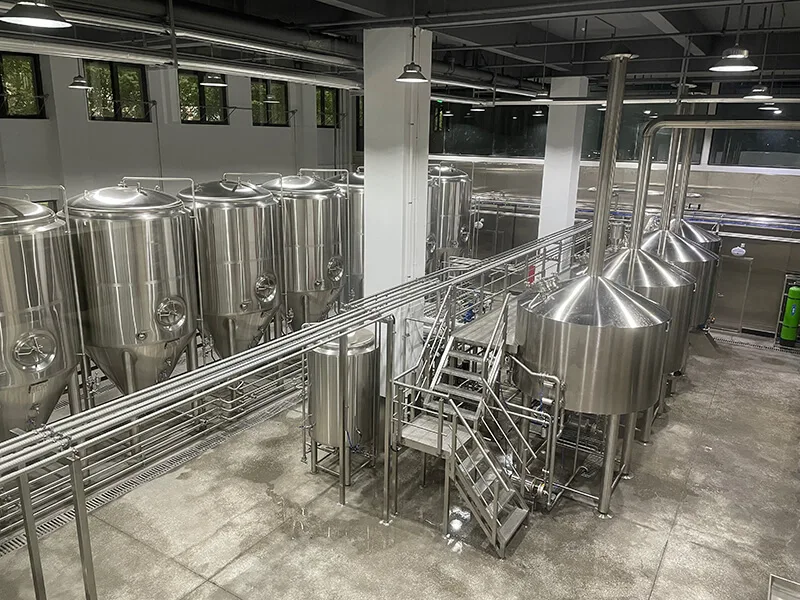
In the first phase, the brewery installed a combination of 2.5-ton and 5-ton fermentation tanks, allowing an annual production capacity of approximately 1200 tons of beer.
Future expansion plans include installing 10-ton fermentation tanks, which will increase the brewery’s maximum production capacity to around 3000 tons per year.
A centralized pipeline gallery is installed in front of the fermentation area, integrating wort pipelines, beer pipelines, CIP pipelines, compressed air lines, CO₂ lines, and drainage pipelines. This layout simplifies operations and improves production efficiency.
Brewery Service Water System
To ensure stable brewing operations, the brewery installed a comprehensive service water system. This includes an 8-ton chilled water tank, 8-ton purified water tank, 8-ton hot water tank, and 8-ton cold water tank, along with circulation pumps.
The system provides stable water temperature and pressure for brewing processes while ensuring consistent water quality throughout production.
Industrial Cooling System for Fermentation Control
The cooling system includes a 20HP industrial chiller and an 8-ton glycol water tank. This system is responsible for wort cooling, fermentation temperature control, and beer cold storage.
Stable low-temperature control helps maintain yeast activity and preserves volatile aroma compounds in the beer, ensuring consistent product quality.
CIP Cleaning System for Sanitary Brewing
Sanitation is essential in modern brewing. The brewery installed a complete CIP cleaning system consisting of a 1-ton alkaline tank, 1-ton acid tank, 1-ton sanitizer tank, and 1-ton hot water tank.
With automated cleaning cycles and dedicated pumps and pipelines, the CIP system ensures hygienic brewing conditions while reducing manual cleaning labor.
Smart Automation Control System
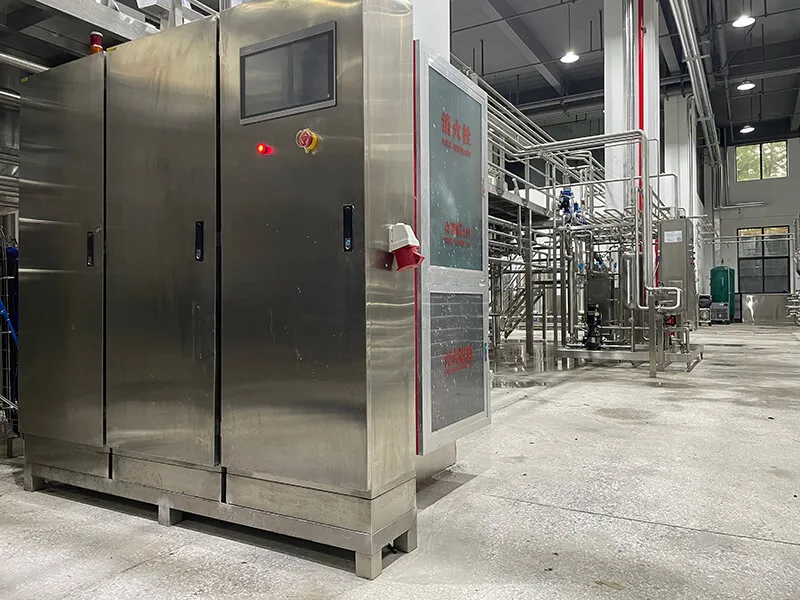
The brewery uses a Siemens PLC control system combined with an MCGS touchscreen interface.
Under WiFi connectivity, operators can monitor brewing processes using mobile phones or tablets. The system enables real-time monitoring of equipment status and brewing parameters, ensuring consistent beer quality and efficient production management.
Key Operating Costs of a Craft Brewery
Operating a brewery involves multiple cost factors. These typically include raw materials, packaging materials, labor, and utilities such as electricity, water, and heat energy.
Understanding these costs is essential for maintaining profitability in a competitive craft beer market.
Raw Material Costs in Craft Brewing
Raw materials usually represent the largest variable cost in brewing, accounting for 30%–45% of total production costs.
Malt is the primary ingredient and typically accounts for 60%–70% of raw material expenses. Specialty malts such as caramel or chocolate malt are often more expensive but contribute unique flavors and colors.
Hops play a key role in aroma and bitterness. Imported hop varieties such as Citra or Mosaic can be significantly more expensive due to market fluctuations.
Yeast usage is relatively small but requires proper propagation and maintenance. Water itself is inexpensive, but water treatment systems such as reverse osmosis and dechlorination add operational costs.
Beer Packaging Costs
Packaging is often underestimated by new breweries. In many cases, packaging costs can represent 20%–35% of total production expenses.
Common packaging formats include stainless steel kegs, disposable kegs, glass bottles, and aluminum cans. Additional materials such as labels and cartons also contribute to overall packaging costs.
Smaller breweries usually purchase packaging materials in smaller volumes, which increases unit costs and inventory pressure.
Labor Costs in Brewery Operations
Craft breweries require skilled labor, including brewers, technicians, and cleaning staff. A significant portion of brewery labor is dedicated to cleaning and sanitation.
An efficient CIP cleaning system can significantly reduce manual labor requirements and improve operational efficiency.
Utilities and Energy Consumption
Brewing is an energy-intensive process. Utilities typically account for 10%–15% of total operating costs.
Electricity powers mills, pumps, refrigeration units, and packaging equipment. Thermal energy is required for mashing, boiling, and hot water production. In addition, large amounts of water are used during brewing and cleaning processes.
Most breweries operate with a water-to-beer ratio between 4:1 and 6:1.
Typical Energy Consumption in a Brewery
Energy efficiency is becoming increasingly important for breweries. Industry benchmarks show that energy consumption in breweries typically ranges from 8–12 kWh per hectoliter of beer produced, depending on the brewery size and equipment efficiency.
Breweries with optimized brewery equipment, heat recovery systems, and automation controls can significantly reduce energy consumption and operating costs.
Monitoring electricity, water, and heat usage through digital control systems allows brewers to track energy performance and identify inefficiencies.
How to Design an Energy-Efficient Brewery
Modern brewery design focuses on improving efficiency through optimized brewery equipment and smart process control.
Heat recovery from wort cooling is one of the most effective strategies. During the brewing process, hot wort can transfer heat to brewing water through plate heat exchangers, significantly reducing energy consumption.
Cooling system optimization is another key factor. Glycol tanks can be used as cold storage systems, allowing breweries to produce chilled water during off-peak electricity hours.
Improved insulation for tanks and pipelines also prevents heat loss and reduces energy demand. In addition, optimizing CIP cleaning procedures can significantly reduce water and heating energy consumption.
By implementing these strategies, a 2500L craft brewery can reduce overall energy consumption by 15%–25%, creating a strong cost advantage in a competitive market.
Building a Sustainable and Profitable Brewery
Operating a craft brewery successfully requires a balance between brewing creativity and efficient production management.
Modern brewery equipment, intelligent automation systems, and energy-saving technologies provide the foundation for efficient brewing operations. However, true efficiency comes from how effectively these systems are managed and optimized.
With proper planning, data-driven operations, and efficient equipment design, breweries can significantly reduce costs while maintaining high-quality beer production.
If you are planning to build a brewery, feel free to contact us for our equipment list.