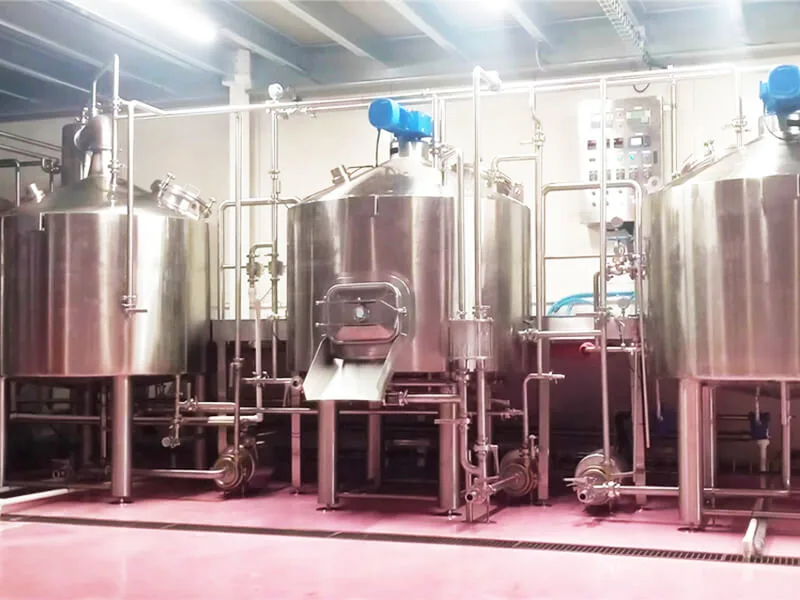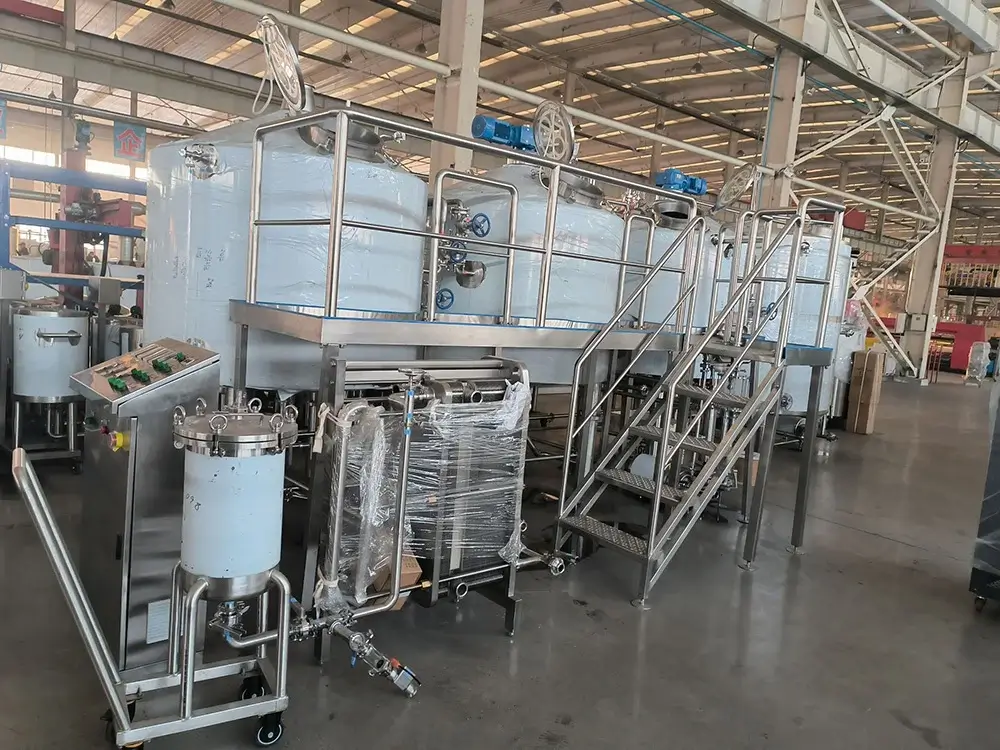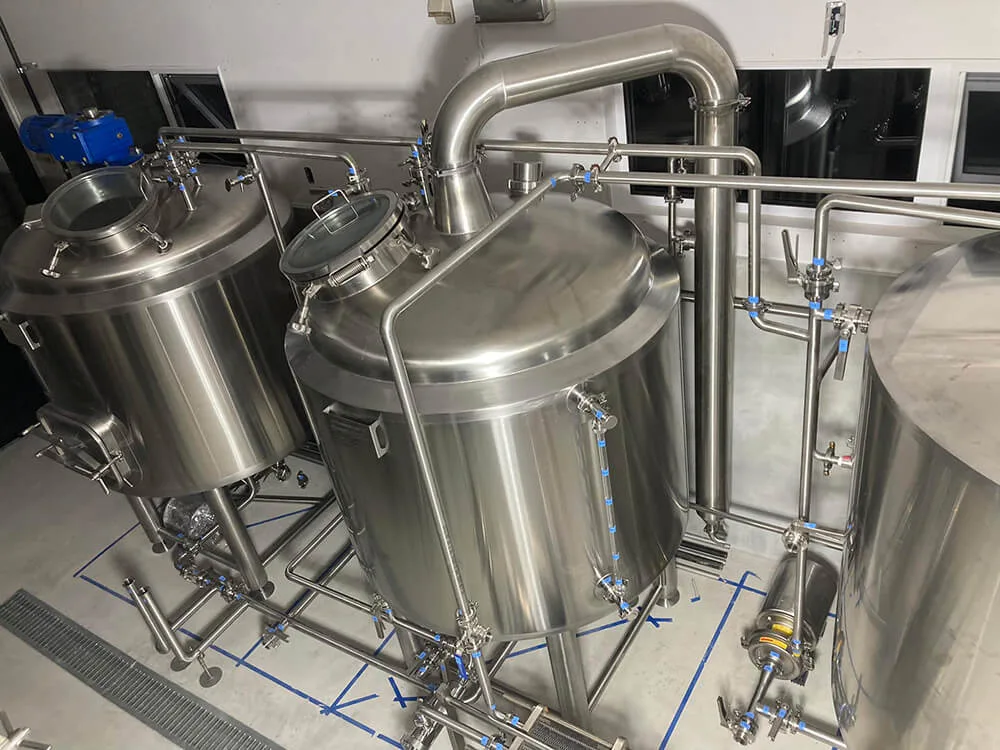
In the realm of whiskey production, a dangerous misconception often persists: that equipment is merely a passive vessel for raw materials and liquid, playing a secondary role in flavor development.
This perspective fundamentally ignores the essence of distillation engineering. Equipment is never a silent bystander; it is an active, critical variable in flavor generation. From the millimeter-level precision of mashing temperature gradients to the subtle fluctuations in microbial metabolism within fermentation tanks, and the exact interplay of copper contact area and reflux ratios during distillation—every engineering parameter quietly reshapes the chemical skeleton and aging potential of the new make spirit.
Therefore, planning a whiskey distillery is far more than compiling a procurement list. It is the deliberate design of a sophisticated “flavor generation system.” Let us examine the symbiotic relationship between equipment and flavor across three core processing stages.
Mash Tuns: The First Directional Shaping of Flavor
The essence of mashing is not simply converting starches into fermentable sugars. It is about selectively shaping the sugar profile and amino acid spectrum of the wort under strictly controlled temperature and pH conditions. The design precision of the mash tun directly dictates the ceiling of this process.
First is the mastery of temperature gradients. Beta-amylase enzymes thrive between 62–65°C, favoring maltose production that yields a lighter body and high fermentability. Conversely, alpha-amylase enzymes at 68–72°C tend to generate unfermentable dextrins, laying the foundation for a fuller mouthfeel. If a mash tun cannot lock in these precise step temperatures over a prolonged mashing period, batch-to-batch sugar composition will inevitably drift, stripping away the reproducibility of subsequent fermentation and distillation.
Second is the shear force of the agitation system. Aggressive mechanical stirring ruthlessly tears apart the grain husks, leaching excessive tannins and fatty acids into the wort and planting the seeds for astringency and fusel alcohol precursors. Only a low-speed, low-shear agitation design can guarantee the pristine purity of the wort.
Finally, there is the absolute verifiability of cleaning. Any microscopic contamination prior to fermentation will be exponentially amplified into fatal off-flavors. The mash tun must be engineered to ensure the Clean-In-Place (CIP) system flawlessly covers every internal surface, weld joint, and valve without leaving blind spots.
A professionally designed mash tun is never just a “heated vessel.” It is the first mold for shaping the whiskey’s character. Its engineering mission is to achieve perfect replication of the mashing curve on the same physical platform, providing a chemically stable wort for fermentation.
Fermenters: The Birthplace of Flavor Compounds
The aromatic complexity of whiskey is not entirely bestowed by distillation and oak barrels. During the 48 to 96 hours of fermentation, the metabolic byproducts of yeast and coexisting microorganisms—producing hundreds of esters, higher alcohols, and organic acids—already set the foundational flavor profile. Designing a fermenter is essentially defining the metabolic boundaries for these microorganisms.
Stratified temperature control is paramount. Whiskey fermentation temperatures generally run higher than those of beer (commonly 30–35°C). If a single cooling jacket is used, the center of the tank can easily overheat due to metabolic heat accumulation, triggering yeast autolysis and unpleasant sulfurous notes. A multi-zone ethylene glycol jacket design is required to achieve uniform heat dissipation along the tank’s height, maintaining a stable micro-environment for fermentation.
The choice of tank head structure represents a balance between tradition and safety. Closed fermenters effectively prevent contamination but block the participation of non-inoculated bacteria like lactobacillus. If a traditional, complex Scotch-style profile is desired, open or semi-open designs allow limited wild flora intervention, creating unique ester and acid spectrums. However, this demands exceptionally rigorous cleaning and sterilization protocols.
Furthermore, the completeness of sampling and monitoring interfaces is often overlooked. A lack of dedicated sampling valves or poorly designed manways forces operators to sample under suboptimal sanitary conditions and cuts off the data stream necessary for process optimization. As a microbial bioreactor, the fermenter’s geometry, cooling method, and sealing mechanisms collectively define the first set of chemical rules for flavor genesis.
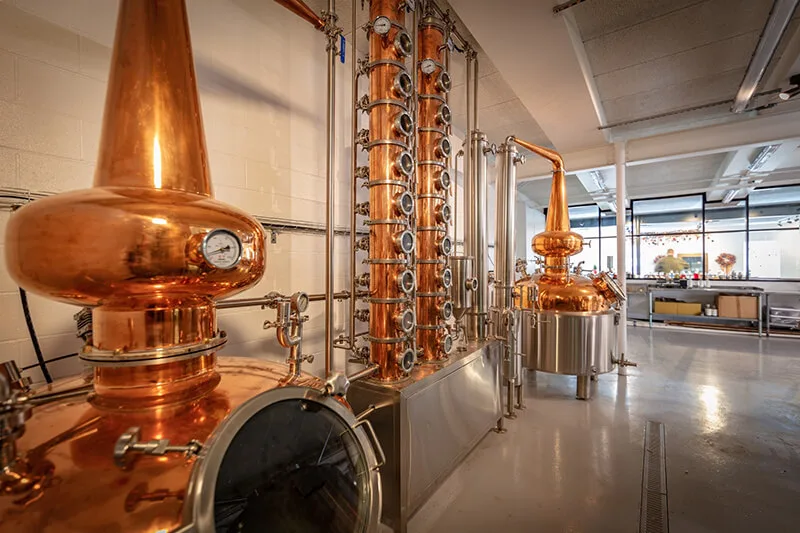
Copper Pot Stills: Precision Refining of the Flavor Profile
The copper pot still is the soul of the distillery, but its function goes far beyond simple “heating and separation.” During distillation, copper reacts with sulfur compounds to form non-volatile copper sulfide, stripping away raw sulfur and rubbery off-notes from the new make spirit. Yet, more copper contact is not always better—moderate sulfur retention is precisely what imparts a meaty texture and mineral character to certain classic whiskeys.
The engineering design of the still must strike a delicate balance among multiple parameters:
- Vessel Shape: Spherical shapes promote reflux, yielding a heavier body; tall necks increase purification efficiency, resulting in a lighter spirit.
- Neck Height: This determines the length of the vapor’s ascent. A taller neck increases reflux, reducing the carryover of esters and fusel oils.
- Lyne Arm Angle: Horizontal or upward-angled designs extend the tangential flow path of the vapor, increasing copper contact time before condensation.
- Internal Copper Components: Copper mesh, baffles, or chains can actively increase surface area, ideal for recipes with high sulfur content.
- Heating Method: Direct firing can induce Maillard reactions and subtle toasted notes; steam heating offers a gentler, more controllable approach.
Using the same batch of fermented wash, a short, wide-neck configuration tends to retain more esters, producing a rich, full-bodied spirit with pronounced fruitiness. A tall, narrow-neck configuration yields a light, pure, and floral new make. This divergence stems not from the raw materials, but from the inherent engineering characteristics of the equipment. The core competency of professional equipment manufacturers lies in reverse-engineering the geometric and thermodynamic parameters of the still based on the client’s predefined flavor targets, rather than offering one-size-fits-all generic models.
Turnkey Projects: The Physical Translation of Process
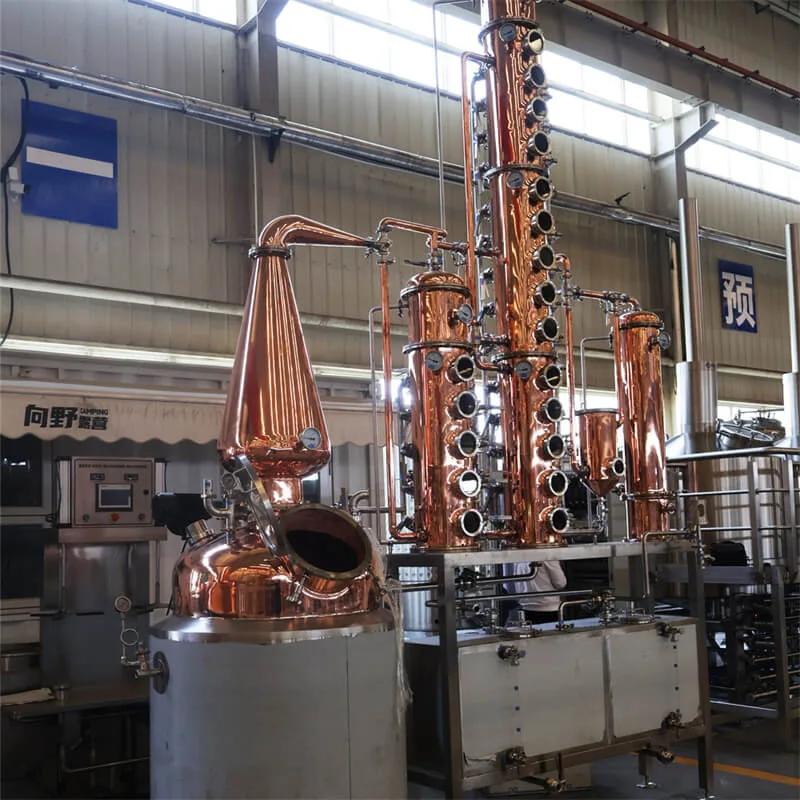
In the industry, “turnkey” is often oversimplified as “ready for production after installation and commissioning.” This severely underestimates its true engineering value. A genuine turnkey project involves completely and operably translating the process logic from the design phase directly into the client’s on-site environment.
A qualified delivery must include a verifiable closed loop:
- Process Parameter Baseline Documents: Providing empirically tested baselines tailored to the client’s raw materials and utility conditions, rather than generic operation manuals.
- Process-Centric Operator Training: Beyond teaching HMI operations, training must cultivate manual judgment skills when automation fails—teaching distillers to assess progress by observing the new make spirit’s appearance, condenser temperature distribution, and distillate surface tension.
- On-Site Validation of Cleaning Protocols: Delivery must include a complete CIP cycle, verified via ATP testing with a formal report. The root cause of most batch contamination in whiskey production lies in cleaning blind spots at valve manifolds or flange connections.
- Localized Adaptation: Water hardness, ambient humidity, altitude, energy costs, and regulatory standards must all be compensated for and adjusted during the commissioning phase.
Choosing a manufacturer with comprehensive engineering delivery capabilities means acquiring a reproducible, traceable, and scalable production system, not just a collection of cold metal vessels.
Engineering Principles for Distillery Planners
In years of distillation equipment design and delivery, three principles have been repeatedly validated as the lifelines for long-term distillery operations:
- Match Capacity to Stable Sales Volume, Not Peak Demand
The thermodynamic characteristics of a still are optimal between 70% and 100% of its designed capacity. Prolonged low-load operation leads to deviated reflux ratios, decreased copper contact efficiency, and soaring energy consumption. It is highly recommended to use the projected annual volume of the third year of operation as the baseline for equipment sizing, rather than the first year or theoretical maximum capacity. - Quantitatively Optimize Copper Contact Area Based on Recipe and Style
Increasing copper contact area removes sulfur compounds, but over-removal simultaneously strips away aromatic sulfur compounds like dimethyl trisulfide, which contribute meaty textures. High-ester or heavily peated styles have a higher tolerance for sulfur, whereas pure, fruity, and floral styles require stronger copper intervention. Equipment design should quantitatively calculate the duration and area of copper-to-vapor contact based on the target flavor profile. - Automate for Recording and Monitoring; Rely on Human Judgment for Cuts
Fully automated cut-point control has limitations in real-world production, as it cannot adapt to fluctuations in malt batches, seasonal temperatures, and yeast vitality. It is recommended to use automated systems for data logging, trend alarming, and interlock protection, while reserving the final judgment of the heart cut for experienced distillers. Equipment design must provide ample manual sampling and sensory evaluation interfaces to support this.
Заключение
Whiskey production is an engineering discipline that unifies chemistry, microbiology, and thermodynamics into equipment design. Mash tuns, fermenters, and copper pot stills are not isolated functional units; they form a tightly coupled flavor generation system. Every weld, every pipe, and every copper surface participates in shaping the final chemical composition of the spirit.
As equipment manufacturers, our role is not to provide standard product catalogs, but to translate our clients’ process goals into manufacturable engineering solutions. If you are planning a whiskey distillery, we invite you to share your target flavor profile, site conditions, and capacity expectations. We do not offer generic quotes; we provide engineering recommendations rooted in process requirements.
Свяжитесь с нашей инженерной командой today to get a customized whiskey distillery equipment solution.