Kombucha, as a naturally fermented living beverage reliant on a SCOBY (Symbiotic Culture of Bacteria and Yeast), demands production equipment that directly shapes its flavor profile, bioactive components, shelf life, and suitable sales channels. Within the industry, two primary processing routes exist: pasteurized (shelf-stable) and unpasteurized (live-culture). This article systematically categorizes the full range of kombucha production equipment based on the complete manufacturing process, incorporating METO’s turnkey system as a practical reference for understanding modern kombucha line design. It clarifies the core differences between pasteurized and unpasteurized equipment, highlights their respective process characteristics, and matches them to appropriate commercial scenarios, providing a solid reference for equipment selection.
I. Complete Equipment System Categorization by Production Process
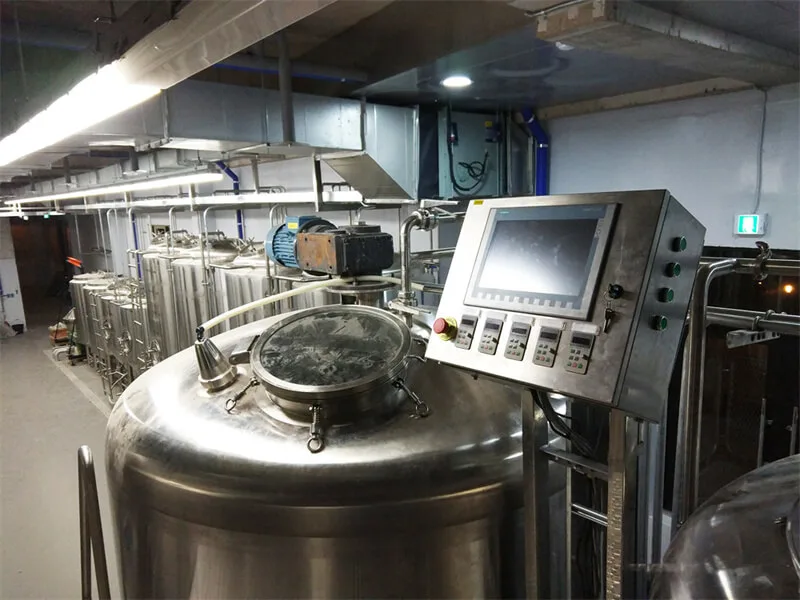
Standardized kombucha production involves seven core systems: raw water pretreatment, tea brewing and sugaring, temperature-controlled fermentation, filtration and clarification, intelligent temperature control, equipment sanitation, and filling & packaging. Each system has a distinct role, forming a complete production chain suitable for home use, micro-workshops, and industrial-scale production. METO’s integrated approach exemplifies this end-to-end philosophy, offering a one-stop turnkey solution that covers the entire workflow from tea extraction through to finished packaging, capable of producing still, lightly sparkling, and fully carbonated kombucha varieties.
(I) Pre-treatment System: Brewing, Blending, and Cooling
The pre-treatment stage sets the foundation for fermentation stability. It is primarily responsible for water purification, raw material steeping, and rapid cooling of the liquid, creating ideal initial conditions for the culture.
- Water Treatment Equipment
This includes RO (reverse osmosis) water purifiers, UV sterilizers, and high-precision security filters. These systems remove residual chlorine, heavy metals, impurities, and harmful microorganisms from the water. By eliminating water quality as a variable, they prevent fermentation failure and off-flavors, ensuring a stable brewing environment. - Tea Brewing & Sugaring System
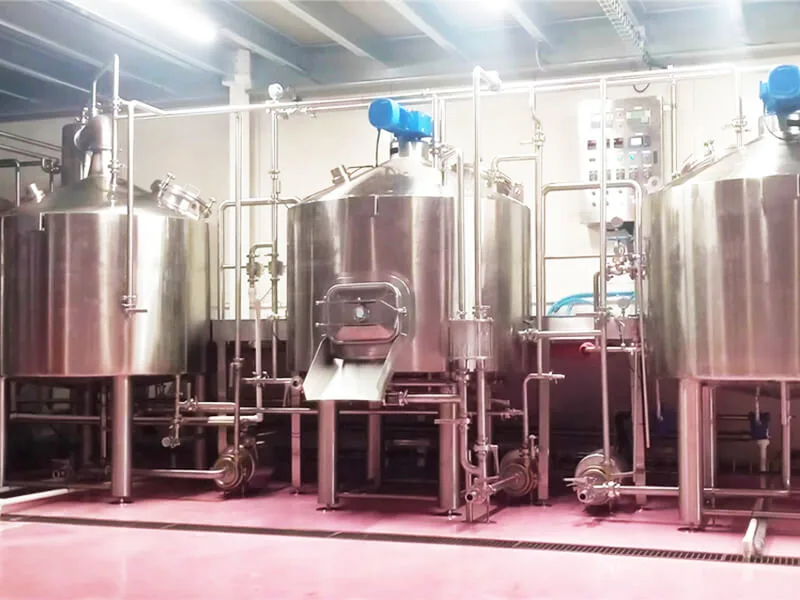
This system is divided into home and commercial categories. For home setups and micro-workshops, simple, electrically heated single-layer tea kettles are standard, as they handle small batches with ease. For industrial operations, jacketed sugaring tanks are employed. In a fully integrated line such as METO’s, the tea extraction tank comes equipped with an agitator and precision temperature control, handling the complete cycle of tea steeping, sugar dissolving, and blending in one standardized unit. These tanks can be heated electrically or with steam and integrate brewing, sugar dissolving, agitation, and precise temperature control, standardizing the raw material preparation stage.
(II) Core Fermentation Vessels: The Heart of Production
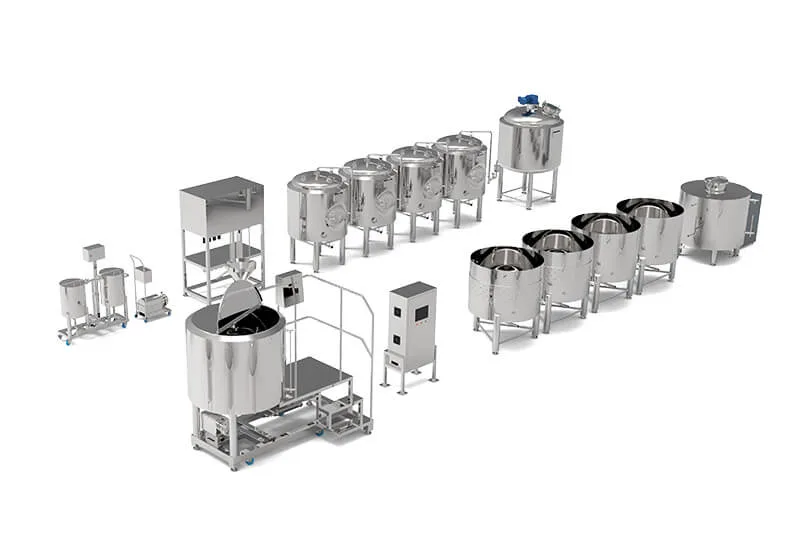
Fermentation vessels are the core carriers for SCOBY metabolism and flavor development. They are categorized by process stage into primary fermentation, secondary carbonation, and culture storage. Their design and capabilities scale up significantly with production volume. A standard commercial system typically comprises seven core modules centered around these vessels.
- Primary Aerobic Fermenter (SCOBY Fermentation)
For home use, glass jars or small, open-top stainless steel tanks with breathable covers allow for natural observation of the SCOBY pellicle growth. The industry standard is the jacketed, temperature-controlled fermenter, featuring a cylindrical or 60° conical bottom, integrated temperature and pH sensors, and precise control between 24–29°C, ideal for large-scale batch consistency. For premium, high-volume production, aseptic isobaric fermenters are used to precisely manage dissolved oxygen levels, greatly minimizing the risk of contamination and ensuring standardized fermentation. - Secondary Carbonation Tank (Flavor Blending & Carbonation)
This is a pressure-rated, sealed tank designed to withstand 2–3 bar. It is used for adding flavoring ingredients like juices and fruit purées after primary fermentation. Through closed, controlled micro-fermentation, natural carbonation occurs, finalizing the product’s effervescence. A dedicated in-line fruit purée dosing system ensures flavor uniformity and stability. A cooling and conditioning tank often precedes this stage, rapidly stabilizing the temperature post-fermentation and allowing for precise flavor adjustment before carbonation. - SCOBY Storage Tank
A dedicated, temperature-controlled vessel for preserving and propagating the SCOBY mother culture. It keeps the culture active and consistent, providing a reliable source for continuous batch production.
(III) Filtration and Clarification System
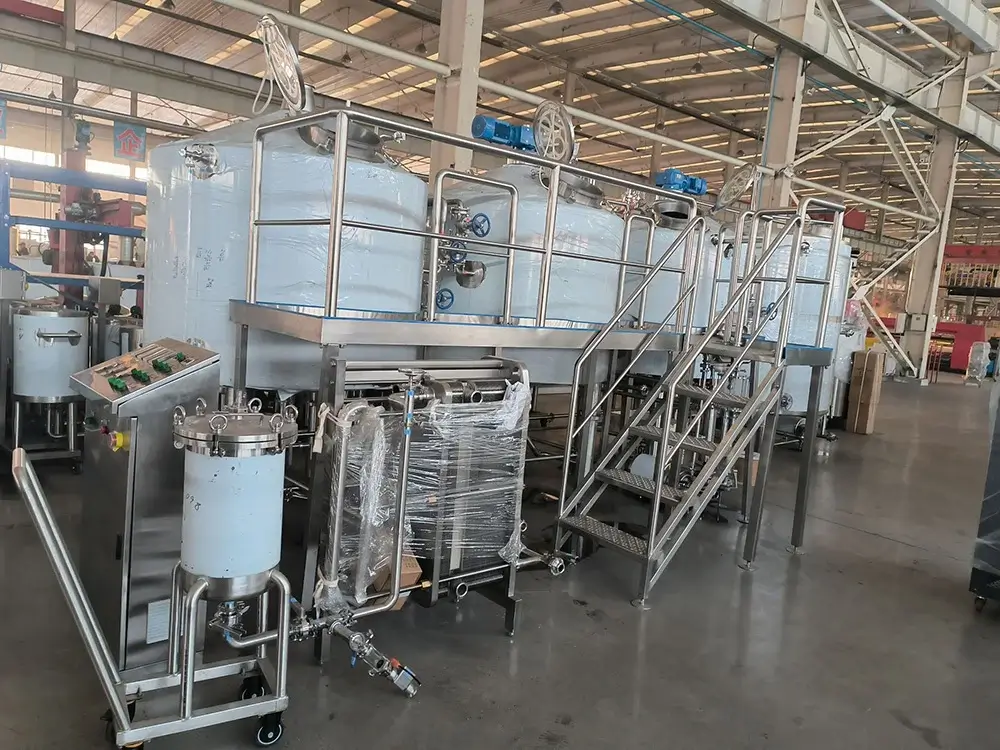
The filtration system purifies the liquid in stages, removing solids and, critically, either retaining or eliminating live cultures. This is the key process juncture that differentiates pasteurized and unpasteurized production lines. Modular systems like METO’s offer configurable filtration units that allow producers to select their preferred route.
- Coarse Filtration: A bag filter is used to separate tea leaf sediment, large pellicle fragments, and other macroscopic solids. This step is universal to all production types.
- Fine Filtration (Live-Culture Path): Equipment like plate-and-frame filters and fine cartridge filters are deployed to polish the liquid’s clarity while preserving the beneficial live cultures. A 0.45μm membrane filtration option is commonly selected here—it removes fine sediment and tea residue while allowing yeast and acetic acid bacteria to pass through intact, making it the standard choice for unpasteurized, refrigerated kombucha.
- Sterile Filtration (Shelf-Stable Path): A microporous membrane filter is implemented to completely remove all microorganisms. This is the core equipment for pasteurized, shelf-stable products, providing final sterilization before filling to extend shelf life. When paired with a pasteurization module, this achieves a 6–12 month ambient shelf life.
(IV) Temperature Control & Automation System
This system is the central nervous system for stable industrial production, enabling intelligent management of temperature and process parameters.
- Temperature Control Equipment: Comprising glycol chillers, jacketed heating/cooling circulation loops, and insulated, climate-controlled fermentation rooms, this setup guarantees a constant fermentation temperature year-round. The independent glycol chiller paired with the jacketed tank design is critical—it prevents the temperature fluctuations that can stress or destabilize the SCOBY culture, ensuring batch-to-batch flavor consistency.
- Automated Control Equipment: A PLC (Programmable Logic Controller) with a touchscreen HMI (Human-Machine Interface), in-line probes for pH, Brix, and temperature, automatic valves, and a data logging module allow for real-time monitoring and recording of all critical parameters including temperature, time, agitation speed, and CIP cycles. Electric valves enable automatic process switching, minimizing human error and ensuring standardized, traceable production across every batch.
(V) Cleaning & Sanitation System (A Food Production Mandate)
Food-grade cleaning and sanitation are essential to prevent contamination and guarantee product safety. The core unit is a mobile, dual-tank CIP (Clean-in-Place) cart with separate alkaline and acid tanks. Tanks come pre-installed with 360° rotating spray balls, enabling automated recirculation cleaning of all interior surfaces without manual disassembly. The alkaline wash, acid wash, and fresh water rinse cycle runs fully automatically, eliminating shadow zones and ensuring a thorough, repeatable cleaning outcome. This drastically reduces labor costs and is the most reliable safeguard against cross-contamination. The system is supported by food-grade detergents, sanitation pumps, hygienic piping, and aseptic connectors, fully meeting food safety standards.
(VI) Filling and Packaging System
Systems range from manual to fully automatic and on-tap solutions, matching different sales models.
- Small-Batch Retail: Manual bottle fillers, benchtop cappers, and compact labeling machines offer flexibility and simplicity for in-store use. Semi-automatic benchtop filling equipment is ideal for low-volume, high-variety production in cafes and small breweries.
- Industrial Automated Line: A full-scale line includes an isobaric filler, bottle washer, screw or crown capper, shrink sleeve applicator, in-line labeler, inkjet coder, and a case packing conveyor. Isobaric filling is crucial for locking in natural carbonation—it maintains counter-pressure during filling to prevent CO₂ loss and oxygen pickup, preserving the delicate effervescence of naturally carbonated kombucha.
- On-Premise Dispensing: For direct-to-consumer sales, stainless steel kegs, commercial kegerators, and refrigerated tap towers enable a made-to-order service model.
(VII) Auxiliary Support Equipment
This category covers raw material processing, in-process testing, product transfer, and system sealing. It includes fruit crushers, sanitary centrifugal pumps, sampling valves, high-precision refractometers, pH meters, food-grade transfer hoses, and various specialized fittings, all ensuring a smooth production flow.
II. Breakdown of Fermentation Vessel Structure and Material Specifications
As the most critical asset, the physical structure and material quality of a fermentation vessel determine both product integrity and operational lifespan.
Material Standards:
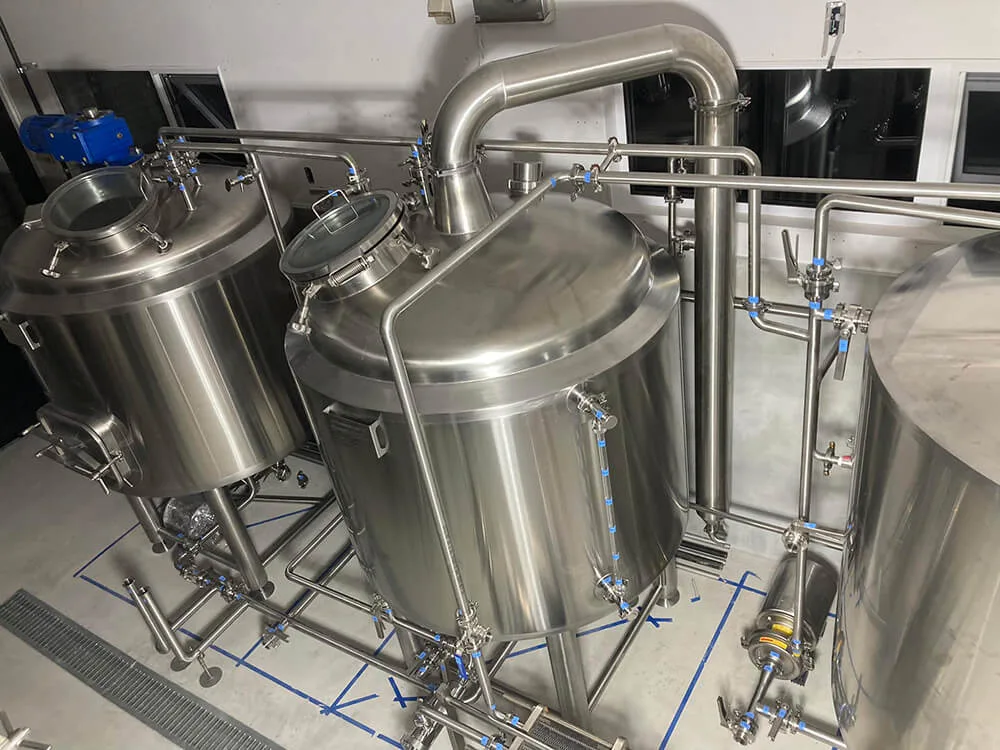
All product-contact surfaces are fabricated from SUS304 or SUS316 food-grade stainless steel. Interior walls receive a mirror polish to a finish of Ra ≤ 0.4μm, creating an exceptionally smooth, non-adherent surface. All welding is seamless and crevice-free, with no sanitary dead zones, followed by complete passivation treatment. This is particularly important for kombucha’s acidic fermentation environment (typically pH 2.5–3.5), where organic acid resistance is non-negotiable. The tank body features a reinforced, heavy-gauge inner and outer shell with 80–150mm of insulation, providing excellent thermal retention and energy efficiency.
Structural Configurations:
Fermentation vessels can be categorized into four types, each suited to a different need:
- Flat-Bottom Open-Top Tank: Simple in design and easy to clean, suitable for home brewers and micro-workshops.
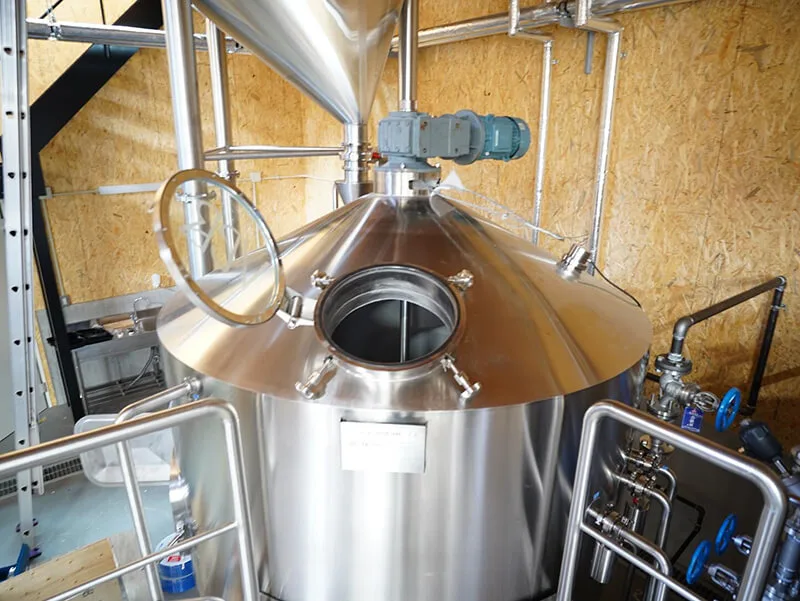
- Conical-Bottom Fermenter: The dominant commercial design. Its 60° or 150° cone shape naturally concentrates yeast, sediment, and SCOBY debris at the lowest point for complete, hygienic removal via the bottom dump valve. This improves liquid clarity and dramatically simplifies the cleaning process. The conical bottom is the industry standard for a reason—it automates what would otherwise be a manual, messy de-sludging operation.
- Jacketed Temperature-Controlled Tank: The industry staple for scalable production. It enables precise temperature management through a circulating heating/cooling medium (glycol or steam) within the jacket, ensuring year-round consistency. Standard fittings include a glass manway, sight glass with light, sampling valve, CIP spray ball connection, agitation system, and a false bottom screen filter assembly.
- Isobaric Sealed Fermenter: The choice for premium, large-scale production. It offers controlled oxygenation, locks in volatile aromas, and provides a superior barrier against contamination, maximizing batch-to-batch stability. The sealed, low-oxygen design also helps slow over-acidification and reduces the risk of excessive pressure build-up in the finished package—a practical advantage for live-culture production.
Volume Flexibility:
Standard capacities cover 100L to 5,000L, with customization available beyond 5,000L. Vessels can be deployed individually or in modular multi-tank configurations, meaning the same core design language scales from a single-tank setup in a café to a multi-vessel, high-throughput factory.
III. Core Analysis: Pasteurized vs. Unpasteurized Equipment
The fundamental difference between the two industry pathways is whether the finished product retains its live culture. This choice dictates two completely different equipment sets, production protocols, and end-product attributes, and is the key selection criterion for brand and channel positioning.
(I) Core Definition: Unpasteurized Equipment
A kombucha’s distinctive flavor, natural carbonation, organic acids, and probiotic activity are all products of the SCOBY’s metabolism. An unpasteurized line intentionally excludes any process unit that would inactivate the live culture, such as thermal pasteurization or sterile filtration. It is designed to preserve the liquid’s native microbiome, producing a raw, living kombucha. A pasteurized line, by contrast, uses heat or filtration to kill the live organisms, trading biological activity for extended shelf stability.
(II) Key Exclusions in an Unpasteurized Setup
- No Pasteurization System: No plate heat exchanger or holding tube for pasteurization is installed. The process avoids exposure to 60–85°C temperatures that would kill the SCOBY’s live bacteria and yeast.
- No Sterile Filtration Equipment: No sterilizing-grade membrane or corresponding filter assembly is used. Instead, a gentler 0.45μm membrane or equivalent fine filtration is employed to remove only sediment and tea solids, intentionally allowing the viable microorganisms to pass through.
- No Finished Product Sterilization: No step exists to sterilize the final liquid. Only the equipment and pipes are subject to routine CIP cycles.
- No Aseptic Filling Station: The line has no bottle sterilization tunnel or sterile filling isolator. Containers are simply pre-sanitized, and filling is conducted at ambient temperature to fully protect the culture’s activity.
(III) Core Advantages and Disadvantages of the Unpasteurized Process
- Core Advantages:
It fully retains probiotics, organic acids, and the authentic, complex flavor of fermentation, resulting in a crisp, nuanced taste—this is the defining, premium differentiator. By eliminating the pasteurizer, chiller, and associated utilities, the capital cost for smaller setups is significantly lower, and the process is streamlined. It aligns perfectly with an organic, natural, and health-conscious brand positioning, ideal for fresh, on-premise sales and premium specialty channels. - Core Disadvantages & Essential Requirements:
The product’s shelf life is extremely limited: only 2–7 days at ambient temperature, or 2–4 weeks under constant 0–4°C refrigeration. An unbroken cold chain is non-negotiable. It demands exceptionally high standards for production hygiene, equipment sanitation, and operational protocols, as the risk of contamination from wild yeast or mold is significantly higher. The product is a living one that will continue fermenting, so bottled products are at risk of over-carbonation and bottle bursting; pressure-rated packaging and correctly calculated headspace are vital. This model is fundamentally incompatible with nationwide, ambient-temperature distribution; it is viable only for local, short-reach channels.
(IV) How Equipment Design Supports the Live-Culture Path
Several specific design features make a tangible difference for unpasteurized production:
- The sealed, low-oxygen vessel design limits air contact, slowing the rate of over-acidification and reducing package pressure build-up.
- The crevice-free, fully welded sanitary construction with mirror-polished internal surfaces leaves no harborage points for unwanted microorganisms, lowering the barrier to maintaining a clean production environment.
- The 0.45μm filtration protocol is deliberately gentle—it clarifies the liquid without stripping out the beneficial SCOBY organisms, preserving the full spectrum of probiotics, organic acids, and the characteristic lively mouthfeel.
- The low-temperature, precision glycol system maintains stable culture activity, so the acidity, sweetness, and carbonation levels remain remarkably consistent from batch to batch—a critical quality control requirement for premium live-culture products.
(V) Core Distinction Between the Two Paths
The unpasteurized route champions live cultures, fresh and complex flavor, a short shelf life, and a premium market position suited to short, specialized supply chains. The pasteurized route uses thermal processing and sterile filtration to achieve microbial stability, resulting in a 6–12 month ambient shelf life. This is the path for high-volume production, robust logistics, and conventional retail channels. The trade-off is the loss of probiotics and a mellower, less dynamic flavor profile.
(VI) A Critical Misconception Clarified
“Unpasteurized Equipment” Does Not Mean “No Sanitation.”
This term refers only to the finished liquid, which remains biologically active. The production equipment itself—tanks, pipes, valves, fillers—must still undergo rigorous, food-grade alkaline and acid CIP cycles to eliminate potential spoilage organisms. This is the absolute, non-negotiable foundation of safe live-culture production.
IV. Key Technical Features of an Integrated Kombucha Line
Drawing from the system design principles common to well-engineered turnkey solutions, several technical features stand out as critical for consistent, efficient production:
1. Precision Temperature Control
An independent glycol chiller paired with jacketed tank circulation maintains the fermentation within its ideal range year-round. Temperature swings are one of the fastest ways to stress a SCOBY and create off-flavors; a well-designed system eliminates this variable entirely, delivering batch-to-batch consistency.
2. Configurable Filtration (Live vs. Shelf-Stable)
The filtration unit is designed as a decision point. Choose the coarse bag filter plus 0.45μm membrane path for an unpasteurized, live-culture product; or upgrade to a sterilizing-grade membrane and add a pasteurization module for a shelf-stable, ambient-temperature product. The same upstream and downstream equipment serves both routes, giving producers strategic flexibility.
3. Fully Automated CIP
Pre-installed 360° rotating spray balls inside each tank, connected to a mobile dual-tank CIP cart, automate the entire wash cycle. No manual disassembly, no shadow zones. This is not a convenience feature—for live-culture production, it is a critical contamination control measure that directly impacts product safety and batch success rate.
4. PLC + HMI Intelligent Control
A centralized touchscreen interface monitors and controls the entire line: temperature profiles, cycle durations, agitation speeds, valve positions, and CIP schedules. Every data point is logged for traceability. Automated valve switching eliminates the variability of manual operation, making consistent, repeatable production a reality rather than an aspiration.
5. Modular, Scalable Architecture
Each unit is independently functional and can be combined flexibly. A producer can start with core fermentation and manual filling, then add a secondary carbonation pressure tank, an in-line fruit purée dosing system, a fully automatic filling line, and a fruit crusher as volumes grow. This modularity protects the initial investment and supports the long-term journey from taproom to export-scale production.
V. Product Advantages: What a Purpose-Built Line Delivers
1. Hygiene by Design, Built for Live Cultures
The combination of mirror-polished internal surfaces (Ra ≤ 0.4μm), seamless sanitary fittings, and food-grade seals creates an environment that protects microbial integrity while minimizing the risk of mold and spoilage organism contamination. This is not generic beverage equipment adapted for kombucha—it is purpose-designed for the specific demands of SCOBY-based fermentation.
2. Operational Efficiency and Lower Lifetime Costs
The integrated CIP system slashes manual cleaning hours. Heavy-gauge insulated jacketing reduces the energy load on heating and cooling systems, delivering long-term electricity savings. SUS316-grade corrosion-resistant vessels withstand years of exposure to acidic fermentation liquid without pitting or leaking. The conical bottom with automated dump valves shortens the filtration and tank turnaround time, increasing overall production throughput.
3. Flavor Versatility for a Broad Product Portfolio
The system accepts tea, botanical, fruit juice, and purée additions at controlled points in the process. Sugar levels and carbonation can be precisely adjusted, enabling a single line to produce original, fruit-infused, herbal, and low-alcohol kombucha variants. This supports a dual strategy: premium SKUs for high-end retail and higher-volume SKUs for mainstream channels, all from the same production backbone.
4. Full Spectrum of Scale, One Design Philosophy
- 100–500L: Cafés, bakeries, local micro-breweries producing unpasteurized, refrigerated live kombucha for on-site or neighborhood sale.
- 1,000–5,000L: Regional cold-chain factories and export-oriented brands serving the premium refrigerated kombucha market.
- Fully equipped line with pasteurization module: National ambient-temperature distribution, extended shelf-life kombucha for mass retail.
5. Single-Supplier Turnkey Delivery
From tank design and plant layout drawings through fabrication, on-site installation, commissioning, and after-sales technical support, a single responsible party delivers the complete line. The layout is customized to the client’s facility dimensions, eliminating the complexity and coordination risk of managing multiple equipment vendors.
6. Filling Flexibility
The line supports both semi-automatic benchtop fillers for low-volume, high-variety runs and fully automatic isobaric filling lines for high-speed production. Isobaric filling is particularly important for naturally carbonated kombucha: it maintains counter-pressure during the fill to lock in the delicate, fermentation-derived bubbles that define the product’s mouthfeel.
Заключение
The design and configuration of a kombucha production line is ultimately a strategic decision that shapes a brand’s market positioning, operational complexity, and product identity. Whether choosing the live-culture path, the shelf-stable route, or a combination of both, the equipment must be evaluated not just on its technical specifications, but on its fitness for the specific fermentation environment, the target sales channel, and the long-term growth trajectory of the business.
If you are looking to start your own kombucha business, please feel free to contact our team for a detailed equipment list.