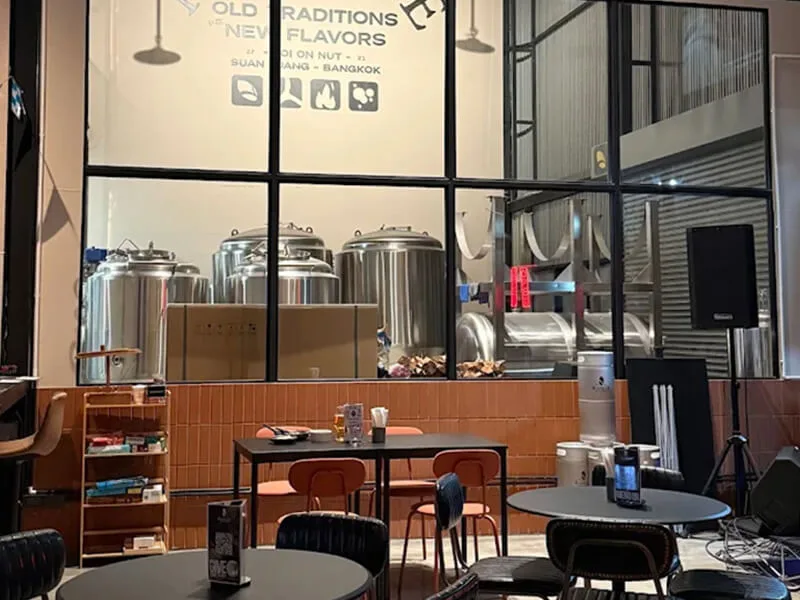
A 1000L brewery is a practical scale for many craft breweries, brewpubs and growing commercial beer businesses. It provides enough production capacity for a professional operation while keeping the equipment footprint and investment more manageable than a large industrial brewery.
However, building a 1000L brewery is not simply a matter of purchasing a 1000L brewhouse.
The brewhouse is only one part of the production system. A complete project may also require fermentation tanks, bright beer tanks, a glycol cooling system, CIP equipment, malt milling, heating equipment, pumps, piping, electrical controls, water treatment and packaging equipment.
The key is to size the entire system around the brewery’s expected production rather than selecting each machine independently.
This guide explains how to plan a 1000L turnkey brewery from production capacity through installation and commissioning.
Start With Production Capacity, Not Equipment
The first step is to define how much beer the brewery actually needs to produce.
A “1000L brewery” normally refers to the nominal volume of the brewhouse or brewing batch. It does not automatically mean that the brewery will produce 1000L of packaged beer every day.
Actual annual production depends on several variables:
- Brewhouse batch size
- Количество порций пива в день
- Brewing days per week
- Working weeks per year
- Fermentation time
- Tank utilization
- Beer loss during transfer and filtration
- Packaging losses
- Seasonal demand
For example, a 1000L brewhouse operating one brew per day has a very different production capacity from the same brewhouse running two or three brews per day.
This is why the first engineering discussion should focus on the target annual production rather than only the tank size.
Determine the Number of Brews per Day
A brewery producing several beer styles may not operate at maximum capacity every day.
A typical production plan might include:
1000L brewhouse → 1–2 brews/day → multiple fermentation tanks → packaged beer
The number of brews per day affects the required:
- Brewhouse configuration
- Тепловая мощность
- Холодопроизводительность
- Ферментационная мощность
- Hot liquor capacity
- Cold liquor capacity
- Pumping capacity
- CIP schedule
For a new brewery, it is also important to leave enough flexibility for future production growth.
What Equipment Does a 1000L Turnkey Brewery Need?
A complete 1000L brewery normally consists of several interconnected systems.
1. Malt Milling System
The milling system prepares malt for the brewhouse.
Depending on the recipe and brewery configuration, the system may include:
- Соломодробилка
- Malt hopper
- Dust collection
- Malt elevator or conveyor
- Grist handling equipment
For a small brewery, a compact milling system may be sufficient. Larger or higher-throughput projects can use automated conveying systems.
The important point is to match milling capacity with the required number of brews per day.
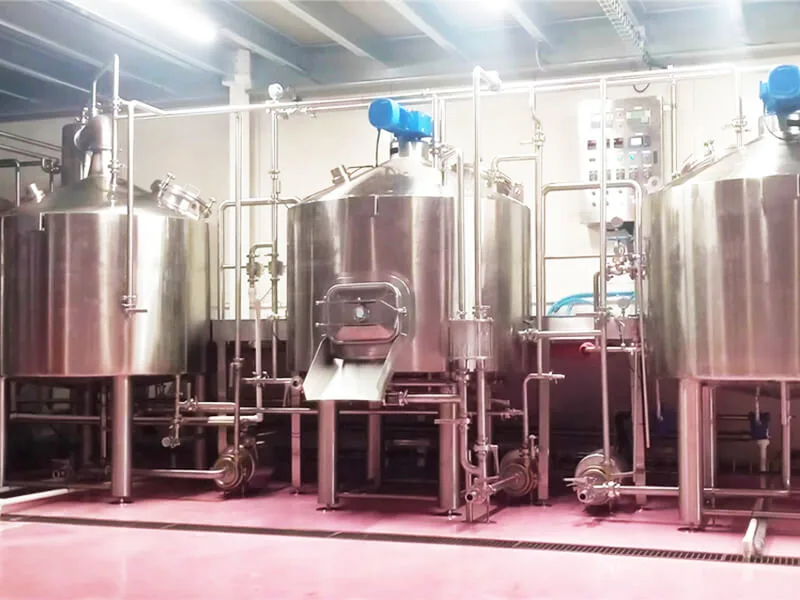
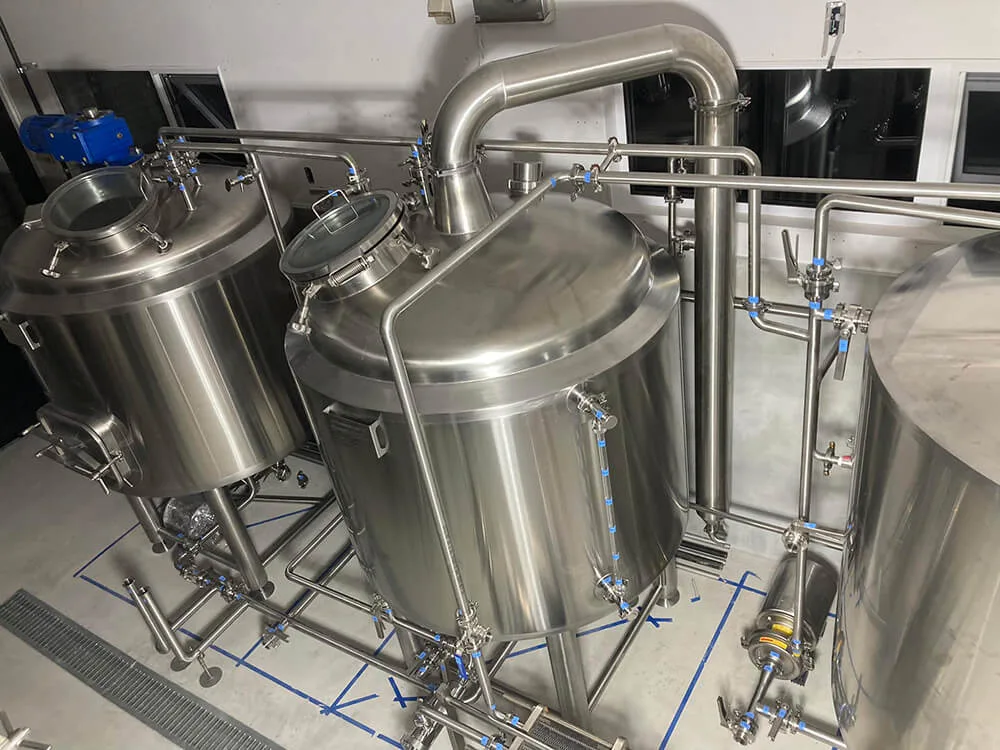
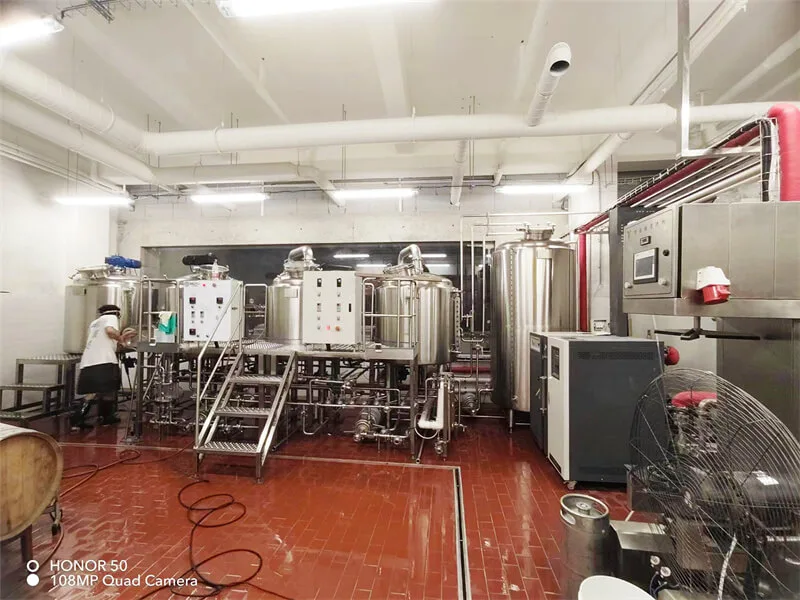
2. 1000L Brewhouse
The brewhouse is the core of the brewing process.
A typical system may include:
- Сусловарочный тун
- Лаутерный тун
- Brew kettle
- Whirlpool
- Резервуар для горячего раствора
- Резервуар для холодного раствора
- Wort pump
- Plate heat exchanger
- Wort aeration
- Process piping
Depending on the production process, a 2-vessel, 3-vessel or 4-vessel configuration can be selected.
A 2-vessel system generally requires less floor space and can be attractive for smaller breweries. A multi-vessel system can provide greater process flexibility and improve brewing throughput when multiple batches are required.
The right configuration depends on production frequency, available space, labor and automation requirements.
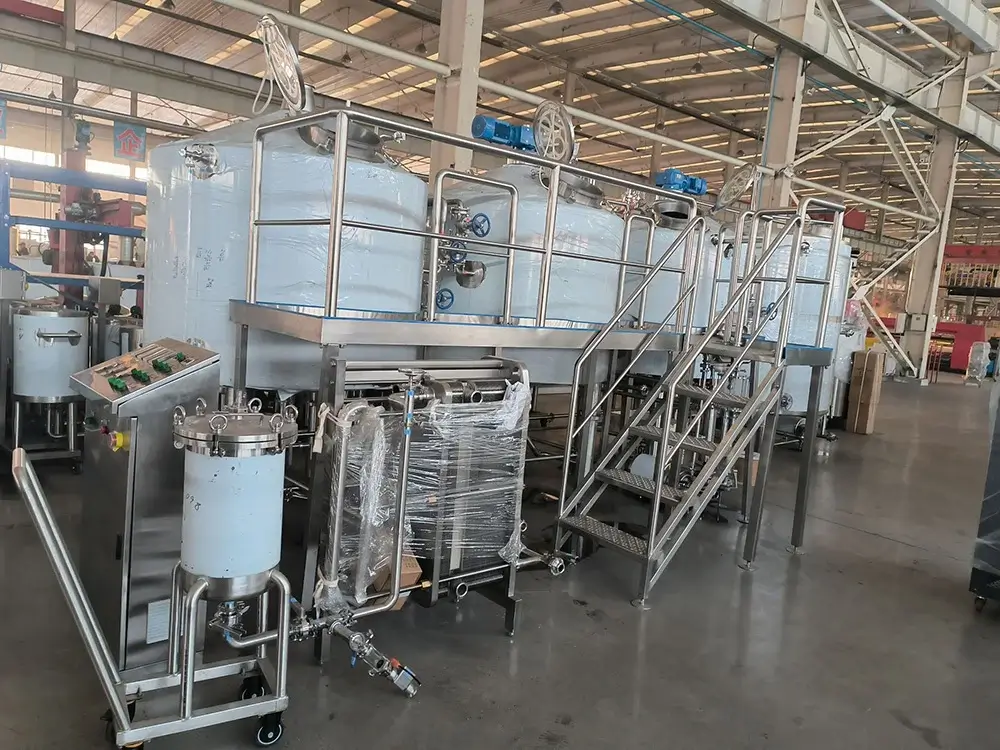
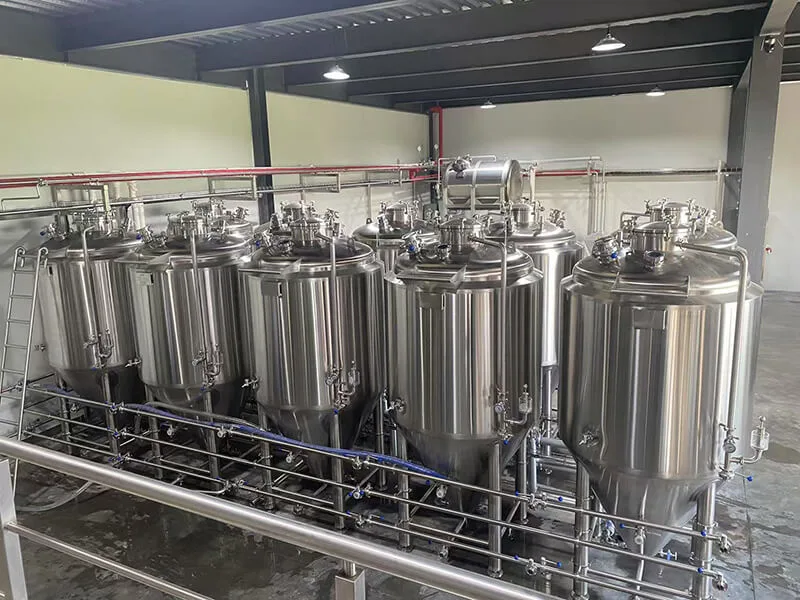
3. Fermentation Tanks
The fermentation system should be designed together with the brewhouse.
This is one of the most important points in a 1000L brewery project.
If the brewhouse produces 1000L per batch but there is insufficient fermentation capacity, the brewhouse cannot operate at its planned utilization rate.
Fermenters may typically be configured with:
- Conical bottom
- Cooling jacket
- Pressure-rated construction
- Temperature sensor
- Pressure gauge
- Safety valve
- Sampling valve
- CIP spray device
- Carbonation stone where required
- Dry-hopping port where required
The number of fermenters depends primarily on the fermentation and maturation time of the beer styles being produced.
4. Bright Beer Tanks
Bright beer tanks can be used for:
- Beer maturation
- Carbonation
- Clarification
- Final beer storage
- Packaging buffer
Not every 1000L brewery requires the same number of BBTs.
A brewery focused on keg and draft beer may have different requirements from one producing cans or bottles.
The BBT capacity should therefore be matched to packaging throughput and sales strategy.
Size the Glycol Cooling System Correctly
Cooling is one of the most commonly underestimated parts of brewery design.
The cooling system may serve:
- Емкости для брожения
- Емкости для светлого пива
- Wort cooling
- Cold liquor
- Other process requirements
A typical system can include:
- Glycol tank
- Industrial chiller
- Glycol pump
- Теплообменник
- Изолированные гликолевые трубопроводы
- Temperature control valves
The required cooling capacity depends on factors such as:
- Wort volume
- Wort temperature
- Cooling target
- Fermentation load
- Number of tanks
- Ambient temperature
- Tank insulation
- Brewing frequency
For this reason, the chiller should not be selected simply because it is paired with a “1000L brewery.”
The correct cooling capacity should be calculated from the actual heat load.
Choose the Right Heating Method
A 1000L brewery can use different heating methods depending on local energy availability and operating costs.
Паровое отопление
Steam heating provides stable and controllable heat transfer and is widely used for commercial brewing systems.
A steam-heated brewery may require:
- Steam generator or boiler
- Steam piping
- Pressure control
- Condensate management
- Safety devices
The steam generator should be sized according to the brewhouse configuration and heating demand.
Электрическое отопление
Electric heating can be attractive where electricity is readily available and installation simplicity is important.
However, the required electrical load can be significant.
Before selecting electric heating, the brewery should confirm:
- Available voltage
- Phase
- Частота
- Maximum site power
- Local electrical requirements
Direct Fire Heating
Direct-fire heating can also be considered for specific brewery applications.
The choice between steam, electric and direct fire should be based on local energy costs, available utilities, installation conditions and production requirements.
Design the CIP System Into the Brewery
Cleaning should not be treated as an accessory added after the main equipment is selected.
A professional brewery needs a defined cleaning strategy for:
- Пивоварня
- Ферментеры
- BBTs
- Piping
- Теплообменник
- Transfer lines
A CIP system may include:
- Емкость для каустика
- Емкость для кислоты
- Бак для горячей воды
- CIP pump
- Spray devices
- Клапаны
- Piping
- Контроль температуры
For a 1000L brewery, the CIP system should be sized according to the tank volume, cleaning procedure and number of vessels cleaned in each cycle.
The piping layout is equally important. Poorly designed piping can create dead legs, difficult-to-clean sections and unnecessary product loss.
Plan the Brewery Layout Before Ordering Equipment
A brewery can have technically correct equipment and still be difficult to operate if the layout is poorly designed.
The layout should consider the complete material and process flow:
Malt → Milling → Brewhouse → Fermentation → Bright Beer → Packaging → Finished Beer
At the same time, utilities need to be considered:
Water + Steam/Electricity + Glycol + CO₂ + Drainage + Electrical
Keep Process Flow Simple
The brewery layout should minimize unnecessary movement of:
- Raw materials
- Wort
- Beer
- Cleaning chemicals
- Operators
Fermenters should be positioned so that transfer lines can be kept as short and direct as practical.
The CIP system should also be positioned with the cleaning circuits in mind.
Leave Space for Maintenance
Equipment should not be installed with zero clearance around it.
Operators need access to:
- Manways
- Клапаны
- Насосы
- Electrical cabinets
- Датчики
- Safety devices
- Heat exchangers
- Motors
Maintenance clearance should be included in the layout before the equipment is manufactured.
Automation Level for a 1000L Brewery
A 1000L brewery can be configured with manual, semi-automatic or fully automated controls.
Manual System
A manual system provides direct operator control and generally has a lower initial equipment cost.
It can be suitable for:
- Пивоварни
- Pilot breweries
- Experienced brewers
- Small production operations
Semi-Automatic System
Semi-automatic control can automate repetitive operations while allowing the brewer to control important process decisions.
Typical functions include:
- Pump control
- Контроль температуры
- Valve operation
- Water dosing
- Heating control
- Fermentation temperature monitoring
Автоматическое управление
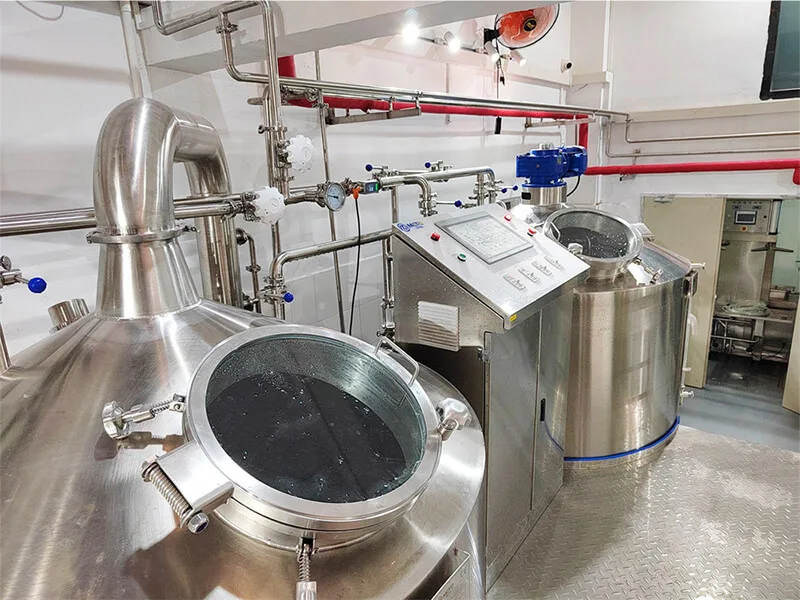
A fully automated system can integrate multiple process stages through PLC and HMI control.
Depending on the project, the control system can monitor:
- Температура
- Flow
- Tank level
- Pump status
- Valve position
- Отопление
- Cooling
- Brewing steps
Automation should be selected according to production requirements rather than simply choosing the most advanced system available.
Don’t Forget the Utilities
A turnkey brewery is only useful if the building can support it.
Before equipment production, the project should confirm:
Electrical Supply
Determine:
- Напряжение
- Частота
- Phase
- Installed power
- Control voltage
- Local electrical requirements
Water
Confirm:
- Water source
- Water pressure
- Water quality
- Required flow
- Brewing water treatment
Water chemistry can have a significant effect on beer production, so water treatment may need to be included in the project.
Drainage
Breweries use substantial amounts of water during brewing and cleaning.
The floor should provide suitable drainage and slope where required.
Drainage capacity should be considered before equipment installation.
Ventilation
The brewhouse can generate significant heat and steam.
Adequate ventilation is therefore important for:
- Operator comfort
- Condensation control
- Building protection
- Steam removal
Estimate the Investment by System
A 1000L brewery should not be evaluated only by the price of the brewhouse.
The total project investment may include:
| Система | Typical Scope |
|---|---|
| Фрезерование | Mill, hopper, conveyor |
| Пивоварня | Mash, lauter, kettle, whirlpool |
| Ферментация | Fermenters, fittings, valves |
| BBT | Bright beer storage |
| Cooling | Glycol tank, chiller, pumps |
| Отопление | Steam, electric or direct fire |
| CIP | Cleaning tanks and pump |
| Control | PLC, HMI, sensors, control cabinet |
| Piping | Wort, beer, water, steam, glycol |
| Упаковка | Keg, bottle or can equipment |
| Утилиты | Water treatment, boiler, ventilation |
| Installation | Assembly, commissioning and training |
The final cost can vary substantially depending on automation level, number of tanks, heating method, material specification, packaging system and local compliance requirements.
For this reason, a meaningful quotation should be based on a defined equipment list rather than a single “1000L brewery price.”
What Does “Turnkey” Actually Mean?
The term turnkey brewery can mean different things to different suppliers.
Before signing a contract, buyers should clarify exactly what is included.
A complete turnkey scope may include:
- Process design
- Equipment engineering
- Manufacturing
- Система управления
- Process piping
- Electrical integration
- Factory testing
- Shipping preparation
- Installation support
- Commissioning
- Operator training
- Technical documentation
Some suppliers may use “turnkey” simply to describe a package of tanks and brewing equipment.
Therefore, always request a detailed equipment list and scope of supply.
Factory Acceptance Testing Before Shipment
Factory Acceptance Testing, or FAT, is an important step before international shipment.
Depending on the project, FAT may cover:
- Tank appearance
- Weld quality
- Pressure testing
- Работа насоса
- Valve operation
- Electrical cabinet
- PLC functions
- HMI functions
- Контроль температуры
- Safety devices
- Piping connections
For a customized 1000L brewery, FAT gives the customer an opportunity to verify key functions before the equipment leaves the factory.
This is especially valuable for overseas projects because correcting a problem after installation can be considerably more expensive.
Установка и ввод в эксплуатацию
After the equipment arrives, the brewery needs to be assembled, connected and commissioned.
The installation process may include:
Equipment positioning
→ Piping connection
→ Electrical connection
→ Utility connection
→ Control system testing
→ Water testing
→ Brewing trial
→ Commissioning
→ Operator training
The manufacturer should provide clear installation drawings and utility requirements before shipment.
For overseas projects, remote technical support or on-site installation assistance can also reduce commissioning time.
Plan for Future Expansion
A 1000L brewery does not necessarily have to remain a 1000L operation.
If future growth is expected, the initial design can reserve capacity for:
- Additional fermenters
- Additional BBTs
- Larger glycol capacity
- Packaging upgrades
- Automated CIP
- Additional brewing shifts
- Expanded cold storage
For example, the brewery may start with a 1000L brewhouse and several fermenters, then increase annual production by adding fermentation and packaging capacity rather than immediately replacing the brewhouse.
This approach can reduce the cost of future expansion.
Common Mistakes When Building a 1000L Brewery
Choosing the Brewhouse Before Calculating Production
A 1000L brewhouse does not define the complete production capacity.
The fermentation and packaging systems must support the planned brewing schedule.
Underestimating Cooling Capacity
Insufficient glycol capacity can limit fermentation performance and prevent the brewery from maintaining the planned production schedule.
Ignoring Utilities
Electrical power, steam, water, drainage and ventilation should be confirmed before equipment manufacturing.
Buying Equipment From Multiple Suppliers Without System Integration
Individual machines may work correctly but still create integration problems when connected together.
Valve standards, piping sizes, electrical signals, control logic and process flow should be coordinated.
Treating Packaging as an Afterthought
If the brewery produces beer faster than it can package it, finished beer can become a bottleneck.
Packaging capacity should therefore be considered during the initial project design.
Why Work With a Turnkey Brewery Equipment Manufacturer?
A brewery project involves multiple systems that need to work together.
Working with a manufacturer capable of engineering the complete system can simplify:
- Equipment selection
- Process integration
- Piping design
- Electrical integration
- Автоматизация
- Factory testing
- Installation
- Commissioning
- Technical support
For an overseas brewery project, this integrated approach can also reduce communication between multiple suppliers.
Build Your 1000L Brewery Around Your Production Plan
There is no single standard configuration that is ideal for every 1000L brewery.
A brewpub, startup craft brewery and expanding commercial brewery may all use a 1000L brewhouse but require very different supporting equipment.
The correct configuration should be based on:
- Планируемый годовой объем производства
- Количество порций пива в день
- Beer styles
- Fermentation time
- Количество бродильных чанов
- Packaging method
- Heating method
- Доступные коммунальные услуги
- Automation level
- Building layout
- Local installation requirements
- Future expansion plans
METO provides customized brewery equipment solutions covering brewhouses, fermentation systems, bright beer tanks, cooling systems, CIP, heating, control systems and related auxiliary equipment.
For a 1000L brewery project, send your target production, brewhouse capacity, number of fermenters, heating method, automation preference and destination country. The equipment configuration can then be developed around your actual production requirements rather than a generic equipment package.
1000L Turnkey Brewery Project Checklist
Before requesting a final quotation, prepare the following information:
☐ Target annual beer production
☐ Brews per day
☐ Brewhouse capacity
☐ Number and size of fermenters
☐ Bright beer tank requirements
☐ Beer styles
☐ Fermentation time
☐ Heating method
☐ Available electrical supply
☐ Water source and quality
☐ Cooling requirements
☐ CIP requirements
☐ Packaging method
☐ Automation level
☐ Available floor space
☐ Destination country and city
☐ Local certification or installation requirements
☐ Future expansion plan
With these parameters defined, a brewery equipment manufacturer can provide a more accurate process design, equipment list, layout and quotation.
Planning a 1000L brewery? Send METO your project requirements and get a customized turnkey brewery equipment proposal.