In today’s highly competitive F&B market, differentiation is no longer optional.
A glass of freshly brewed beer has evolved from a “nice-to-have” into a core profit driver for restaurants.
However, many restaurant owners hesitate to enter the craft beer segment because of one key issue:
How to choose the right brewing equipment.
- Too small → not enough supply
- Too large → wasted investment
- Wrong configuration → inconsistent beer quality
In this guide, we’ll walk you through a real 500L brewery equipment case, and show you how to choose the right system step by step—so you can avoid costly mistakes and build a new revenue engine.
Real Case: From Bottled Beer to In-House Brewing Success
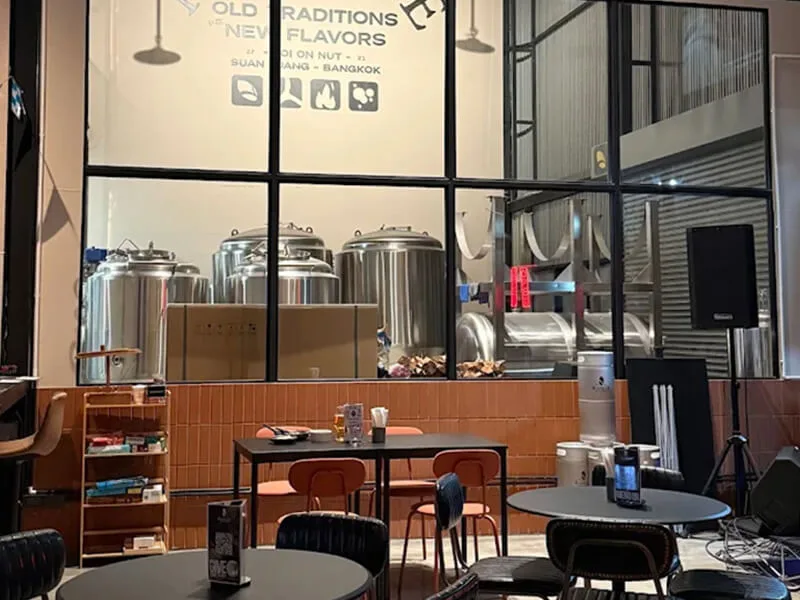
The client is a mid-sized fusion restaurant:
- Size: ~80㎡
- Daily traffic: 150+ customers
- Previous model: outsourced bottled craft beer
Problems:
- Low profit margins
- Customer complaints about freshness
- Lack of differentiation
✅ After Installing 500L Brewery Equipment:
- Daily draft beer sales: 120+ glasses
- Average ticket size: +28%
- Customer return rate: +35%
👉 The restaurant quickly became a local craft beer destination
System Configuration (Tailored for Restaurant Use)
This 500L brewery equipment setup is designed with zero redundancy and full practicality:
- 200–300kg/h Malt Milling Unit
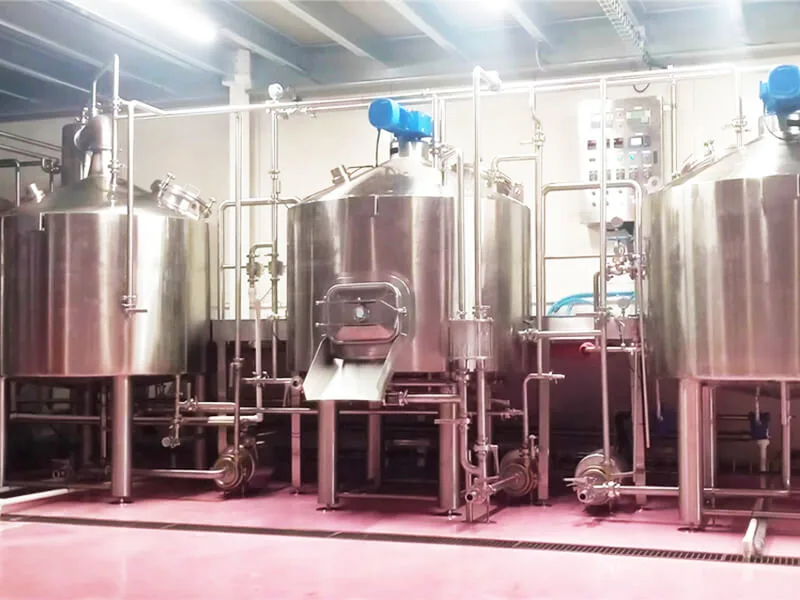
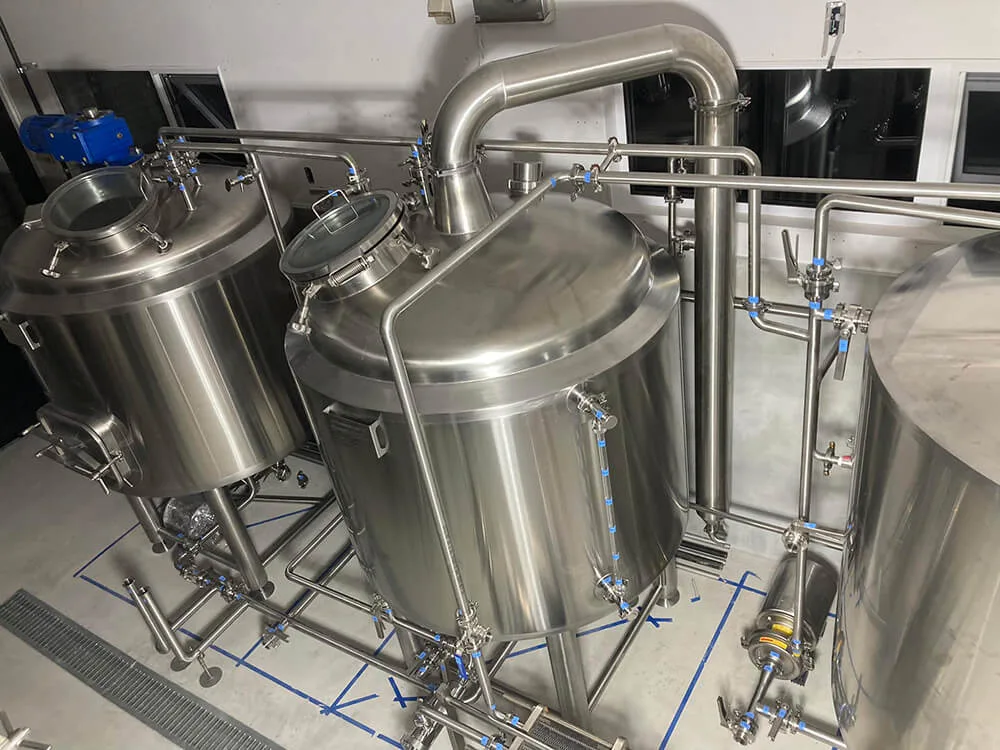
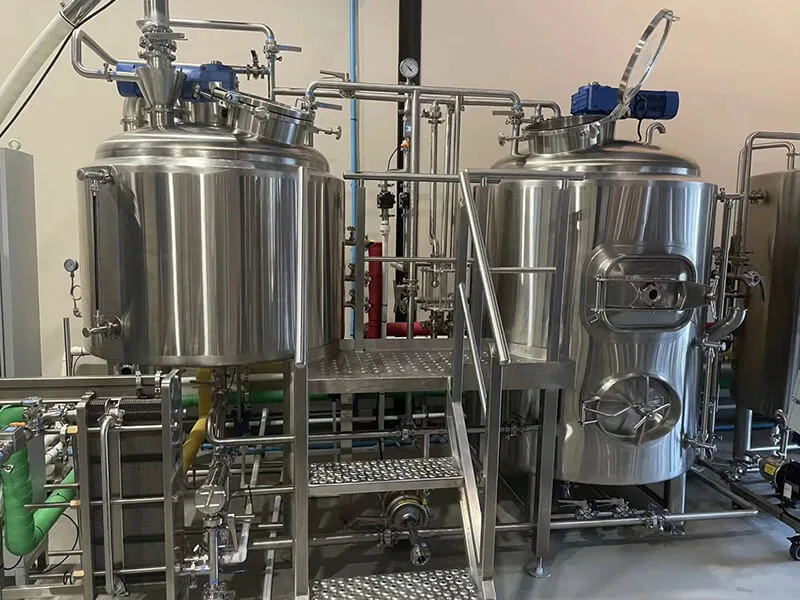
- 500L German-Type Three-Vessel Brewhouse + HLT
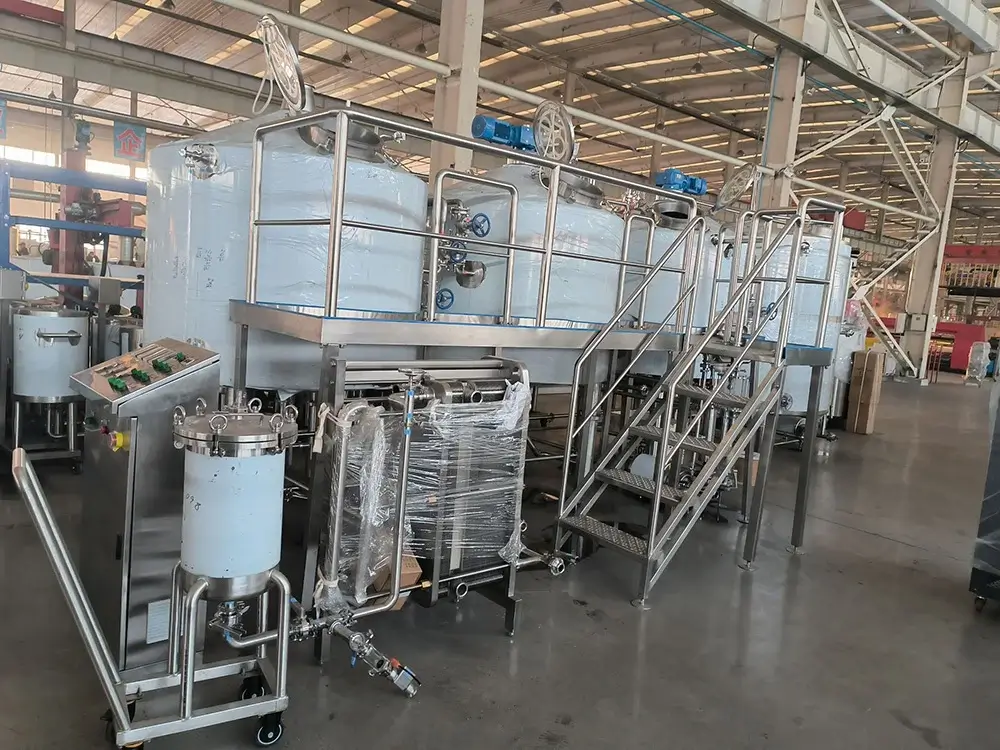
- 100L × 2 Fermentation Tanks
- 500L × 3 Fermentation Tanks (Top Manway)
- 1000L × 2 Fermentation Tanks (Top Manway)
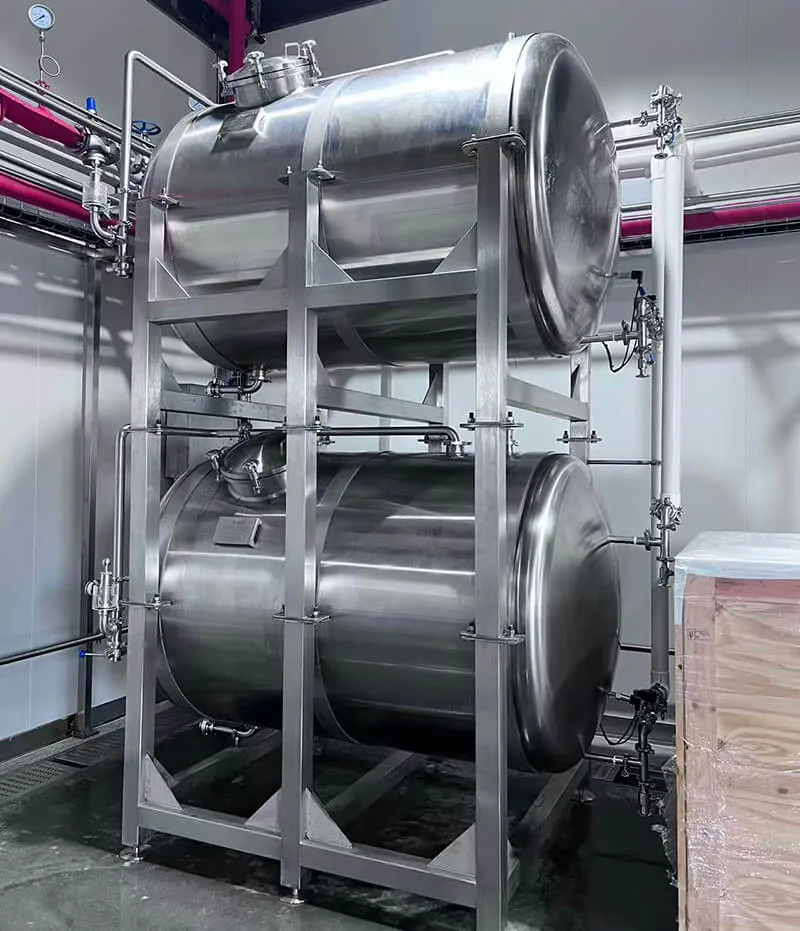
- 1000L × 2 Horizontal Bright Beer Tanks
- Резервуар для гликолевой воды 1500 л
- Portable CIP Pump with Danfoss VFD
- 50kg/h Gas Steam Boiler
- Brewing Control Cabinet
- Two-Head Semi-Auto Keg Washer
- Four-Head Keg Filling Machine
👉 Every component is selected specifically for restaurant workflow, efficiency, and scalability
✅ 3 Key Principles for Choosing 500L Brewery Equipment
1️⃣ Match Capacity to Customer Flow
Enough to Sell — Without Waste
The biggest mistake restaurant owners make is overestimating capacity.
In this case:
- 150+ daily customers
- 500L per batch ≈ 200 glasses (250ml each)
👉 Perfect balance:
- Daily operations covered
- Peak hours handled
- No overproduction waste
Supporting Equipment Logic
- 200–300kg/h malt milling unit
→ Matches brewhouse input, no bottlenecks - 50kg/h gas steam boiler
→ Fast heating, supports efficient brewing cycles
👉 Result:
Smooth production aligned with restaurant service rhythm
2️⃣ Balance Flavor Consistency & Menu Flexibility
Keep Quality Stable — Keep Customers Coming Back
For restaurants, beer must:
- Deliver consistent taste
- Offer variety to drive repeat visits
How This System Delivers
- German-style three-vessel brewhouse
→ Precise control of mashing, lautering, and boiling
→ Ensures stable beer quality
Smart Fermentation Strategy
- 100L tanks → pilot brewing
(seasonal / limited flavors) - 500L & 1000L tanks → core production
(lager, wheat, IPA)
👉 Result:
- Stable flagship beers
- Continuous new offerings
Built for Hot Climate Markets (e.g., Thailand)
- 1500L glycol cooling system
→ Temperature control within ±0.5°C - 1000L horizontal bright tanks
→ Better clarity and freshness
👉 Ensures consistent quality even in high temperatures
3️⃣ Easy Operation = Lower Operating Cost
Designed for Restaurant Teams
Restaurants don’t need complex systems—they need efficient and easy-to-manage equipment.
Основные характеристики
- Brewing control cabinet
→ Visual interface
→ Easy operation after basic training - CIP system with Danfoss VFD
→ One-click cleaning
→ Saves labor and improves hygiene
Faster Serving Efficiency
- Two-head keg washer
- Four-head keg filler
👉 Faster turnaround, better customer experience
Future Expansion Ready
- Modular system design
- Easy to add fermentation tanks
- No need to replace brewhouse
Profit Logic: Why It Works
Many buyers assume:
“More expensive = better”
But for restaurants:
👉 “Right fit = higher profit”
In This Case:
- Raw material cost = ~1/3 of bottled beer
- Selling price = 3–5x markup
💡 Example:
- Cost per glass: ~$0.7
- Selling price: $3–4+
👉 Craft beer becomes a high-margin core product
Final Takeaway
Choosing the right 500L brewery equipment comes down to three principles:
- Capacity matches demand
- Configuration balances quality & flexibility
- System is easy to operate and scale
Ready to Start Your Brewpub?
If you’re planning to enter the craft beer market:
Don’t overspend.
Don’t under-configure.
Choose equipment that truly fits your business.
👉 A well-designed 500L brewery equipment system can become your strongest competitive advantage.
Contact Meto today to learn more about our brewery solutions and find the brewery equipment for your brewery.