For wineries and wine producers aiming to enter the European and American markets, it is essential not only to master core winemaking techniques but also to build a hardware system that meets international standards. This article provides an in-depth analysis of key winemaking processes and offers a detailed guide on commercial equipment procurement and compliance.
Core Winemaking Process Analysis
Winemaking is a bioengineering process that transforms grapes into an alcoholic beverage with specific flavor characteristics through physical and biochemical means. The process paths for red and white wines differ significantly, primarily in skin contact and fermentation temperature control.
Raw Material Harvesting & Pre-treatment
Harvesting is the first step determining raw material quality. Mechanical harvesting suits flat, large-scale vineyards, enabling low-temperature night operations to maximize acidity and freshness retention. Manual harvesting, preferred by top-tier wineries, involves hand-sorting to reject moldy and underripe berries. Harvested grapes must undergo immediate pre-treatment: vibration sorting tables remove leaves and debris, followed by destemming and crushing. For white wines, pressing and skin separation must occur within two hours to prevent oxidation by polyphenol oxidase. For red wines, skins are retained for maceration to extract anthocyanins and tannins.
Crushing, Pressing & Maceration
Crushing requires precise control of skin breakage. Modern practice calls for retaining partial skin integrity for red grapes, while white grapes are handled gently to avoid pulp oxidation. In pressing, pneumatic presses have become the standard: they apply uniform pressure (typically within 0.6 MPa) via inflatable bladders, effectively reducing bitter compound extraction from crushed pomace. Red wines are usually pressed after fermentation, white wines before fermentation.
Fermentation Control & Malolactic Fermentation
Alcoholic fermentation is key to flavor development. Red wine fermentation is typically maintained at 25–30°C to promote pigment and tannin extraction, accompanied by daily pump-overs or punch-downs. White wines are fermented at lower temperatures (12–22°C) to preserve volatile fruit aromas. Additionally, red wines typically undergo malolactic fermentation at 18–22°C, converting sharp malic acid into softer lactic acid, imparting buttery complexity.
Envelhecimento e maturação
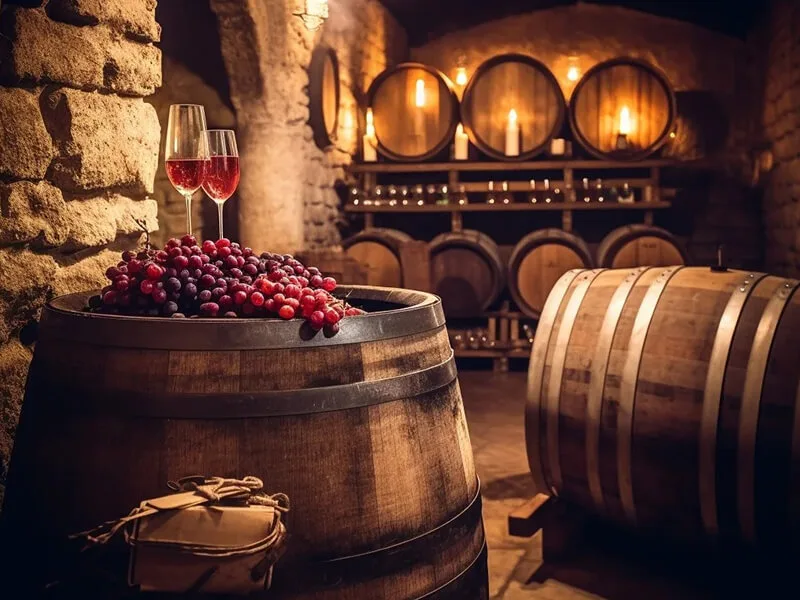
Aging gives wine structure and depth. Oak barrel aging (usually French or American oak) imparts vanilla, toast, and spice notes, lasting from six months to three years. Stainless steel tank aging maintains pure fruit character. Regular racking removes sediment and replenishes lost wine volume.
Clarification, Filtration & Bottling
After fermentation, wine undergoes clarification. Traditional methods use egg white or bentonite to adsorb suspended particles, while modern techniques favor membrane filtration with pore sizes as low as 0.45 μm to ensure biological stability and clarity, followed by aseptic bottling.
Core Equipment Configuration for Commercial Winemaking
An efficient production line requires six major systems:
Sistema de manuseamento de matérias-primas
- Destemmer-crusher: Dual-function with adjustable drum speed for different grape varieties.
- Pneumatic press: Food-grade bladders, automatic pressure regulation for gentle pressing of high-quality white and rosé wines.
- Transfer pump: Rotary lobe or peristaltic pumps to avoid fruit and wine damage.
Fermentation & Temperature Control System
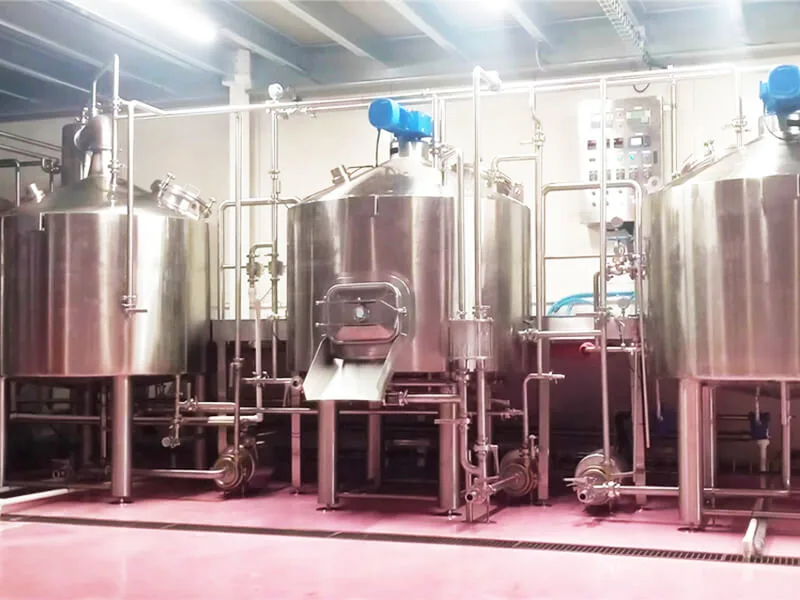
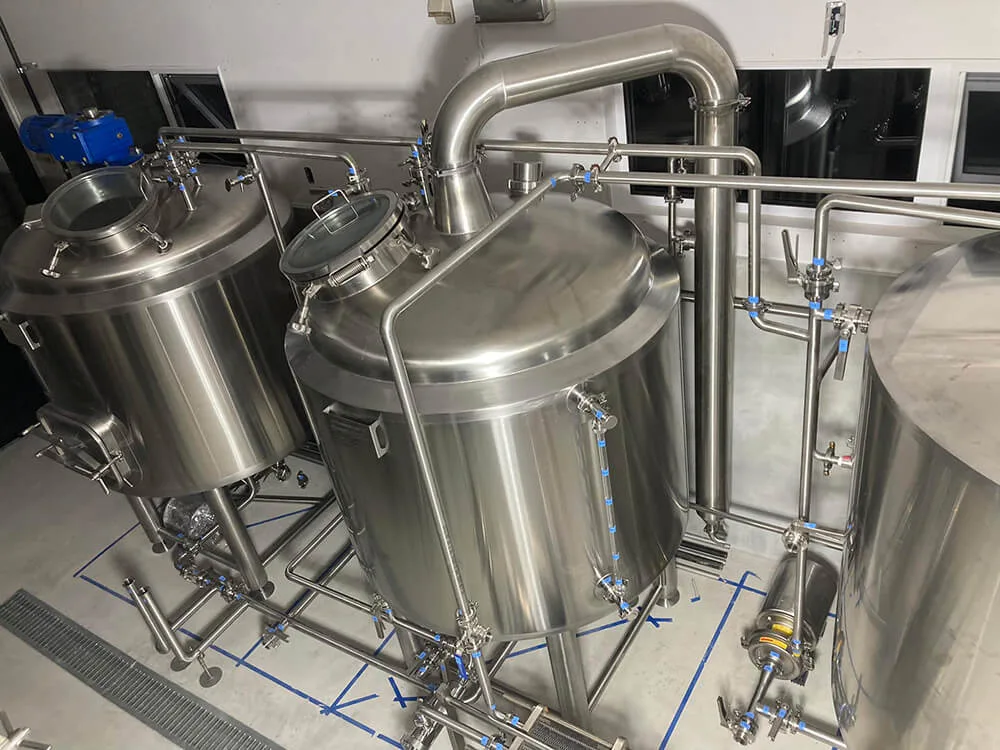
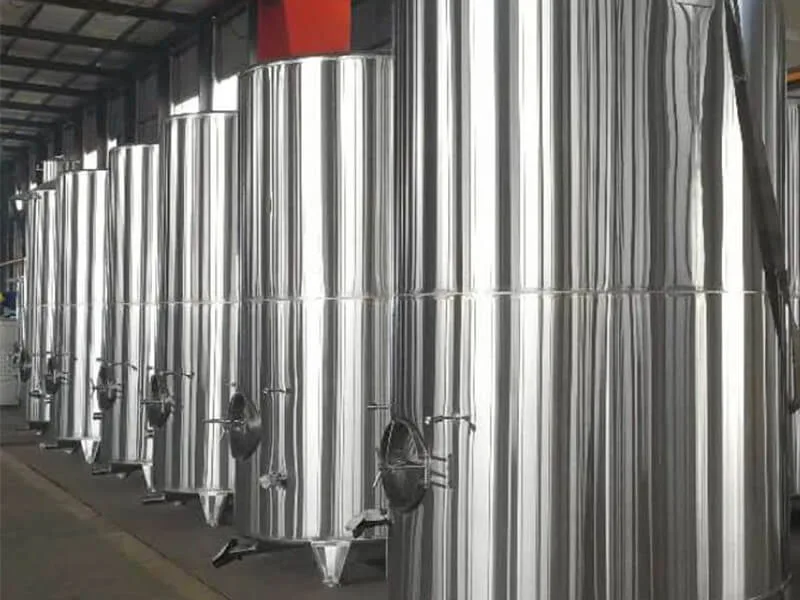
- Stainless steel fermentation tanks: SUS304 or SUS316L food-grade stainless steel, jacketed cooling system, PT100 temperature sensor with ±0.5°C accuracy.
- Automated control system: PLC-based unit for real-time monitoring of specific gravity, temperature, and automatic cooling adjustment to prevent stuck fermentation.
- Wine fermentation tank (keyword): A critical component of the fermentation system, designed for precise temperature control and hygiene.
Storage & Aging System
- Storage tanks: Equipped with nitrogen blanketing (O₂ ≤0.5 mg/L) to prevent oxidation.
- Oak barrels: Different toast levels available, with dedicated barrel racks and cleaning equipment.
Filtration & Clarification System
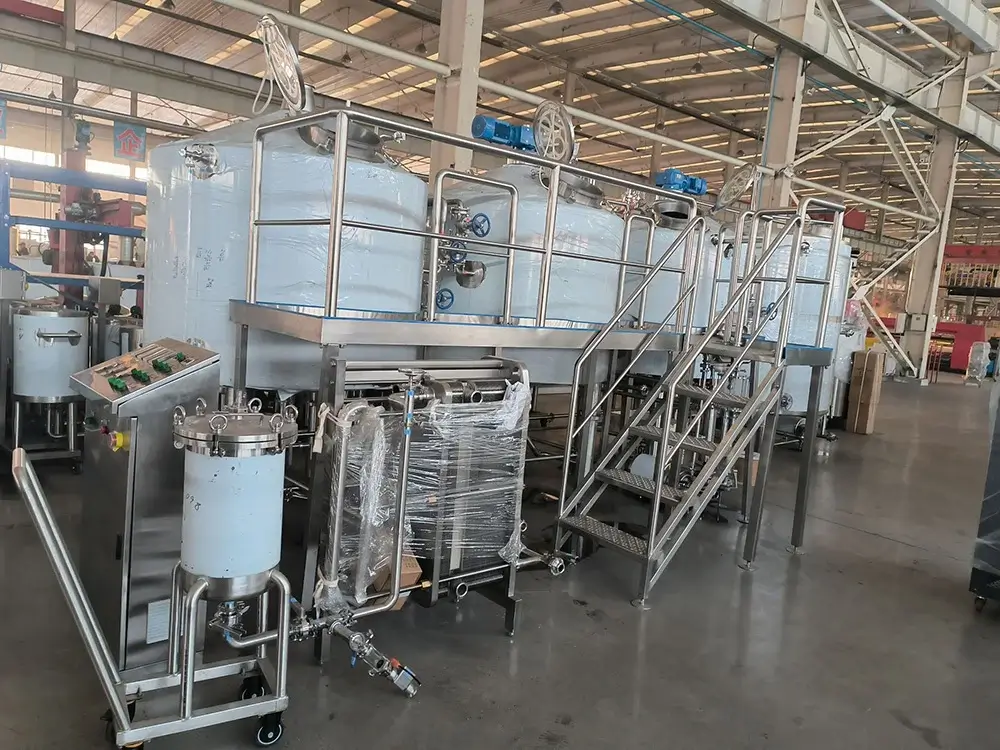
- Diatomaceous earth filter: For coarse filtration to remove larger particles.
- Membrane filter: For fine and sterile filtration to ensure pre-bottling biological stability.
Filling & Packaging System
- Automatic bottling line: Integrated rinsing, filling, corking, and capping with vacuum or inert gas purging to minimize dissolved oxygen pickup.
Auxiliary & Cleaning System
- CIP system: Automatic circulation of acid, alkali, and hot water through pipes and tanks – essential for food safety.
- Chiller unit: Provides cooling for fermentation tank jackets and cold stabilization.
Commercial Winemaking Equipment Procurement & Compliance Guide
When sourcing equipment for European and American markets, considerations must go beyond price to include material safety, automation level, and compliance certifications.
Material Safety & Hygienic Design
Equipment in direct contact with wine must use compliant materials. SUS316L stainless steel is preferred for its superior corrosion resistance in acidic environments. Internal welds must be TIG-welded and polished to Ra ≤0.8 μm, with no dead zones – meeting EHEDG (European Hygienic Engineering & Design Group) hygienic design standards to prevent microbial growth.
Temperature Control Accuracy & Automation
Fermentation stability directly determines wine quality. High-quality fermentation tanks (including the wine fermentation tank) should feature precise temperature control systems managed by PLC or DCS, with accuracy of ±0.1°C to ±0.5°C. Data logging capabilities are essential for traceability of critical process parameters.
Capacity Matching & Scalability
Equipment sizing must be based on production planning. For example, cost differences between 500 L and 2000 L tanks are significant. A modular approach using multiple medium-sized tanks instead of few large ones allows flexible small-batch, multi-varietal production and future expansion. Floor height and load-bearing capacity must be carefully checked for installation.
EU & US Market Compliance & Certification Systems
Equipment for export to Europe or the US must pass rigorous compliance reviews – the “passport” to market:
- Food contact material safety: EU: (EC) No 1935/2004 framework; US: FDA 21 CFR (e.g., 21 CFR 175–178).
- Hygienic design certification: Prefer equipment with EHEDG certification or meeting 3-A Sanitary Standards – recognized quality benchmarks by top global wineries.
- Management system certification: Suppliers should hold ISO 9001 (QMS) and ISO 22000/FSSC 22000 (food safety management).
- Electrical & mechanical safety: EU requires CE marking (Low Voltage Directive 2014/35/EU and Machinery Directive 2006/42/EC); US typically requires UL certification and compliance with IEC 61010.
- Energy efficiency & sustainability: Under carbon neutrality goals, energy performance is increasingly important. Prefer equipment with energy recovery systems and ISO 50001 compliance to reduce utility consumption and align with green production trends.
Conclusão
From vineyard to production line, commercial winemaking is a discipline of precision and patience. High-quality equipment is not just a carrier of processes but a guardian of quality. When selecting equipment, only by combining deep process understanding with rigorous compliance standards can you create wines with international competitiveness – allowing every drop of fine wine to reach consumers around the world safely and consistently.
For more information about METO’s brewery solutions, please contact our sales team.