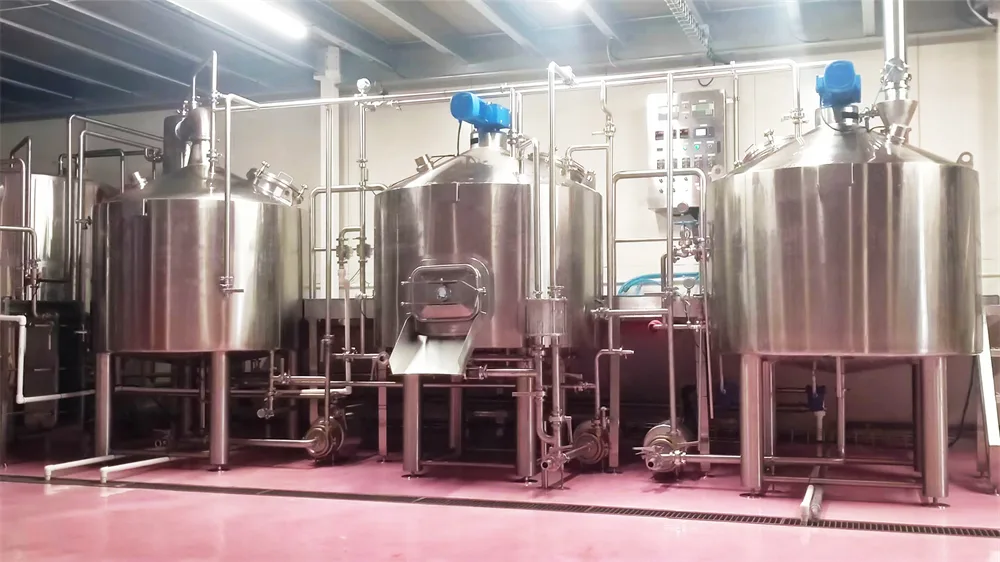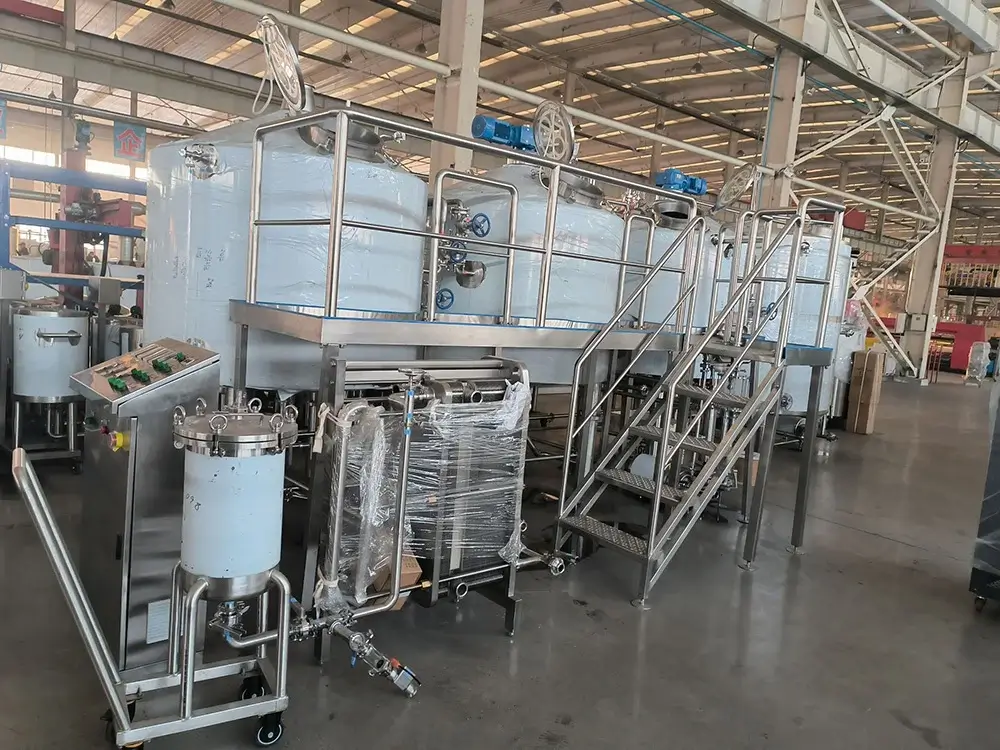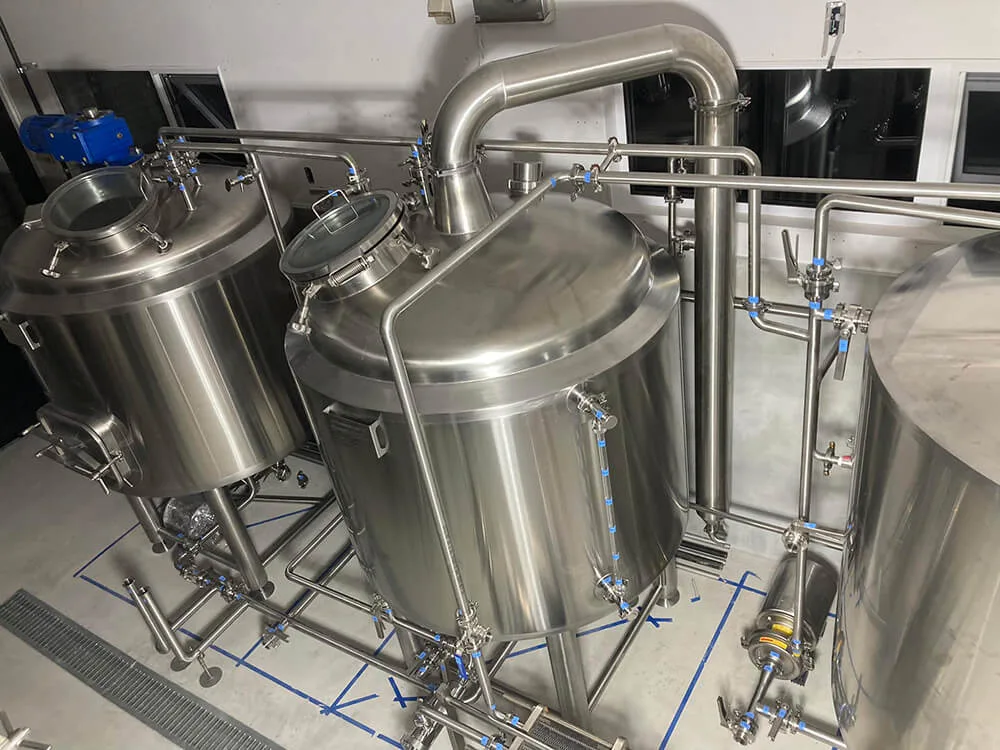

Fermenting wine in stainless steel tanks is not just a modern trend — it’s a reflection of precision, cleanliness, and consistency that today’s professional winemakers rely on.
Just as cold brew producers depend on temperature-controlled systems for stable extraction, modern wineries use stainless steel tanks to achieve repeatable, high-quality fermentation with minimal oxygen exposure and optimal flavor retention.
Meto’s wine fermentation tanks are engineered for full process control — from the first yeast pitch to the final cold stabilization stage. Let’s explore step by step how to ferment wine in a stainless steel tank efficiently and avoid common issues.
🧭 Step-by-Step Wine Fermentation Process
Step 1: Prepare and Clean the Tank
Cleanliness is the foundation of a successful fermentation.
Like a cold brew system, any residue, mineral film, or microbial contamination will affect product clarity and taste.
Best Practices:
- Rinse the tank with hot water to remove visible residues.
- Perform CIP (Clean-in-Place) with alkaline detergent followed by acid neutralization.
- Passivate the stainless surface using citric or nitric acid to rebuild the protective oxide layer and prevent corrosion.
- Pre-chill or pre-heat the cooling jacket to the starting temperature before filling.
Step 2: Fill the Must or Juice
When the tank is spotless and temperature-ready, it’s time to fill the grape must or juice.
Stainless steel’s smooth, non-porous interior minimizes microbial risk during filling.
Guidelines:
- Red wine (on skins): Fill to 70–85 % of capacity to allow cap expansion during fermentation.
- White wine: Fill to 95 % since there is no cap formation.
- Confirm that sampling valves, manways, and drains are securely closed.
- Optional: use inert gas purging to eliminate oxygen from headspace before fermentation begins.
Step 3: Inoculate and Start Fermentation
Once the must is in place, yeast inoculation begins. Yeast selection and temperature management directly shape the aroma, mouthfeel, and fermentation speed.
Process Recommendations:
- Add activated yeast (approx. 20 g/hL) and nutrient supplements if needed.
- Set the fermentation temperature:
- White wines: 14–18 °C for slow, clean fermentation.
- Red wines: 24–28 °C to enhance color and tannin extraction.
- Monitor °Brix (sugar content), temperature, and CO₂ release daily.
Step 4: Control the Fermentation
Active fermentation produces heat and CO₂. Controlling these factors ensures yeast health and preserves delicate aromatics.
Key Controls:
- Use Meto’s advanced cooling jackets to keep core temperature within ±0.5 °C of the setpoint.
- For red wines, perform gentle pump-overs or punch-downs to mix skins and juice evenly.
- Seal the manway and apply CO₂ or N₂ blanket to minimize oxidation.
- Optional: integrate digital sensors to track dissolved oxygen, pressure, and thermal profiles.
Step 5: Clarify, Stabilize, and Mature
When sugar reaches near zero and fermentation slows, clarity and stability become the focus.
Finishing Steps:
- Cool the wine to –2 °C for one week to complete cold stabilization and tartrate precipitation.
- Maintain an inert gas layer to prevent oxygen contact during storage.
- Filter or rack off lees as needed.
- For extended stainless-steel aging, Meto tanks can support up to 12 months of maturation, maintaining freshness while avoiding oxidative effects from oak.
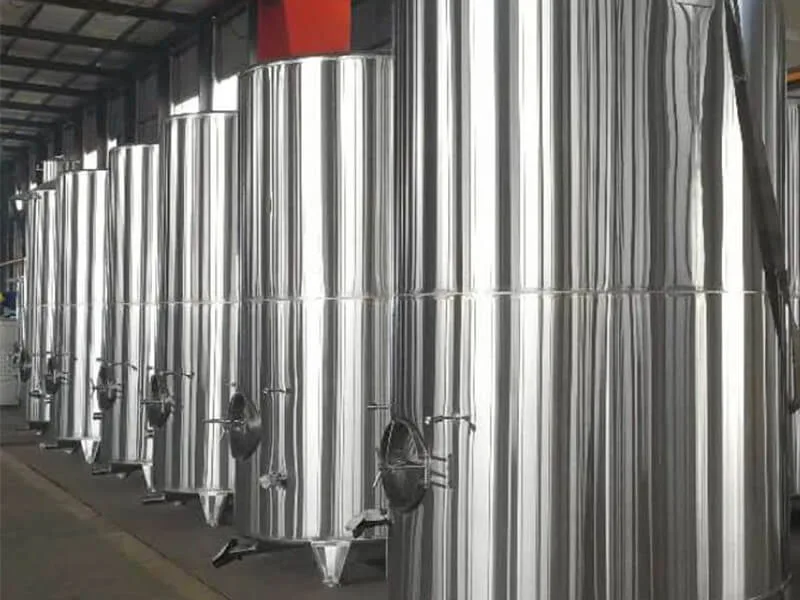
⚙️ Technology Behind Meto Wine Fermentation Tanks
Drawing on food-grade engineering similar to commercial cold brew systems, Meto tanks combine industrial precision with winemaking artistry:
| Caraterística | Benefit |
|---|---|
| 304 / 316L stainless steel | Corrosion-resistant and flavor-neutral |
| Mirror-polished inner surface (Ra ≤ 0.8 µm) | Prevents microbial buildup |
| Multi-zone cooling jacket | Targeted temperature management |
| Cone bottom (≥ 60°) | Efficient lees discharge |
| Sealed manway + inert gas port | Oxygen protection |
| Digital sensors (optional) | Real-time monitoring of temperature, pressure, and DO |
🍇 Conclusão
Fermenting wine in stainless steel tanks delivers the clarity, precision, and control that define modern winemaking.
By combining principles from advanced beverage systems — with Meto’s expertise in stainless fabrication, winemakers can achieve:
- Stable temperature and microbial safety
- Pure flavor retention without oxidation
- Repeatable results, vintage after vintage
- Scalable solutions for any production size
If you’re ready to modernize your winery with a professional stainless steel wine fermentation tank, Meto’s team can customize the perfect system for your cellar.
With Meto’s advanced design and expert guidance, you can ferment wines with greater purity, aroma retention, and operational efficiency.