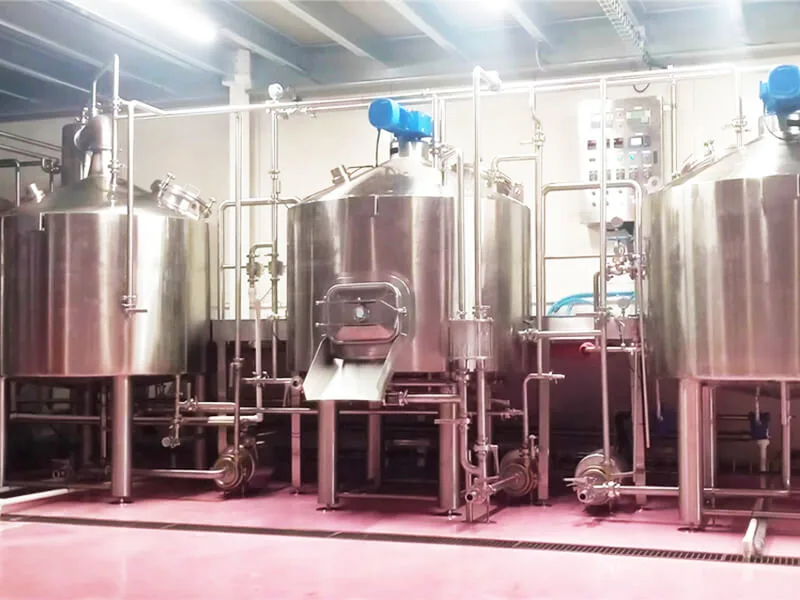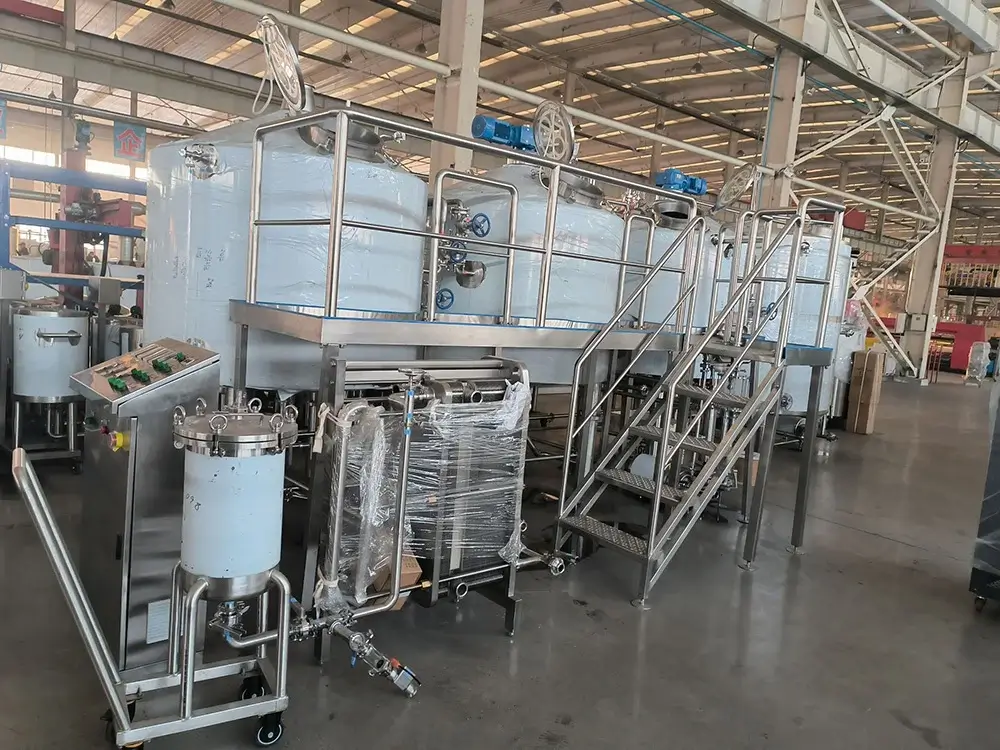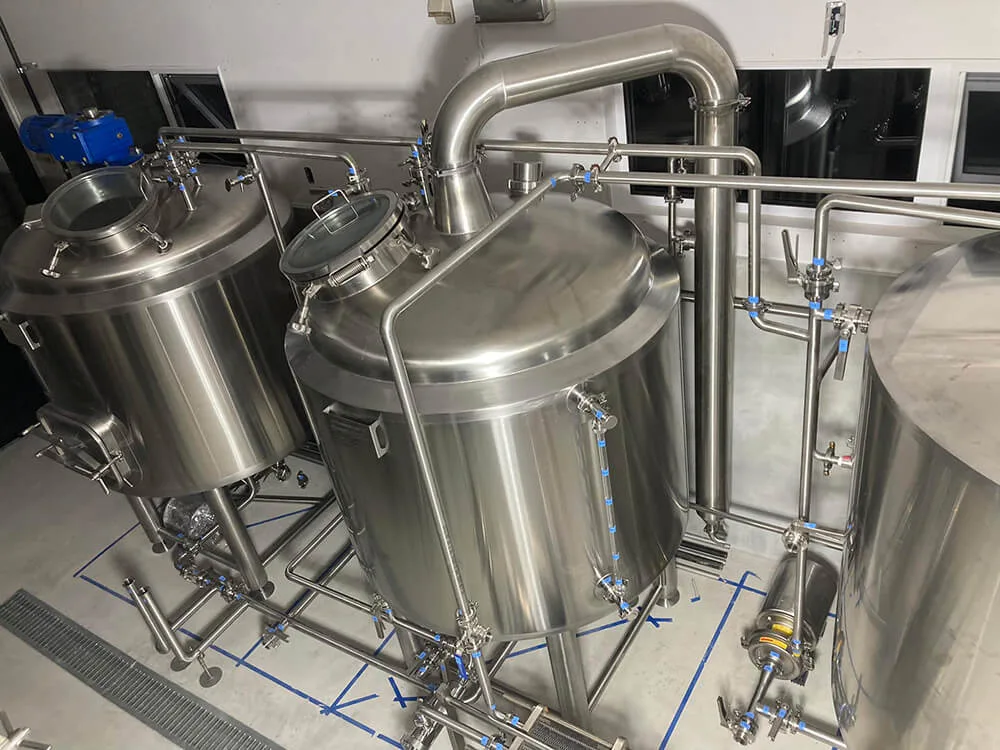
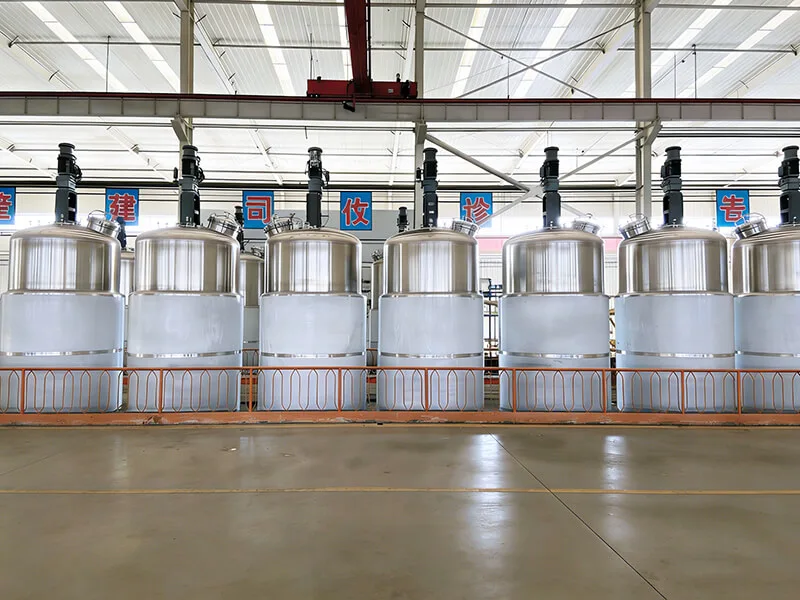
A stainless steel mixing tank is used for blending, dissolving, heating, cooling, holding and processing liquids or semi-liquid products. In food and beverage production, choosing the right tank involves more than selecting a capacity.
The tank material, agitator, motor, mixing speed, temperature control, CIP system, pressure rating and surface finish all need to match the actual production process.
For overseas buyers, working directly with a mixing tank manufacturer can also make a significant difference. A manufacturer can design the tank around your process requirements instead of offering a fixed standard configuration.
1. Start With Your Product and Process
The first step is to define what you will process in the tank.
Different products have very different mixing requirements. Water-like beverages, syrups, sauces, fruit preparations and other viscous products may require different agitator designs, motor power and mixing speeds.
Before selecting a tank, consider:
- Product type
- Viscosity
- Density
- Solids or powders
- Required mixing time
- Mixing temperature
- Shear sensitivity
- Required production volume
The mixing objective is also important. A tank designed for simple blending may be different from one used for powder dissolution, suspension or high-shear dispersion.
2. Choose the Right Tank Capacity
Tank capacity should be based on both your batch size and required headspace.
A tank’s total volume is not necessarily its working volume. The available working volume depends on the product, mixing method and process requirements.
For example, a 1,000 L tank may not be intended to operate continuously at a full 1,000 L working volume.
When selecting capacity, consider:
- Required batch volume
- Headspace
- Production cycles per day
- Future production expansion
- Available installation space
A manufacturer can also help determine whether a single larger tank or multiple smaller tanks is more suitable for your production schedule.
3. Select SUS304 or SUS316L Stainless Steel
SUS304 and SUS316L are common stainless steel options for hygienic process equipment.
SUS304 is suitable for many general food and beverage applications. SUS316L may be considered when the product, cleaning chemicals or operating environment requires greater corrosion resistance.
The correct material should be selected according to the actual process rather than simply choosing the more expensive option.
A professional manufacturer should be able to recommend the material based on your product characteristics, temperature, cleaning process and operating conditions.
4. Choose the Agitator for Your Product
The agitator is one of the most important components of a mixing tank.
Common designs include:
- Propeller agitators
- Paddle agitators
- Turbine agitators
- Anchor agitators
- High-shear mixers
Low-viscosity liquids may require relatively simple high-efficiency mixing, while high-viscosity products may require an anchor-type or other specialized agitator.
If powders need to be dispersed or products need intensive emulsification, a high-shear mixer may be more appropriate.
The agitator should therefore be selected together with the tank diameter, liquid level, viscosity, density and required mixing performance.
5. Match Motor Power and Mixing Speed
Motor power should not be selected only according to tank capacity.
The required motor and gearbox configuration depends on factors such as:
Tank volume + product viscosity + product density + agitator type + agitator diameter + required speed
For applications involving different products, a variable-frequency drive (VFD) can provide adjustable mixing speed.
This allows operators to use lower speeds for gentle blending and higher speeds when greater dispersion or mixing intensity is required.
As a tank manufacturer, METO can configure the agitator, motor, gearbox and speed control as an integrated system rather than treating each component separately.
6. Decide Whether Heating Is Required
Some food and beverage processes require controlled heating for product preparation or temperature maintenance.
Common heating methods include:
- Steam jacket
- Aquecimento elétrico
- Hot-water heating
The appropriate system depends on the required temperature, heating rate, available utilities and production volume.
For example, a jacketed tank can provide indirect heating while maintaining controlled product temperature.
The heating system should be designed together with the tank rather than added after the tank structure has been finalized.
7. Consider Cooling Requirements
Cooling may be required after heating, during product preparation or when a stable processing temperature must be maintained.
Depending on the process, options may include:
- Cooling-water jacket
- Glycol cooling
- Chilled-water systems
- External heat-exchange systems
The cooling area and heat-transfer design should be matched to the tank volume, product characteristics and required cooling time.
For production lines that require both heating and cooling, an integrated jacketed mixing tank can provide more flexible temperature control.
8. Add Insulation When Temperature Stability Matters
Insulation can be useful for heated or cooled mixing tanks.
It can:
- Reduce heat loss
- Improve temperature stability
- Reduce energy consumption
- Protect operators from hot surfaces
A typical insulated tank may include the process vessel, insulation layer and stainless steel outer cladding.
The insulation thickness should be selected according to the operating temperature and application.
9. Design the Tank Around Your CIP System
For food and beverage applications, cleaning performance is an important part of tank design.
Depending on the process, the tank may use a fixed CIP spray ball or rotary spray head.
The design should also consider:
- Internal cleaning coverage
- Drainability
- Sanitary fittings
- Weld treatment
- Dead-leg reduction
- Product residue areas
CIP should be considered during the tank design stage. Simply adding a spray ball to a standard tank does not necessarily provide effective cleaning.
A manufacturer with fabrication and process-design capabilities can coordinate the tank geometry, fittings and CIP system as one configuration.
10. Confirm Pressure and Vacuum Requirements
Not every mixing tank operates under pressure.
Depending on the process, you may need:
- Atmospheric operation
- Pressure-rated operation
- Vacuum capability
Before ordering, specify the normal operating pressure, maximum pressure, operating temperature and any vacuum requirements.
If the tank is pressure-rated, the applicable design, fabrication and testing requirements should be determined according to the equipment type, destination market and actual operating conditions.
11. Specify the Internal Surface Finish
Surface finish affects hygiene, cleaning performance and maintenance.
Important specifications may include:
- Internal polishing
- Weld finishing
- Surface roughness
- Acessórios higiénicos
- Internal geometry
For applications requiring a higher hygienic standard, a smoother internal surface can make cleaning easier and reduce areas where product residue may accumulate.
The required finish should be confirmed according to the product and cleaning process. For example, Ra ≤ 0.4 μm may be specified for certain hygienic applications, but it should not automatically be treated as a universal requirement.
12. Consider the Complete Tank Configuration
A mixing tank is more than a vessel and agitator. Depending on your process, the configuration may include:
- Top or side manway
- Temperature sensor
- Level sensor
- Sampling valve
- Sight glass
- Bottom outlet
- Células de carga
- Sanitary valves and fittings
- Sistema CIP
- Heating/cooling jacket
- Control panel
- VFD speed control
The connections should also match your pumps, pipelines, CIP system, filling equipment and other process tanks.
Work Directly With a Mixing Tank Manufacturer
For overseas buyers, choosing the right supplier is as important as choosing the right tank specification.
A manufacturer can evaluate your process and coordinate vessel fabrication, agitator selection, motor configuration, heating and cooling, CIP, instrumentation and controls.
METO manufactures stainless steel process tanks for food, beverage and other industrial applications. Our tanks can be customized according to product characteristics, capacity, mixing requirements, temperature control, cleaning method, pressure conditions and installation requirements.
As a manufacturer, METO can support the process from tank design and fabrication to equipment integration and commissioning, rather than supplying only a standard tank.
What Information Should You Send for a Mixing Tank Quote?
To receive an accurate configuration and quotation, provide:
- Product type
- Required working and total volume
- Product viscosity and density
- SUS304 or SUS316L preference
- Mixing purpose
- Required agitator or mixing result
- Mixing speed
- Heating requirement
- Cooling requirement
- CIP method
- Pressure or vacuum requirements
- Surface finish
- Available utilities
- Installation space
With this information, the manufacturer can recommend a tank configuration that matches your actual production process.
Planning a stainless steel mixing tank for your food or beverage production line? Send METO your product type, capacity and process requirements, and our engineering team can develop a suitable tank configuration for your application.