A indústria global do kombucha entrou numa nova fase de crescimento comercial. O que outrora era um chá fermentado de nicho, apreciado por entusiastas da saúde, evoluiu para uma categoria de bebidas em rápido crescimento, presente em supermercados, cafés, lojas de conveniência e gamas de bebidas funcionais em todo o mundo.
Para os produtores comerciais, o sucesso depende de muito mais do que apenas criar uma excelente receita. À medida que os volumes de produção aumentam, manter um sabor consistente, uma acidez estável, uma carbonatação fiável e normas rigorosas de segurança alimentar torna-se cada vez mais desafiante. Os métodos manuais de fabrico que funcionam para pequenos lotes tornam-se frequentemente gargalos operacionais quando a produção diária atinge várias centenas de litros.
É por isso que os fabricantes modernos de kombucha estão a investir em equipamento comercial específico para a produção de kombucha. Uma linha de produção concebida por profissionais proporciona um controlo preciso do processo, qualidade repetível do produto, melhores condições de higiene e a flexibilidade necessária para desenvolver novos produtos, reduzindo simultaneamente os custos com mão-de-obra e os riscos de produção.
Este guia explica como funciona uma linha de produção comercial de kombucha, o equipamento necessário em cada fase e por que razão a tecnologia moderna de fermentação está a transformar o processo de fabrico da kombucha.
Por que razão a produção comercial de kombucha requer equipamento especializado
Ao contrário da produção de cerveja, vinho ou sumo, a fermentação do kombucha envolve um ecossistema microbiano vivo composto por leveduras e bactérias do ácido acético. Estes microrganismos convertem continuamente o açúcar em ácidos orgânicos, dióxido de carbono e centenas de compostos aromáticos.
Uma vez que a fermentação é um processo biologicamente ativo, pequenas variações na temperatura, na exposição ao oxigénio ou no equilíbrio microbiano podem afetar significativamente a bebida final.
Os produtores comerciais devem controlar de forma consistente:
- Temperatura de fermentação
- Disponibilidade de oxigénio
- Conversão de açúcar
- Acidez (pH)
- Nível de gaseificação
- Oxigénio dissolvido
- Contaminação microbiana
- Consistência do sabor
- Estabilidade da embalagem
O equipamento de produção de kombucha, concebido especificamente para este fim, foi projetado para controlar estas variáveis, respeitando simultaneamente as normas internacionais de fabrico de produtos alimentares.
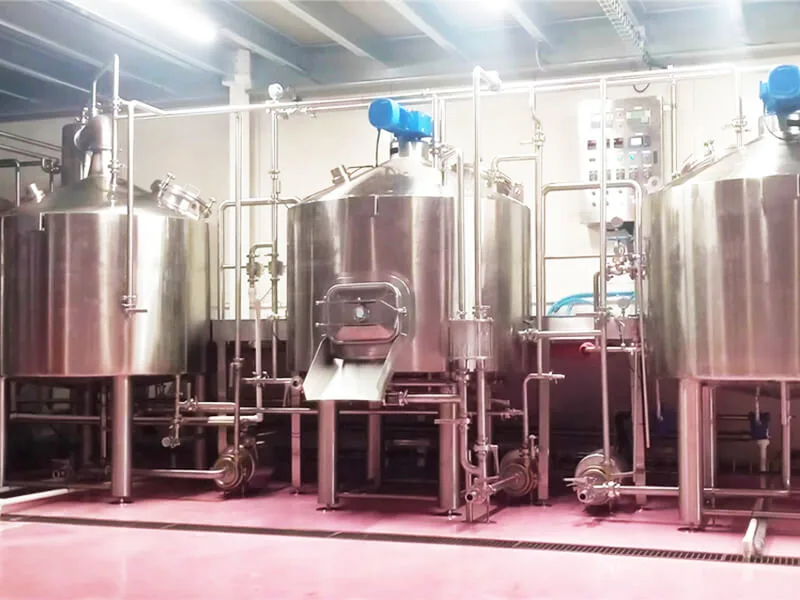
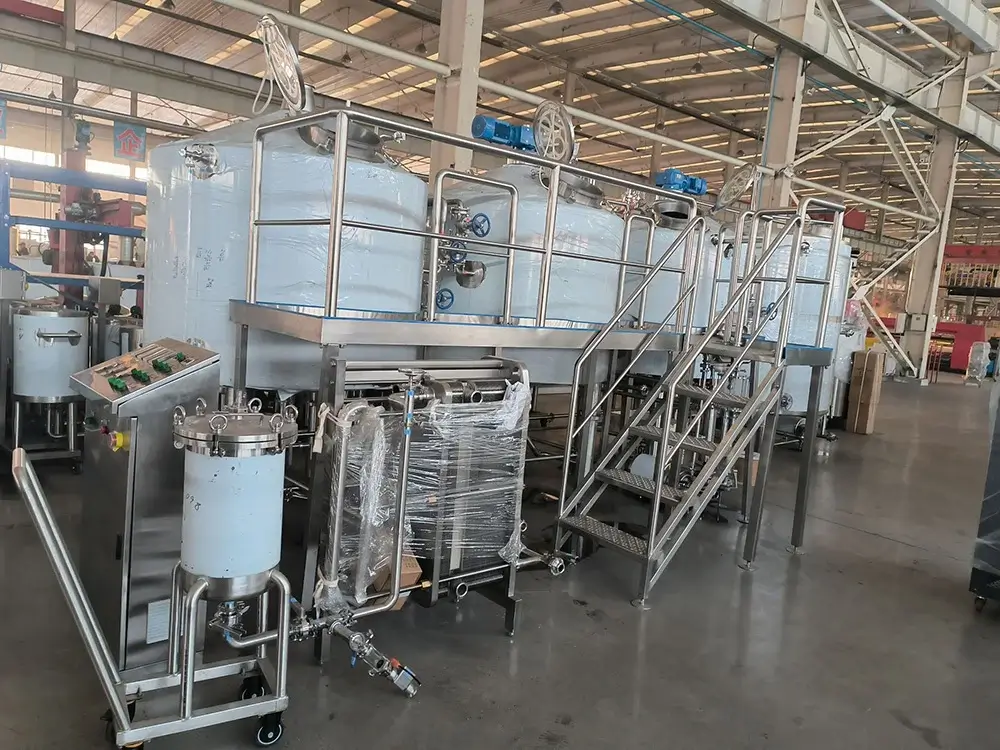
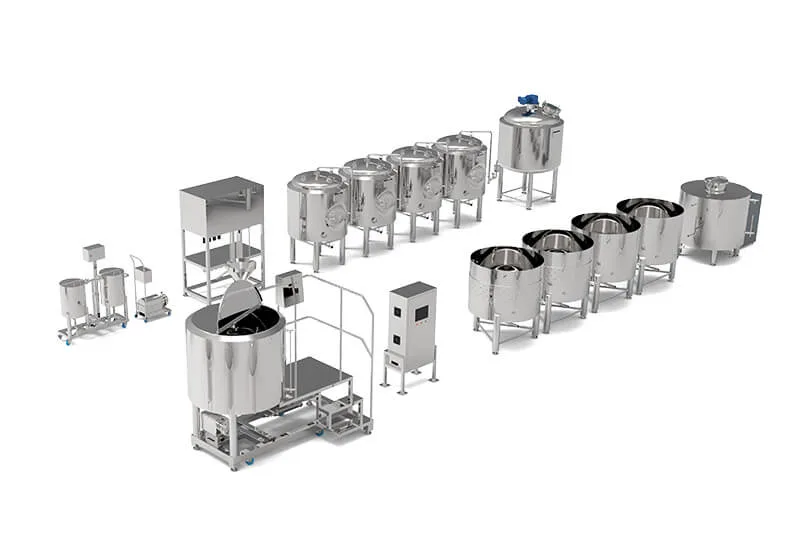
Uma linha completa de produção comercial de kombucha
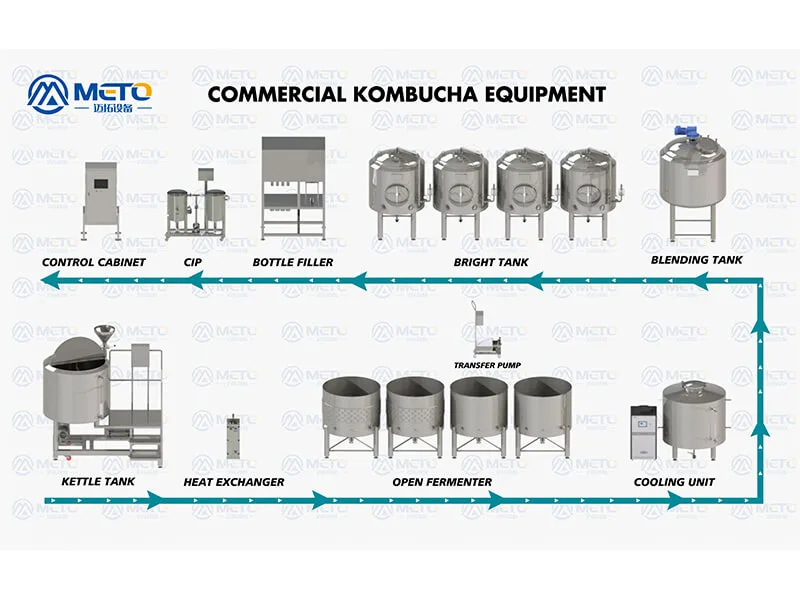
Um sistema típico de produção comercial de kombucha segue um fluxo de produção lógico, levando o produto de forma eficiente desde a preparação do chá até à embalagem final.
Passo 1: Preparação do chá
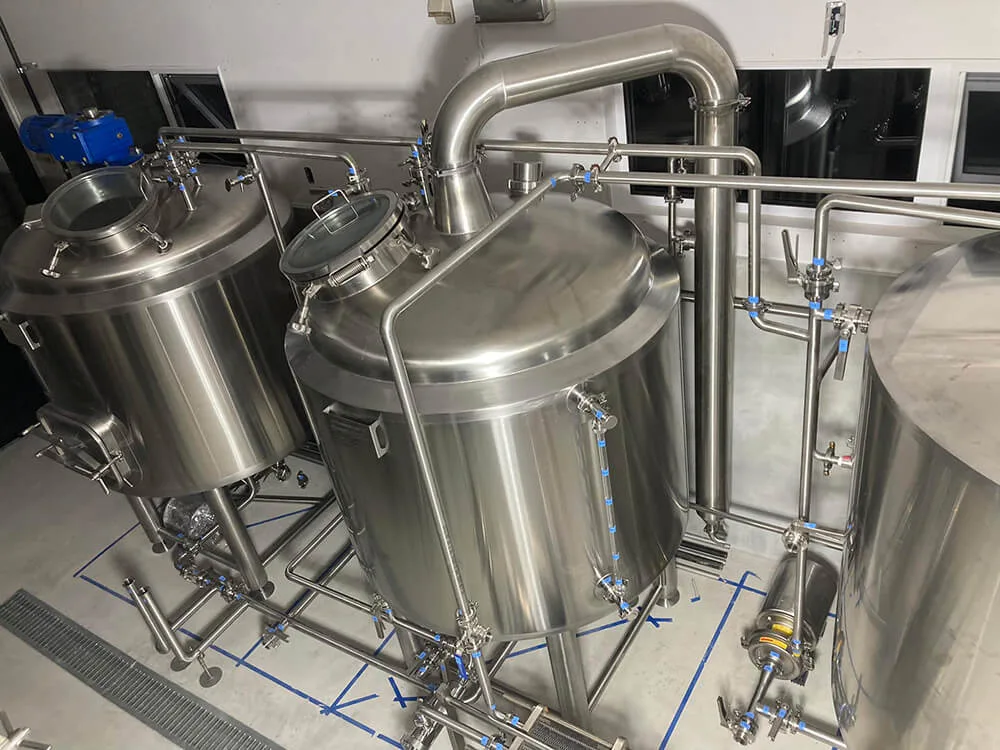
O processo de produção começa no tanque de fervura, onde a água purificada, as folhas de chá e o açúcar são aquecidos em conjunto.
Esta fase desempenha várias funções essenciais:
- Dissolve o açúcar completamente
- Extraia os compostos que conferem sabor ao chá
- Esteriliza o meio de fermentação
- Cria uma base de chá consistente
A maioria das chaleiras comerciais inclui:
- Aquecimento a vapor ou elétrico
- Construção em aço inoxidável de qualidade alimentar
- Sistema de agitação
- Monitorização da temperatura
- Casaco com isolamento térmico
Após a infusão, o chá quente passa por um permutador de calor de placas, que arrefece rapidamente o líquido até à temperatura ideal de fermentação.
O arrefecimento rápido é essencial, uma vez que a exposição prolongada a temperaturas elevadas pode danificar a cultura microbiana e afetar negativamente o desenvolvimento do sabor.
Passo 2: Fermentação primária
A fermentação primária ocorre no interior de um fermentador aberto.
Ao contrário da fermentação da cerveja, a kombucha necessita de oxigénio nesta fase, uma vez que as bactérias do ácido acético são organismos aeróbicos. O oxigénio contribui para:
- Produção de ácidos orgânicos
- Desenvolvimento do SCOBY
- Aroma característico do kombucha
- Atividade microbiana equilibrada
Os fermentadores abertos comerciais são especificamente concebidos com:
- Grande área de superfície do líquido
- Construção em aço inoxidável para uso sanitário
- Fácil acesso para limpeza
- Acessórios higiénicos
- Monitorização da temperatura
- Casacos de arrefecimento opcionais
Durante a fermentação, a levedura transforma os açúcares em álcool e dióxido de carbono, enquanto as bactérias transformam o etanol em ácidos orgânicos benéficos, incluindo o ácido acético e o ácido glucónico.
Dependendo do método de produção, a fermentação dura geralmente entre 5 e 14 dias.
Ao longo deste processo, as bombas de transferência sanitárias transportam o produto entre os recipientes, minimizando a contaminação por oxigénio e garantindo uma operação higiénica.
Passo 3: Estabilização da temperatura e mistura de sabores
Assim que se atinge a acidez desejada, o kombucha é arrefecido através de uma unidade de arrefecimento específica antes de entrar no tanque de mistura.
Esta fase tem vários objetivos importantes:
- Estabiliza a atividade microbiana
- Evita a fermentação excessiva
- Preserva os aromas delicados
- Cria as condições ideais para a adição de aromas
No interior do tanque de mistura, os fabricantes podem incorporar:
- Concentrados de sumo de fruta
- Extratos botânicos
- Ervas aromáticas
- Aromas naturais
- Ingredientes funcionais
- Adoçantes
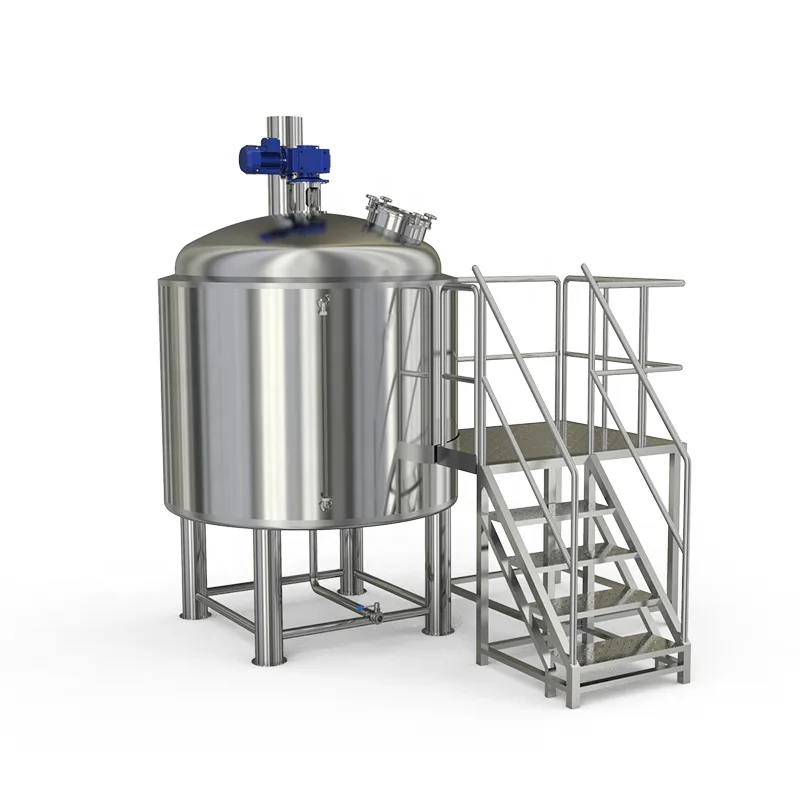
Os tanques de mistura modernos estão normalmente equipados com:
- Agitadores de velocidade variável
- Casacos de refrigeração
- Células de carga
- Controlos de mistura
- Esferas de pulverização sanitárias
Uma mistura precisa garante que cada garrafa tenha o mesmo perfil de sabor, independentemente do volume de produção.
Passo 4: Maturação e carbonatação
Após a mistura, a bebida entra no tanque de clarificação, onde o produto passa por um processo de maturação antes do envase.
Embora os tanques brilhantes tenham surgido inicialmente em aplicações cervejeiras, tornaram-se igualmente valiosos na produção comercial de kombucha.
As suas funções incluem:
- Estabilização do produto
- Esclarecimento
- Carbonatação controlada
- Sedimentação
- Maturação do sabor
- Armazenamento a curto prazo
Dependendo do tipo de produto, a carbonatação pode ser obtida através de:
Fermentação secundária natural
A levedura residual produz dióxido de carbono naturalmente no interior do recipiente à prova de pressão.
As vantagens incluem:
- Desenvolvimento do sabor tradicional
- Bolhas finas e naturais
- Carácter autêntico da fermentação
Carbonatação forçada
O CO₂ de qualidade alimentar é introduzido através de pedras de carbonatação.
As vantagens incluem:
- Controlo preciso da carbonatação
- Ciclos de produção mais rápidos
- Excelente consistência
- Menor variabilidade na produção
Muitos produtores comerciais preferem a carbonatação forçada, uma vez que esta garante níveis de carbonatação previsíveis em todos os lotes.
Passo 5: Enchimento e embalagem
O acondicionamento é uma das etapas mais críticas na produção de kombucha.
Uma vez que a kombucha contém frequentemente CO₂ dissolvido e microrganismos residuais, um enchimento inadequado pode resultar em:
- Absorção de oxigénio
- Perda de gás
- Sobrepressão na garrafa
- Deterioração do produto
Profissional Máquinas de enchimento de garrafas foram concebidos para preservar a qualidade do produto durante todo o processo de embalagem.
As características típicas incluem:
- Enchimento por contrapressão
- Lavagem automática de garrafas
- Volume de enchimento preciso
- Tamponamento automático
- Baixa captação de oxigénio
- Construção em aço inoxidável, que garante a higiene
Dependendo das exigências do mercado, os sistemas de enchimento podem incluir:
- Garrafas de vidro
- Latas de alumínio
- garrafas de PET
- Barris
Passo 6: Limpeza CIP e automatização de processos
A segurança alimentar depende da manutenção de equipamentos perfeitamente limpos ao longo de todo o processo de produção.
As instalações modernas de produção de kombucha recorrem a sistemas automatizados de limpeza no local (CIP), que limpam os tanques e as condutas sem necessidade de desmontagem.
Um sistema CIP padrão realiza normalmente:
- Pré-lavagem
- Limpeza com produtos cáusticos
- Enxaguamento com água
- Limpeza com ácido
- Enxaguamento final
- Higienização opcional
Em comparação com a limpeza manual, os sistemas CIP automatizados oferecem:
- Saneamento consistente
- Redução da mão-de-obra
- Menor consumo de água
- Tempo de resposta mais rápido
- Maior eficiência na produção
Toda a linha de produção é gerida através de um quadro de controlo centralizado ou de um sistema PLC.
A automatização permite aos operadores monitorizar e controlar:
- Temperatura
- Funcionamento da bomba
- Caudal
- Tempo de fermentação
- Ciclos de arrefecimento
- Operações de enchimento
- Sequências CIP
- Gestão de alarmes
A automatização melhora significativamente a repetibilidade do processo, reduzindo simultaneamente os erros do operador.
Fermentação tradicional vs. produção comercial moderna
Muitas das primeiras marcas de kombucha recorriam à fermentação tradicional em lotes, utilizando culturas SCOBY selvagens.
Embora esta abordagem possa produzir sabores característicos, também introduz uma variabilidade considerável na produção.
Fermentação tradicional
As características incluem:
- Populações microbianas selvagens
- Ciclos de fermentação longos
- Monitorização manual
- Elevada variação entre lotes
- Maior risco de contaminação
- Dificuldade na ampliação
A produção demora frequentemente entre 10 e 14 dias, sendo que a qualidade depende em grande medida da experiência do cervejeiro.
Fermentação Comercial Moderna
As instalações comerciais atuais combinam equipamento de engenharia com culturas microbianas cuidadosamente selecionadas.
As principais vantagens incluem:
- Temperaturas de fermentação controladas
- Inoculação padronizada
- Gestão otimizada do oxigénio
- Monitorização automatizada
- Controlo consistente do pH
- Qualidade previsível do produto
Atualmente, muitos fabricantes utilizam Comunidades Microbianas Sintéticas (SMCs) ou culturas iniciadoras padronizadas, em vez de dependerem exclusivamente de SCOBYs que evoluem naturalmente.
Em conjunto com um controlo preciso do processo, estes sistemas podem reduzir os ciclos de fermentação para 5 a 7 dias, diminuindo significativamente o risco de contaminação.
O resultado é um processo de produção mais rápido, mais previsível e mais fácil de escalar.
Equipamento que apoia a inovação de produtos
O equipamento moderno para a produção de kombucha não foi concebido apenas a pensar na eficiência — permite também o desenvolvimento contínuo do produto.
Os fabricantes podem utilizar sistemas de produção modulares para criar:
- Kombucha com infusão de frutos
- Misturas botânicas
- Bebidas funcionais de bem-estar
- Fórmulas com baixo teor de açúcar
- Bebidas de chá com gás
- Edições limitadas sazonais
As linhas de produção avançadas incluem frequentemente:
- Monitorização em linha do oxigénio dissolvido (OD)
- Injeção de azoto de cobertura
- Sistemas de carbonatação de precisão
- Tanques de fermentação à escala piloto
- Gestão automatizada de receitas
Estas tecnologias protegem os aromas delicados, preservam os antioxidantes e ajudam a manter as características sensoriais que os consumidores esperam de uma kombucha de alta qualidade.
Para as marcas que procuram diferenciar-se em mercados competitivos, o equipamento de processamento flexível torna-se uma vantagem estratégica.
Aço inoxidável: o material preferido para o equipamento comercial de kombucha
Uma vez que a kombucha é naturalmente ácida, os materiais dos equipamentos têm de ser resistentes à corrosão e, ao mesmo tempo, cumprir requisitos rigorosos de segurança alimentar.
Os sistemas comerciais são normalmente fabricados em aço inoxidável 304 ou 316L, oferecendo:
- Excelente resistência à corrosão
- Superfícies lisas e higiénicas
- Limpeza fácil
- Longa vida útil
- Conformidade com as normas internacionais relativas aos produtos alimentares
O polimento de soldaduras de alta qualidade, os acessórios sanitários e as tubagens sem trechos mortos reduzem ainda mais os riscos de contaminação e simplificam a manutenção de rotina.
Escolher o equipamento adequado para a produção comercial de kombucha
Cada produtor de kombucha tem objetivos de produção, canais de distribuição e planos de crescimento diferentes. A escolha do equipamento adequado deve ter em conta tanto a capacidade atual como a expansão futura.
Entre os fatores importantes contam-se:
- Volume de produção diário
- Número de tanques de fermentação
- Método de fermentação
- Requisitos de refrigeração
- Nível de automatização
- Formato de embalagem
- Estratégia de limpeza
- Área útil disponível
- Consumo de serviços públicos
- Escalabilidade futura
Muitas empresas de bebidas em expansão optam por sistemas modulares que permitem a integração de fermentadores, tanques de mistura e equipamento de embalagem adicionais à medida que a produção aumenta.
Esta abordagem minimiza o investimento de capital, ao mesmo tempo que proporciona flexibilidade para o crescimento a longo prazo.
Conclusão
A produção comercial de kombucha evoluiu de um processo artesanal para uma operação de fabrico altamente tecnificada. À medida que as expectativas dos consumidores continuam a aumentar, a consistência, a segurança alimentar, a eficiência da produção e a inovação dos produtos tornaram-se vantagens competitivas essenciais.
Uma linha de produção comercial moderna de kombucha integra a preparação, a fermentação, a mistura, a maturação, a carbonatação, o acondicionamento, a limpeza e a automatização num único sistema coordenado. Ao combinar engenharia de precisão com conhecimentos especializados em microbiologia, os produtores podem encurtar os ciclos de fermentação, reduzir os riscos de contaminação, manter uma qualidade consistente e aumentar a produção com confiança para satisfazer a crescente procura do mercado.
Quer esteja a lançar uma nova marca de kombucha, a expandir um negócio de bebidas já existente ou a passar da fermentação manual para a produção industrial, investir em equipamento comercial de kombucha concebido por profissionais constitui a base para uma produção sustentável, eficiente e rentável.
Se pretende iniciar o seu próprio negócio de kombucha, por favor não hesite em contactar a nossa equipa para consultar uma lista detalhada do equipamento.