Water is the most overlooked asset in a brewery — yet it influences everything from beer flavor and production efficiency to sustainability and operating costs. In modern brewing, water is no longer just a raw ingredient. It is engineered, recycled, monitored, and optimized throughout the entire brewing process.
For breweries aiming to improve product consistency, reduce utility costs, and meet environmental standards, a professional brewery water treatment system is no longer optional — it is essential.
In this article, we explore how brewery water treatment works, why water quality matters, and how advanced water management systems help breweries stay competitive in a resource-conscious industry.
Why Water Matters in Brewing
Beer is made up of more than 90% water. But not all water is suitable for brewing.
Natural water sources vary significantly in mineral composition. Historically, famous beer styles developed around local water characteristics:
- Soft water in Pilsen helped create crisp and delicate pilsners.
- Mineral-rich water in Munich enhanced malt-forward lagers.
- Hard alkaline water in Ireland balanced the acidity of roasted malts in stouts.
Today’s breweries cannot rely on natural water consistency alone. Whether water comes from municipal supplies or groundwater, it must be treated and standardized before brewing begins.
Modern breweries essentially “design” their own brewing water.
Core Processes in a Brewery Water Treatment System
1. Mechanical Filtration
The first stage removes suspended solids such as sand, rust, and sediment using quartz sand filters or multimedia filtration systems.
This basic physical purification protects downstream equipment and improves overall water clarity.
2. Activated Carbon Filtration
Activated carbon filters remove chlorine, disinfection byproducts, and organic contaminants.
This step is critical for beer flavor stability. Residual chlorine can react with phenolic compounds in malt, creating medicinal or chlorophenol off-flavors that ruin beer quality.
3. Reverse Osmosis (RO) Water Treatment
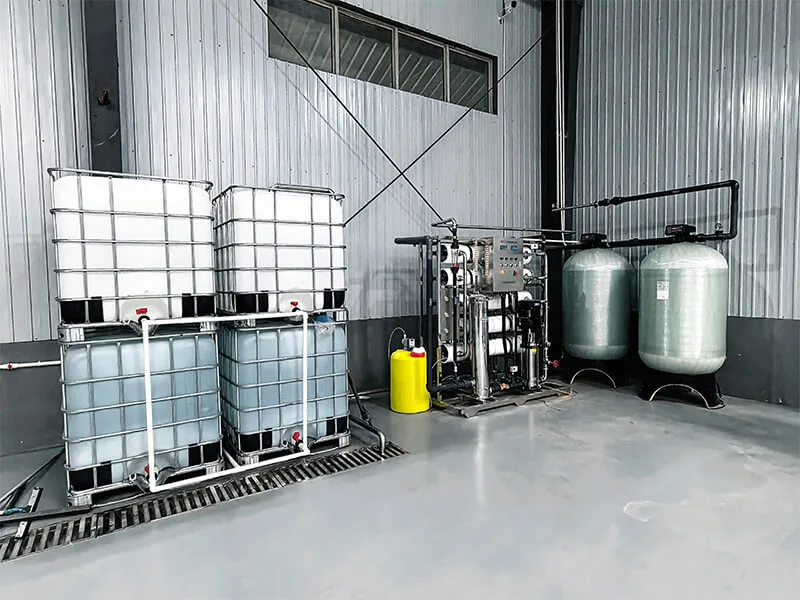
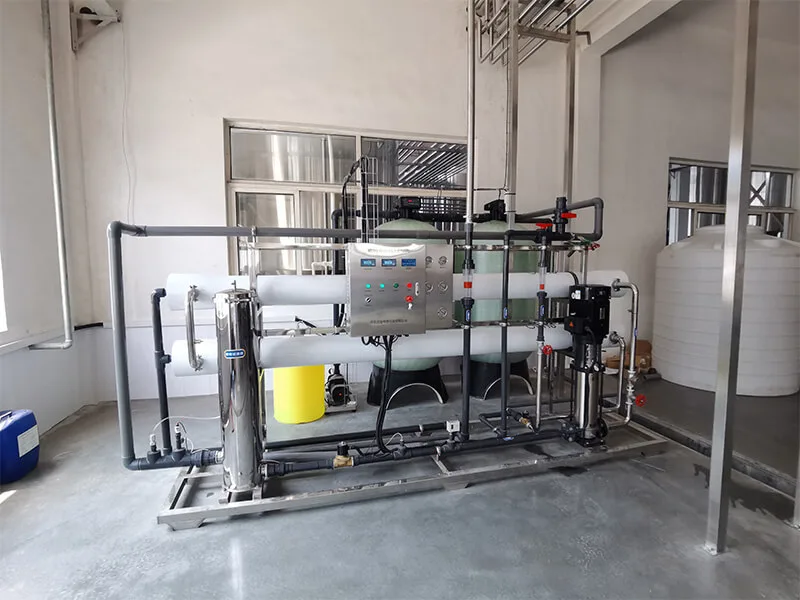
Reverse osmosis is the heart of most modern brewery water treatment systems.
Under pressure, water passes through semi-permeable membranes that block dissolved salts, minerals, and ions such as:
- Calcium
- Magnesium
- Sodium
- Sulfates
- Chlorides
The result is highly purified water with nearly zero dissolved solids — essentially a blank canvas for brewers.
4. Mineral Adjustment
After purification, brewers rebuild the water profile by adding food-grade minerals such as:
- Calcium sulfate (gypsum)
- Calcium chloride
This allows breweries to precisely match water chemistry to specific beer styles and maintain batch-to-batch consistency regardless of seasonal source water variations.
Brewery CIP Systems: More Than Just Cleaning
In most breweries, over 70% of water consumption is not used directly in beer production — it is used for cleaning.
This is where the CIP system (Clean-in-Place system) becomes essential.
CIP systems automatically clean fermentation tanks, brewhouses, pipelines, heat exchangers, and filling equipment without disassembly. A typical brewery CIP cycle includes several stages:
Pre-Rinse
The system removes leftover wort, yeast, and beer residues.
Because this wastewater contains extremely high COD levels, it is usually sent directly to wastewater treatment.
Optimization opportunity:
Many breweries reuse recovered final rinse water from previous cycles for pre-rinsing, significantly reducing freshwater usage.Caustic Wash
A heated sodium hydroxide solution (typically 1.5%–2.5% at 70–85°C) circulates through the system.
This stage dissolves proteins, fats, and organic deposits through saponification and hydrolysis.
Optimization opportunity:
Caustic solution recovery systems monitor conductivity and automatically replenish chemical concentration instead of discarding the entire cleaning solution after one use.
Intermediate Rinse
This step removes residual caustic solution before acid cleaning.
Optimization opportunity:
Recovered clean rinse water can be reused for lower-grade cleaning tasks.
Acid Wash
Nitric acid or phosphoric acid solutions remove beerstone and mineral scaling, mainly calcium oxalate and calcium phosphate deposits.
Optimization opportunity:
Acid solutions can also be recovered and reused under controlled conductivity and concentration management.
Final Rinse
The final rinse uses purified or softened water to ensure no chemical residue remains.
The system monitors pH and conductivity until neutral conditions are restored.
Optimization opportunity:
Final rinse water is often clean enough to recover and reuse for the next pre-rinse cycle.
Water Balance Management in Breweries
Efficient breweries do not simply treat water — they manage water like a strategic resource.
A key concept in brewery engineering is water balance management, which focuses on:
- Segregated water quality usage
- Cascading water reuse
- Real-time flow monitoring
- Leak detection
- Consumption optimization
The goal is to allow every ton of water to be reused multiple times before discharge.
Water Consumption Ratio (L/L)
The industry’s most important KPI is the water-to-beer ratio:
Liters of water consumed per liter of beer produced.
Typical benchmarks include:
| Brewery Performance | Water Consumption Ratio |
|---|---|
| World-class breweries | 3.5–4.0 L/L |
| Advanced breweries | 5.0–6.0 L/L |
| Traditional breweries | 8.0–10.0+ L/L |
For a medium-sized brewery producing 100,000 tons annually, reducing water consumption from 8.0 L/L to 4.0 L/L can save hundreds of thousands of tons of water every year.
Brewery Wastewater Treatment: Turning Waste Into Energy
After multiple reuse cycles, brewery wastewater still contains:
- High organic loads
- Cleaning chemical residues
- Suspended solids
- Yeast and sugar residues
Brewery wastewater is characterized by extremely high:
- COD (Chemical Oxygen Demand)
- BOD (Biochemical Oxygen Demand)
However, brewery wastewater also has excellent biodegradability, making it ideal for biological treatment systems.
Anaerobic Treatment
In anaerobic reactors such as:
- UASB reactors
- IC reactors
Microorganisms break down organic matter without oxygen, producing methane-rich biogas.
This process:
- Dramatically reduces COD
- Generates renewable energy
- Lowers operational costs
Aerobic Treatment
After anaerobic treatment, remaining organic matter is further degraded in aerobic systems using activated sludge and oxygen.
The treated water can then meet environmental discharge standards.
Advanced Brewery Water Recycling Technologies
Modern breweries increasingly adopt advanced membrane technologies, including:
- UF (Ultrafiltration)
- MBR (Membrane Bioreactor)
- RO (Reverse Osmosis)
These systems allow treated wastewater to be recycled for:
- Cooling towers
- Utility cleaning
- CIP pre-rinse applications
- Non-product-contact operations
Leading breweries are now pursuing near-zero liquid discharge (ZLD) strategies to minimize environmental impact.
Smart Water Management and the Future of Brewing
The future of brewery water treatment is becoming increasingly digital.
Modern breweries use:
- Online flow meters
- Real-time COD monitoring
- Conductivity sensors
- Automated dosing systems
- AI-driven optimization software
These technologies help breweries:
- Detect abnormal water usage instantly
- Optimize CIP cycles automatically
- Reduce chemical consumption
- Improve sustainability reporting
- Custos operacionais mais baixos
Water management is evolving from manual experience-based control into data-driven intelligent optimization.
Choosing the Right Brewery Water Treatment System
A complete brewery water treatment solution should include:
- Raw water filtration
- Activated carbon filtration
- Water softening or RO systems
- CIP water recovery
- Wastewater treatment systems
- Sistemas de controlo automatizados
- Water reuse integration
The ideal configuration depends on:
- Brewery size
- Beer styles produced
- Local water quality
- Environmental regulations
- Sustainability goals
A properly designed brewery water treatment system not only improves beer quality but also significantly reduces long-term operating costs.
Conclusão
In modern brewing, water flows through every stage of production — from brewing and cleaning to recycling and wastewater recovery.
The breweries that truly understand water are not simply making better beer. They are building more efficient, sustainable, and future-ready operations.
As environmental standards tighten and production costs rise, investing in advanced brewery water treatment systems is becoming one of the smartest long-term decisions a brewery can make.
Tem dúvidas sobre o seu projeto de equipamento para cervejeiras? Pode diga-nos as suas necessidades para a fábrica de cerveja e fornecer-lhe-emos uma solução chave-na-mão no prazo de 24 horas.