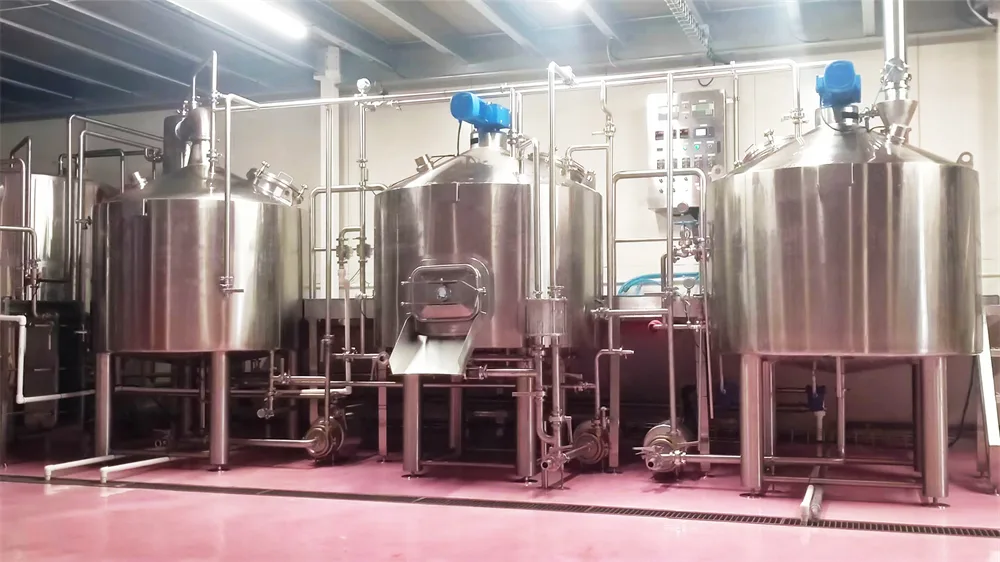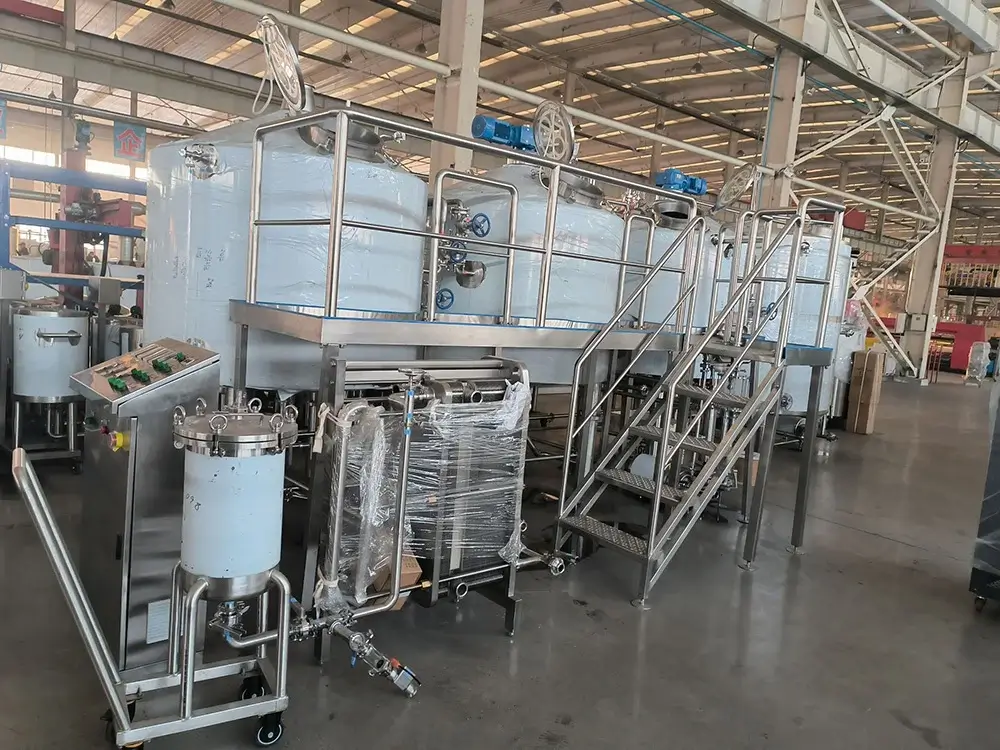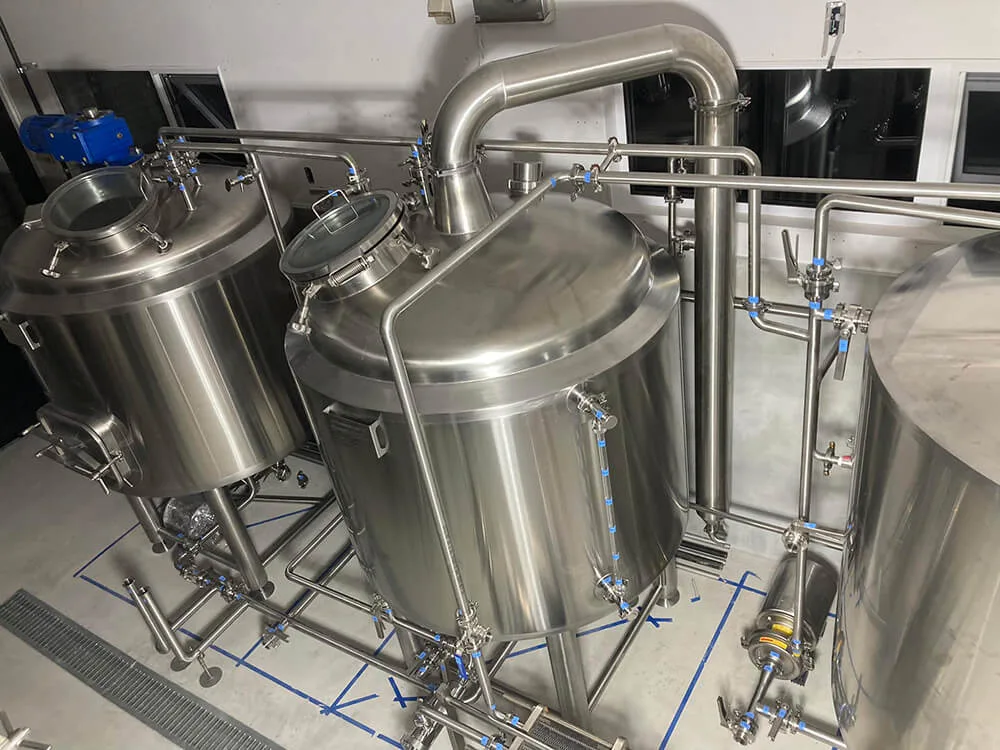
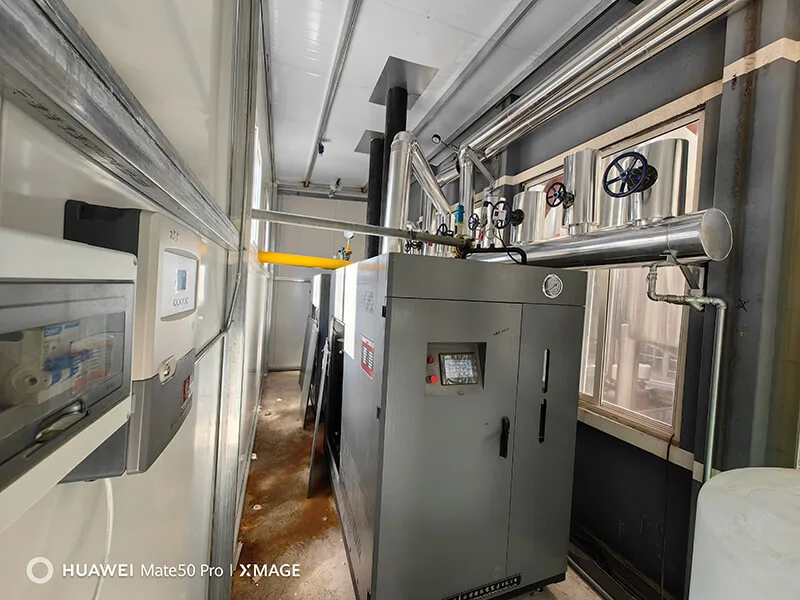
Heating is one of the most critical elements in a brewhouse. From mashing to boiling, every stage of beer production relies on accurate, efficient, and stable heat. Selecting the right heating method directly impacts energy consumption, brewing quality, operational safety, and long-term costs.
This guide summarizes the three most common heating options used in breweries—steam, direct fire, and electric heating—and explains how to choose the best one based on your facility size, budget, and production goals.
1. Overview of the Three Main Heating Methods
1. Steam Heating
Steam heating transfers heat through jackets or coils around the brewhouse vessels.
장점
- Fast heating speed, improving overall brewing efficiency.
- Even heat distribution, reducing the risk of wort scorching.
- Excellent for large-scale or continuous production.
Disadvantages
- Highest initial investment (boiler, piping, steam traps, insulation, etc.).
- Requires skilled operation and regular maintenance.
- May not be cost-effective for very small breweries.
최상의 대상:
Medium to large breweries seeking high efficiency, stable temperature control, and continuous production.
2. Direct Fire (Gas or Oil) Heating
A burner mounted beneath the kettle heats the vessel directly via an open flame.
장점
- Lower installation cost compared to a steam system.
- Simple, straightforward operation.
- Suitable for mid-size brewing systems.
Disadvantages
- Uneven heating may cause hot spots and risk caramelization/scorching.
- Requires proper ventilation and combustion safety controls.
- Heat efficiency can be lower due to radiant heat loss.
최상의 대상:
Small-to-medium breweries needing reasonable heating power without investing in a full steam system.
3. Electric Heating
Heating elements inside or outside the kettle supply heat directly to the wort.
장점
- Lowest upfront investment.
- Easy installation and convenient operation.
- Ideal for small breweries, pilot systems, or startups.
Disadvantages
- Slower heating speed compared to gas or steam.
- Heating may be less uniform, increasing risk of localized scorching.
- Electricity costs can be higher over long-term production.
최상의 대상:
Small systems (500L and below), pilot breweries, test batches, and limited production environments.
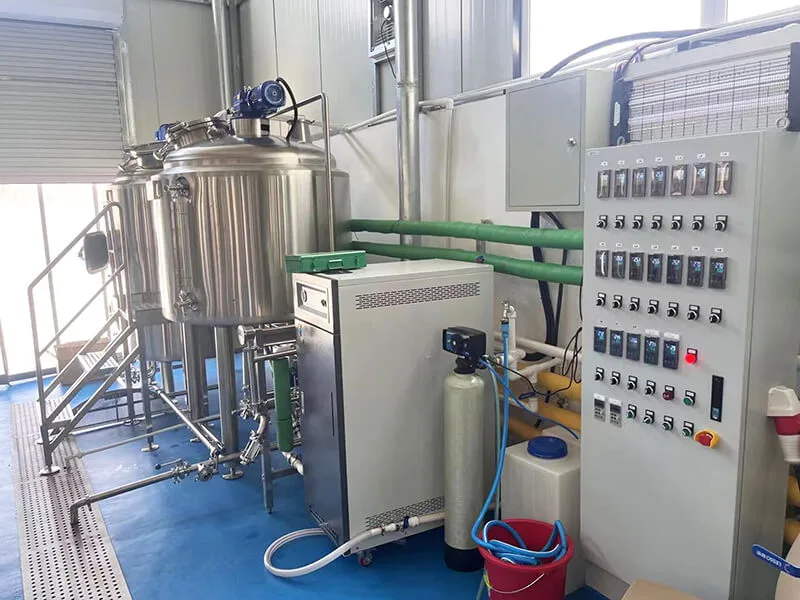
2. Key Factors When Choosing a Heating Method
To select the right heating method, consider the following critical elements:
● System size
- Small systems frequently use electric heating.
- Mid-size systems often choose gas or oil burners.
- Large breweries typically rely on steam for efficiency.
● Budget (CAPEX + OPEX)
- Steam = high startup cost, lower long-term cost for large production.
- Gas = moderate investment, moderate operating cost.
- Electricity = low investment, higher operational cost in many regions.
● Facility infrastructure
- Is high-voltage electricity available?
- Is natural gas available?
- Can you install and maintain a steam boiler?
- Does the building support ventilation and chimney exhaust?
● Production speed and temperature control
- Steam offers the most stable and even heat.
- Gas provides strong heating but requires careful monitoring.
- Electric is fine for small-scale brewing but slower.
● Safety and compliance
- Steam boilers require certification and trained operators.
- Gas systems require proper exhaust and leak testing.
- Electric requires correct electrical load capacity and grounding.
● Long-term expansion
Consider whether your heating system should support future capacity increases.
3. Recommended Heating Options by Brewery Size
Small breweries (≤ 500L):
✔ Electric heating
Affordable, easy to install, and suitable for low-volume brewing.
Medium breweries (500–1500L):
✔ Gas or oil direct-fire heating
Provides stronger heating capacity without the large investment of a boiler system.
Large breweries (1500L and above):
✔ Steam heating
Best efficiency, fastest heating, and excellent temperature control for large batches and multiple daily brews.
4. Practical Considerations During Installation
- For electric systems:
Install a condenser for steam from the kettle to protect your workspace from humidity. - For steam systems:
Ensure good insulation, pressure safety design, and regular boiler maintenance. - For direct-fire systems:
Use kettles engineered for flame distribution to avoid hot spots and scorching. - For all systems:
Maintain strong temperature control and monitoring to ensure batch consistency and quality.
결론
Choosing the right heating method for a brewery is a strategic decision involving cost, efficiency, infrastructure, and long-term growth plans. Each method—steam, direct fire, and electric—offers unique benefits and trade-offs. The best solution depends on your production volume, facility setup, and brewing objectives.
With a well-planned heating system, your brewhouse will achieve stable temperature control, efficient energy use, and consistently excellent beer quality.
If you need help evaluating which heating solution fits your brewing system, feel free to share your setup details anytime.