Kombucha continues to gain global popularity as consumers increasingly seek natural, functional beverages that deliver probiotics, low sugar, and diverse flavor profiles. As more hobbyists and start-up brands enter the market, the demand for efficient, safe, and scalable kombucha brewing equipment has grown rapidly.
However, with equipment options ranging from simple glass jars to stainless steel fermenters and semi-automated systems, choosing the right setup can be confusing. This guide breaks down everything you need to know — whether you are brewing kombucha at home or building a small commercial production line.
What Equipment Do You Need to Brew Kombucha?
A complete kombucha brewing setup typically includes the following components:
1. Fermentation Vessel
The heart of kombucha brewing. Options include:
- Glass jars
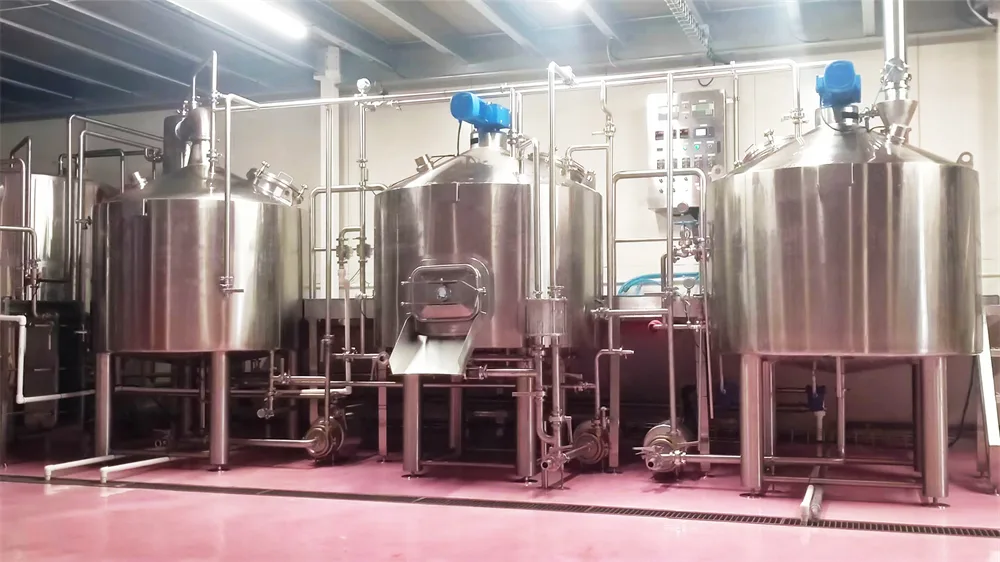
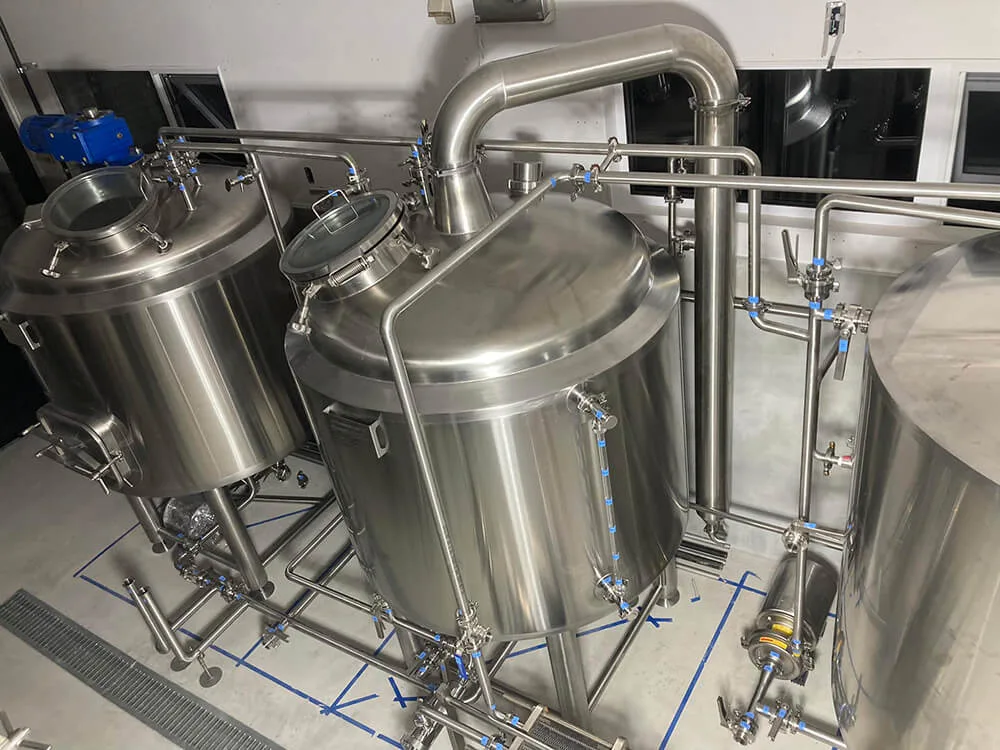
- Food-grade stainless steel tanks
- (Less recommended) food-grade plastic containers
2. Temperature Control
Stable fermentation temperature is essential for active yeast and bacteria. Home brewers may use:
- Heat mats
- Insulated wraps
- Small thermostatic controllers
Commercial systems often include:
- Jacketed fermenters
- Digital temperature controllers
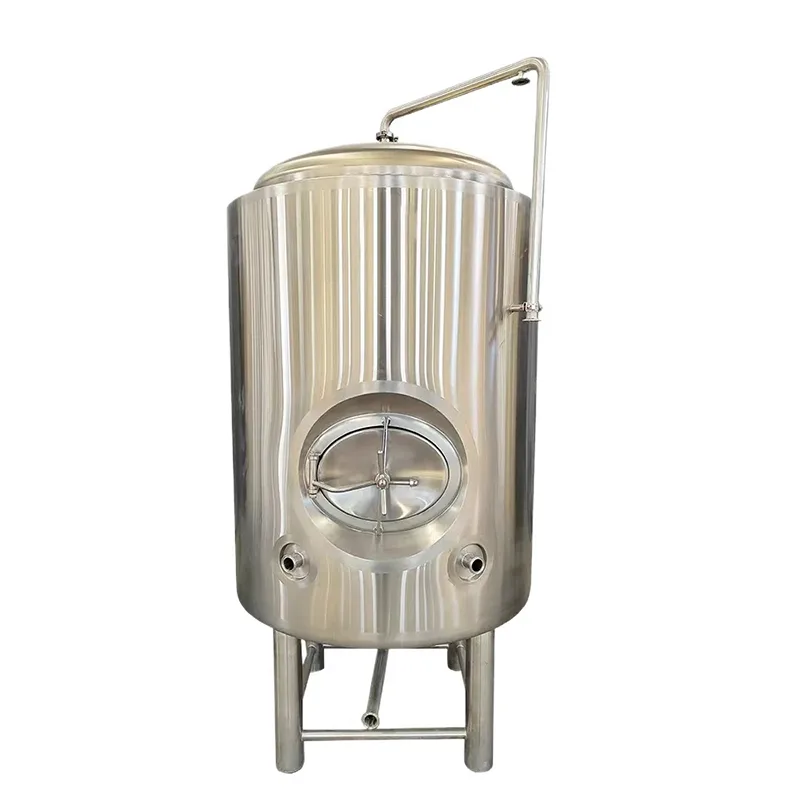
3. Filtering & Bottling Tools
Used after primary fermentation to remove tea residues and SCOBY fragments before bottling. Systems range from hand-held filters to semi-automatic bottlers.
4. pH Measurement Tools
Kombucha’s safety and quality are closely tied to acidity.
- pH test strips
- Digital pH meters
5. Cleaning & Sanitization Supplies
Any brewing system must be thoroughly cleaned after each batch to prevent contamination — especially with acidic kombucha.
Home Brewing vs. Commercial Brewing: What’s the Difference?
🏠 Home Kombucha Brewing
최상의 대상: beginners, hobbyists, and small household consumption.
Recommended setup:
- 1–3 L glass jars (or 5–10 L if you want higher output)
- Breathable cloth covers
- Simple heating pad if room temperature is low
- Manual filtration + glass bottles
장점:
- Low cost
- Easy to observe fermentation
- Great for learning and experimenting
Limitations:
- Batch size is small
- Temperature and process control are inconsistent
- Flavor stability varies between batches
🏢 Small-Scale Commercial Kombucha Brewing
최상의 대상: cafés, beverage shops, health drink bars, and start-up brands.
Recommended setup:
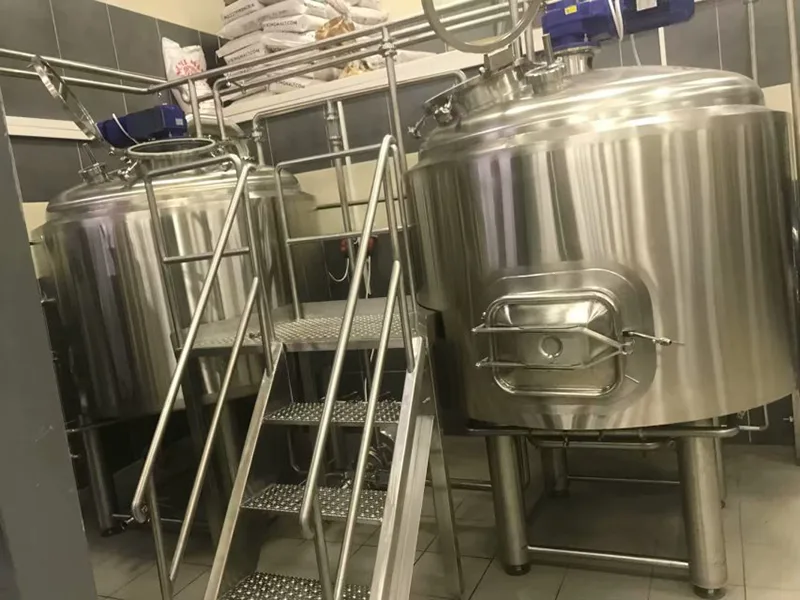
- 20–100 L stainless steel fermenters for daily production
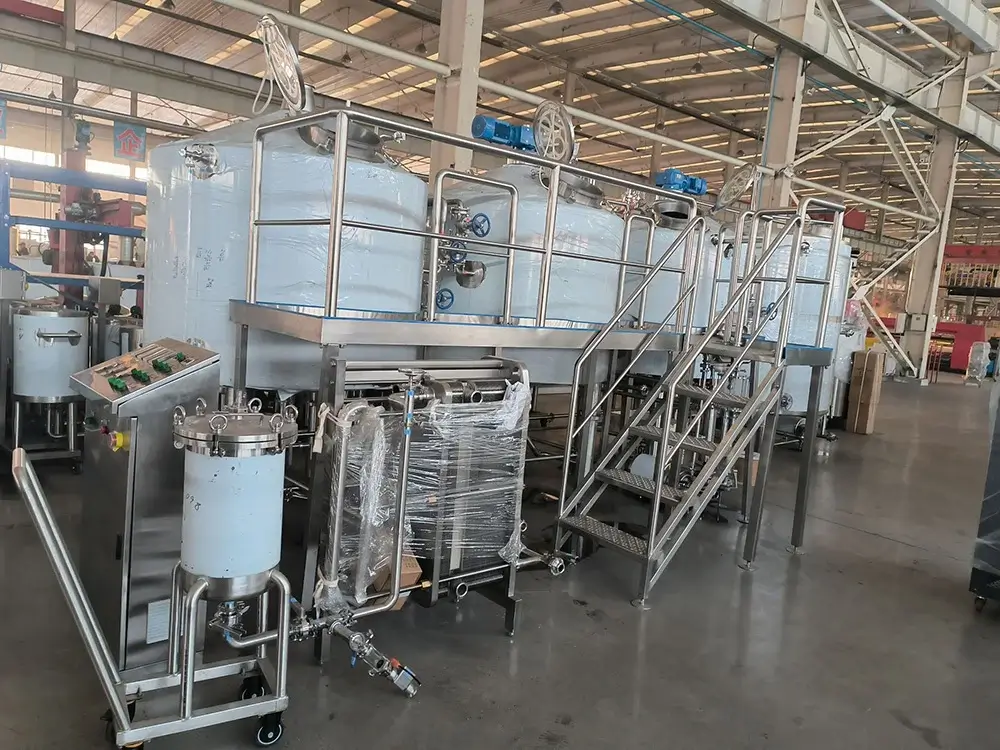
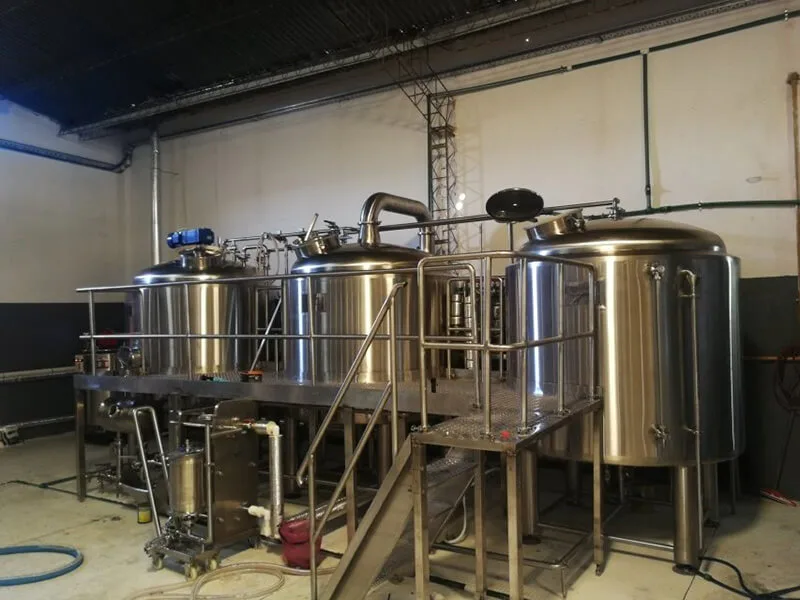
- ≥200 L modular brewing systems for packaged beverage lines
- 304 or 316 stainless steel construction
- Temperature-controlled fermenters
- Optional CIP (Clean-in-Place) cleaning system
- Pressure-rated tanks if secondary fermentation is done under CO₂
장점:
- Higher output & improved consistency
- Better temperature stability
- Hygienic design, easy to clean
- Scalable for future business growth
Limitations:
- Higher investment
- Slightly more technical knowledge required
Key Factors When Choosing Kombucha Brewing Equipment
Regardless of scale, the following factors will determine your equipment choice:
1. Temperature Stability
Kombucha ferments best at 25°C–30°C.
- Low temperature → slow fermentation, flat flavor
- High temperature → bacterial imbalance, off-flavors
Choose equipment with:
- Reliable temperature controls
- Proper insulation for larger tanks
2. Aeration and Oxygen Exposure
Kombucha is aerobic, meaning SCOBY needs oxygen.
- For home brewing: breathable cloth covers
- For commercial brewing: tanks with vented lids or air valves
Proper aeration improves SCOBY health and flavor consistency.
3. Material Safety and Acid Resistance
Kombucha is acidic, so the vessel must be food-safe and corrosion-resistant.
- Best home options: borosilicate glass, food-grade stainless steel
- Best commercial options: 304/316 stainless steel
- Avoid low-grade plastic or reactive metals
4. Ease of Cleaning & Hygiene
Residues from tea, yeast, and SCOBY can contaminate future batches.
찾습니다:
- Polished internal surfaces
- Removable valves and fittings
- No dead corners
- CIP systems for commercial tanks
5. Automation & Scalability
For commercial use, semi-automatic features greatly reduce labor:
- Automated temperature control
- Liquid-level sensors
- Pressure-control valves
- CIP cleaning systems
- Expandable modular brewing lines
6. Supplier Certification & After-Sales Support
Choose manufacturers that offer:
- Food-grade certifications (CE / FDA / HACCP / SGS)
- Installation guidance
- Training and operation manuals
- Replacement parts and long-term support
A well-supported system will drastically reduce downtime and protect product quality.
결론
For home brewers:
Start with a simple glass-jar kit or a small stainless steel vessel. It’s cost-effective, easy to use, and perfect for learning the basics.
For small commercial brewers:
Invest in stainless steel systems with temperature control and hygienic features. The increased stability, scalability, and production efficiency will pay off as demand grows.
Ultimately, the right kombucha brewing equipment should match your goals — whether that’s experimenting at home or building a beverage brand. Prioritize safety, ease of cleaning, temperature control, and material quality. As production scales up, automation and modular expansion become even more important.
양조에 대해 궁금한 점이 있으면 언제든지 문의해 주세요. 문의하기 Meto 장비.