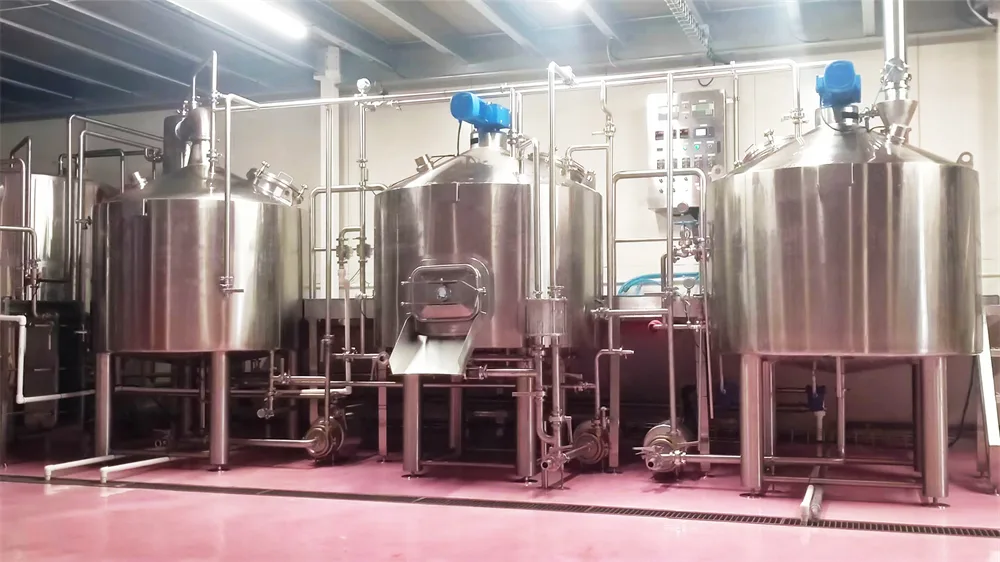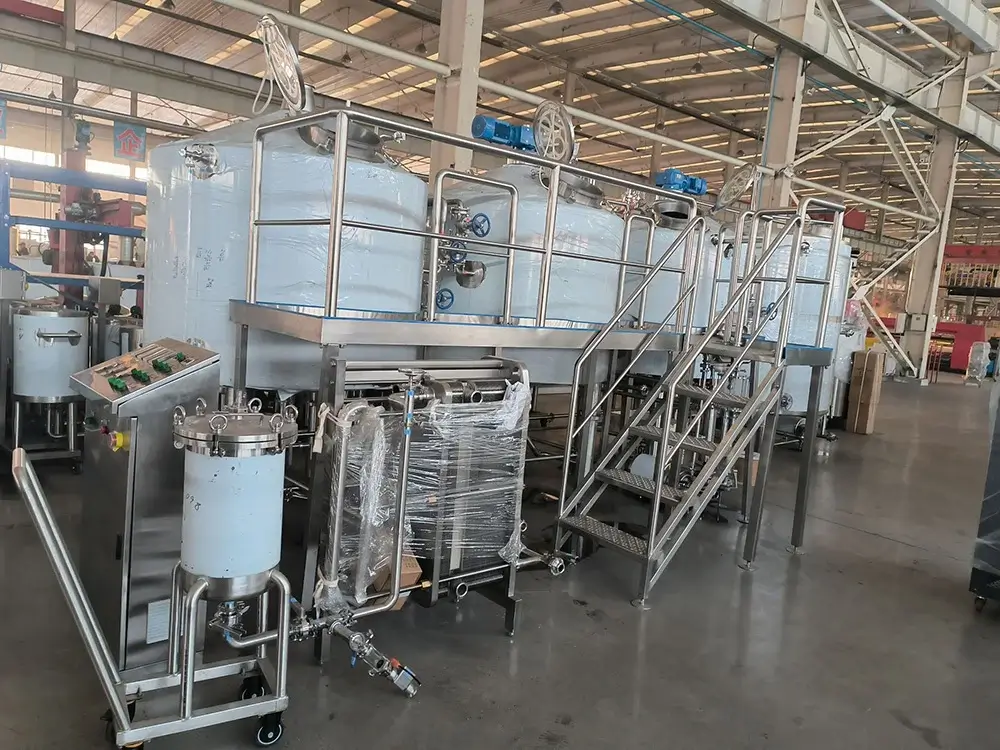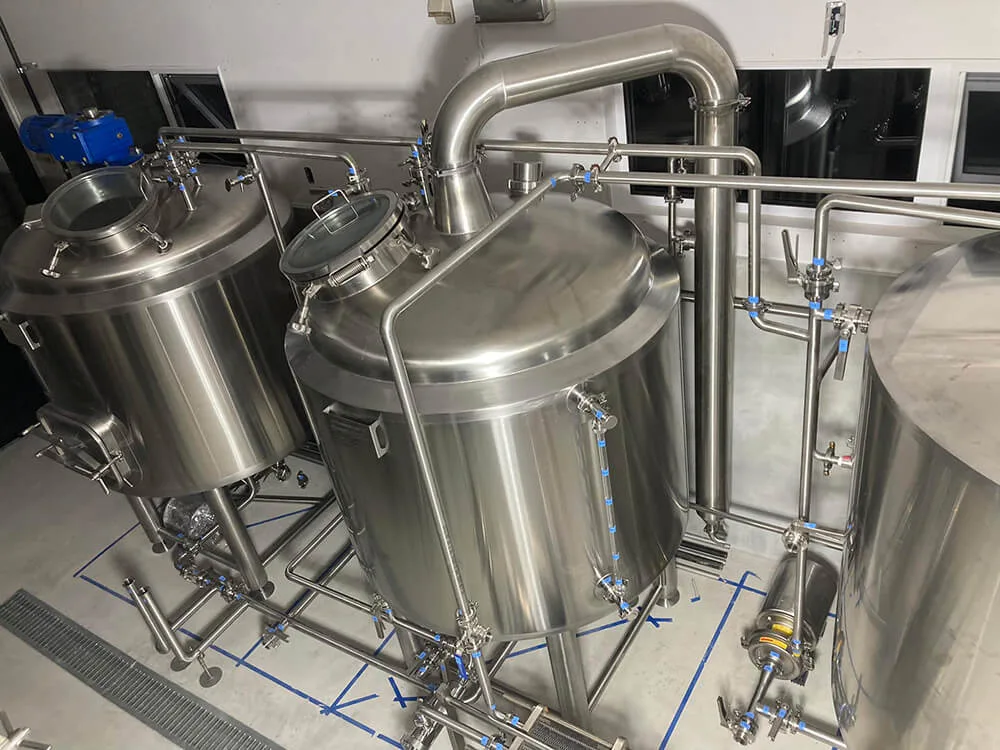
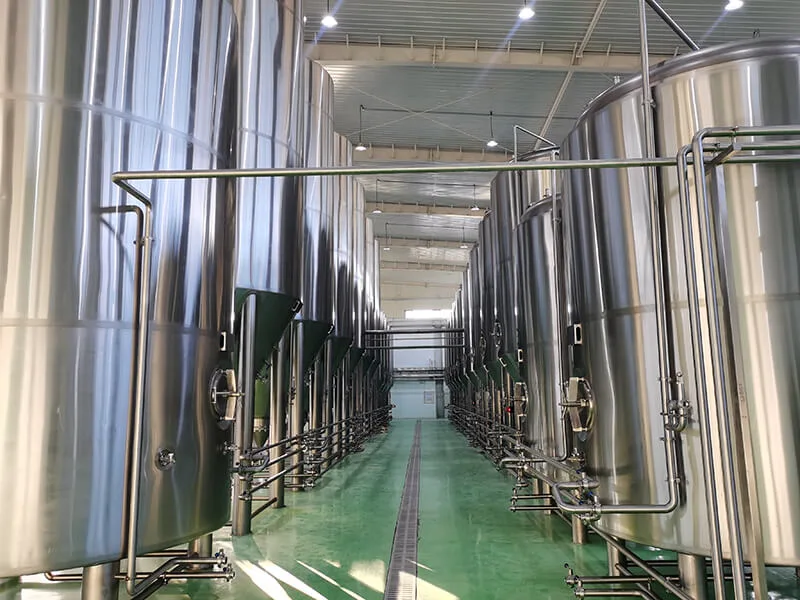
In 2024,a craft brewery from Poland reached out through our official website seeking to expand its brewing capacity to meet growing demand. After detailed technical consultations, layout evaluation, and customized engineering proposals, the client selected four 6500L stainless steel fermentation tanks to strengthen and modernize their production line.
These tanks were engineered to support large-volume, high-consistency brewing while maintaining strict hygiene and temperature control—key requirements for producing stable and high-quality beer.
Equipment Specifications
- Tank Capacity: 6500L (with optimized headspace)
- Material: Food-grade stainless steel SUS304
- Internal Finish: Mirror polished, Ra ≤ 0.4μm for easy cleaning and sanitation
- Cooling System: Glycol jacket with precise temperature control for stable fermentation
- Fittings: Safety valve, breathing valve, CIP spray ball, sampling valve
- Design Pressure: 0.3 MPa
- Test Pressure: 0.45 MPa
- 단열: High-density polyurethane foam for improved energy efficiency
프로젝트 하이라이트
- Customized tank dimensions, manway orientation, and valve positions tailored to the client’s brewery layout
- Fully TIG-welded tank body with internal polishing that meets international hygiene standards
- All vessels passed hydrostatic tests and fermentation simulation tests before shipment
- Entire project—from engineering confirmation to final delivery—completed within 60 days

Best Practices to Extend the Service Life of Fermentation Tanks
As part of the project handover, we also provided the Polish brewery with technical guidance on how to maximize the lifespan of their stainless steel fermentation tanks. Proper operation and maintenance not only extend equipment longevity but also positively impact beer quality.
Below are some practical recommendations inspired by industry best practices.
1. Maintain Proper Cleaning and Sanitation Procedures
Fermentation tanks are exposed to yeast, hops, sugars, and protein residues. To prevent microbial contamination:
- Use a CIP system with the correct cleaning cycle
- Apply alkaline cleaners to dissolve organic residues
- Use acid cleaners periodically to remove beer stone and mineral deposits
- Ensure all cleaning solutions reach the cone, walls, and fittings
A clean fermentation tank ensures stable beer flavor and prolongs internal surface quality.
2. Avoid Mechanical Impact on the Tank Body
Stainless steel can dent or deform if hit by heavy tools or equipment.
To protect the tank:
- Avoid dragging tools against the surface
- Install protective barriers in high-traffic brewery areas
- Ensure pallets, kegs, and forklifts maintain safe clearance from the tanks
Mechanical damage can compromise insulation or internal weld integrity.
3. Ensure Glycol System Stability
Temperature control is critical for fermentation and tank longevity.
- Maintain glycol concentration at 30–35% to prevent freezing
- Inspect glycol pipes and jackets regularly
- Avoid rapid temperature changes that cause thermal stress
A stable glycol system prevents cracking or stress on tank jackets.
4. Protect the Internal Surface Finish
The internal Ra ≤ 0.4μm mirror-polished surface is essential for cleanliness.
To maintain it:
- Do not use abrasive brushes or pads
- Avoid harsh chemicals that damage stainless steel
- Rinse thoroughly after each CIP cycle
- Monitor pH levels of cleaning agents
Proper care keeps the tank sanitary and reduces the risk of corrosion.
5. Regularly Inspect Valves and Fittings
Critical components such as the safety valve, sampling valve, and breathing valve must function properly.
Inspection tips:
- Check seals and gaskets for aging or cracks
- Ensure valves open and close smoothly
- Lubricate fittings if recommended by the manufacturer
- Replace worn components promptly
Reliable fittings contribute to consistent fermentation and tank safety.
6. Monitor Pressure and Safety Devices
Fermentation tanks operate under pressure, making safety essential.
- Never exceed the design pressure (0.3 MPa for this system)
- Verify that the pressure relief valve operates correctly
- Record pressure behavior during fermentation to detect anomalies
Safe operation protects both the tank and brewery staff.

결론
이 폴란드 양조장 프로젝트는 맞춤형 엔지니어링, 고품질 스테인리스 스틸 발효 탱크, 효율적인 생산 계획이 양조장의 생산 능력을 어떻게 크게 업그레이드할 수 있는지 보여줍니다. 탱크를 납품하는 것 외에도 장기적인 유지보수 지침을 제공함으로써 장비가 수년 동안 최상의 성능을 유지할 수 있도록 보장합니다.
Whether for large breweries or expanding microbreweries, proper tank selection combined with good maintenance practices can greatly enhance both production efficiency and beer quality.
브루잉 장비에도 관심이 있으시다면 언제든지 문의해 주세요. 문의하기 Meto 장비.