For every brewer pursuing the dream of crafting exceptional beer, a high-performance commercial brewery system is the critical bridge between recipe conception and the perfect pint. However, before diving into technical specifications, it’s vital to confront a harsh reality: data shows that over 60% of craft beer startups stumble when selecting their brewery equipment. Many teams impulsively purchase shiny, oversized tanks before properly planning their brewing workflow. This common mistake not only wastes precious start-up capital but often leads to inconsistent beer quality or even operational shutdowns due to equipment defects.
Common Pitfalls When Buying a Brewery and Fermenter
To steer clear of costly mistakes, keep these core warnings in mind when investing in your commercial fermenter and brewhouse setup.
Beware of Low-Price Traps and Material Fraud
Steer clear of equipment with suspiciously low prices. Inferior manufacturers often use 201 stainless steel or even reclaimed steel, falsely labeling it as food-grade 304/316L stainless steel. Poor welding—often looking like rough “chicken scratch”—leads to rust, leaks, and, most critically, heavy metal contamination that can ruin your beer completely.
Reject Impractical “Over-Designed” Systems
Some equipment makers build tanks but have never brewed a single batch of beer. Their designs can be counterintuitive, featuring overly complex piping and hard-to-clean dead legs. Such a layout drastically increases daily labor, time, and cleaning costs in the long run, pushing your brewery towards inefficiency.
Don’t Ignore Facility Support and Capacity Matching
Avoid the blind pursuit of large-capacity fermenters. If your facility’s drainage, power supply, or ventilation cannot support large-scale production, or if your capacity far exceeds actual sales, the equipment becomes a heavy financial burden. Mismatched scale also drags down team morale through difficult cleaning and temperature control nightmares.
What Does a Commercial Brewing System Include?
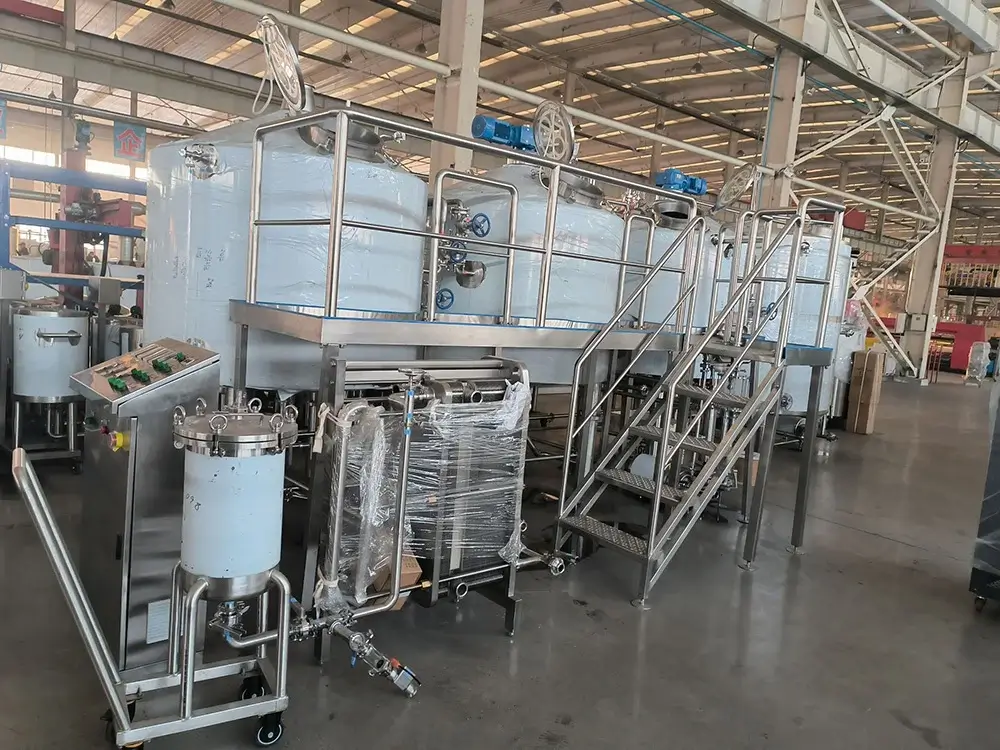
Once you understand these common mistakes, we can take a professional turnkey brewing solution. The right choice helps you avoid 90% of the standard problems, guaranteeing both flavor stability and reliable production output. A complete commercial brewing system is far more than just a collection of shiny tanks. It is an integrated process flow covering everything from raw material handling to the end of primary fermentation.
Raw Material Handling System
This includes the malt mill (essential for uniform grist particle size to maximize extract efficiency) and conveying/storage equipment for raw materials.
Hot-Side Brewing System: The Brewhouse
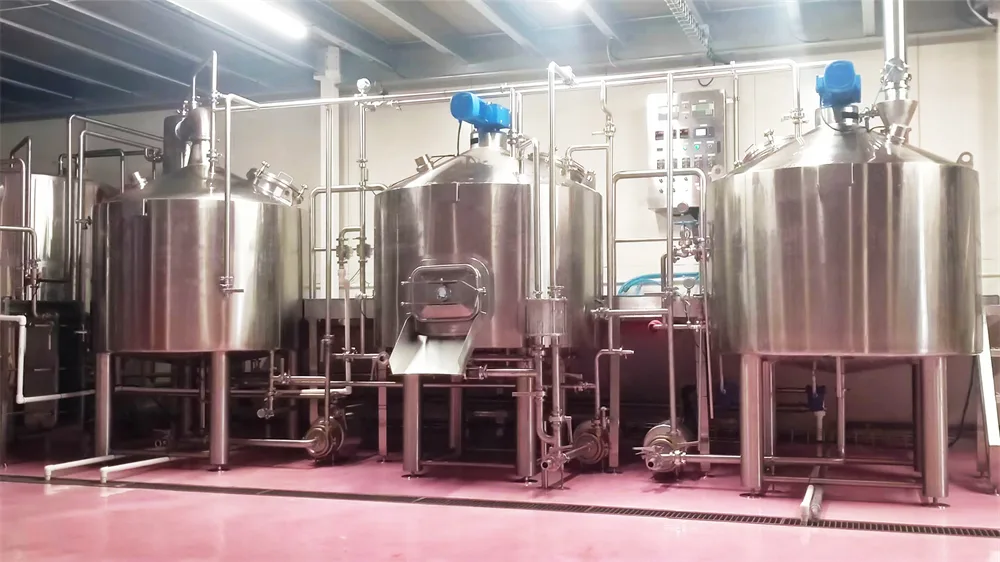
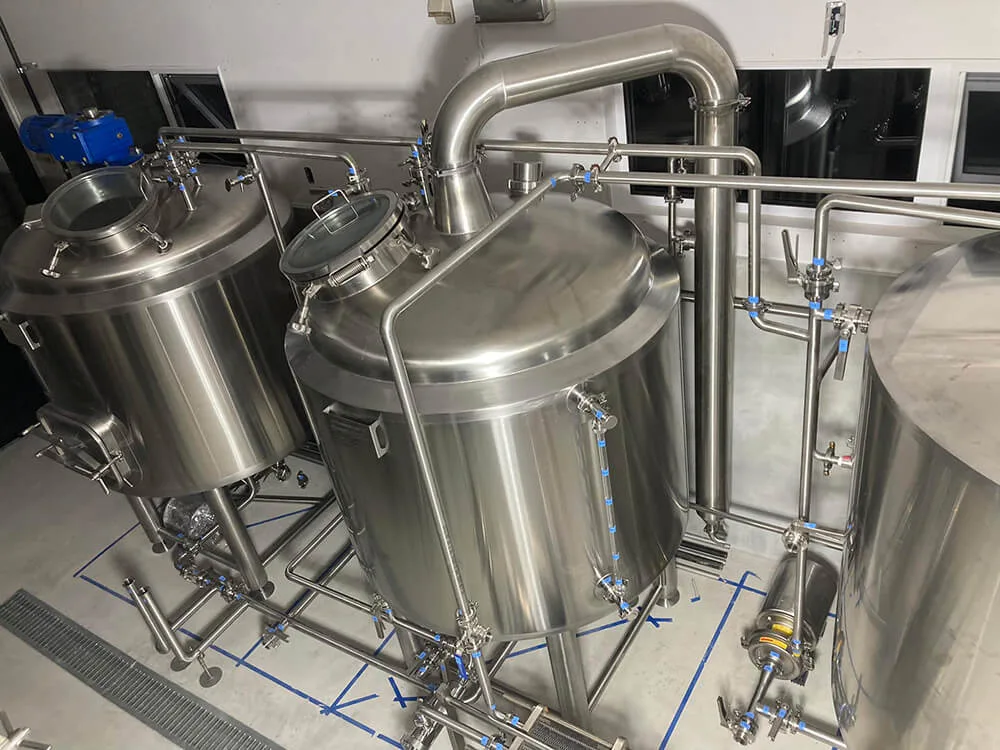
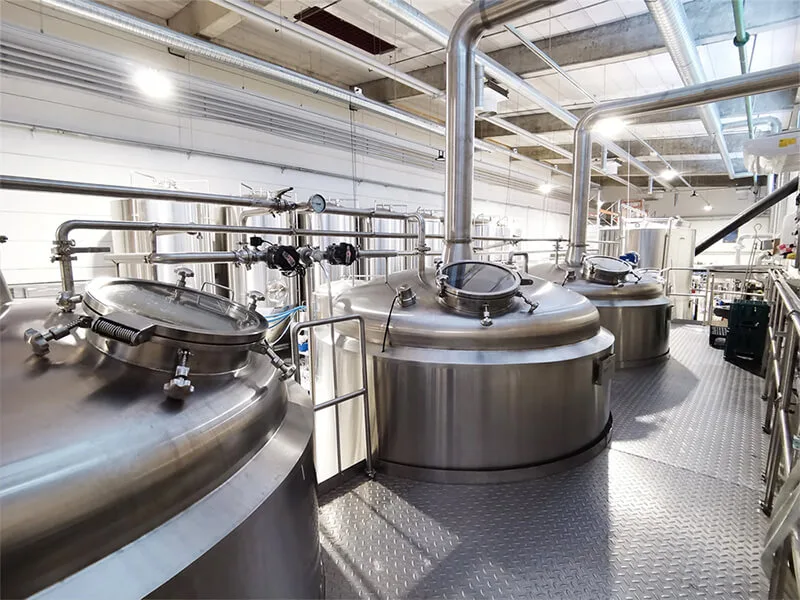
The heart of mashing and wort production, typically comprising a Mash Tun, Lauter Tun, Brew Kettle/Boil Kettle, and a Whirlpool Tank.
Wort Cooling and Oxygenation System
A plate or tube heat exchanger rapidly lowers high-temperature wort to yeast pitching temperature while inline aeration injects sterile oxygen for healthy yeast propagation.
Cold-Side System: Fermentation and Storage Tanks
This is where beer flavor develops, consisting of cylindroconical fermenters (unitanks), Brite Tanks, and horizontal maturation tanks.
Utility and Auxiliary Systems
Covers glycol chillers (cold source), steam boilers or electric heating systems, CIP (Clean-in-Place) systems, and compressed air/CO₂ systems.
Automated Control Systems
Includes a PLC control panel, Human-Machine Interface (HMI), and various temperature, pressure, and level sensors, ensuring precision and repeatability in every batch.
Which Brewery Capacity Fits Your Plan to Brew and Sell?
Capacity planning is the absolute first element to define before you purchase your fermenter tanks and brewhouse. Chasing excessive capacity leads to idle assets, while scrimping on a low-spec setup often results in production bottlenecks. You must work backward from your short-term sales projections and long-term brand vision.
Small-Scale Setups: 100–500 Liters per Batch
Perfect for community brewpubs, restaurant breweries, or startup craft beer brands. These compact brewhouses allow for flexible, multi-style brewing (IPA, wheat beer, stout, etc.) with manageable investment. They enable you to quickly pivot your beer list based on direct market feedback.
Mid-Scale Production: 1,000–5,000 Liters per Batch
Ideal for independent microbreweries or regional chain brands. This scale requires a fully automated production line. Its daily output easily covers supply across multiple venues or regional distribution, and it provides the infrastructural foundation for developing more complex styles like sours or barrel-aged beers.
Large-Scale Industrial Production: 10+ Tons per Batch
This is for large-scale industrial brewing and national brand expansion. It demands a highly automated continuous line, extensive outdoor fermenter tank farms, and high-speed packaging lines. The core objectives are extreme production efficiency and absolute batch-to-batch consistency.
Kettle, Heating, and Electric Choices: How to Get Wort to Boil Without Drama
Your brewhouse’s mashing and boiling system (the hot side) determines your extract efficiency and foundational beer flavor. The primary goal of equipment selection here is to achieve a vigorous, even boil.
Vessel Configuration: 2-Vessel vs. 3-Vessel vs. 4-Vessel
The classic “two-vessel system” (mash/lauter tun combined + brew kettle/whirlpool) suits space-constrained startups. Breweries pursuing the highest quality and control often opt for a 3-vessel or even a 4-vessel brewhouse (separate mash tun, lauter tun, brew kettle, and whirlpool). A dedicated whirlpool kettle efficiently separates hot trub, leading to clearer, cleaner wort.
Steam Heating vs. Electric Heating
For heating methods, the two main choices are electric and steam:
- Electric Heating: Offers lower initial investment and easy installation without needing a separate boiler room. It’s an excellent fit for smaller brew pubs or facilities with stable, sufficient electrical supply.
- Steam Heating: Using internal calandria or external jackets, steam is extremely thermally efficient and provides perfectly uniform heating. Crucially, it eliminates the risk of local wort scorching—the very definition of a boiling process “without drama.” For mid-to-large breweries, steam offers long-term advantages in energy cost and boiling intensity.
Fermenter or Unitank: How Cold-Side Tanks Shape Beer, Speed, and Consistency
The fermenter is undeniably the heart of any brewery. Cold-side equipment performance directly dictates beer flavor profiles, production speed, and batch-to-batch consistency. The dominant industry standard for commercial brewing is the cylindroconical fermenter, widely known as the unitank.
Why Unitanks Outperform Traditional Fermenters
Compared to traditional flat-bottomed fermenters, the unitank offers unparalleled advantages:
- Yeast Management: The cone-bottom design facilitates natural yeast flocculation and collection. This significantly lowers yeast propagation costs and allows for straightforward yeast generation management.
- All-in-One Functionality: A unitank can handle primary fermentation, diacetyl rest, cold conditioning, and even natural carbonation within a single, closed vessel. This drastically reduces the number of transfers between tanks, minimizing oxidation risk and speeding up the overall turnout speed of your brewery.
Temperature Control and Consistency in a Fermenter
A professional fermenter must include a high-precision glycol jacket cooling system, typically achieving temperature control within ±0.5°C. Whether you are cold-fermenting a lager (8–12°C) or fermenting an ale at ambient temperatures (15–22°C), this precise control is the secret behind absolute flavor consistency from batch to batch.
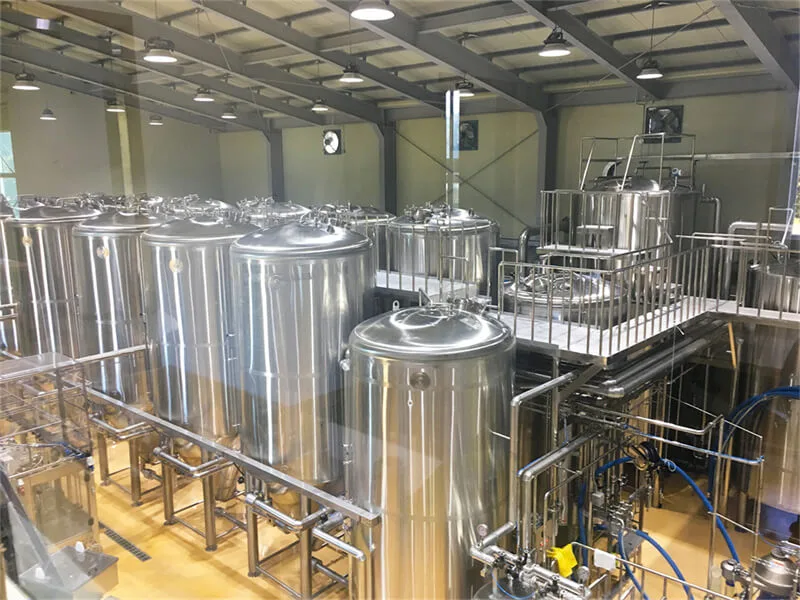
Pro Brewing Controls That Help You Win: Clean CIP Paths, One Pump, Real Simplicity
A truly “pro” brewing system must help you make great beer, but equally, it must make the brewer’s daily operations simple, efficient, and safe.
Automated Control: The PLC and HMI Advantage
The automated control system (PLC + HMI) is the “brain” of a modern brewery. Via a touchscreen interface, brewers can program precise mashing temperature curves, control pump and valve sequences, and even perform “one-touch brewing.” This eliminates 90% of human handling errors and frees up the brewer to focus on recipe development and optimization.
CIP System Design and the “One Pump” Philosophy
The CIP system (Clean-in-Place) is the unsung hero that ensures brewery hygiene and beer stability. Expert equipment design incorporates perfectly thought-out CIP flow paths. Dedicated CIP pumps and spray balls allow for 360-degree automated cleaning of every tank and pipe, using acid, caustic, and hot water, without any need for dismantling the system. The “One pump, real simplicity” philosophy is equally important. Excellent piping design minimizes redundant pumps and valves, achieving highly efficient flow paths with a single pump where possible. This reduces upfront equipment purchase costs, cuts maintenance difficulties, and lowers potential failure points.
Commercial Brewery Equipment Procurement: A Step-by-Step Guide
Choosing the right equipment is half the battle. To ensure your upfront investment translates into a solid, operational reality, it’s wise to follow this standard procurement process.
Step 1: Define Requirements and Budget
Before contacting any suppliers, create a detailed checklist: your target production capacity, primary beer styles, on-site facility conditions (water, power, drainage), and your exact capital budget.
Step 2: Market Research and Supplier Shortlisting
Find potential suppliers through industry trade shows, peer referrals, and online platforms. Crucially check their manufacturing credentials, industry reputation, and past project case studies. Completely eliminate pure trading companies with no real-world brewing experience.
Step 3: In-Depth Evaluation and On-Site Visits
Request a detailed equipment list, Piping and Instrumentation Diagrams (P&ID), and material certifications. If feasible, an on-site factory visit or, better yet, a tour of an operational brewery using their equipment is invaluable. This gives you a firsthand look at build quality and real-world performance.
Step 4: Contract Signing and Final Detailing
When finalizing the contract, every detail must be in writing: equipment specifications, material standards (clearly stated as 304/316L stainless steel), delivery timeline, payment terms, warranty coverage, after-sales service response time, and liability for breach of contract.
Step 5: Formal Acceptance, Installation, and Commissioning
Upon delivery, strictly check all models and quantities against the contract, and thoroughly inspect for any transit damage. Professional technicians should then complete the installation, followed by a full commissioning test using water to verify that all performance indicators meet agreed specifications.
Step 6: Systematic Training and Launch
The supplier must provide complete operational and maintenance training, ensuring your brewing team is fully proficient in using all equipment and mastering the CIP cleaning process. Only after final sign-off and training completion should you proceed with your first official grain-to-glass brew.
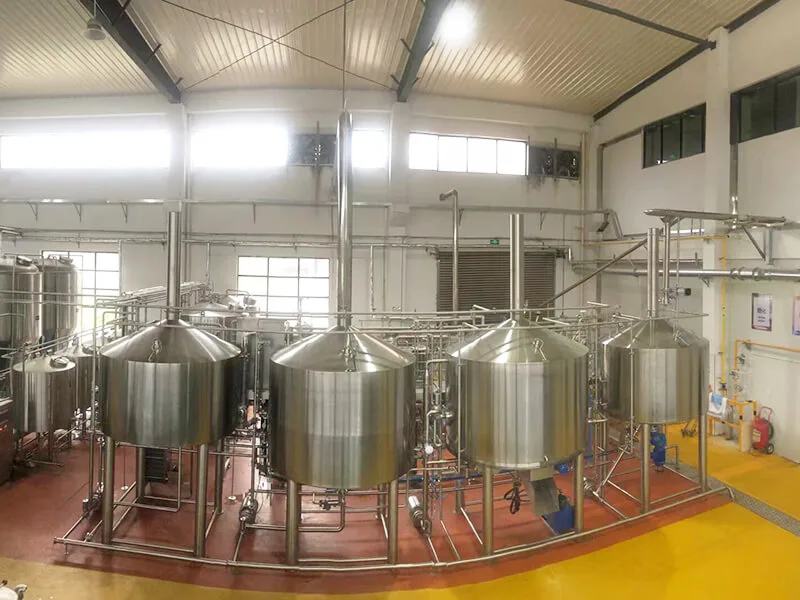
Commercial Brewery Equipment Maintenance: Protecting Your Investment
Buying your brewery equipment is merely the first step. A scientific maintenance and care program is what ensures long-term operational stability, extends asset lifespan, and guarantees beer flavor consistency.
The Daily Lifeline: Strict CIP Cleaning and Sanitizing
This is the lifeline of brewing. Immediately after each brewing cycle ends, activate the CIP protocol without delay. Use an alkaline cleaner to remove organic soils (protein, hop resins), followed by an acidic cleaner to eliminate inorganic scale (beer stone), and finally rinse with clean water until free of any chemical residue. Never allow wort or beer to sit overnight in pipes or tanks, as it will rapidly cultivate spoilage bacteria and wild yeast, directly contaminating your next batch of beer in the fermenter.
Daily, Weekly, and Monthly Inspection Routines
Before daily start-up, check all pressure gauges, thermometers, and sensors for accurate readings and calibrate periodically. Meticulously inspect pipes, valves, and flange connections for any liquid or gas leaks. Listen closely to motors, pumps, and other rotating parts for abnormal noise or vibration. Apply food-grade lubricant to moving parts like conveyor bearings and valve stems on a weekly schedule. Monthly, inspect and clean the condenser fins of your glycol chiller to remove dust and ensure optimal cooling efficiency. Also, check the integrity of the sealing gaskets and pressure-relief/vacuum valves on all fermenters.
Annual Overhaul and Long-Term Shutdown Protocols
Proactively replace wear parts such as O-rings, soft gaskets, and diaphragm seals every 6–12 months to prevent leaks and failures caused by aging. An annual comprehensive plant-wide overhaul should include weld polishing, repairing any scratches on tank interior walls, and a thorough inspection of all electrical safety systems. If your brewery requires a long-term shutdown, all tanks and pipes must be thoroughly cleaned, drained, and dried. Seal all openings to prevent dust and pest ingress. During winter months, pay special attention to anti-freeze measures for all water and glycol piping.
Conclusion: Choosing Your Long-Term Brewery Equipment Partner
Choosing commercial brewery equipment is, in essence, choosing a long-term strategic partner. We hope this guide helps you construct the most suitable professional brewhouse, ensuring that every drop of carefully prepared wort is perfectly transformed into a stunning, market-leading beer. Contact us today to discuss your project and discover how our turnkey brewery and fermenter solutions can bring your vision to life.
Contattateci oggi stesso to discover how our brewery equipment and commercial craft brewing equipment can power your next brewery.