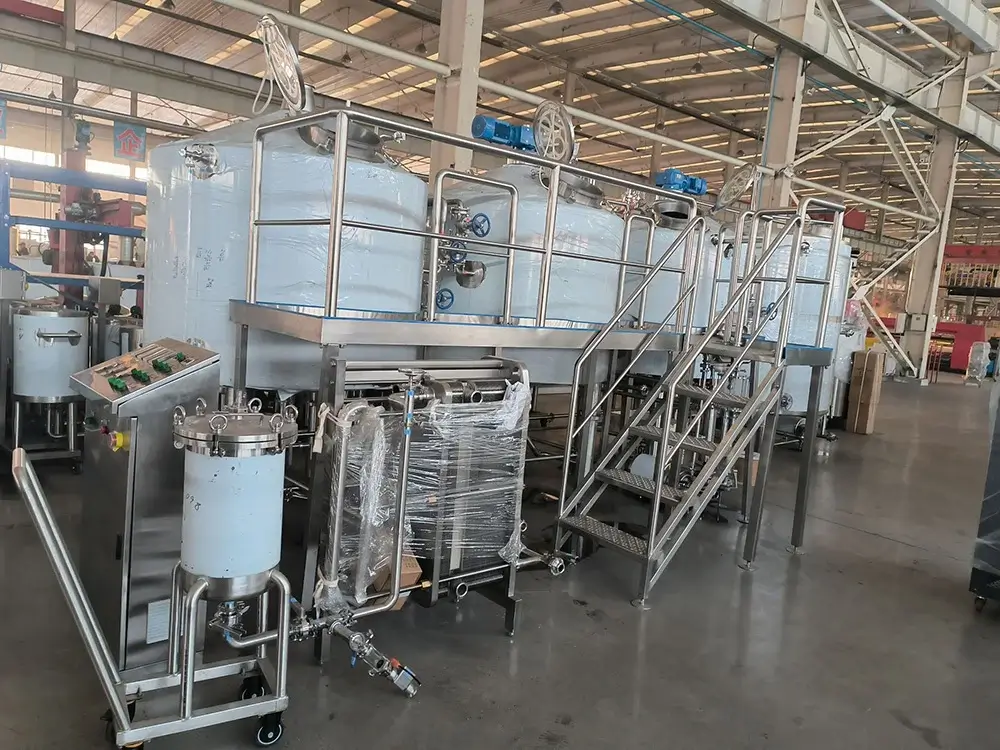
For entrepreneurs and master brewers planning to launch or expand a commercial brewing operation, selecting the right brewery equipment is the single most critical decision that defines your brand’s future. Among the various capacity options, the 1500L brewery system (often referred to in the industry as a 15HL system) stands out as the “golden capacity” for mid-sized craft breweries.
Why is this specific size so pivotal? A 1500L brewery perfectly bridges the gap between pilot systems and massive industrial plants. It offers the scalability needed for regional distribution while retaining the flexibility required for craft beer artistry. In this comprehensive guide, we will dive deep into the technical specifications, advanced configurations, automation systems, and the undeniable commercial advantages of investing in a professional 1500L setup.
🛠️ Deep Dive: 1500L Brewery Equipment Specifications
A 1500L brewery is not just about volume; it is about engineering precision. To ensure the purity of your beer’s flavor and the longevity of your investment, top-tier brewery equipment must adhere to rigorous industrial standards.
1. Premium Material & Craftsmanship
The foundation of any 15HL brewery is its material. The entire system is typically crafted from food-grade SUS 304 stainless steel (DIN 1.4301). For brewers focusing on highly acidic styles like Sours or operating in coastal environments with high salinity, upgrading specific components to SUS 316L stainless steel provides superior corrosion resistance.
- Surface Finish: The interior welds are polished to a mirror finish with a roughness of Ra ≤ 0.4μm to 0.6μm. This ultra-smooth surface is crucial for preventing bacterial harborage and ensuring efficient cleaning, a non-negotiable standard for professional brewery equipment.
2. Advanced Insulation Technology
Temperature stability is the heartbeat of brewing. A high-quality 1500L brewery utilizes a double-layer jacket design. The gap between the inner and outer shells is filled with approximately 80mm to 100mm of high-density polyurethane foam (PUR). This ensures minimal thermal loss, allowing your glycol chiller to work efficiently and keeping energy costs low.
3. Pressure Ratings & Safety
Unlike basic open-top vessels, a modern 15HL brewery features pressure-rated fermentation tanks. These are designed to withstand working pressures of 0.2 to 0.3 MPa (2-3 Bar). This capability is essential for:
- Carbonation: Performing natural carbonation directly inside the tank (unitank functionality).
- Safety: Equipped with precision pressure relief valves and vacuum breakers to prevent tank deformation during aggressive CIP cleaning or cooling cycles.
⚙️ Core Configuration of a 1500L System
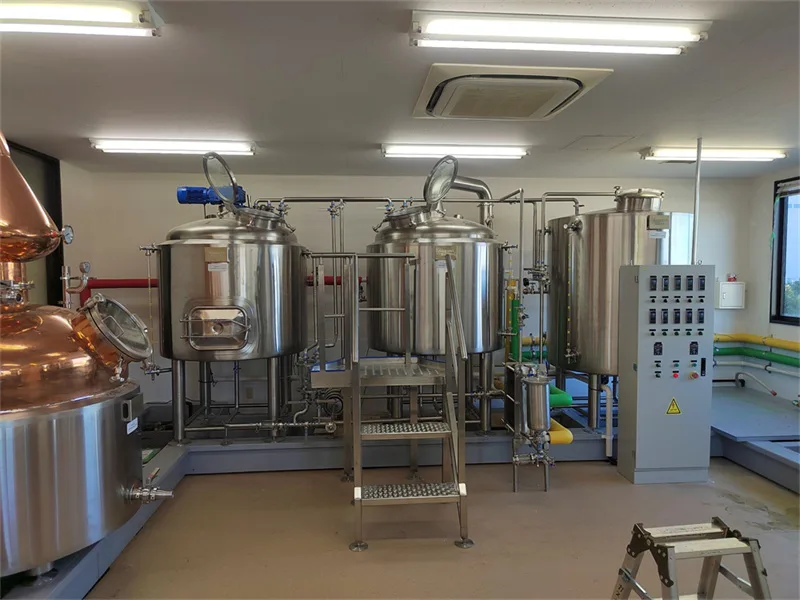
A complete 1500L brewery is a symphony of subsystems working in harmony. Let’s break down the engineering behind the four critical pillars of this setup.
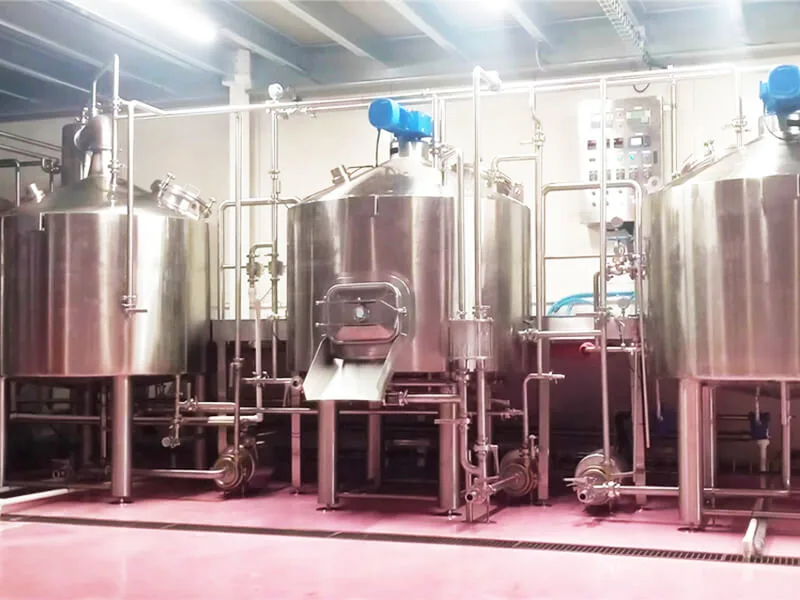
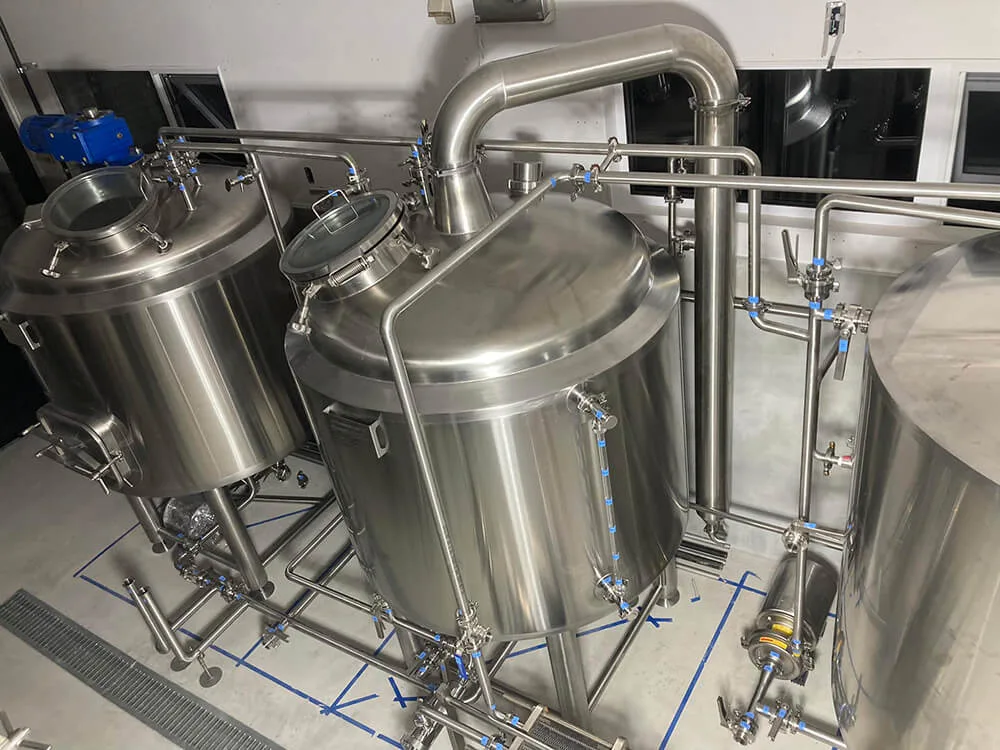
1. The Brewhouse: Where Chemistry Meets Art
The brewhouse determines the throughput of your 1500L brewery. For this capacity, efficiency is key.
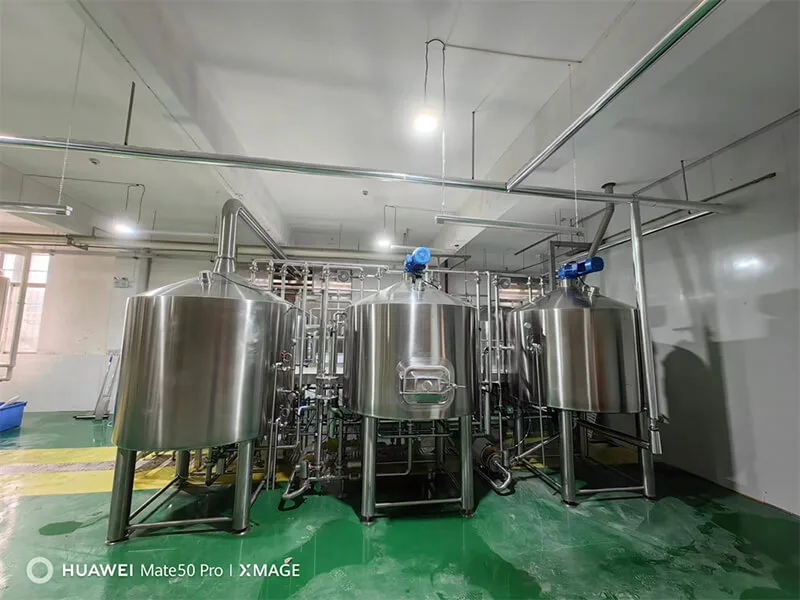
- Vessel Configuration: The industry standard is the “2-vessel 3-function” (Mash/Lauter Tun + Brew Kettle/Whirlpool) or a “3-vessel” setup (adding a dedicated Lauter Tun). This configuration optimizes floor space while allowing for overlapping brew days.
- Heating Methods: To prevent wort scorching and ensure even heat distribution, a 15HL brewery typically employs steam jacket heating (powered by an electric or gas steam generator) or high-efficiency direct electric heating elements with variable frequency drives (VFD).
- Filtration Efficiency: The Lauter Tun is equipped with a motorized rake system with adjustable scrapers and a false bottom designed for high-gravity brewing, ensuring maximum extract efficiency and clear wort runoff.
2. Fermentation System: The Flavor Cradle
The fermentation cellar is where your beer truly comes to life. In a 1500L brewery, the fermenters are often the largest capital expense.
- Conical Design: Standard Uni-tanks feature a 60° conical bottom, which is scientifically optimized for yeast sedimentation and easy harvesting.
- Precision Cooling: The tanks are fitted with dimple jackets or half-pipe coils on the cylinder and cone. Connected to a glycol loop, this system maintains temperature stability within ±0.5℃, which is vital for controlling ester production in Ales and preventing off-flavors in Lagers.
- Versatility: These tanks are equipped with sample valves, racking arms, dry-hopping ports (essential for modern IPAs), and carbonation stones, making your brewery equipment versatile enough for various beer styles.
3. Intelligent Control System: The Digital Brain
Gone are the days of manual monitoring. A modern 1500L brewery is driven by a sophisticated PLC (Programmable Logic Controller) automation system.
- Touchscreen Interface: Brewers can control the entire process via a 10-15 inch HMI (Human-Machine Interface). You can save specific recipes, set temperature ramps, and automate pump sequences.
- Data Traceability: Advanced brewery equipment logs data for every batch—temperature curves, pH levels, and flow rates. This allows for precise quality control and recipe replication, ensuring your brand’s consistency.
4. CIP & Hygiene: The Guardian of Quality
In a 15HL brewery, manual cleaning is impossible. An automated CIP (Clean-In-Place) station is mandatory.
- Automated Cycles: The system uses dedicated tanks for Caustic, Acid, and Sanitizer. Through a network of sanitary valves and centrifugal pumps, it executes pre-programmed cleaning cycles (Pre-rinse → Caustic Wash → Intermediate Rinse → Acid Wash → Final Sanitization).
- 360° Coverage: High-impact rotating spray balls ensure that every inch of the tank interior is cleaned, eliminating the risk of contamination.
🚀 Commercial Advantages of a 1500L Brewery
Why is the 1500L brewery the smartest investment for a growing business?
1. The “Goldilocks” Capacity
A 1500L (15HL) batch size hits the sweet spot. It is large enough to supply a chain of taprooms or regional distributors efficiently, reducing the “cost per liter” significantly compared to smaller systems. Yet, it is small enough to allow for frequent recipe rotation, keeping your tap list exciting and responsive to market trends.
2. Operational Efficiency & ROI
The automation inherent in a 1500L brewery translates directly to labor savings. One or two brewers can manage the entire production process, from milling to fermentation, thanks to the PLC controls and automated transfer pumps. This high efficiency leads to a faster Return on Investment (ROI).
3. Future-Proof Scalability
Investing in a 15HL brewery is a long-term play. The modular nature of this brewery equipment means you can start with a standard configuration (e.g., 4 fermenters) and easily expand your cellar capacity as demand grows, without needing to replace your core brewhouse.
4. Professional Brand Image
Using standardized, high-spec brewery equipment signals to your customers and distributors that you are a serious, professional operation. The consistency and quality assurance provided by a 1500L system build brand trust and loyalty.
Conclusione
The 1500L brewery system represents the perfect synthesis of traditional brewing craftsmanship and modern industrial engineering. It provides the robust infrastructure needed to produce world-class beer while offering the economic viability required for a sustainable business. Whether you are brewing a classic Pilsner or a hazy New England IPA, a well-configured 1500L brewery is the solid foundation upon which brewing legends are built.
At Meto, we understand that every brewery is unique. Our engineers can custom-design equipment to fit your vision. Just let us know what you need, and we’ll deliver a one-stop solution straight to your inbox within 24 hours.”