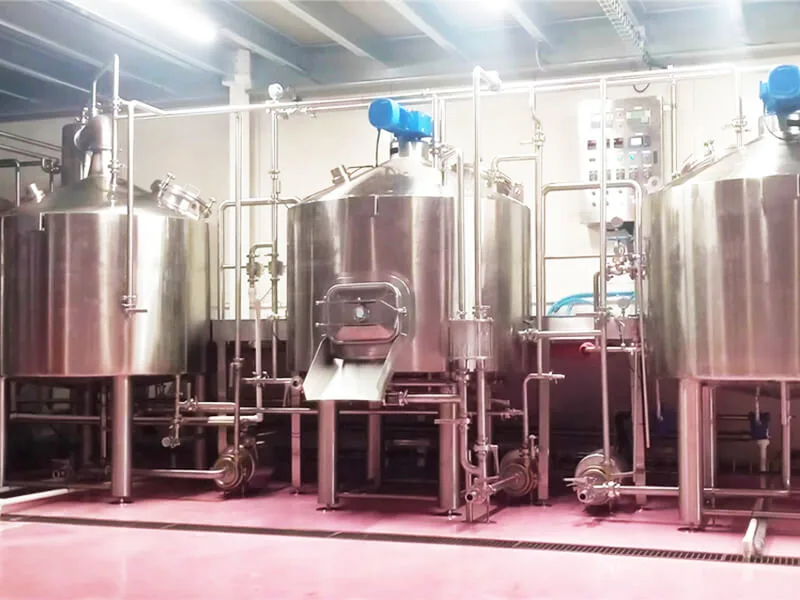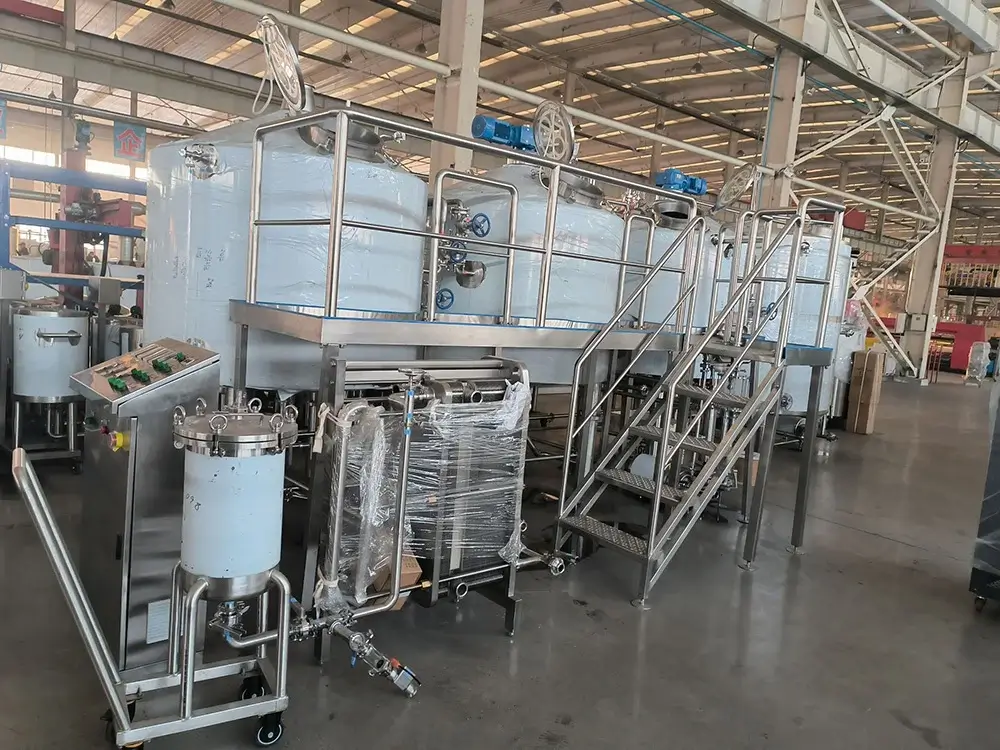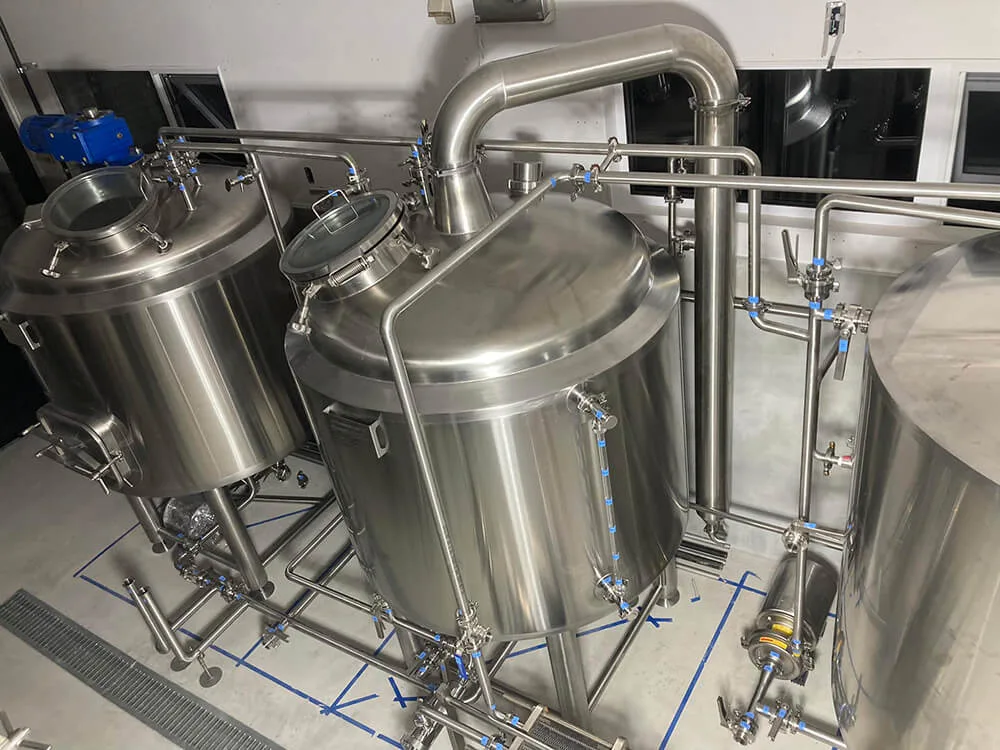
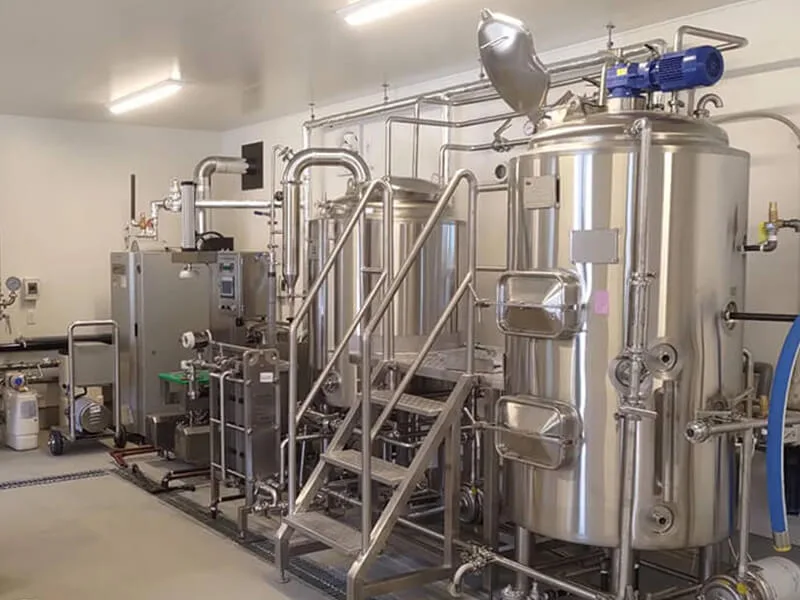
Choosing the right heating method is an important decision when designing a brewery. The heating system affects equipment cost, installation requirements, energy consumption, temperature control, brewing speed and future expansion.
The three most common options are steam heating, electric heating and direct-fire heating. Each method has advantages and limitations. There is no single heating solution suitable for every brewery.
The best choice depends on the brewhouse capacity, production schedule, available utilities, local energy prices, floor space, automation requirements and applicable safety regulations.
Steam Heating for Breweries
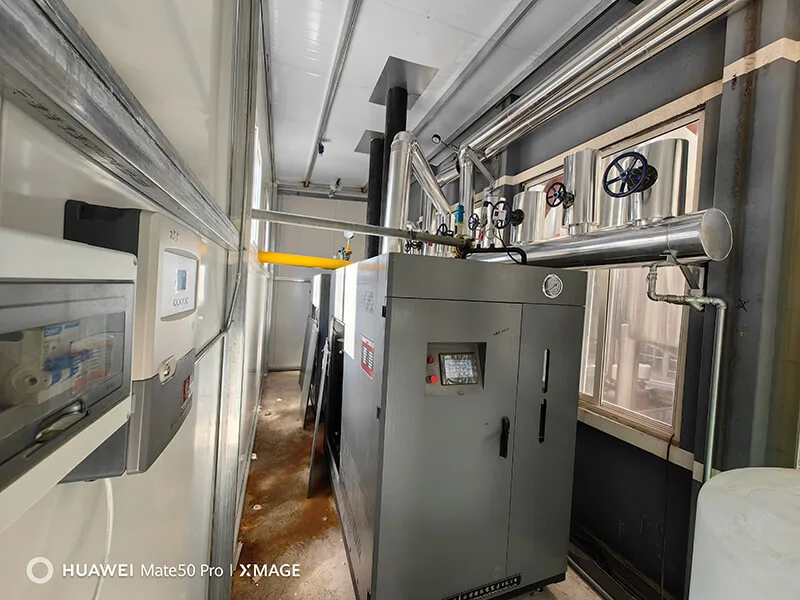
Steam heating uses a boiler or steam generator to produce steam. The steam is then delivered through steam jackets or internal heating channels around the mash tun, kettle or other process vessels.
The steam transfers heat indirectly to the brewing liquid. This provides even heating and helps reduce the risk of localized overheating.
Advantages of Steam Heating
Steam heating is widely used in medium-sized and large commercial breweries because it can provide stable and efficient heating for multiple vessels.
Its main advantages include:
- Even and indirect heating
- Good temperature stability
- Suitable for large-volume brewing
- Fast heating for high-frequency production
- Ability to heat several vessels
- Compatibility with automated control systems
- Possible use in CIP and other steam-demanding processes
A properly designed steam system can support a brewhouse with several vessels, including mash tuns, lauter tuns, wort kettles and hot liquor tanks.
Steam heating is also suitable for breweries that plan to increase production in the future. A central boiler can often supply several pieces of equipment as the production line expands.
Steam Heating Considerations
Although steam heating offers strong performance, it usually requires more auxiliary equipment than electric heating.
A complete steam heating system may include:
- Steam boiler or steam generator
- Burner and fuel system
- Steam distribution piping
- Pressure control components
- Safety valves
- Condensate drainage
- Water treatment equipment
- Boiler-room ventilation
- Steam traps and related accessories
The brewery must also consider fuel availability, boiler maintenance and local regulations. Depending on the boiler type, fuel source, pressure rating and installation location, additional approvals or inspections may be required.
Steam heating is often a good choice when the brewery needs high output, frequent brewing or steam for other production processes.
Electric Heating for Breweries
Electric heating uses electric heating elements installed inside or around the brewing vessel. The elements convert electrical energy into heat and are controlled through a temperature control system.
Electric heating is common in pilot breweries, brewpubs, small craft breweries and research systems.
Advantages of Electric Heating
Electric heating has a relatively simple installation structure. It does not require a separate boiler room, fuel storage system or steam distribution network.
Its main advantages include:
- Simple installation
- No boiler required
- Controllo preciso della temperatura
- Easy operation
- Compact equipment layout
- Low local emissions
- Good suitability for small brewing systems
- Easy integration with PLC or digital controls
Electric heating can be especially useful for breweries located in restaurants, hotels, laboratories or urban buildings where space is limited.
For small systems, electric heating may reduce the complexity of the overall project because the customer only needs a suitable electrical supply and the required control cabinet.
Electric Heating Considerations
The main limitation of electric heating is the amount of electrical power required for large brewing systems.
Before selecting electric heating, the customer should confirm:
- Local voltage
- Power frequency
- Single-phase or three-phase supply
- Available transformer capacity
- Maximum electrical load
- Electricity price
- Cable and switchgear requirements
- Local electrical standards
- Backup power requirements
A large electric brewhouse may require a high-power electrical connection. If the available power supply is limited, the heating time may be longer than expected or the project may require electrical infrastructure upgrades.
Electric heating is usually most practical when electricity is reliable and reasonably priced.
Direct-Fire Heating for Breweries
Direct-fire heating uses a gas burner or another approved fuel source to heat the brewing vessel directly. The burner is installed below the kettle or heating chamber, and the flame transfers heat to the vessel.
This method is commonly associated with traditional brewing systems and smaller commercial breweries.
Advantages of Direct-Fire Heating
Direct-fire heating can provide a relatively simple heating configuration without requiring a steam boiler.
Its main advantages include:
- Risposta rapida al riscaldamento
- No steam boiler required
- Suitable for gas-supplied locations
- Relatively compact system structure
- Useful for traditional brewing layouts
- Potentially lower initial investment than a complete steam system
Direct-fire heating may be suitable for customers who have a reliable gas supply and want to avoid installing a separate boiler system.
It can also be considered for small and medium-sized brewhouses where the heating demand is moderate.
Direct-Fire Heating Considerations
Direct-fire heating requires careful attention to burner design, heat distribution and safety.
Important considerations include:
- Gas or fuel availability
- Burner capacity
- Flame failure protection
- Automatic ignition
- Controllo della temperatura
- Combustion ventilation
- Exhaust and flue design
- Fire protection
- Heat shielding
- Local gas and building regulations
The vessel must be designed to distribute heat properly. Poorly designed direct-fire heating can create localized hot spots, which may affect wort quality or cause cleaning difficulties.
For this reason, the burner, heating chamber, vessel structure and control system should be designed as one integrated system.
Steam vs Electric vs Direct-Fire Heating
The following comparison provides a general overview of the three heating methods.
| Fattore | Riscaldamento a vapore | Riscaldamento elettrico | Direct-Fire Heating |
|---|---|---|---|
| Initial system cost | Medium to high | Low to medium | Low to medium |
| Complessità dell'installazione | Alto | Low to medium | Medio |
| Boiler required | Usually | No | No |
| Controllo della temperatura | Stable and controllable | Precise | Depends on burner system |
| Heating uniformity | Eccellente | Excellent with proper design | Depends on vessel and burner design |
| Energy source | Gas, diesel, biomass or other fuel | Electricity | Gas or other approved fuel |
| Space requirement | Più alto | Più basso | Medio |
| Small brewery suitability | Possible | Eccellente | Buono |
| Large brewery suitability | Eccellente | Depends on power supply | Limited by system design |
| Multi-vessel heating | Very suitable | Possible with sufficient power | More limited |
| CIP steam supply | Possible | Not directly | Not directly |
| Auxiliary equipment | More extensive | Relatively simple | Burner and exhaust system required |
These comparisons are general. Actual performance and operating cost depend on vessel design, insulation, heating power, energy prices, production schedule and local conditions.
Which Heating Method Is Best for Different Brewery Sizes?
100L–300L Breweries
For very small breweries and pilot systems, electric heating is often the simplest option.
It is suitable for:
- Pilot brewing
- Recipe development
- Brewpub
- Restaurants
- Research and training
- Small experimental production
Direct-fire heating may also be suitable when gas is readily available and the customer prefers a traditional heating configuration.
300L–1000L Breweries
For small craft breweries, all three heating methods may be possible.
Electric heating is suitable when:
- Electricity is stable
- Available power is sufficient
- The brewery has limited space
- The customer wants simple operation
Direct-fire heating may be selected when gas is more economical or when the customer wants to avoid a boiler.
Steam heating may be preferred when the brewery operates several batches per day or requires steam for other equipment.
1000L–2000L Breweries
For breweries in this range, steam heating becomes more attractive, especially when the production schedule is intensive.
The final decision should consider:
- Batches per day
- Target heating time
- Number of vessels
- Available electrical power
- Fuel cost
- Boiler-room space
- Automation requirements
- Future expansion
High-capacity electric heating is possible in some projects, but the electrical infrastructure must be checked carefully.
Breweries Above 2000L
For larger commercial breweries, steam heating is often preferred because it can support high heating demand and multiple vessels.
Steam systems are especially useful when the brewery requires:
- High production frequency
- Several heated vessels
- Stable indirect heating
- Centralized energy management
- Steam for CIP or other processes
- Future production expansion
However, the final heating method should still be selected according to the complete process design rather than brewhouse volume alone.
How Heating Method Affects Brewing Efficiency
Heating efficiency is not determined only by the energy source. The vessel structure and system design are equally important.
Important design factors include:
Vessel Insulation
Good insulation reduces heat loss and helps maintain stable process temperatures.
Insulation is particularly important for hot liquor tanks, mash tuns, wort kettles and steam-jacketed vessels.
Heating Surface
A larger and properly designed heating surface can improve heat transfer and reduce heating time.
For steam and electric systems, the heating surface should match the vessel volume and expected production schedule.
Heating Power
The required heating power depends on:
- Liquid volume
- Starting temperature
- Target temperature
- Heating time
- Heat loss
- Vessel material
- Insulation quality
- Local ambient conditions
A system designed for one batch per day may not be suitable for four or six batches per day.
Controllo della temperatura
Temperature control is important for mashing, boiling and other brewing stages.
Electric systems usually provide direct control of heating elements. Steam systems use valves, pressure control and temperature sensors. Direct-fire systems require burner modulation and safety controls.
A PLC control system can help coordinate heating, pumping, temperature measurement and process timing.
Important Questions Before Ordering a Brewery Heating System
Before requesting a quotation, the customer should prepare the following information:
- Brewhouse working capacity
- Number of brewing vessels
- Target heating time
- Batches per day
- Required annual production
- Preferred energy source
- Local electricity voltage and frequency
- Gas availability
- Fuel type
- Available boiler-room space
- Available floor space
- Livello di automazione
- CIP requirements
- Future expansion plans
- Destination country and installation location
The destination is important because electrical standards, gas regulations, pressure-vessel requirements and installation conditions may vary by country or region.
For example, the correct heating solution for a 1000L brewery in a location with low-cost electricity may be different from the solution for a brewery of the same size where gas is more economical and steam is needed for CIP.
Why Choose METO for Brewery Heating Solutions?
METO can provide brewery heating configurations based on the customer’s production requirements and available utilities.
Depending on the project, the system can be configured with:
- Riscaldamento elettrico
- Riscaldamento a vapore
- Direct-fire heating
- Steam boilers or generators
- Heating jackets
- Burners and fuel systems
- Sensori di temperatura
- PLC control systems
- Steam and process piping
- Hot liquor tanks
- CIP-related equipment
- Cooling and auxiliary systems
The heating method should be selected together with the brewhouse, vessels, control system and plant layout. This helps ensure that the complete brewery operates as one coordinated production system.
METO’s engineering team can review the target capacity, brewing schedule, energy source, installation conditions and future expansion requirements before recommending a suitable configuration.
Conclusione
Steam, electric and direct-fire heating systems can all be used in brewery production, but their suitability varies according to the project.
- Riscaldamento elettrico is often suitable for pilot breweries, brewpubs and small craft systems.
- Direct-fire heating can be a practical option where gas is available and a traditional heating method is preferred.
- Riscaldamento a vapore is often better suited to medium and large breweries, high-frequency production and projects requiring steam for additional processes.
The best solution is not always the system with the lowest initial price. The customer should also consider energy cost, heating time, installation complexity, maintenance, safety, automation and future production growth.
Planning a new brewery or upgrading an existing brewhouse? Share your target capacity, heating method preference, batches per day and destination country with METO. Our engineers can recommend a suitable brewery heating configuration and prepare a project proposal based on your production needs.