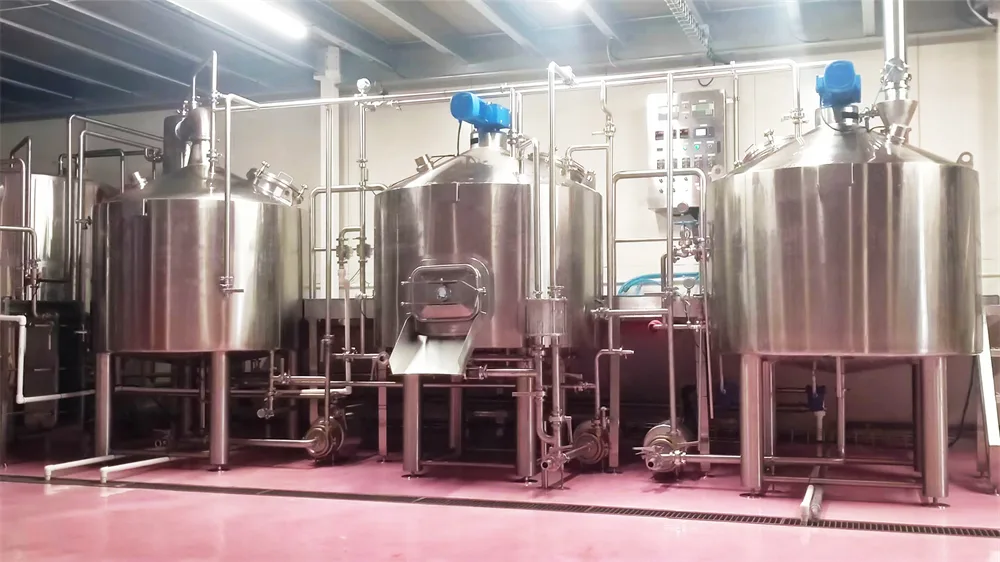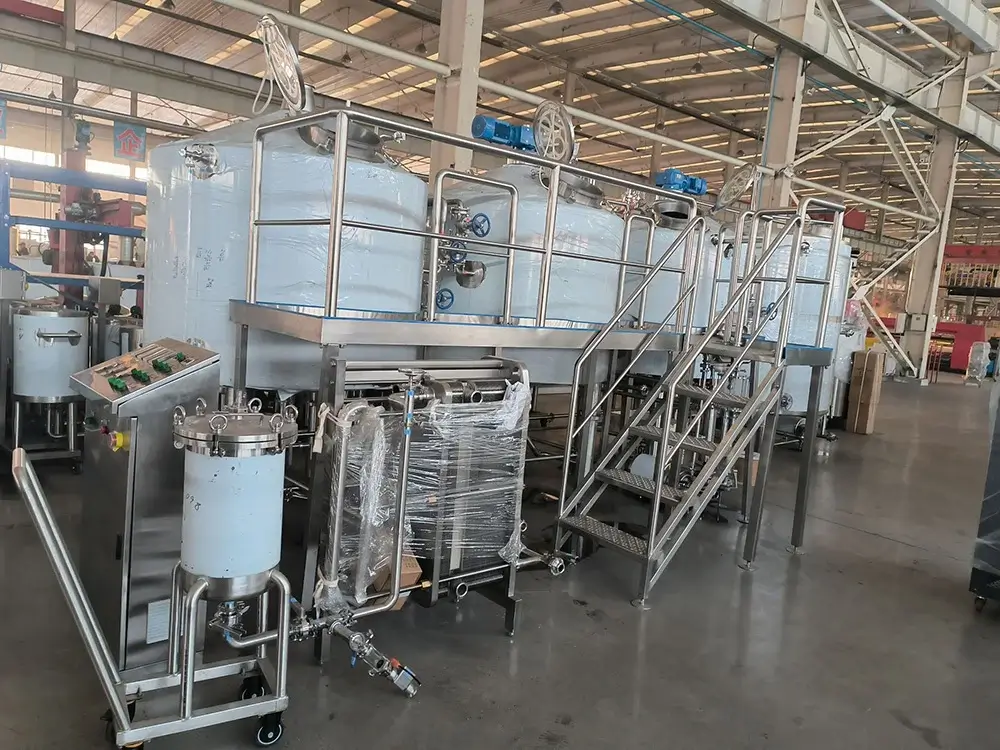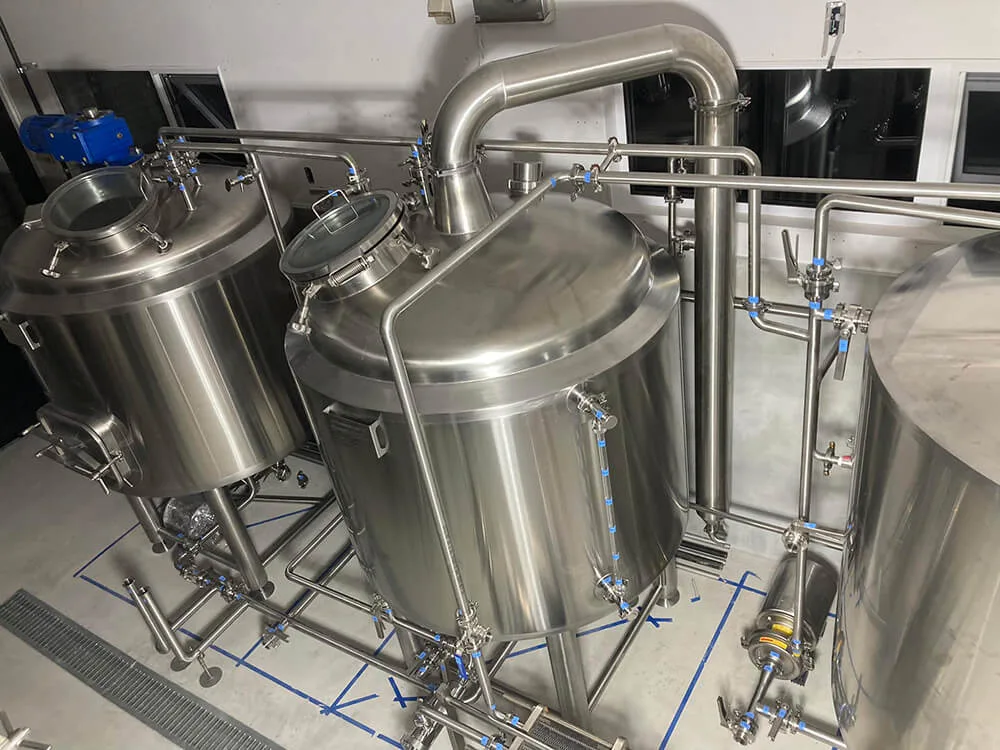
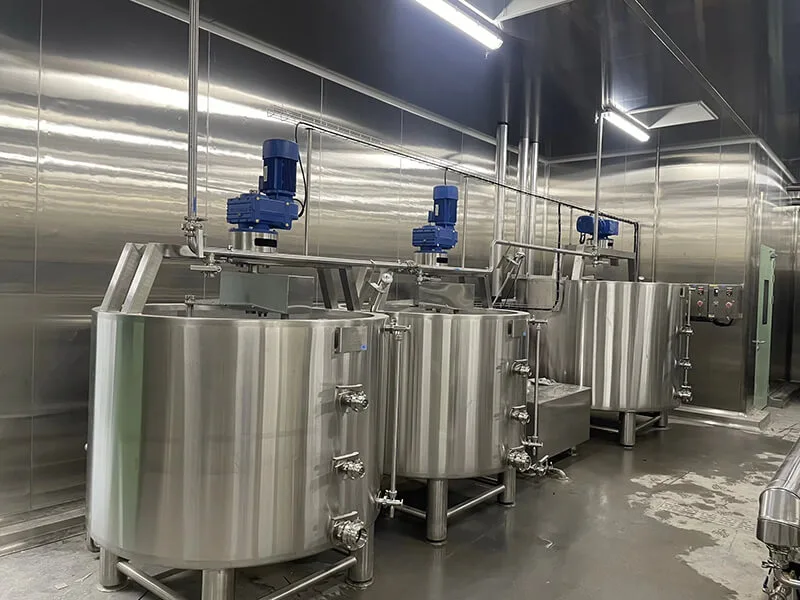
Why Global Manufacturers Are Investing in Advanced Stainless Steel Mixing Tanks
Across industries such as pharmaceuticals, food processing, chemicals, cosmetics, biotechnology, and new materials, stainless steel mixing tanks have evolved from simple storage vessels into critical process equipment that directly impacts product quality, production efficiency, and regulatory compliance.
As manufacturing becomes increasingly automated and quality standards continue to rise worldwide, the demand for high-performance mixing systems is accelerating. According to industry research, the global industrial mixing equipment market is projected to maintain steady growth through 2031, driven by increasing investments in pharmaceutical manufacturing, food processing modernization, specialty chemicals, and sustainable production technologies.
For international buyers, purchasing a mixing tank is no longer simply about acquiring a vessel. It is about investing in a long-term processing solution that supports productivity, compliance, scalability, and future expansion.
Understanding the Technology Behind Modern Stainless Steel Mixing Tanks
Material Selection: SS304 vs SS316L
Material selection remains one of the most critical decisions when specifying a stainless steel mixing tank.
SS304 Stainless Steel
SS304 is the most commonly used material in industrial mixing applications due to its excellent balance between corrosion resistance and cost-effectiveness.
Typical applications include:
- Food ingredients
- Water treatment
- General chemical processing
- Beverage production
- Low-corrosion environments
Vantaggi:
- Costi di investimento inferiori
- Good mechanical strength
- Excellent fabrication performance
- Suitable for most non-aggressive media
SS316L Stainless Steel
SS316L contains molybdenum, significantly improving resistance to chlorides, acids, and aggressive cleaning chemicals.
Typical applications include:
- Pharmaceutical production
- Biotechnology
- Dairy processing
- Cosmetic manufacturing
- High-purity food applications
Vantaggi:
- Superior corrosion resistance
- Better resistance to pitting and crevice corrosion
- Enhanced performance under CIP/SIP cleaning conditions
- Longer service life in demanding environments
Surface Finishing Technologies
The internal surface quality directly affects product purity, cleanability, and contamination risk.
Mirror Polishing (Ra ≤ 0.4 μm)
Widely used in pharmaceutical and sanitary applications.
Vantaggi:
- Reduced bacterial adhesion
- Easier cleaning
- Improved product purity
- Compliance with GMP requirements
Electropolishing
Electropolishing removes microscopic surface imperfections and further enhances corrosion resistance.
Advantages include:
- Ultra-smooth finish
- Improved passivation layer
- Enhanced cleanability
- Reduced contamination risks
Brushed Finish
Typically used on external surfaces where aesthetics and durability are desired.
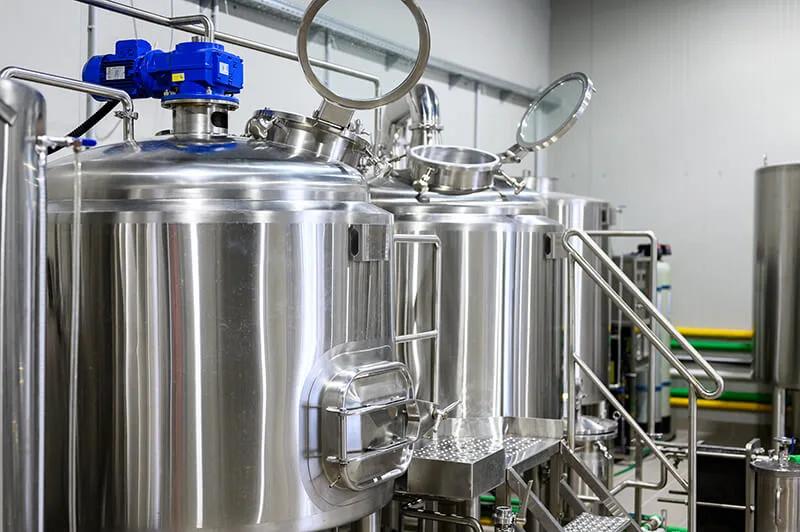
Structural Design Considerations
Vertical vs Horizontal Mixing Tanks
Vertical Mixing Tanks
Most commonly used across industries.
Vantaggi:
- Smaller footprint
- Better mixing efficiency
- Easier drainage
- Suitable for CIP systems
Horizontal Mixing Tanks
Preferred for certain high-volume or high-viscosity processes.
Vantaggi:
- Lower overall height
- Easier integration into restricted spaces
- Effective for specialized mixing applications
Single, Double, and Triple-Layer Configurations
Single-Layer Tanks
Suitable for:
- Ambient temperature storage
- Basic mixing operations
Jacketed Mixing Tanks
Provide heating or cooling capabilities.
Applicazioni:
- Fermentazione
- Chemical reactions
- Temperature-sensitive products
Triple-Layer Tanks
Include insulation layers to minimize thermal losses.
Vantaggi:
- Efficienza energetica
- Stable process temperatures
- Riduzione dei costi operativi
Jacket Design Comparison
Full Jacket
- Uniform heat transfer
- Suitable for medium-sized systems
Half-Pipe Jacket
- Higher pressure resistance
- Better thermal performance
- Common in chemical processing
Dimple Jacket
- Lightweight design
- Cost-effective manufacturing
- Excellent heat transfer efficiency
Agitator Selection: Matching Mixing Technology to Process Requirements
The agitator design often determines overall process performance.
Paddle Agitator
Ideale per:
- Low-viscosity liquids
- Blending applications
Anchor Agitator
Suitable for:
- Medium to high-viscosity materials
- Heat transfer processes
Frame Agitator
Ideal for:
- High-viscosity products
- Uniform wall scraping
Ribbon Agitator
Commonly used for:
- Extremely viscous products
- Creams and gels
Turbine Agitator
Effective for:
- Gas-liquid dispersion
- Chemical reactions
High-Shear Mixer
Preferred in:
- Cosmetics
- Pharmaceuticals
- Emulsification applications
Provides:
- Rapid particle reduction
- Stable emulsions
- Enhanced product consistency
Evolution of Sealing Technologies
Packing Seals
Vantaggi:
- Low initial cost
- Simple maintenance
Limitazioni:
- Higher leakage potential
- Frequent adjustments
Mechanical Seals
Currently the most common industrial solution.
Vantaggi:
- Excellent sealing performance
- Reduced maintenance
- Long operational life
Magnetic Drive Systems
The premium solution for critical applications.
Vantaggi:
- Zero shaft penetration
- Leak-free operation
- Ideal for sterile and hazardous environments
Applicazioni:
- Pharmaceutical manufacturing
- Biotech processing
- High-purity chemical production
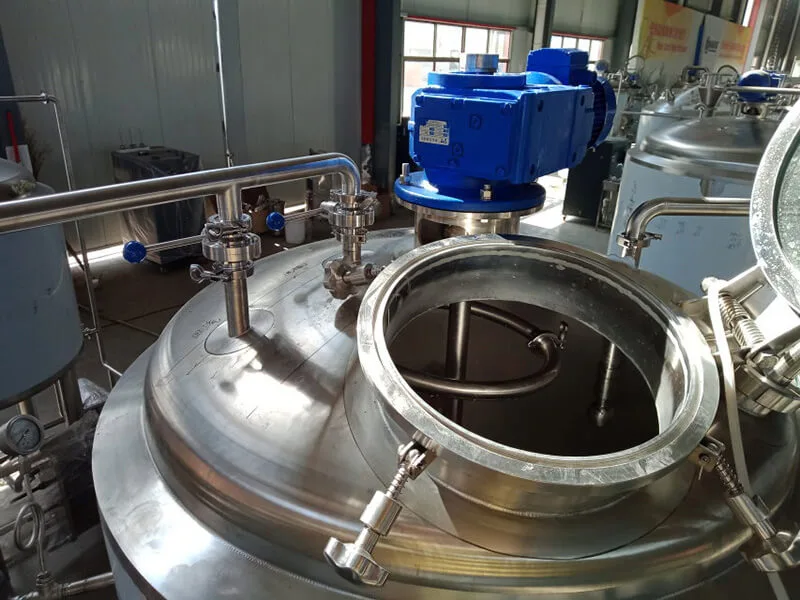
Industry Applications: From Standard Equipment to Customized Solutions
Pharmaceutical Manufacturing
Critical requirements include:
- GMP compliance
- CIP/SIP integration
- Sterile processing design
- Validation support
Food and Beverage Processing
Focus areas:
- Sanitary construction
- Easy cleaning
- Cross-contamination prevention
- FDA-compliant materials
Chemical Processing
Requirements often include:
- Corrosion resistance
- Pressure resistance
- High-temperature capability
- Explosion-proof configurations
Cosmetics and Personal Care
Key considerations:
- High-shear emulsification
- Precise temperature control
- Product consistency
- Flexible batch processing
Smart Accessories and Automation Integration
CIP/SIP Systems
Automated cleaning and sterilization systems improve:
- Hygiene standards
- Efficienza produttiva
- Validation consistency
Intelligent Sensors
Modern tanks increasingly integrate:
- Temperature sensors
- Pressure transmitters
- Level monitoring
- pH measurement
- Conductivity monitoring
PLC-Based Automation
Benefits include:
- Recipe management
- Tracciabilità dei lotti
- Process consistency
- Remote monitoring
- Reduced labor costs
Selection Framework for International Buyers
Capacity Planning
Available capacities typically range from:
- Pilot scale: 50L–500L
- Small production: 500L–5,000L
- Industrial scale: 5,000L–50,000L+
Future expansion should always be considered during initial design.
Pressure and Temperature Requirements
Typical design parameters include:
- Pressure: Atmospheric to 1.6 MPa
- Temperature: -20°C to 300°C
Special applications may require custom engineering solutions.
Compliance Requirements
Depending on market and industry, buyers may require:
- FDA Compliance
- GMP Standards
- ASME Certification
- PED Certification
- CE Marking
Selecting a supplier with international certification experience can significantly reduce project risk.
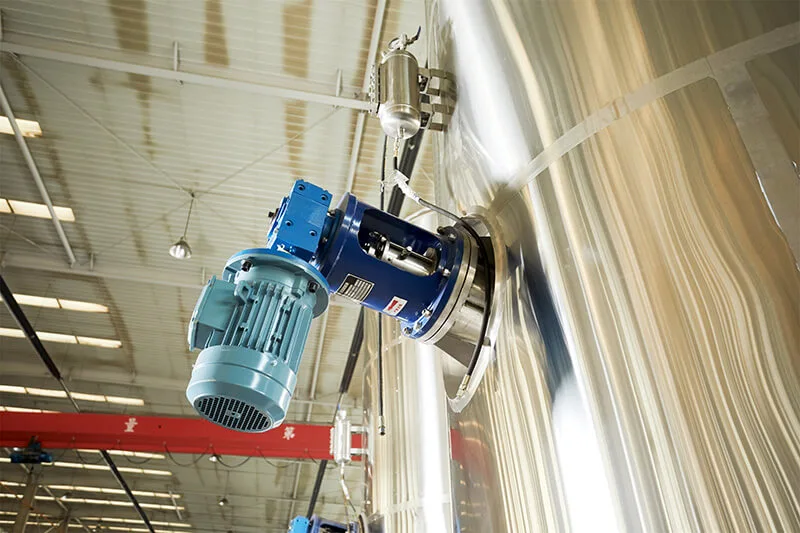
Why Global Buyers Are Increasingly Choosing Chinese Manufacturers
The global mixing tank manufacturing landscape is primarily concentrated in North America, Europe, and Asia-Pacific.
While European and North American manufacturers maintain strong reputations in premium engineering, Chinese manufacturers have emerged as highly competitive partners due to several advantages.
Competitive Pricing
Lower manufacturing costs enable substantial savings without compromising quality.
Flexible Customization
Chinese suppliers often provide:
- Tailored vessel dimensions
- Customized agitators
- Specialized automation packages
- Industry-specific configurations
Export Certification Capabilities
Leading manufacturers now routinely provide:
- ASME-certified vessels
- PED-compliant systems
- CE-certified equipment
- FDA-compatible material documentation
Faster Production Cycles
Advanced fabrication facilities allow shorter lead times compared with many traditional suppliers.
Modular Design and Rapid Delivery: A New Competitive Advantage
One of the most significant innovations among modern Chinese manufacturers is modular engineering.
Traditional process equipment often requires extensive on-site fabrication and installation. Modular systems significantly reduce project timelines by delivering pre-engineered and pre-tested equipment modules.
Benefits include:
- Faster factory construction
- Reduced installation costs
- Simplified commissioning
- Lower project risks
- Easier future expansion
For overseas buyers facing labor shortages and aggressive project schedules, modular process systems can reduce commissioning time by several weeks or even months.
Maintenance and Lifecycle Management
Daily Maintenance Best Practices
After each production cycle:
- Perform complete cleaning procedures
- Inspect agitator components
- Verify seal integrity
- Check sensor functionality
Avoid chlorine-containing cleaning chemicals whenever possible to prevent stainless steel corrosion.
Preventive Maintenance Programs
Recommended inspection items include:
- Mechanical seals
- Agitator shafts
- Bearings
- Gearboxes
- Motors
- Electrical control systems
A well-designed preventive maintenance strategy can significantly extend equipment lifespan while reducing unplanned downtime.
Future Trends Shaping the Mixing Tank Industry
Digital Manufacturing
The industry is rapidly moving toward:
- Real-time monitoring
- Industrial IoT integration
- Predictive maintenance
- Data-driven process optimization
Efficienza energetica
Future designs increasingly focus on:
- Variable frequency drives (VFDs)
- Optimized agitator geometries
- Improved thermal insulation
- Reduced energy consumption
Integrated Multi-Function Systems
Modern process vessels increasingly combine:
- Mixing
- Heating
- Raffreddamento
- Emulsification
- Homogenization
- Vacuum processing
within a single integrated platform.
Scalable Modular Production
As manufacturing facilities demand greater flexibility, modular production systems will become a key competitive advantage across global markets.
Conclusion: A Strategic Investment Beyond Equipment
Selecting a stainless steel mixing tank is no longer a simple equipment purchase. It is a strategic investment that influences product quality, operational efficiency, compliance, and future scalability.
International buyers should evaluate not only tank specifications but also engineering expertise, customization capabilities, automation integration, certification support, and lifecycle service.
The most successful projects are built around complete process solutions rather than standalone equipment. By partnering with experienced manufacturers capable of delivering customized, compliant, and future-ready systems, companies can maximize return on investment while positioning themselves for long-term growth in increasingly competitive global markets.