In the modern craft beer industry, brewery design and equipment configuration directly affect production efficiency, beer quality, and long-term operating costs. Depending on production scale and automation level, brewery systems are generally divided into three categories: manual systems, semi-automatic systems, and fully automated systems. Understanding the differences between these systems is the first step toward selecting the right brewing equipment for your brewery.
Types of Brewery Systems
Manual Brewery Systems
A manual brewery system is the most basic configuration, where nearly every operation — including grain feeding, temperature control, valve operation, and cleaning — is handled manually.
This type of system requires a relatively low initial investment, making it ideal for small craft breweries, brewpubs, pilot brewing facilities, and educational laboratories. Manual systems offer maximum flexibility, allowing brewers to adjust the brewing process based on experience and recipe requirements. However, they also rely heavily on operator skill and consistency.
Semi-Automatic Brewery Systems
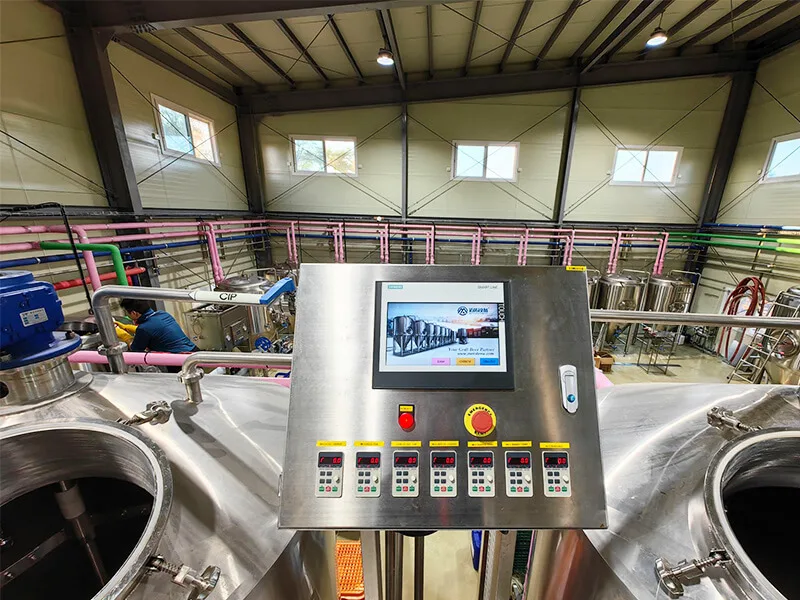
Semi-automatic brewery systems integrate selected automated functions into the brewing process. For example, mash temperatures can be maintained automatically, while pumps and valves are operated through a centralized control panel.
This setup reduces labor intensity while still allowing brewers to manually intervene when needed. Semi-automatic systems are currently the most popular choice for medium-sized craft breweries because they provide a practical balance between investment cost, operational efficiency, and brewing flexibility.
Fully Automated Brewery Systems
Fully automated brewery systems use PLC (Programmable Logic Controller) technology and industrial control software to achieve complete process automation, from brewhouse operation to fermentation management.
Brewers can preset recipes, automate mash schedules, control fermentation temperatures, and remotely monitor production data in real time. Fully automated systems are ideal for large-scale breweries focused on standardized production, high efficiency, and batch-to-batch consistency. Automation also helps minimize human error and reduce labor costs over time.
Main Components of Brewery Equipment
Regardless of the automation level, a complete brewery production line generally includes the following core equipment.
Mulino per malto
The malt mill crushes malted barley into particles of the correct size for mashing. Grinding too fine can cause lautering issues, while overly coarse grist reduces extraction efficiency. The design and adjustability of the mill directly impact mash performance and brewhouse efficiency.
Sistema di birrificazione
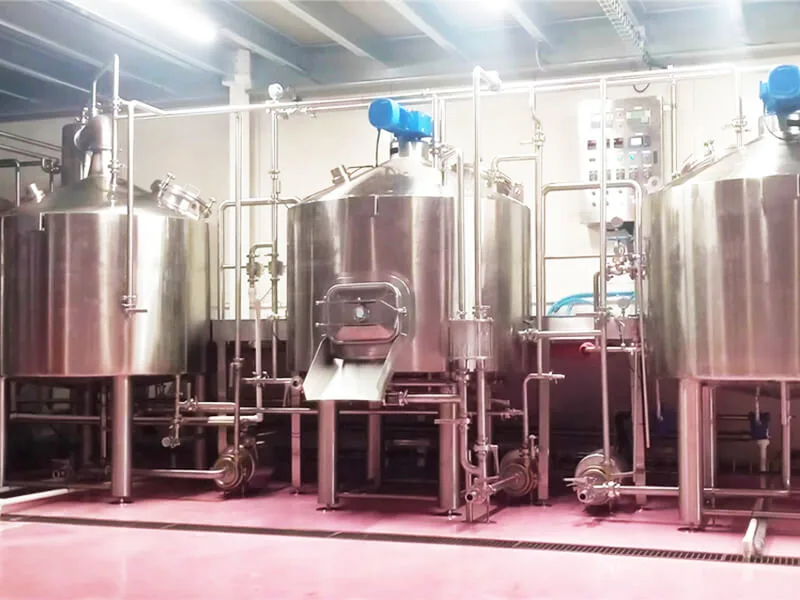
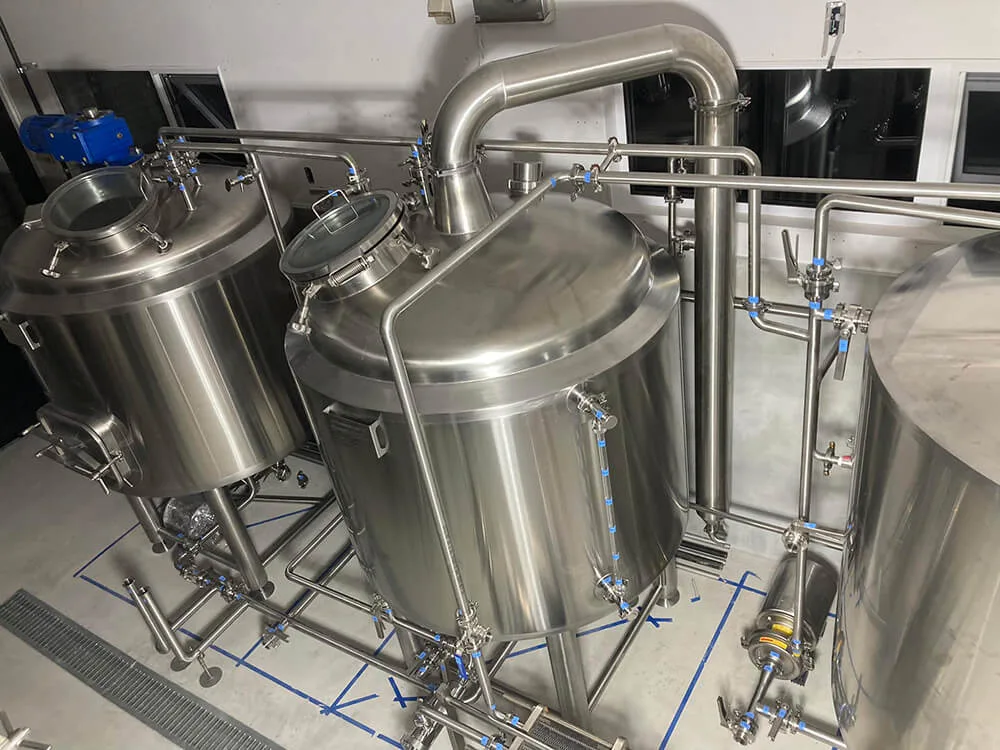
The brewhouse system includes hot-side brewing equipment such as mash tuns, lauter tuns, brew kettles, and whirlpool tanks. These vessels are often integrated into a complete brewing unit that determines batch size, brewing capacity, and beer style versatility.
Serbatoi di fermentazione
Fermentation tanks are the core cold-side equipment where wort is converted into beer through yeast fermentation. Key selection factors include tank material, cooling configuration, pressure rating, and tank volume. Stainless steel conical fermenters are the industry standard for modern breweries.
Sistema di raffreddamento
The cooling system typically consists of glycol chillers, pumps, and insulated pipelines that provide cooling media for fermentation tanks and wort cooling processes. Stable cooling performance is essential for precise fermentation temperature control and beer quality consistency.
Plate Heat Exchanger
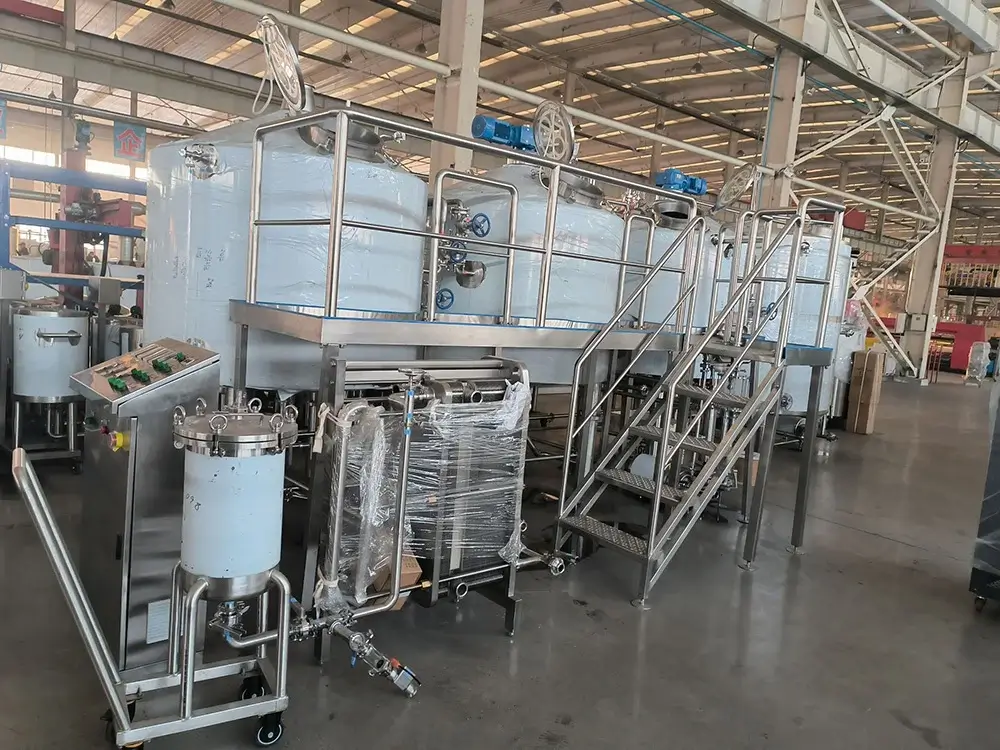
A plate heat exchanger rapidly cools hot wort to yeast pitching temperature after boiling. Heat exchanger size and plate design affect cooling efficiency, wort clarity, and cleaning convenience.
Cold Water Tank
Cold water tanks store chilled water or glycol solutions to stabilize cooling demand and reduce excessive chiller cycling. Properly designed cooling water systems improve overall energy efficiency.
Sistema CIP
CIP (Clean-in-Place) systems automatically clean the internal surfaces of brewery equipment using circulating caustic, acid, and rinse water solutions. CIP systems are essential for maintaining hygiene standards, reducing labor, and ensuring product safety in breweries of all sizes.
How to Choose the Right Brewery Equipment
Selecting brewing equipment should involve more than comparing prices. Several critical factors must be evaluated carefully.
Production Capacity
Daily output, annual production targets, and maximum batch size determine the required equipment capacity. Most breweries should allow an additional 20–30% production margin for future business growth.
Livello di automazione
The choice between manual, semi-automatic, and fully automated systems depends on labor costs, operator experience, and desired production consistency. Breweries in regions with high labor costs often benefit from higher automation levels.
Material and Manufacturing Quality
All components that contact wort or beer should be made from high-quality stainless steel such as 304 or 316L stainless steel. Interior surfaces should be properly polished to prevent microbial contamination and simplify cleaning procedures.
After-Sales Support and Spare Parts
Brewing equipment requires ongoing maintenance and periodic replacement of wear components. Choosing a supplier with reliable technical support and readily available spare parts is critical for long-term operation. Visiting existing customer installations is strongly recommended before purchasing.
5 Tips for Brewery Equipment Installation and Maintenance
1. Reserve Sufficient Installation Space
Before installation, confirm building height, floor load capacity, drainage systems, electrical supply, and water connections to avoid costly installation issues.
2. Follow Proper Commissioning Procedures
During startup, perform pressure testing on pipelines, valves, and instruments, and complete a full CIP cleaning cycle before production begins.
3. Maintain Equipment Service Records
Document cleaning schedules, gasket replacements, pump operation hours, and maintenance history to help predict equipment failures and improve preventive maintenance planning.
4. Calibrate Sensors Regularly
Temperature and pressure accuracy are critical in brewing. Even minor deviations can affect beer flavor and fermentation performance. Calibration is generally recommended every 6 to 12 months.
5. Train Brewery Operators Thoroughly
Even fully automated breweries require trained personnel who understand brewing processes, safety procedures, and emergency shutdown operations. Regular training improves operational reliability and workplace safety.
Domande frequenti
Is a Manual or Semi-Automatic System Better for a Small Craft Brewery?
If daily production is below 500 liters and labor costs are manageable, a manual system may be sufficient. However, breweries planning future expansion or improved consistency should consider semi-automatic systems.
How Can Plate Heat Exchanger Blockages Be Prevented?
Blockages are usually caused by hop residue or protein coagulation. Proper whirlpool separation, inlet filtration, immediate hot water backflushing, and regular CIP cleaning help minimize fouling.
Is a CIP System Necessary?
For breweries with frequent production schedules or larger tank volumes, CIP systems significantly reduce cleaning labor and improve sanitation consistency. Small breweries with simple setups may still use manual cleaning, provided hygiene standards are maintained.
How Many Fermentation Tanks Are Needed?
Tank quantity depends on fermentation duration and production scheduling. For example, if brewing occurs daily and fermentation lasts 14 days, at least 14 fermentation tanks are typically required to maintain continuous production, plus additional conditioning or serving tanks.
What Should Be Checked When Buying Used Brewery Equipment?
Inspect internal tank surfaces for scratches, check weld seams for corrosion, evaluate gasket condition, and test pumps and agitators for abnormal noise. Water pressure testing and CIP circulation testing are also recommended.
Choosing the right brewery system and maintaining it properly are essential for producing high-quality beer consistently. Before investing, brewery owners should consult experienced brewers, visit operating breweries, and seek professional brewing equipment advice when necessary.
Avete domande sul vostro progetto di attrezzatura per birreria? È possibile diteci le vostre esigenze per il birrificio e vi forniremo una soluzione "chiavi in mano" entro 24 ore.