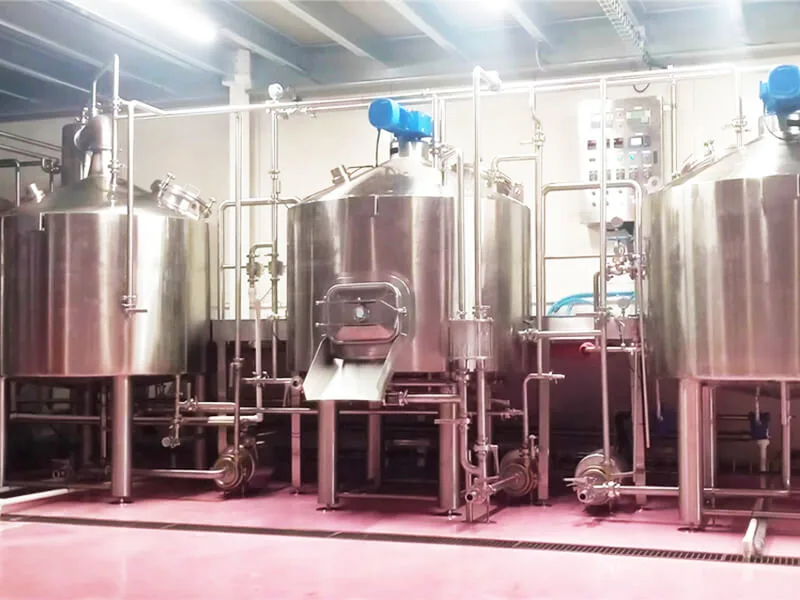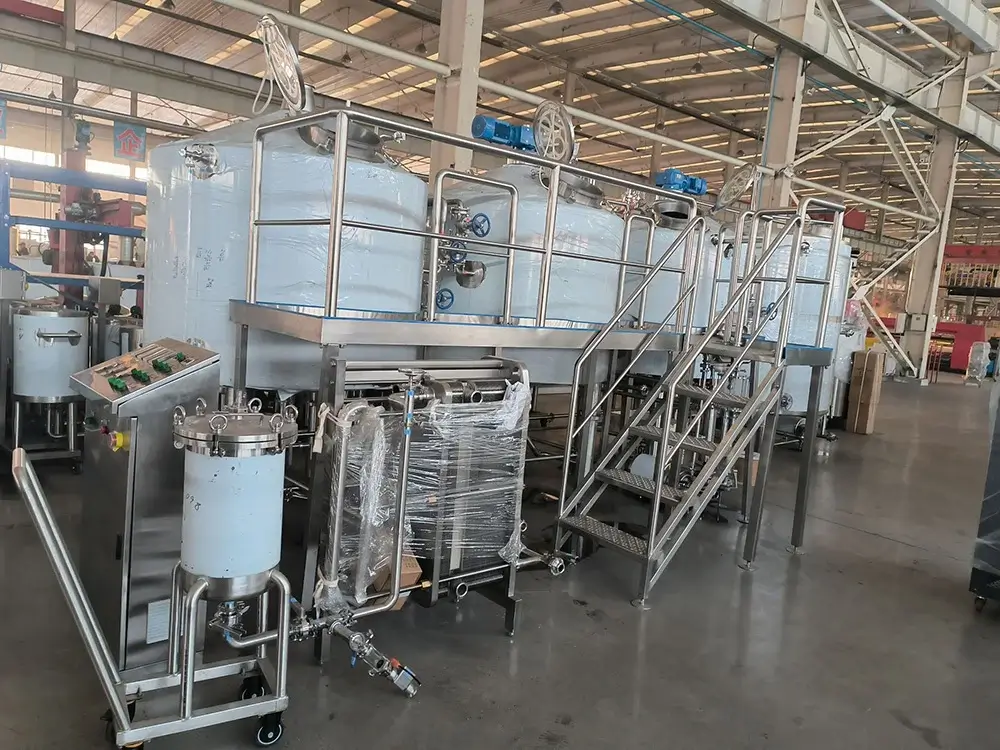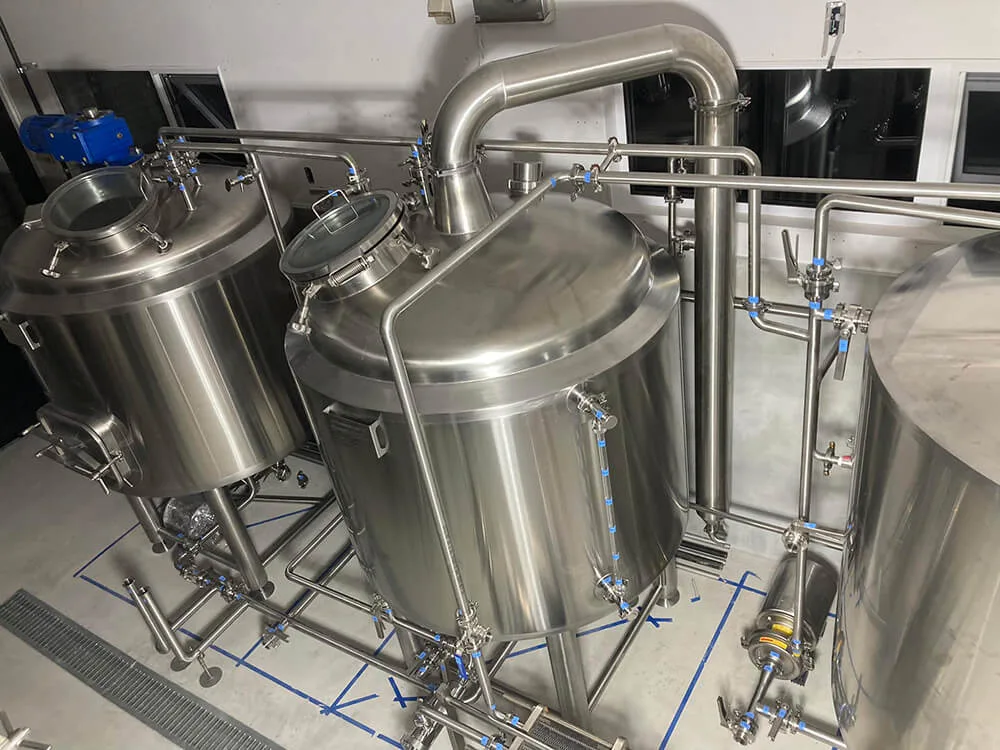
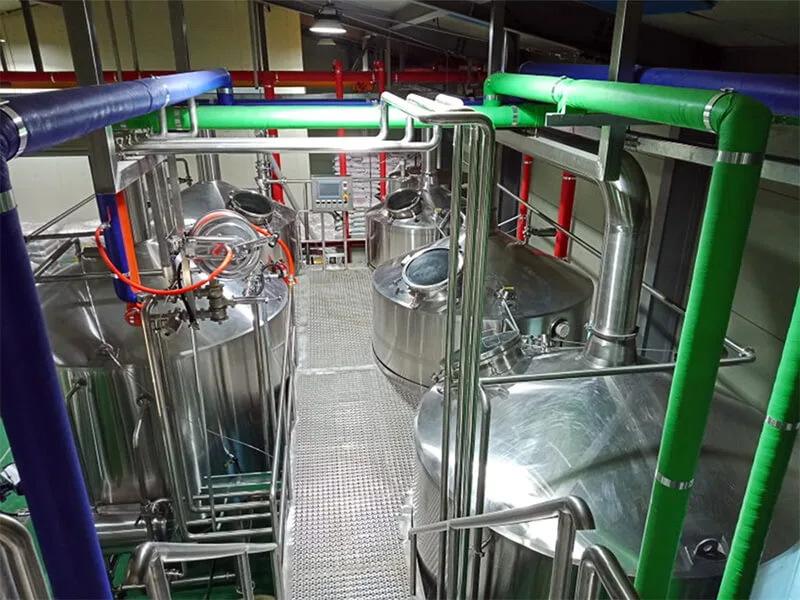
In the world of craft beer, a brilliant recipe is nothing without the vessel that brings it to life. It’s the commercial brewing system—that intricate network of tanks, pipes, valves, and sensors—that transforms simple wort into a shelf-stable, flawlessly flavored, and consistent product. Whether you’re sketching out a 500L nano-brewery or scaling a 50,000L regional powerhouse, understanding the engineering logic behind your equipment directly determines your beer’s quality and your operation’s bottom line.
Let’s move beyond the basic equipment checklist and dive deep into the four pillars of modern brewery design: core system architecture, process-driven flexibility, intelligent automation, and sustainable operations.
1. Core System Architecture & Technological Evolution: From Kettle to Precision Bioreactor
The evolution of modern brewing systems is fundamentally a pursuit of unwavering consistency and uncompromising sanitation.
The Brewhouse: Balancing Batch Artistry with Continuous Efficiency
While over 99% of craft breweries swear by batch mashing for its recipe flexibility, continuous mashing technology is seeing a quiet renaissance in large regional breweries. Why? It slashes energy consumption by 20-30% and drastically reduces the footprint and handling time of spent grain.
When it comes to materials and heating, the choices are no longer about just “what fits the budget”:
- Material Science: 304 stainless steel is the standard. But if your brand DNA involves sour beers or you’re dealing with high-chloride water profiles, the corrosion-resistant 316L stainless steel isn’t a luxury—it’s an insurance policy against pitting and premature equipment death.
- Heat Source Dynamics: In systems under 2,000L, the layout of electric heating elements is critical; poor design leads to localized scorching of wort. Large-scale brewing, however, almost mandates steam heating, where the true engineering challenge lies in designing a condensate recovery system to capture and reuse latent heat.
- The Control Brain: The leap from manual valves to PLC-driven automation isn’t about reducing manpower—it’s about shrinking the “batch-to-batch deviation delta.” Consistent temperature ramp rates and precise rest timings are the engineering bedrock of brand trust.
Fermentation & Conditioning: Uni-tank Dominance and the Invisible Temperature War
The Uni-tank (Unitank) has conquered the industry for a reason: it consolidates primary fermentation, diacetyl rest, cold crashing, and conditioning in a single vessel, dramatically slashing transfer-related labor and infection risks.
However, the unsung hero determining your yeast’s performance is a brilliantly designed Glycol Chilling System:
- Precision Philosophy: A temperature control accuracy of ±0.5°C isn’t an overkill spec; it’s the difference between a crisp, clean lager and a fruity, expressive Hazy IPA ester profile.
- Jacket Engineering: Segmented cooling jackets on the cone and body aren’t just for fermentation control. Their primary late-batch function is to drive rapid yeast sedimentation during cold crashing, achieving physical clarification without excessive fining agents.
Equally critical is the CIP (Clean-in-Place) system—the literal lifeblood of the brewery. Designing a brewhouse without a logical CIP return loop is catastrophic. Modern CIP theory hinges on mechanical action: achieving turbulent flow (minimum velocity of 1.5–2.0 m/s) through centrifugal pumps, combining chemistry (caustic/acid) and heat to strip biofilms from surfaces unreachable by human hands.
The Holy Trinity of Underestimated Utilities: Water, Yeast & CO₂
- Liquor Treatment: Beer is over 90% water. A comprehensive system of RO filtration, activated carbon dechlorination, and mineral salt dosing isn’t an overhead cost—it’s the anchor of flavor reproducibility from brew to brew.
- Spent Yeast Handling: Viable excess yeast is a profit center; dumped yeast is a massive wastewater BOD (Biochemical Oxygen Demand) fine waiting to happen. Integrated yeast storage and recovery systems, feeding into animal feed or biogas, turn a waste problem into a by-product revenue stream.
- CO₂ Recovery: Fermenters exhale extremely pure CO₂. A dedicated CO₂ recovery system—comprising a foam trap, balloon, scrubber, compressor, and liquefier—requires significant CAPEX. Yet, amid volatile CO₂ market prices and supply chain shocks, it pays for itself by insulating you from shortages while drastically lowering your brewery’s carbon footprint.
2. Process Flexibility & Portfolio Diversity: Using Hardware to Fuel Creativity
The allure of craft is diversity, but rigid equipment design strangles an innovative brewer’s imagination.
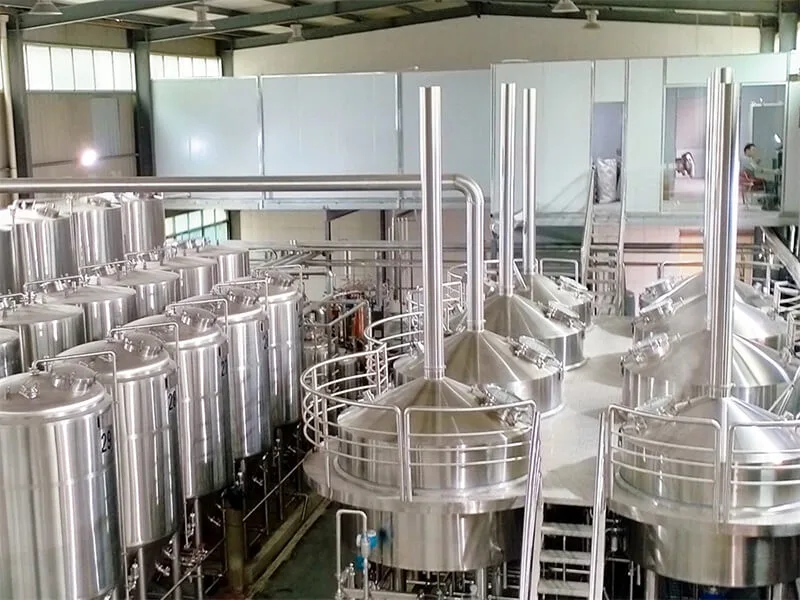
Engineering for Complexity: Sours, Wood, and Hops
If your roadmap includes kettle sours, barrel-aging, or heavy dry-hopping, your system needs “redundancy” from Day One:
- The Wild Isolation Mandate: Wild yeast and bacteria (Brettanomyces, Lactobacillus) are formidable invaders. You must design dedicated, physically isolated piping runs, valve clusters (down to the gaskets), and filler heads for any “wild” program. While open fermentation vessels are romantic for specific styles, most modern breweries opt for controlled, closed Uni-tanks inoculated with lab-propagated specialty cultures to prevent environmental cross-contamination.
- The Hop Creep Battle: Massive dry-hopping is a modern IPA requirement, not a fad. Your fermenters need top ports designed for purging with CO₂ during hop addition to defeat the arch-nemesis: dissolved oxygen. Meanwhile, an expertly engineered whirlpool vessel must efficiently separate hop trub and hot break; otherwise, you’re in for a painful, slow knockout and significant yield loss.
Scaling Smart: Modularity & the Brewing Intensity Metric
Scaling from a 5HL nano system to a 500HL regional beast isn’t linear.
- Brewing Intensity: This is the true efficiency metric, typically measured in BBLs per vessel per year. High intensity isn’t just about vessel size; it’s about faster fermentation profiles, rapid CIP cycles, and tight production scheduling that extracts maximum annual output from every cubic meter of tank space.
- The Modular Strategy: Smart operators invest in modular brewhouse platforms. You can start with a 2-vessel system but leave physical space and pre-welded manifold connections for a future 3rd or 4th vessel. This allows you to double brews-per-day capacity without ripping out the concrete floor or stopping production—a phased investment that protects your initial outlay.
3. Automation, Digitalization & the Smart Brewery
The holy grail of brewery automation isn’t a dark, operator-less floor; it’s total predictability.
Modern commercial systems are transitioning from isolated PLCs to full-facility SCADA (Supervisory Control and Data Acquisition) ecosystems. In this reality:
- Mash temperature profiles, sparge cycles, pressure fermentation ramps, and crash-cooling rates run automatically via secure recipes, visualized with real-time trending dashboards.
- In-line sensors for dissolved oxygen, pH, and conductivity provide dynamic, closed-loop quality control, not just post-packaging forensic reports.
- The frontier is Digital Twin technology: importing a new grain bill into a virtual replica of your brewhouse, simulating the heat load and viscosity curves to predict pump cavitation, then executing the optimized profile on the real asset. This slashes R&D grain waste and protects your physical kit.
4. Sustainability & Operational Efficiency: Green Logic is Profit Logic
Environmental stewardship in brewing is, very bluntly, just good business. Energy, heat, and water are a brewery’s largest variable operating costs.
Thermal Energy Recovery: The Hot-Cold Balancing Act
Post-boil, you need to chill wort from near-boiling to pitching temperature instantly. This “waste heat” is liquid gold. A well-sized plate heat exchanger captures this thermal energy, heating fresh cold water up to ~85°C for storage in an insulated Serbatoio di liquido caldo. This reclaimed hot water then serves as pre-heated strike water for the next mash or supplies the CIP system. A polished energy-recovery loop routinely shaves over 30% off the brewhouse’s direct thermal energy demand.
Water Use Ratio: The Brutal Efficiency Scoreboard
Elite brewery benchmarks hover around a water use ratio of 3.5:1 (H₂O/bbl) , but many startups bleed water at 8:1 or worse. Optimization strategies focus on:
- Segmented CIP Recovery: Capturing final rinse water for the subsequent cycle’s pre-rinse.
- Eliminating Open-Flow Cleaning: Moving to dry-lube conveyors and pneumatic bottle transport.
- Non-Product Water Sourcing: Using harvested rainwater or reclaimed process water for evaporative condensers.
On-Site Renewables: From Geek-Toy to ROI Engine
Rooftop photovoltaic solar arrays are becoming a standard spec for new builds, powering electric boilers or facility HVAC. Meanwhile, diverting high-BOD wastewater and yeast slurry into an anaerobic digester to generate biogas—and then burning that biogas in a micro-turbine or dual-fuel steam boiler—represents the pinnacle of circular economy thinking: transforming a costly disposal problem into on-site, baseload clean energy.
Conclusione:
A commercial brewing system is a beautiful coupling point of art and science. It is no longer simply an arrangement of stainless steel containers. It is a precision manufacturing platform that integrates thermodynamics, microbiology, control systems, and ecological economics. Whether your next goal is unlocking a transcendent hop aroma in your flagship Hazy IPA or simply slashing your water bill by 20%, a profound understanding of your equipment’s deep engineering logic is the true starting point for brewing great beer, sustainably and profitably.
Internal Linking Suggestions:
- Link to: “The Complete Guide to Brewery Startup Costs & Equipment Budgeting”
- Link to: “Troubleshooting Your CIP System: A Step-by-Step SOP”
Call to Action: Planning a new facility or upgrading your existing brewhouse? Partner with engineering experts who speak the language of both brewers and process designers to build your precision platform.
È possibile diteci le vostre esigenze per il birrificio e vi forniremo una soluzione "chiavi in mano" entro 24 ore.