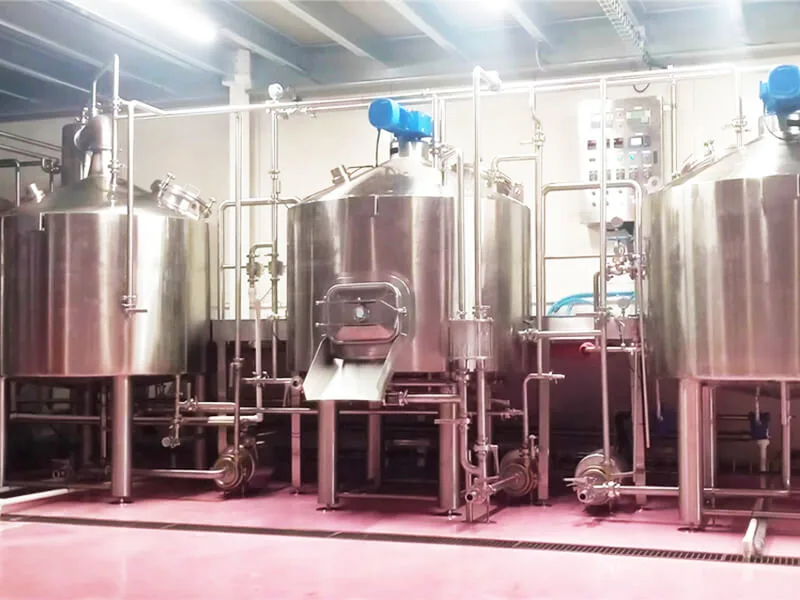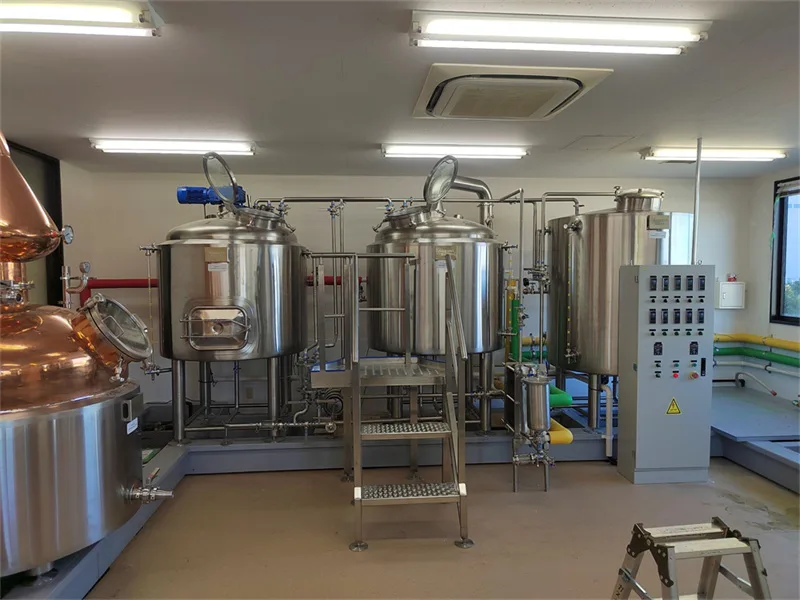
When brewhouse scheduling falls apart or unpredictable fermentation throws off your taproom supply, margins tighten fast. The solution is not simply a collection of tanks—it is an integrated production platform that guides your team through every phase with clear, repeatable procedures. As a brewery equipment manufacturer, we design systems that reduce variability, cut unnecessary handling, and let your brewers focus on recipe development rather than firefighting.
A commercial brewing system coordinates milling, mashing, wort separation, boiling, chilling, fermentation, conditioning, and packaging into a continuous workflow. The brewhouse forms the hot side; cellar tanks, glycol distribution, and transfer paths form the cold side. Getting the engineering right at each interface—vessel geometry, port placement, heating method, pump sizing, and control logic—determines whether your operation runs smoothly or struggles with daily bottlenecks.
Brewhouse Configuration and Process Flow: From Grain Intake to Wort Cooling
The brewhouse anchors production. A typical setup combines a mash-lauter vessel (or separate mash tun and lauter tun), a whirlpool kettle, sanitary spool pieces, a correctly sized centrifugal pump, and a control panel with dedicated temperature and flow readouts. On the cold side, you add jacketed fermenters (unitanks or dedicated conical fermenters), a brite tank, a glycol chiller with properly insulated supply and return lines, and a plate-and-frame heat exchanger matched to your batch volume and cooling water temperature.
Process engineering starts with facility layout: floor drains with adequate slope, ventilation hoods over the kettle, clearance for manway access, and pathways that keep hot and cold zones separate. We map every valve and instrument to a height that an operator can reach without stretching or climbing. This is not aesthetic preference—it is deliberate ergonomic design that reduces fatigue and misreading during a 10-hour brew day.
| Process Step | Core Equipment | Engineering Consideration |
|---|---|---|
| Fresatura | Two-roller mill with gap adjustment | Uniform particle size distribution; husk preservation for filtration |
| Mashing/Lautering | Mash-lauter tun or separate vessels | Recirculation flow rate; raking mechanism; false bottom slot width |
| Wort Boiling | Kettle with steam jacket or electric elements | Evaporation rate; hot break formation; whirlpool geometry |
| Chilling | Plate-and-frame heat exchanger | Cooling capacity; single-stage vs two-stage; oxygen pickup prevention |
| Fermentazione | Jacketed conical or unitank | Aspect ratio; cooling jacket zoning; pressure rating |
| Conditioning | Brite tank | Carbonation stone placement; sample valve location |
Field data from operating breweries show that ergonomic brewhouse layouts reduce operator errors by approximately 40 percent during peak shifts. Simple measures—numbered ports, color-coded hose connections, and a single HMI screen with alarm prioritization—make training faster and reduce the chance that a new hire misroutes a transfer.
Sizing the System: 3.5 BBL Versus 5 BBL and Capacity Planning
Capacity planning directly affects labor scheduling, cold storage load, and inventory turnover. The choice between a 3.5-barrel and a 5-barrel brewhouse depends on taproom demand, distribution commitments, and the number of fermentation vessels you can fit in your cellar.
| Planning Factor | 3.5 BBL System | 5 BBL System |
|---|---|---|
| Finished beer per turn | Approximately 1,100 pints | Approximately 1,550 pints |
| Weekly turns with one brewer | 3 batches typical | 2 batches typical |
| Recommended cellar vessels | 3 to 4 fermenters | 3 fermenters plus larger brite |
| Floor space requirement | Più basso | Più alto |
| Best application | Pilot batches, small taprooms | Taproom with limited distribution |
Practical engineering tip: size your cold side before you upsize your brewhouse. A 5-barrel kettle is useless if your fermenter capacity queues batches for three extra days. For lager-heavy schedules, allocate additional unitanks for extended conditioning. For IPA production with dry-hopping, factor in tank downtime for hop contact and sediment settling. Leave spare ports on your vessels for future additions—carb stones, sample coolers, or auxiliary thermowells—because welding a ferrule onto an installed tank is always more expensive than capping a port during fabrication.
Kettle Heating: Steam Versus Electric for Wort Boiling
Heating method influences capital cost, installation complexity, and ramp rate. Steam-jacketed kettles deliver rapid temperature increases and uniform heat distribution across the vessel wall, which promotes consistent evaporation and hot break formation. Electric elements offer simpler installation in urban buildings where boiler permits and flue paths create regulatory hurdles.
| Heating Type | Engineering Strengths | Operational Watchpoints |
|---|---|---|
| Steam jacket | Fast step ramps; even heat transfer; no scorching | Boiler sizing; condensate return; annual inspection |
| Electric immersion | Lower install cost; no boiler required | Panel amperage; element scaling; cleaning access |
Whichever heating method you choose, insulate all hot liquor and wort transfer lines to reduce energy loss and maintain stable temperatures between process steps. For electric systems, specify low-watt-density elements to minimize caramelization and simplify CIP removal of baked-on residues.
Cold-Side Vessel Selection: Conical Fermenter Versus Unitank
Vessel geometry directly affects yeast management, sediment removal, and carbonation efficiency. A conical fermenter allows yeast cropping from the cone tip and trub dumping without opening the vessel—two operations that save hours over a flat-bottom tank. A unitank serves double duty as both fermenter and serving tank, which reduces oxygen exposure during transfer and cuts the vessel count for small operations.
Key engineering details: jacket zoning on a fermenter should cover the cone, the lower cylindrical section, and the upper wall to maintain uniform temperature throughout the active fermentation period. Sample valves at two heights—mid-cone and lower cylinder—give you representative samples without disturbing the yeast bed. PRV set pressure should match your fermentation schedule: higher for spunding, lower for atmospheric ales.
Controls and CIP Engineering: Designing for Cleanability
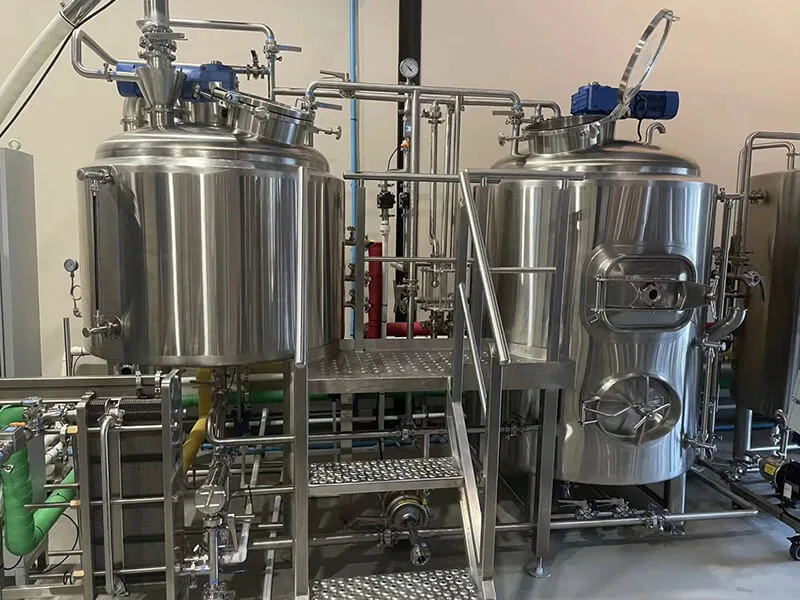
Cleaning accounts for a significant portion of brewery labor. A poorly designed CIP circuit extends downtime by 90 minutes per vessel and increases chemical consumption by 25 percent. We specify spray-ball coverage verified by riboflavin testing during commissioning, drain slopes of at least 2 percent, and return pump sizing that maintains turbulent flow in all circuit branches.
| CIP Component | Specifiche | Verification Method |
|---|---|---|
| Spray ball | 360-degree coverage; flow rate matched to vessel diameter | Riboflavin UV test |
| Drain connection | 2 percent slope; no dead legs | Visual and dye test |
| Return pump | 10 to 15 feet of head above vessel | Flow meter reading |
| Gasket material | EPDM or silicone; brewery-grade | Replacement schedule log |
Standardize gaskets, clamps, and fitting sizes across every skid. Use a single tri-clamp size for all product-contact connections so that a single spare kit covers your entire facility. Label shelving for PRV springs, thermowells, and sample valves so that operators find parts without searching during caustic cycles.
Milling and Mash Filtration: Protecting Extract Efficiency
The grain mill determines extract yield and lauter performance. A two-roller mill with micrometer gap adjustment produces a consistent crush that preserves husk integrity for filtration while exposing endosperm for enzymatic conversion. Teach your operators to check crush visually every 15 minutes during milling—the appearance of flour content and husk fragmentation tells you whether the gap has drifted.
Mash recirculation requires careful flow management. Too fast, and you compact the grain bed; too slow, and you lose temperature stability. We recommend a variable-frequency drive on the mash recirculation pump so that operators can adjust flow in real time based on differential pressure across the bed. A well-designed raking mechanism with adjustable depth helps maintain uniform extraction without channeling.
Heat Exchanger and Brite Tank: Protecting Flavor Through Transfer
The heat exchanger is the final hot-side component and the first cold-side interface. Sizing must account for your groundwater temperature and desired pitch temperature—a single-stage exchanger works for cool climates, but two-stage units with a glycol intermediate loop are necessary where summer groundwater exceeds 18°C.
| Checkpoint | Purpose | Frequency |
|---|---|---|
| Pitch temperature match | Prevent ester imbalances | Every batch |
| Dissolved oxygen after chilling | Monitor oxidative stability | Weekly |
| PRV and gauge calibration | Safety compliance | Monthly |
| Gasket condition on plate pack | Prevent leaks and contamination | Each CIP cycle |
A brite tank that matches your serving demand buffers the cellar so that the brewhouse can continue producing while packaging occurs. Position the carbonation stone at the cone-to-cylinder junction for efficient CO₂ diffusion. Place the sample port at a height that allows easy access without bending or reaching over the tank top.
Fittings, Spares, and Inventory Engineering
Downtime is expensive, especially when your taproom is full and the local distributor is waiting for a delivery. A standardized spare parts inventory reduces repair time from hours to minutes. Maintain labeled bins for clamps, gaskets, thermowells, PRV components, tri-clamp tees, and hose end connections. Build a swap box with one complete set of gaskets for each vessel size and one backup temperature probe and pressure transducer.
| Spare Component | Quantity Recommended | Storage Location |
|---|---|---|
| Gasket kits | Two per vessel size | Labeled shelf bins |
| Clamps | Three per size used | Near gaskets |
| PRV springs | One per pressure rating | Marked container |
| Thermowell and probe | One spare for each type | Electrical cabinet |
| Sight glass gaskets | Five per size | Small-parts drawer |
Standardization across fittings also simplifies ordering. When every connection uses the same tri-clamp size, you reduce the number of SKUs to track and lower the chance that a missing adapter stops production.
Skid-Mounted Systems and Operational Documentation
A skid-mounted brewhouse integrates piping, pumps, controls, and safety valves onto a single frame. This approach reduces field installation time, minimizes mismatched components, and ensures that all connections are tested at the factory before shipment. For new facilities, a single HMI screen with a prioritized alarm list shortens the learning curve and allows operators to focus on process variables rather than navigating menus.
Standard operating procedures should live alongside each skid—laminated, waterproof, and attached to the control panel. Include startup sequences, shutdown steps, CIP chemical concentrations, and troubleshooting flowcharts for common events: stuck mash, low flow through the heat exchanger, and pressure buildup in the fermenter.
Stainless Fabrication and Material Selection: Engineering for Durability
Material specification affects cleanability, corrosion resistance, and equipment lifespan. We specify 304 stainless for non-product surfaces and 316L for all wort and beer contact areas. Interior welds are ground to a 0.8-micron finish—not for appearance, but to eliminate crevices where microorganisms or chemical residues can hide.
| Material Feature | Operational Benefit |
|---|---|
| 316L product contact | Corrosion resistance from acidic wort and CIP chemicals |
| 0.8-micron weld finish | Faster rinsing; reduced biofilm growth |
| Numbered ports with engraved labels | Shorter training and fewer misconnections |
| Handles at waist height | Safer manual valve operation |
| Future port caps | Low-cost capacity for hop dosers or carb stones |
Fabrication drawings should include every weld joint, fitting, and instrument location. These drawings become your maintenance reference and simplify troubleshooting when you add new equipment later. A single set of as-built drawings saves hours of guesswork during repairs.
Scaling From Pilot to Production: A Practical Example
A regional taproom group planned to increase lager production without adding a second shift. We supplied a compact turnkey skid with a steam-jacketed kettle, parallel fermenter arrangement, and posted SOPs for each step. The brewer could mill and mash on Monday morning, achieve target gravity by Wednesday afternoon, and package by Friday morning. Output per brew cycle increased by 22 percent, and the documented process reduced training time for new hires from four weeks to two.
This result came from deliberate engineering choices: vessel sizing matched the cooling system capacity, jacket coverage was verified before shipment, and control settings were pre-tuned to the facility’s water chemistry. The system did not require custom programming or extended commissioning—the team brewed their first batch within two days of installation.
Investment Priorities: What to Purchase First and What to Add Later
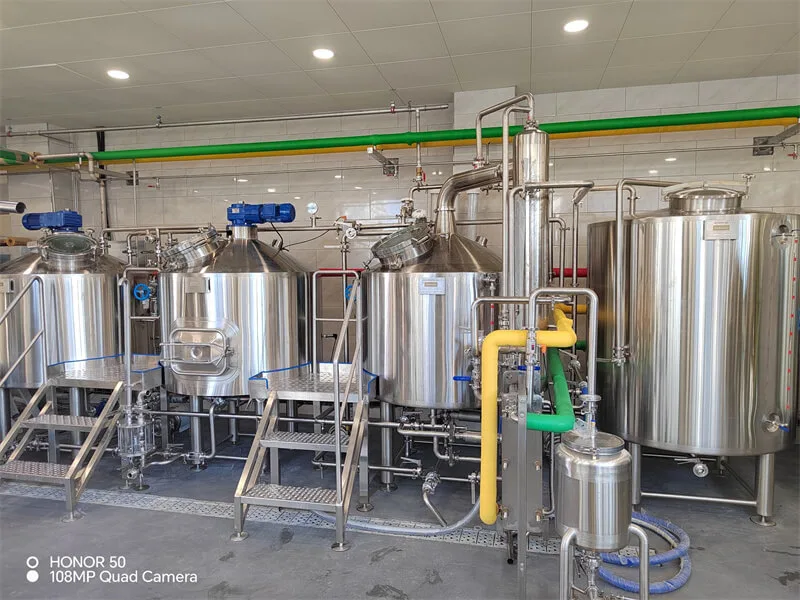
Start with a two-vessel or three-vessel brewhouse, jacketed cellar tanks, and a control system that monitors temperature and pressure. Add a second racking arm for dry-hopping when your IPA production increases. Install a carb stone when you begin packaging in kegs or cans. For facilities planning distribution, allocate budget for a small canning line after draft sales stabilize.
Long-term value comes from durable fabrication: welded frames, sanitary polish, and ports positioned for easy operation. These features reduce daily cleaning time and extend equipment life beyond 20 years with proper maintenance. When you invest in fabrication quality, every brew day becomes more predictable and less physically demanding for your team.
Domande frequenti
What defines a complete brewhouse for a microbrewery?
A full brewhouse includes mash-lauter capability, a whirlpool kettle, sanitary piping, a hot-side pump, and a control panel. The cold side consists of jacketed fermenters or unitanks, a brite tank, a glycol chiller, and a heat exchanger sized to the batch volume. Together, these form an integrated production system from grain to package-ready beer.
Is a conical fermenter necessary at startup?
Yes. Conical geometry allows yeast cropping and sediment dumping without opening the tank. This reduces transfer time, improves clarity, and simplifies operator training. The ability to harvest healthy yeast for repitching also reduces ingredient costs over time.
Can electric heating keep up with production demands?
Electric systems work well for small batch counts and limited floor space. For breweries running multiple turns per day or step-mash schedules, steam jackets provide faster ramp rates and more uniform heating. We evaluate utility availability and brewing schedule to recommend the appropriate heating method for each facility.
Where should I start with spare parts inventory?
Standardize all gaskets and fittings across every vessel. Stock clamps, sensors, PRV springs, and thermowells in labeled bins. Include one complete gasket set per vessel and one backup temperature probe. A modest spare parts inventory prevents extended downtime during peak production periods.
How do I reduce cleaning time without compromising hygiene?
Design for full CIP coverage with verified spray-ball performance. Label all hoses and ports so that operators make correct connections quickly. Post detailed SOPs next to each vessel and conduct regular training on chemical concentrations and recirculation times. Consistent procedure reduces cleaning time and chemical use while maintaining microbiological safety.
Summary: Engineering for Consistent Production
- Plan the entire flow path from mill to packaging before ordering equipment; eliminate backtracking and unnecessary handling.
- Size hot-side and cold-side capacity together; add fermentation volume before increasing kettle BTU input.
- Use jacketed vessels and accessible instruments to protect both product quality and operator safety.
- Standardize fittings and maintain a well-organized spare parts shelf for quick repairs.
- Design CIP circuits with verified spray coverage and adequate drain slopes to minimize cleaning labor.
- Specify stainless steel finishes that facilitate rapid rinsing and resist corrosion over decades of use.
- Keep SOPs visible and up to date; clear procedures raise output and protect batch-to-batch consistency.
As a brewery equipment manufacturer, our role extends beyond supplying vessels and skids. We provide fabrication engineering, installation support, spare parts availability, and documentation that keeps your production team running efficiently. From pilot systems to full-scale brewhouses, our design approach prioritizes operator usability, cleanability, and long-term durability—because the best equipment is the equipment that stays out of your way while you brew.
Feel free to contact our engineering team for professional technical guidance, customized equipment solutions, and in-depth distillery setup knowledge tailored to your project.