De nombreux brasseurs amateurs et nouveaux propriétaires de brasseries ont fait cette expérience : même avec un malt et un houblon de haute qualité et un brassage soigneux, la bière a toujours un goût plat, oxydé ou des arômes désagréables.
Le problème réside souvent dans la cuve de fermentation, un équipement qui peut sembler n'être qu'un simple "récipient". En réalité, la cuve de fermentation est l'endroit où la levure travaille, et elle affecte directement le développement de la saveur de votre bière. Aujourd'hui, nous allons présenter les trois types de cuves de fermentation les plus courants - verticale, horizontale et à toit ouvert - en termes simples pour vous aider à choisir celle qui répond le mieux à vos besoins.
Core Function of a Fermentation Tank: Creating the Right Environment for Yeast
Before choosing a tank, it’s important to understand its main role: to provide a stable environment for yeast growth and allow brewers to control the fermentation process effectively.
Yeast is very sensitive to changes. Temperature swings, pressure shifts, or contamination by unwanted microbes can all negatively impact the final beer’s flavor and quality. Therefore, a good stainless steel fermentation tank should offer:
- Temperature control: Maintain consistent fermentation temperatures
- Sealing: Prevent oxygen and contaminants from entering
- Easy operation and cleaning: Simple to sanitize, fill, empty, and maintain
With these basics in mind, let’s compare the three common tank types.
Detailed Comparison of Three Tank Types
1. Vertical Fermentation Tank
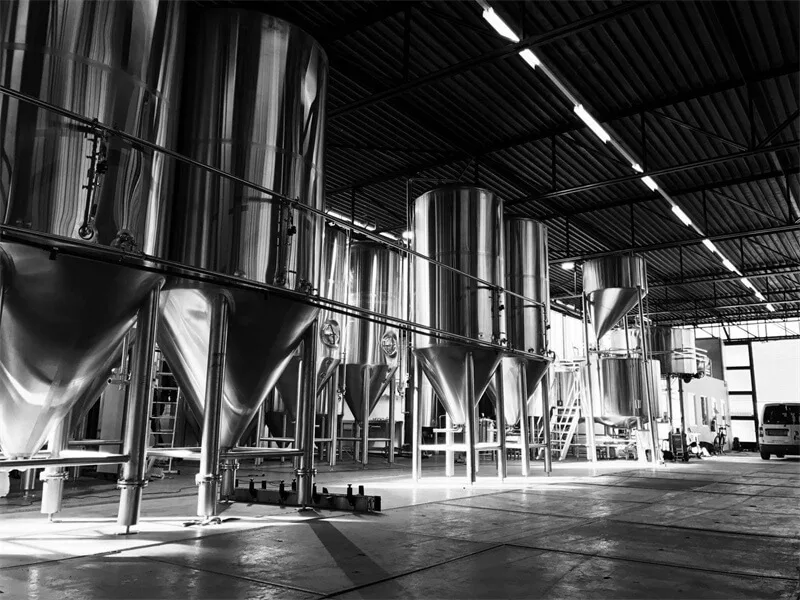
This is the most common type. It’s taller than it is wide, with a slim, upright shape.
Caractéristiques principales :
- Space-saving: Uses vertical space efficiently; great for limited floor areas
- Precise temperature control: Often comes with multi-zone cooling jackets for accurate temperature management
- High hygiene standards: Fully sealed design; can include CIP (Clean-in-Place) systems to reduce contamination risk
- Pressure control: Supports pressurized fermentation and natural carbonation
Best For:
- Users: Homebrewers, small brewpubs, and commercial breweries
- Beer Styles: Lagers, IPAs, Stouts, Wheat beers, and other mainstream styles
Note: Requires sufficient ceiling height. Larger models may need a working platform.
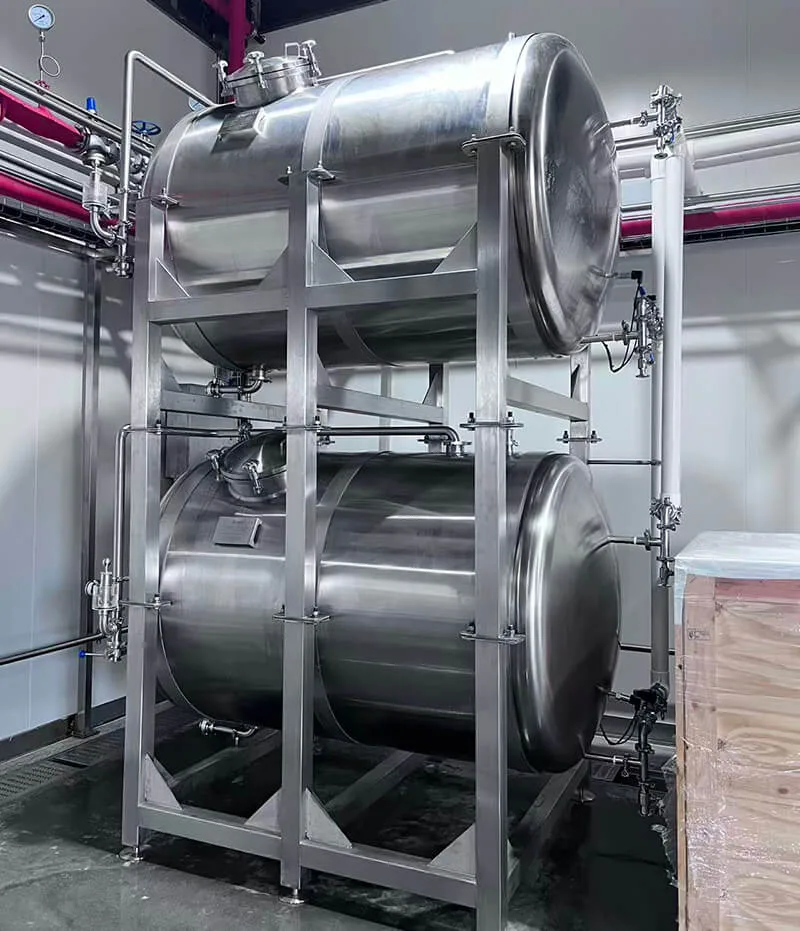
2. Horizontal Fermentation Tank
This tank lies on its side, with a diameter larger than its length.
Caractéristiques principales :
- Large capacity per tank: Can hold dozens of tons, reducing the total number of tanks needed
- Easy access: Low height allows gravity-fed filling and draining
- Great for clarification: Large surface area helps sediment settle, ideal for lagering and conditioning
Best For:
- Users: Medium to large commercial breweries focused on batch production
- Common Use: Also used as bright beer tanks for storing finished beer
Note: Takes up more floor space. Temperature uniformity needs careful design. Cleaning dead zones at the bottom must be addressed.
3. Open Top Fermentation Tank
A traditional design where the top of the tank is open to the air.
Caractéristiques principales :
- Unique flavors: Allows contact with ambient microbes, creating complex, traditional profiles
- Simple structure: No pressure system; lower equipment cost
- Easy observation: Brewers can directly watch fermentation activity
Best For:
- Users: Experimental brewers or breweries making traditional styles
- Beer Styles: Belgian ales, some sour beers, and other heritage varieties
Limites :
- High contamination risk: Open design invites unwanted bacteria and wild yeast
- Oxidation risk: Exposure to air can cause stale or cardboard-like flavors
- No pressure control: Cannot support pressurized fermentation or natural carbonation
Selection Guide: Which Tank Is Right for You?
- Need consistent production of standard beer styles, with easy operation and space efficiency?
→ Choose a vertical stainless steel fermentation tank - Already have a larger operation, need high-capacity tanks, and have ample floor space?
→ Consider a horizontal stainless steel fermentation tank - Want to explore traditional methods and produce unique styles, and can manage higher risks?
→ An open top fermentation tank may work—but only if your environment is clean and controlled
What type of fermentation tank are you currently using? Or what challenges are you facing in choosing the right one? Feel free to share your thoughts!
If you are planning or upgrading your line, contact the Meto team to visit and start your craft beer journey!