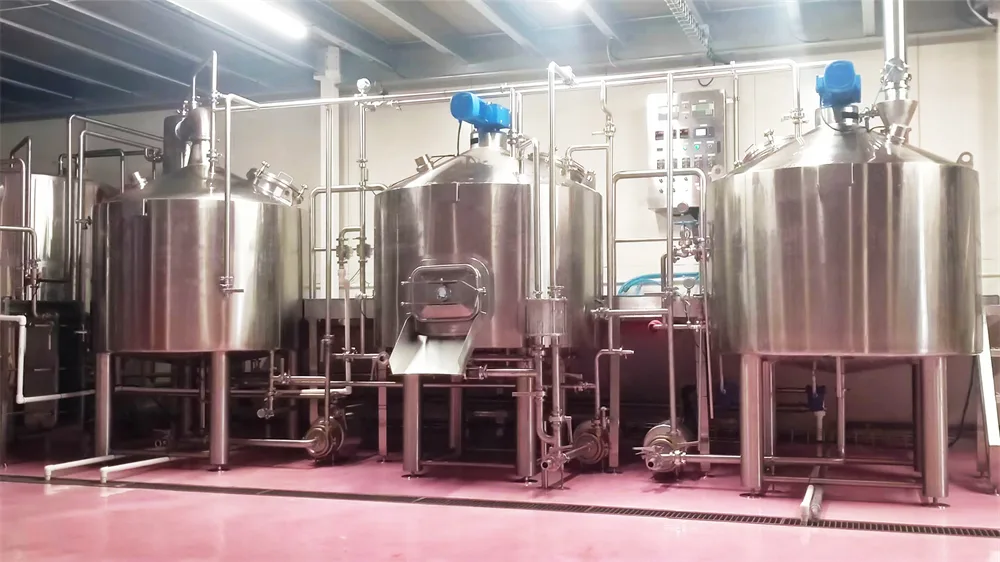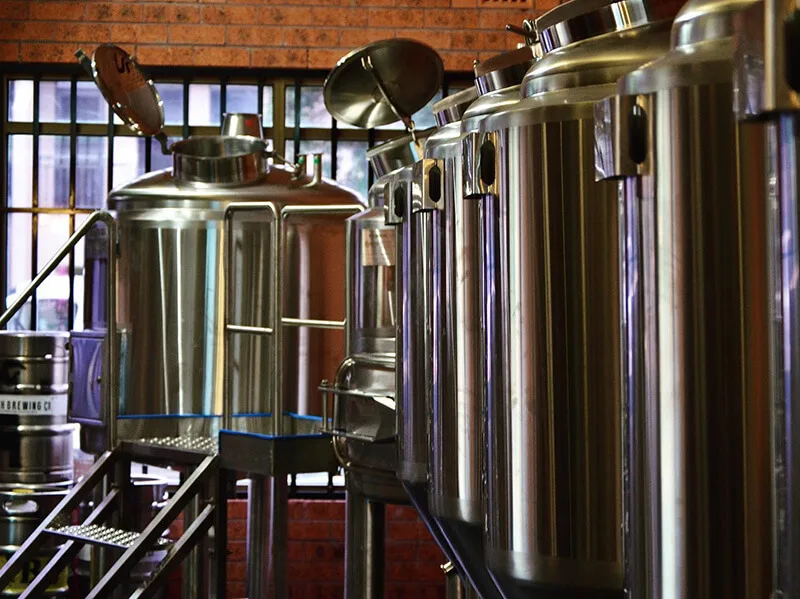
In craft beer production, fermentation time directly affects tank utilization, production planning, and operating costs. For small and mid-sized breweries, especially those using 500L microbrewery equipment, improving fermentation efficiency is one of the most practical ways to increase output without expanding floor space.
Based on Meto’s project experience and brewing system design practice, this article explains how fermentation time can be reduced through yeast management, process optimization, and professional equipment configuration, while maintaining stable beer quality.
1. Yeast Management: The Foundation of Efficient Fermentation
1.1 Selecting Suitable Yeast Strains
Yeast performance plays a decisive role in fermentation speed. When designing 500L brewery systems, Meto recommends selecting yeast strains that balance fast attenuation and clean flavor.
- Ale yeast
Common fast-fermenting strains such as US-05 or S-04 can complete primary fermentation in 3–5 days at 18–22°C under stable conditions. - Lager yeast
Modern lager strains like W-34/70 are capable of completing primary fermentation in 7–10 days at 10–12°C, provided that temperature control is accurate and consistent. Compared with traditional lager processes, this can reduce fermentation time by 30–50%.
Meto recommendation:
Yeast strain selection should always be matched with tank design, cooling capacity, and temperature control accuracy.
1.2 Optimizing Yeast Pitching Rate
A higher and more accurate pitching rate helps yeast enter the active fermentation stage faster.
Recommended ranges:
- Ale beer: 15–20 × 10⁶ cells/mL
- Lager beer: 20–25 × 10⁶ cells/mL
Practical advice:
- Use fresh liquid yeast or healthy yeast slurry
- Prepare yeast in advance using a dedicated propagation tank
- Avoid uncontrolled pitching of dry yeast
Result: Reduced lag phase and more predictable fermentation timelines.
1.3 Maintaining Yeast Health
Healthy yeast ensures both speed and stability.
Before fermentation:
- Acid washing at pH ~4.5 for short contact time
- Supplementing trace elements such as zinc and magnesium
During fermentation:
- Stable temperature control
- Avoid sudden temperature changes above 2°C
From Meto’s experience:
Stable fermentation conditions provided by properly designed tanks significantly reduce yeast stress and fermentation delays.
2. Process Optimization for Faster Turnover
2.1 Controlled Wort Pitching Temperature
A slightly higher pitching temperature can accelerate yeast activation.
- Ale wort: 20–22°C
- Lager wort: 12–14°C
This approach is only applied at the early fermentation stage. Once fermentation begins, temperature should follow a controlled fermentation curve to avoid off-flavors.
2.2 Step Fermentation with Accurate Temperature Control
With Meto 500L microbrewery equipment, step fermentation can be executed precisely.
Typical ale profile:
- Day 0–3: 20–22°C (rapid fermentation)
- Day 3–5: 18–20°C (diacetyl reduction)
- Day 5–7: 0–4°C (conditioning)
Typical lager profile:
- Day 0–5: 12–14°C
- Day 5–10: 8–10°C (diacetyl rest)
- Day 10–14: 0–2°C (lagering)
Bénéfice :
Fermentation time is reduced without compromising flavor development or beer stability.
2.3 Wort Composition Adjustment
Efficient fermentation also depends on wort quality.
- Fermentable sugars:
Target ≥ 80%, optimized through mash temperature control - FAN (Free Amino Nitrogen):
Target ≥ 150 mg/L, supported by proper malt selection or enzyme use
Résultat : Faster yeast growth and smoother fermentation progress.
3. Equipment Design Advantages of Meto 500L Microbrewery Systems
3.1 Conical Fermentation Tanks
Meto 500L fermenters are designed to support fast and stable fermentation.
Key features:
- Conical bottom for efficient yeast collection
- Cooling jackets for precise temperature control (±0.5°C)
- Hygienic design for reliable CIP cleaning
Operation guideline:
- Oxygenate wort at 5–10 mg/L, depending on beer style and yeast strain
- Oxygen is added only at the beginning of fermentation
Outcome:
Up to 20% reduction in fermentation time, with improved yeast recovery efficiency.
3.2 Flexible Tank Configuration
For higher efficiency, Meto often recommends:
- Multiple smaller fermentation tanks (e.g. 2 × 250L) instead of a single large tank
- Parallel fermentation and conditioning
This configuration improves tank utilization and shortens the overall production cycle.
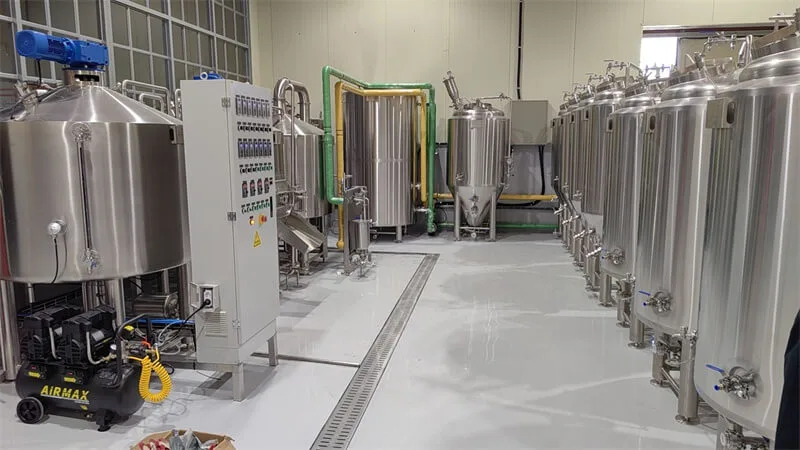
3.3 Automation and Control Systems
Meto brewery systems can be equipped with automated control solutions.
Functions include:
- Continuous monitoring of temperature and pressure
- Programmable fermentation curves via PLC
Bénéfice :
Stable fermentation conditions, reduced operational error, and consistent fermentation time from batch to batch.
4. Quality Control Considerations
- Faster fermentation requires proper diacetyl rest and conditioning
- Yeast reuse is recommended within 3–5 generations, depending on yeast health
- Strict CIP and sanitation procedures are essential to prevent contamination
Conclusion
Reducing fermentation time is not achieved by a single adjustment, but by a well-matched combination of yeast selection, brewing process, and equipment design.
With Meto’s 500L microbrewery equipment, breweries can achieve faster fermentation cycles while maintaining consistent beer quality and stable operation.
If you are planning a new 500L brewery or looking to optimize fermentation efficiency, Meto provides complete equipment solutions and technical support tailored to your production goals.
📩 Contact us today to get a professional solution for your microbrewery project.