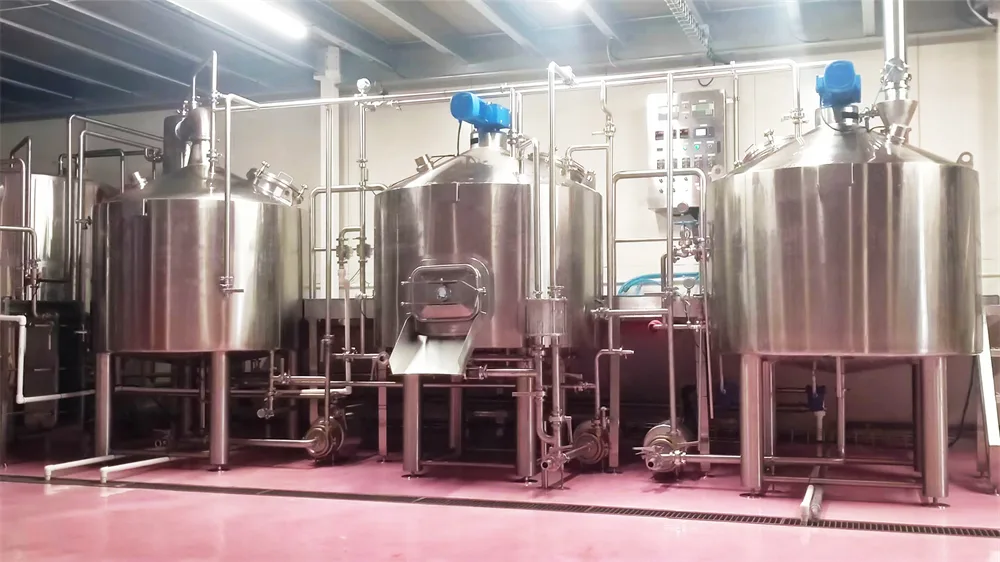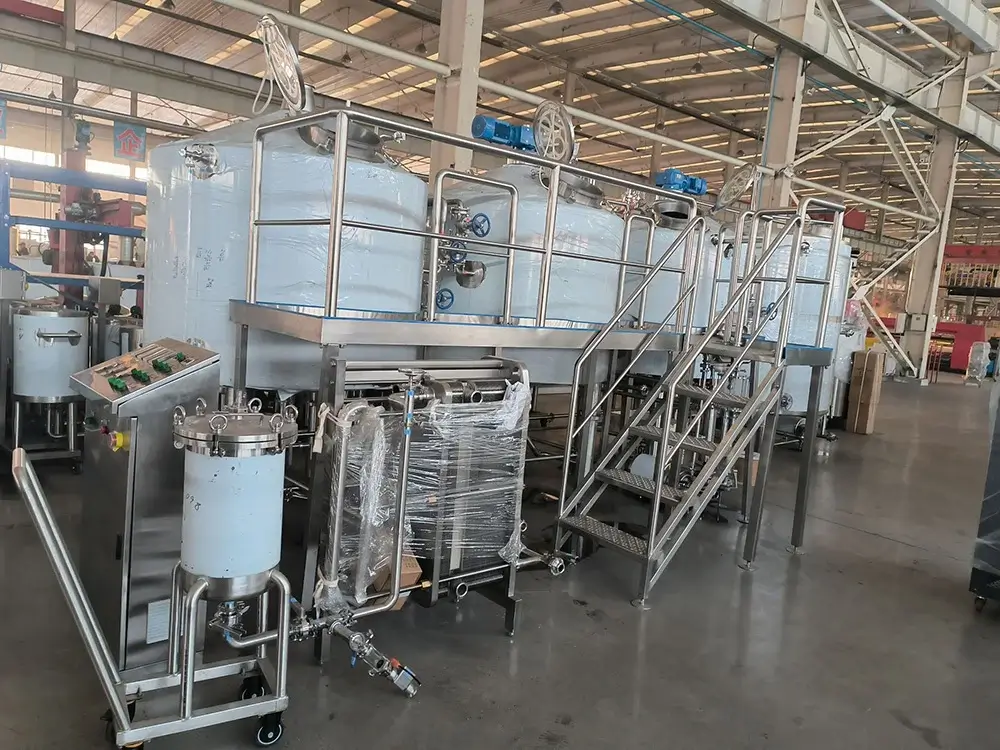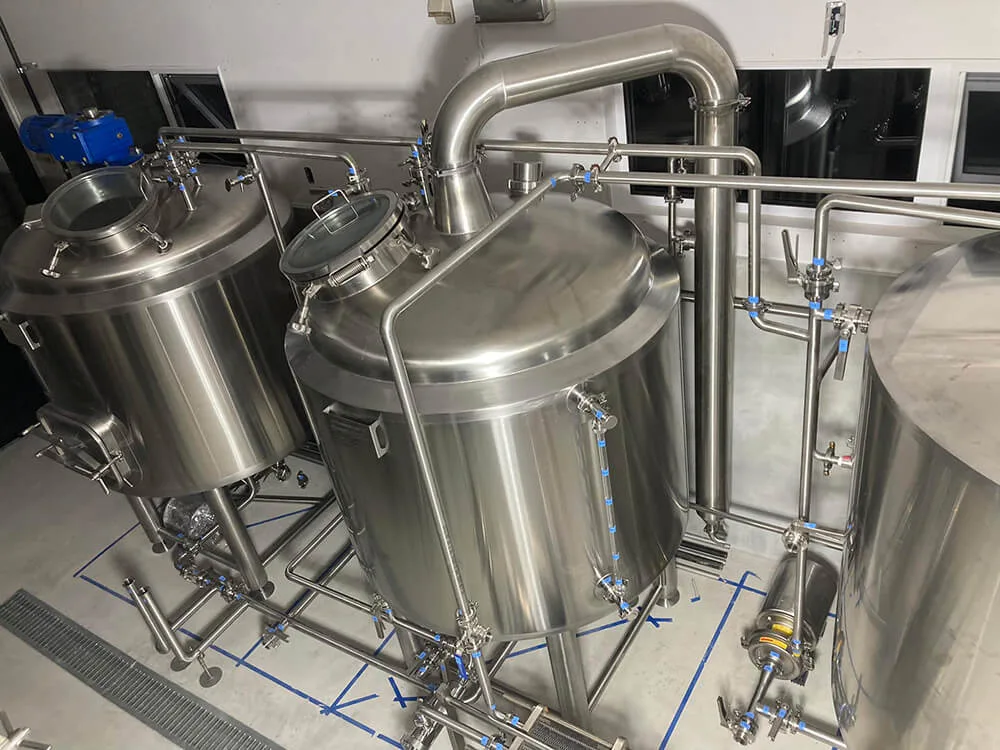
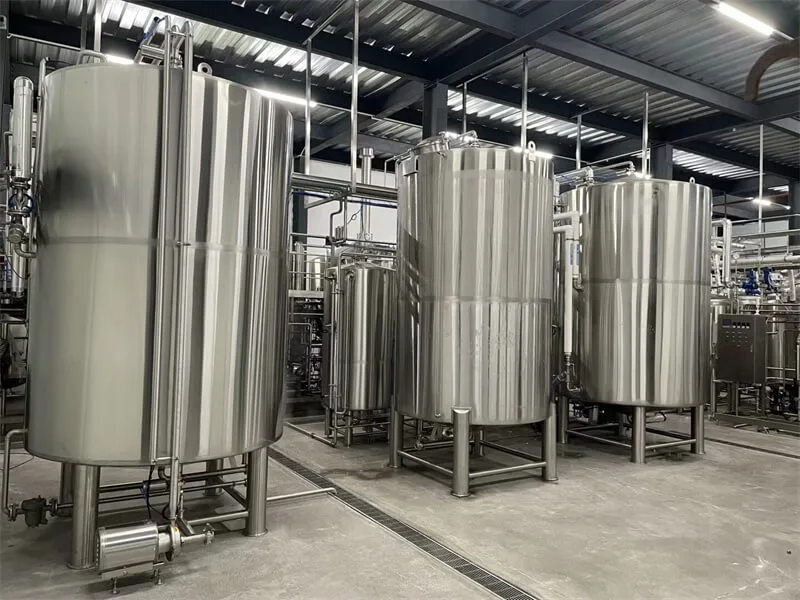
In today’s food and beverage industry, hygiene isn’t optional—it’s non-negotiable. From craft kombucha to premium dairy drinks and artisanal beer, every liquid you produce passes through a storage tank at some point. And that tank? It’s not just a container. It’s a critical control point for safety, quality, and efficiency.
Food-grade stainless steel storage tanks have become the gold standard across breweries, dairies, juice plants, and fermentation facilities—not because they’re shiny, but because they protect your product, simplify compliance, and last decades when chosen correctly.
But with so many options—304 vs. 316L, vertical vs. horizontal, insulated vs. agitated—how do you pick the right one?
Here’s your practical, no-fluff guide.
Why Stainless Steel? The Unbeatable Advantages
Plastic degrades. Carbon steel rusts. Glass is fragile. But food-grade stainless steel?
- Non-reactive: Won’t leach chemicals or alter flavor
- Corrosion-resistant: Handles acids (citric, lactic), salts, and cleaning agents
- Smooth surface: Mirror-polished interiors prevent biofilm buildup
- Fully cleanable: Compatible with CIP (Clean-in-Place) and SIP (Sterilize-in-Place)
- Long-lasting: Properly maintained tanks operate 20+ years
In short: if your liquid touches it, it better be stainless.
Key Types of Food-Grade Storage Tanks & Their Roles
1. Raw Material Holding Tanks
Store purified water, syrups, fruit concentrates, or milk pre-processing.
→ Must feature air filtration, level sensors, and seamless welds to block contamination.
2. Fermentation Vessels
Used for beer, kombucha, yogurt, vinegar, or soy sauce.
→ Require temperature control jackets, pressure ratings, and precise agitation for consistent microbial activity.
3. Finished Product Buffer Tanks
Hold final beverages before filling—critical for batch homogeneity and line buffering.
→ Should integrate directly with fillers via sanitary tri-clamp lines and include real-time temperature monitoring.
4. Mixing & Blending Tanks
Combine ingredients uniformly (e.g., flavored milk, RTDs, sauces).
→ Equipped with variable-speed agitators, heating/cooling jackets, and CIP spray balls.
5. Insulated/Cooling Tanks
For temperature-sensitive products like fresh juice, cold-brew coffee, or live-culture drinks.
→ Double-walled with PU insulation and glycol circulation to maintain ±0.5°C stability.
6. CIP Solution Tanks
Often overlooked—but essential. Store caustic, acid, and rinse water for automated cleaning cycles.
→ Built from 304/316L with chemical-resistant seals and level alarms.
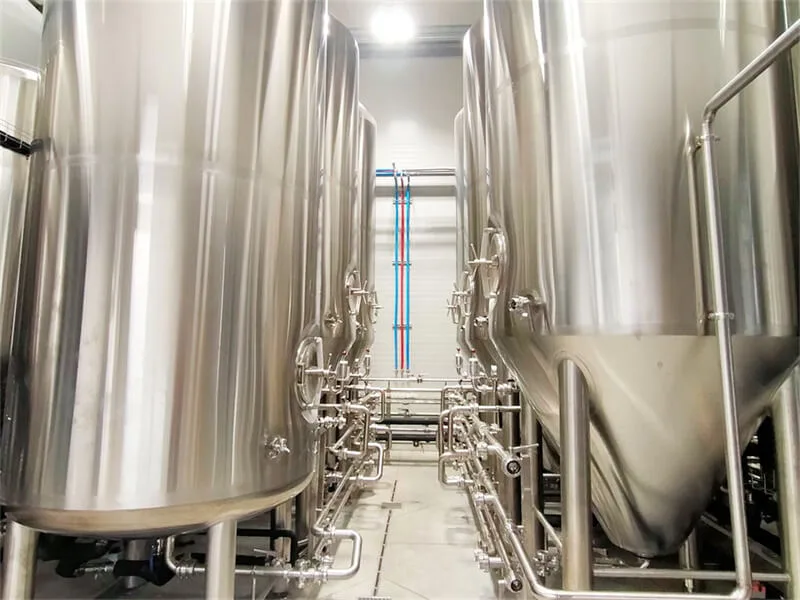
How to Select the Right Tank: 6 Critical Factors
✅ 1. Material Grade – Match to Your Product Chemistry
- 304 Stainless Steel: Ideal for water, milk, juices, mild sauces
- 316L Stainless Steel: Essential for high-salt (soy sauce, brines), acidic (kombucha, vinegar), or pharmaceutical-grade applications due to molybdenum-enhanced chloride resistance
Tip: For ultra-pure water or biopharma, consider electropolished 316L (Ra ≤ 0.25 μm).
✅ 2. Surface Finish – Hygiene Starts at the Micro Level
- Inner surface roughness Ra ≤ 0.4 μm (mirror polish) prevents bacterial adhesion
- Outer finish: Brushed for durability, mirror for premium aesthetics
✅ 3. Capacity & Orientation
- Vertical tanks: Save floor space, offer complete drainage via bottom cone
- Horizontal tanks: Fit under ceilings or in shipping containers; ideal for mobile units
- Standard sizes: 100L to 50,000L—scale with production, not ambition
✅ 4. Temperature Control Needs
- Single-wall: Ambient storage only
- Double/triple-wall with jacket: For heating (pasteurization) or cooling (fermentation hold)
- Add PT100 probes and PLC integration for automated control
✅ 5. Cleaning & Sterilization Compatibility
- Must support CIP/SIP with fixed or rotating spray balls
- Include drain ports, vent filters (0.2μm), and sample valves
✅ 6. Certifications & Build Quality
- Cherchez :
- ASME or PED pressure vessel certification (if pressurized)
- ISO 22000 or 3-A compliance documentation
- TIG-welded seams with acid passivation post-welding
- Food-grade gaskets (EPDM, PTFE, or silicone)
Maintenance Best Practices: Extend Life, Ensure Safety
- Clean after every use—never let residues dry
- Inspect welds and seals quarterly for cracks or wear
- Avoid steel wool or abrasive pads—they scratch and invite corrosion
- Re-passivate if rust spots appear (yes, even on stainless!)
- Store in dry, ventilated areas away from chlorine or salt air
A well-maintained tank isn’t just equipment—it’s an asset that appreciates in reliability.
Future-Proofing: What’s Next in Tank Technology?
- IoT Sensors: Real-time monitoring of temp, level, pH, and cleaning cycle status
- Modular Designs: Stackable or skid-mounted tanks for rapid expansion
- Energy Recovery: Glycol return loops that cut chiller load by 20%
- Digital Twins: Virtual replicas for predictive maintenance and batch traceability
The tank of tomorrow doesn’t just hold liquid—it communicates, optimizes, and protects.
Final Thought: Your Tank Is Your First Line of Defense
In an era where a single contamination event can shutter a brand, your storage tank is more than metal and welds. It’s a silent guardian of taste, safety, and trust.
Choose wisely. Build clean. Brew confidently.
Need a custom tank solution?
Tell us your product type, volume, and facility constraints—and we’ll engineer a food-grade stainless steel tank that meets global hygiene standards and your bottom line.
→ Get Your Free Tank Specification Sheet
Tags: Food-Grade Stainless Steel Tanks, CIP Tanks, Fermentation Vessels, Beverage Storage, Dairy Tanks, Kombucha Tanks, 304 vs 316L Stainless Steel, Hygienic Design, Brewery Equipment, Mixing Tanks