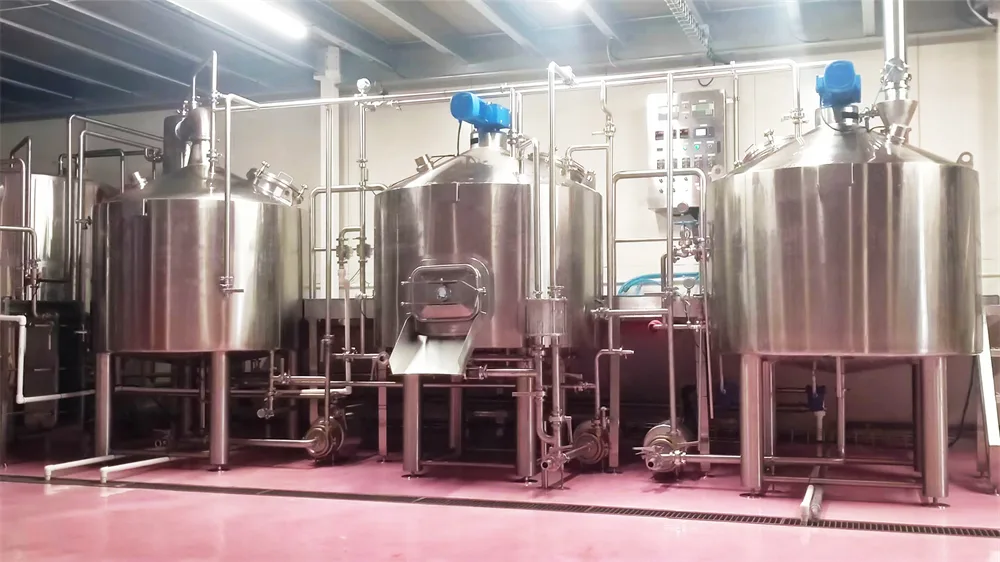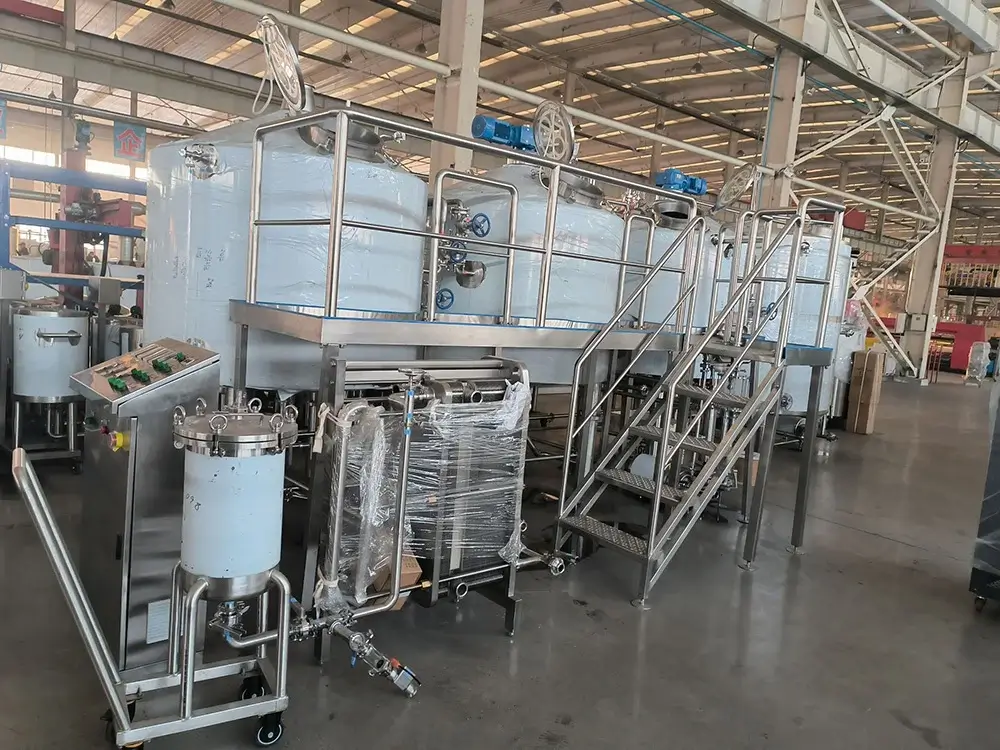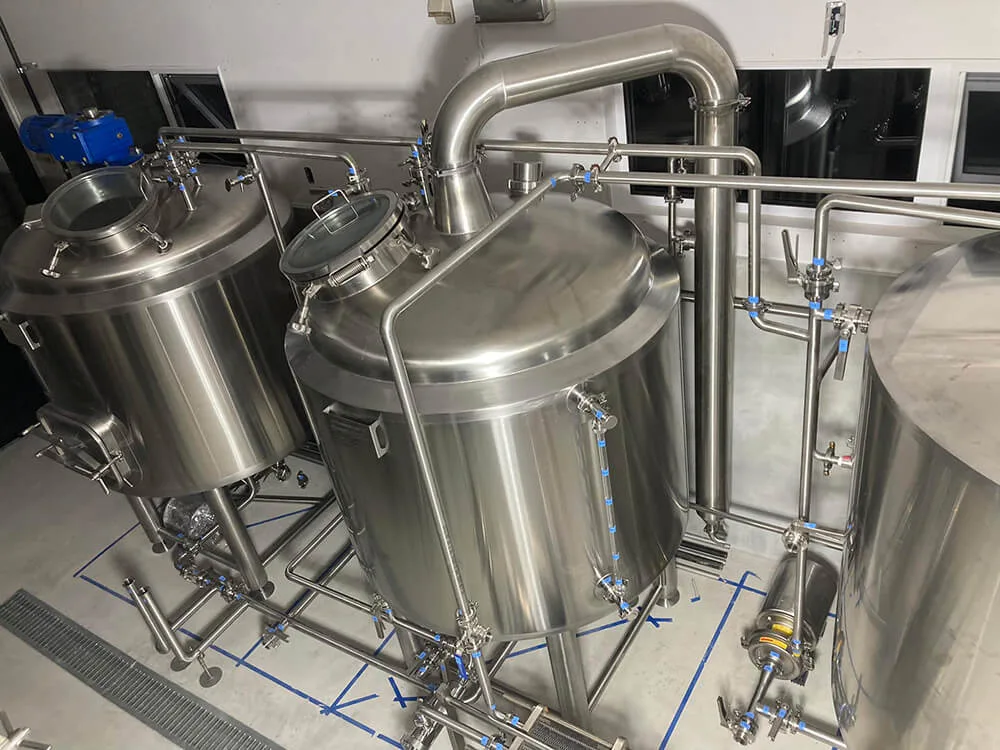
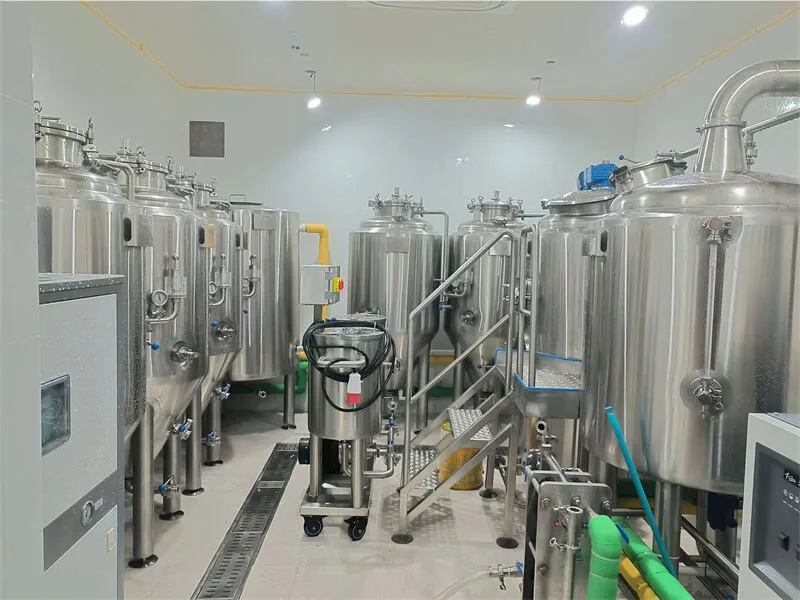
The craft beer market has become increasingly competitive. Rising raw material and energy costs put strong pressure on small breweries, especially those operating 300L brewing systems.
For microbreweries, profitability depends on two things:
- Consistent beer quality
- Controlled production costs
This guide offers a structured, practical approach to lowering operating expenses while maintaining product standards.
1. Understanding Your Cost Structure
Before reducing costs, you must understand where money is being spent.
In a typical 300L batch, production costs are generally divided into:
- Malt and adjuncts (largest portion)
- Hops and yeast
- Water, electricity, and gas
- Labor
- Equipment depreciation
Key Insights
- Raw materials are the largest cost component — and the first area to optimize.
- Energy consumption often has the highest savings potential through technical improvements.
A small improvement in these areas can significantly increase overall profitability.
2. Raw Material Cost Control
2.1 Malt and Adjunct Optimization
Choose Cost-Effective Base Malt
Instead of relying solely on premium imported malt, consider high-quality local or competitively priced alternatives.
Always test key parameters:
- Extract potential
- Moisture content
- Protein levels
- Diastatic power
Stable quality is more important than brand name.
Use Adjuncts Strategically
Rice, corn starch, or sugar syrup can partially replace malt depending on beer style.
Avantages :
- Lower raw material cost
- Improved fermentability
- Lighter body (for certain styles)
Replacement ratios must match recipe goals to avoid flavor compromise.
Precise Material Control
- Use digital scales and flow meters
- Adjust grain weight based on moisture content
- Establish raw material inspection procedures
Small measurement errors accumulate into significant waste over time.
Bulk Purchasing and Price Locking
Negotiate long-term contracts with suppliers.
Bulk purchasing can reduce unit cost and protect against price fluctuations.
2.2 Hop and Yeast Optimization
Hop Utilization Efficiency
- Add bittering hops early in boil
- Add aroma hops later
- Consider hop pellets or hop extracts instead of whole cones
Dry hopping generally requires less material than wet hopping while providing stronger aroma retention.
Splitting dry hop additions into two stages can enhance aroma intensity and reduce total hop consumption.
Popular high-aroma varieties such as:
- Citra
- Motueka
- Cascade
offer strong aroma efficiency per unit weight.
Yeast Repitching
Brewer’s yeast can be reused for multiple generations if properly handled:
- Harvest at peak viability
- Store under sanitary and cold conditions
- Test cell vitality before reuse
Replace yeast after several generations to avoid mutation or contamination risks.
2.3 By-Product Recovery
Turn waste into income:
- Spent grain → sell to farms
- Spent hops → compost or fertilizer
- Surplus yeast → feed additives or yeast powder
Even small additional revenue improves overall margin.
3. Energy Consumption Control
Energy optimization often delivers the fastest financial return.
3.1 Water and Heat Recovery
CIP Optimization
Install or upgrade to an efficient Clean-in-Place (CIP) system.
Reuse rinse water when possible.
Optimize cleaning cycles to reduce water waste.
Condensate Recovery
Collect hot condensate from the kettle and reuse it for:
- Preheating brewing water
- Cleaning processes
This reduces both gas and water consumption.
3.2 Electrical Efficiency
Variable Frequency Drives (VFD)
Install VFDs on:
- Wort pumps
- Milling systems
- Refrigeration compressors
Speed control reduces unnecessary power usage.
Off-Peak Electricity Scheduling
If local utility pricing supports it, perform high-energy operations (boiling, chilling) during off-peak hours.
3.3 Thermal Insulation and Steam Recovery
Insulate Key Equipment
Proper insulation on:
- Fermentation tanks
- Mash tuns
- Kettles
reduces heat loss and lowers fuel consumption.
Steam Recovery
Recover kettle vapor heat and reuse it for:
- Cleaning
- Preheating water
Multi-Stage Heat Recovery
Use heat exchangers to transfer residual heat from hot processes to cold water supply.
High-efficiency plate heat exchangers significantly improve thermal performance.
4. Process Optimization: Shortening Production Cycles
Reducing fermentation and turnaround time increases equipment utilization.
4.1 Fermentation Temperature Management
Optimized fermentation profiles for ales and lagers can:
- Shorten fermentation time
- Reduce conditioning duration
- Maintain flavor stability
Fast fermentation protocols can significantly increase annual production capacity without new tank investment.
4.2 Simplified Mashing Programs
Consider single-infusion mashing instead of more complex multi-step programs when style allows.
Avantages :
- Shorter brew day
- Réduction de la consommation d'énergie
- Reduced operational complexity
Enzyme additions can compensate when necessary.
4.3 Efficient Dry Hopping
Dry hopping:
- Uses less material than wet hopping
- Preserves aroma longer
Two-stage dry hopping improves extraction efficiency while controlling hop costs.
5. Equipment Maintenance and Downtime Reduction
Unexpected downtime is expensive.
5.1 Preventive Maintenance Program
Implement:
- Daily checks
- Weekly inspections
- Monthly service routines
- Annual overhauls
Standardized procedures reduce breakdown risk.
5.2 Predictive Maintenance
- Maintain equipment records
- Stock critical spare parts
- Install sensors for real-time monitoring
Early detection prevents costly shutdowns.
5.3 Energy-Efficient Upgrades
Upgrade when ROI is clear:
- Échangeurs de chaleur à plaques à haut rendement
- Heat recovery modules
- Smart water and power meters
Long-term savings justify phased investment.
6. Production Management Optimization
6.1 Batch Planning
- Brew similar styles consecutively to reduce cleaning cycles
- Plan production based on sales data
- Adjust capacity seasonally
Improved tank utilization increases profit per square meter.
6.2 Staff Training and Incentives
Train staff in:
- Process control
- Energy-saving practices
- Raw material efficiency
Link performance metrics to:
- Energy usage
- Material yield
Incentives drive measurable improvement.
6.3 Digital Monitoring
Introduce:
- Production tracking systems
- Energy monitoring
- Gestion des stocks
- Quality data recording
Data transparency reduces hidden losses.
7. Compliance and Risk Management
7.1 Regulatory Compliance
Follow local food safety and production regulations strictly.
In the United States, breweries must comply with the Food and Drug Administration and obtain licensing from the Alcohol and Tobacco Tax and Trade Bureau.
Non-compliance risks fines, recalls, and license suspension.
7.2 Avoid Over-Specified Equipment
Do not pay for unnecessary features.
Ensure all materials meet food-grade standards.
Choose suppliers with strong after-sales service.
7.3 Monitor Abnormal Energy Usage
Sudden increases in:
- Water consumption
- Electricity usage
- Gas usage
may indicate leaks or equipment malfunction.
Early intervention prevents waste and damage.
8. Conclusion
Cost optimization for a 300L craft brewery system requires coordinated improvements across five major dimensions:
- Raw materials
- Efficacité énergétique
- Process optimization
- Equipment maintenance
- Production management
Start with fast-return measures.
Upgrade equipment gradually.
Build a data-driven management system.
Always stay compliant with local regulations.
Cost control is not about cutting corners — it is about improving efficiency.
For small breweries, mastering cost structure is a core competitive advantage. With systematic optimization, a 300L brewing system can achieve lower production costs, faster payback periods, and sustainable long-term growth.
If you are planning a brewery expansion or new facility project, our engineering team is ready to provide a customized solution tailored to your production goals.