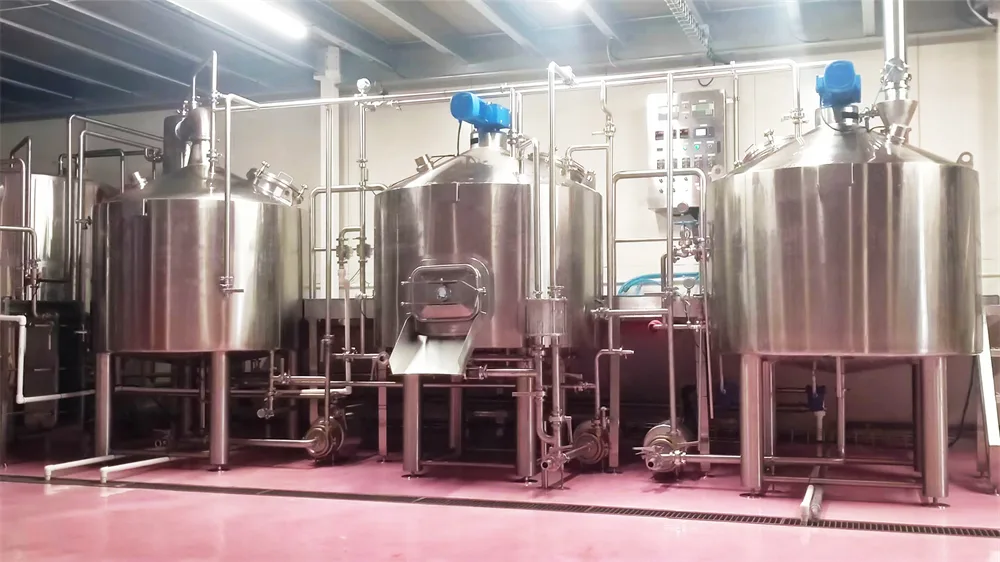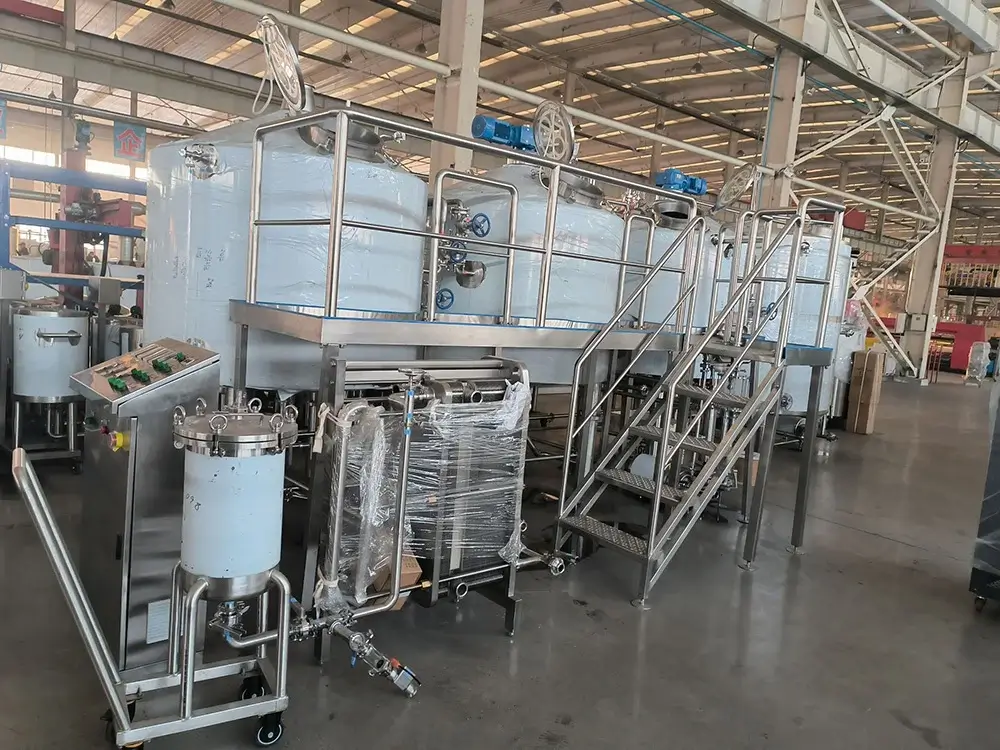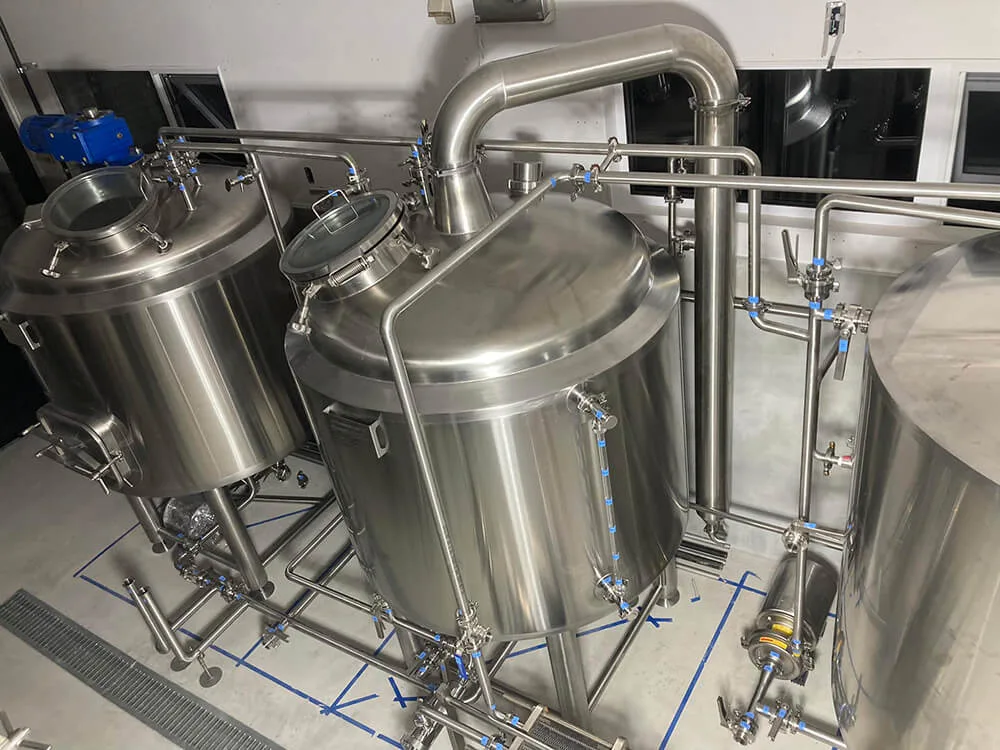
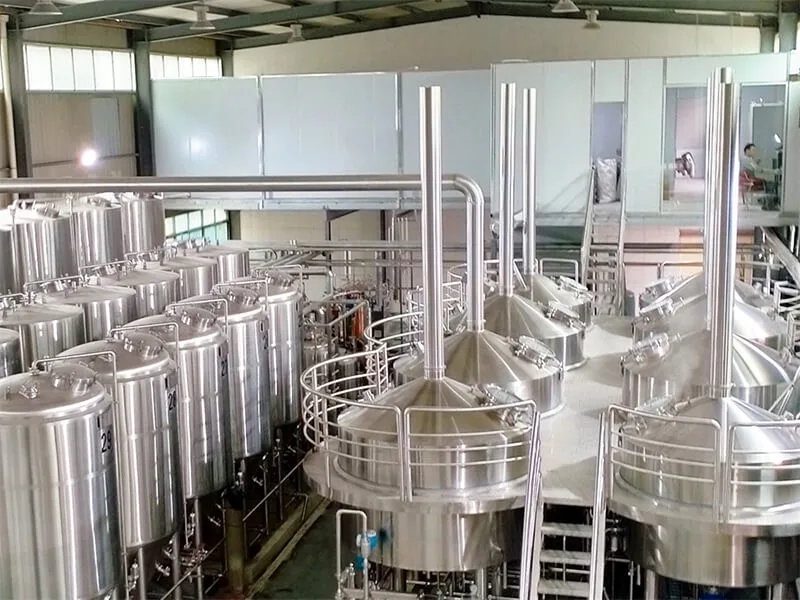
For breweries of any size—whether a start-up microbrewery or an expanding regional facility—the brewhouse system is the core engine that determines brewhouse efficiency, flavor consistency, and long-term production capability.
1. What Is a brewhouse System?
A brewhouse system is a set of vessels and process controls used to convert malted barley starches into fermentable sugars. It typically includes:
- Mash Tun / Mash Kettle
- Lauter Tun
- Brew Kettle
- Whirlpool
- Heat exchanger and transfer pump
- Control system (manual, semi-automatic, or fully automatic)
The design and configuration directly influence wort quality, brewhouse efficiency, and energy consumption.
2. Brewers’ Most Common Questions About Salle de brassage Systèmes
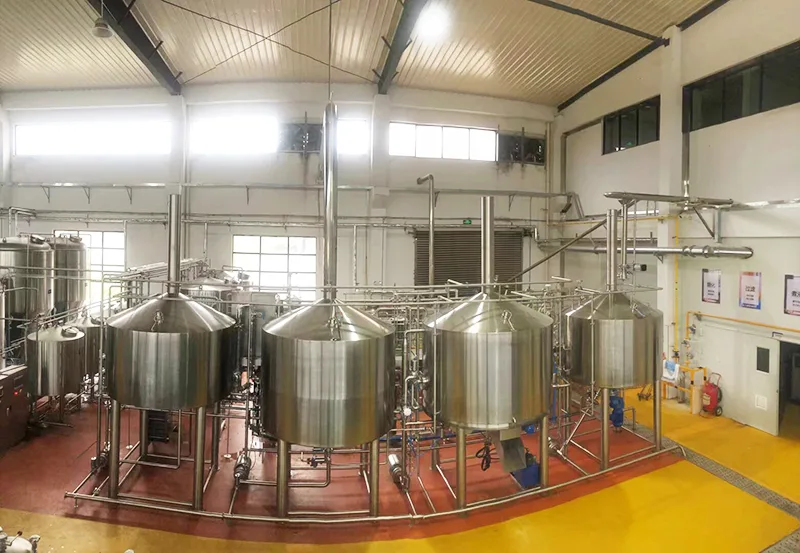
Q1: What brewhouse configuration should I choose—2-vessel, 3-vessel, 4-vessel or 5/6-vessel?
This is the most frequently searched question globally.
2-Vessel System (Mash/Lauter + Kettle/Whirlpool)
- Best for small craft breweries and brewpubs.
- Lower cost and smaller footprint.
- Suitable for 1–2 batches/day.
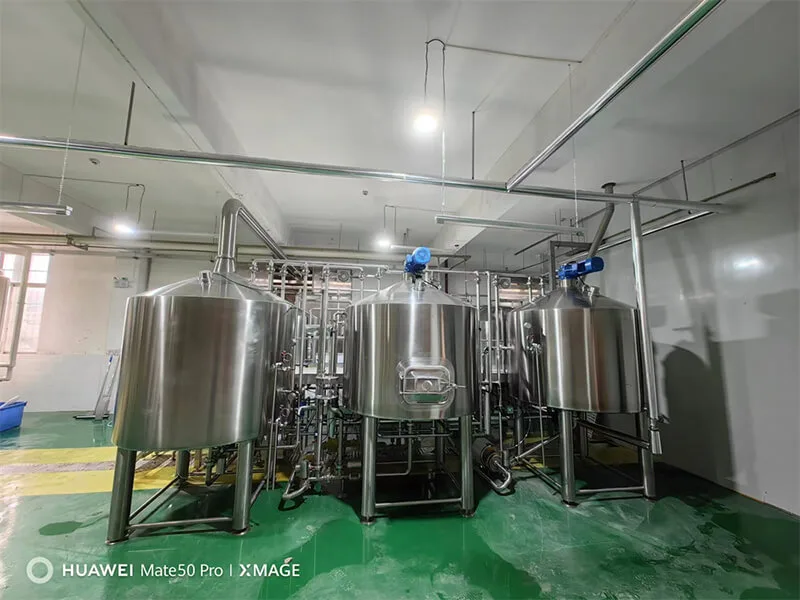
3-Vessel System (Mash Tun + Lauter Tun + Kettle/Whirlpool)
- Most popular choice for micro and craft breweries.
- Higher brewhouse efficiency and faster turnaround.
- Ideal for 2–4 batches/day.
4-Vessel System (Mash Tun + Lauter Tun + Kettle + Whirlpool)
- High-production, commercial breweries.
- Maximum efficiency and parallel processes.
- Suitable for 4–8 batches/day.
5-Vessel System (Mash Tun + Lauter Tun +Pre-run Tank+ Kettle + Whirlpool)
- Designed for medium to large craft breweries aiming for higher daily output.
- Wort collection can proceed while boiling is ongoing, reducing idle time.
- Improved lauter efficiency and wort clarity due to dedicated vessels.
- Suitable for 2–6 batches/day depending on brewhouse size.
6-Vessel System (Pre-Mash Tun+Mash Tun + Lauter Tun +Pre-run Tank+ Kettle + Whirlpool)
- Ideal for high-volume commercial production requiring maximum parallel processes.
- Pre-mash tun accelerates mash-in, improves grain hydration, and boosts extract yield.
- Allows true continuous brewing with all stages operating simultaneously.
- Suitable for 8–12 batches/day or more under industrial conditions.
Q2: What heating method is best—steam, electric, or direct fire?
Chauffage à la vapeur
- Most stable temperature control.
- Recommended for professional breweries (300L and above).
- Supports step mashing and high gravity brewing.
Chauffage électrique
- Suitable for nano and pilot systems.
- Small footprint and easy installation.
- Higher electricity consumption at large scale.
Direct Fire Heating
- Lower upfront cost.
- Less common due to uneven heating and combustion requirements.
Q3: What features improve mashing efficiency and wort clarity?
Brewers commonly search for technologies that reduce stuck mash and increase extraction yield. Key engineering features include:
- Raker & agitator design
Prevents hot spots and ensures uniform enzyme activation. - Laser-cut false bottom plates (0.8–1.0 mm slot width)
Improves filtration speed while maintaining clarity. - V-wire or wedge-wire screen options
Used for high-gravity brewing and fast lautering. - VFD-controlled mash and wort pumps
Enables fine control of lautering, recirculation, and transfer. - Optimized lautering piping (under-letting & vorlauf)
Ensures stable wort recirculation and prevents channeling.
3. Core Components of a Professional Salle de brassage Système
Pre-Mash Tun / Cereal Cooker
- Used for pre-mashing adjuncts such as rice, corn, or high-starch ingredients
- Independent steam jackets for rapid heating and precise gelatinization
- High-torque agitator to prevent burning and ensure even starch mixing
- Enables multi-step temperature profiles for optimal enzyme activation
- Improves extract efficiency and allows breweries to expand raw material flexibility
Mash Tun / Mash Kettle
- Steam or electric heating jackets
- Agitator with variable speed
- Insulated tank for heat retention
- Internal CIP spray ball
Lauter Tun
- Precision false bottom
- Variable-speed rakes with lifting function
- Spent grain outlet (manual or pneumatic)
- Sight glass and wort collection ring
Pre-Run Tank / Wort Holding Tank
- Designed to collect clarified wort from the lauter tun before entering the kettle
- Prevents production downtime when the kettle is still occupied
- Improves overall brewhouse throughput during multi-batch brewing
- Maintains stable wort flow, gravity, and temperature before boiling
- Insulated design with CIP spray balls for sanitation and product safety
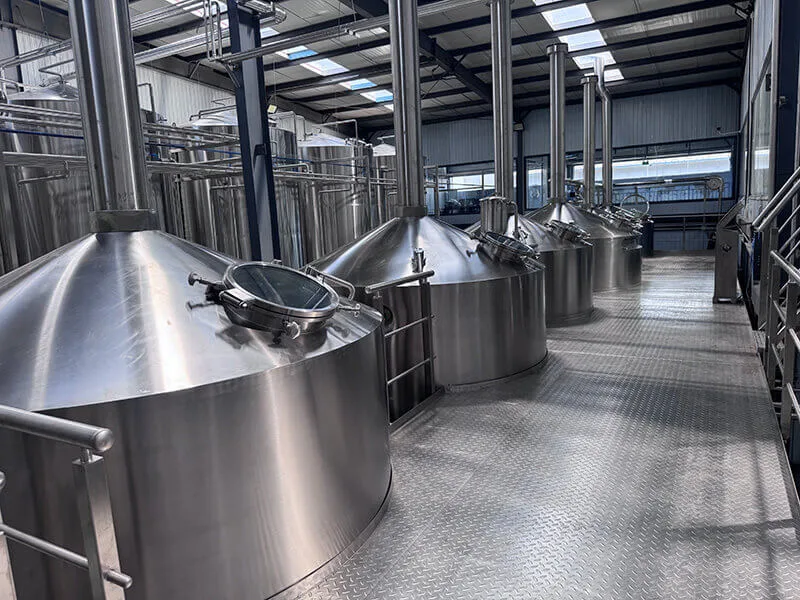
Brew Kettle
- High-efficiency steam jackets or chimney exhaust
- Vigorous boiling capability for DMS removal
- Tangential inlet for wort circulation
Whirlpool
- Designed for strong trub separation
- Welded inlet angle for consistent vortex formation
4. Automation Options: Manual, Semi-Auto, Full PLC
Brewers often search for the differences between control systems:
Manual
- Valves operated manually
- Suitable for low-budget startups
Semi-Automatic
- Pneumatic valves + digital temperature control
- Ideal balance of price and efficiency
Full PLC Automation
- Touchscreen control with pre-set recipes
- Automated mash steps, lautering, pumping sequences
- Improves repeatability and operator safety
5. How to Size a Brewhouse System for Your Brewery?
International buyers often search for sizing guidelines:
| Brewhouse Size | Idéal pour | Daily Capacity |
|---|---|---|
| 100-300L | nano brewery, taproom | 1–2 batches |
| 500–1000L | craft brewery | 2–4 batches |
| 1500–3000L | regional brewery | 4–8 batches |
| 5000L+ | commercial production | 8+ batches |
Considerations:
- Expected monthly output
- Number of beer styles
- Batch frequency
- Utility conditions (steam, water, power)
6. Materials & Sanitation: Why Stainless Steel Grade Matters
Foreign users often search: “304 vs 316 stainless steel—what’s the difference?”
SUS304
- Standard for all brewery vessels
- Excellent corrosion resistance
SUS316
- Higher chloride resistance
- Used for acidic wort and high-end applications
- More expensive but longer lifespan
All tanks should feature:
- TIG welding with pure argon
- Internal polishing ≤0.4–0.6 µm
- Complete CIP and passivation
7. Tips for Choosing the Right Salle de brassage System Supplier
Overseas brewers frequently ask how to evaluate manufacturers. Consider:
- Actual engineering experience (not just trading)
- Customization capability
- Real brewing cases or references
- After-sales support and spare parts supply
- Clear piping diagrams, P&ID, and BOM documentation
- Compliance with CE, UL, or local electrical standards
Conclusion
Un système de salle de brassage est plus qu'un ensemble de cuves - c'est la base de la qualité de la bière, de l'efficacité de la salle de brassage et de la croissance de la production à long terme. En comprenant la conception des cuves, les options de chauffage, l'efficacité de la lauter, les systèmes de contrôle et les exigences de dimensionnement, les brasseries peuvent prendre des décisions éclairées qui correspondent à leurs objectifs techniques et commerciaux.
Si vous avez des questions sur le brassage, n'hésitez pas à nous contacter. nous contacter Equipement Meto.