A 1000L distillation system is widely considered the ideal scale for growing craft distilleries. It offers a balance between production efficiency and operational flexibility, allowing distillers to transition from pilot-scale to commercial output.
Whether configured as a pot still, a column still, or a hybrid system, a 1000L distillation system enables producers to create multiple spirits within one integrated platform. This flexibility is essential for distilleries targeting diverse product portfolios such as whiskey, gin, vodka, and rum.
From an engineering perspective, the value of a distillation system lies not only in capacity, but in how effectively it controls heat transfer, vapor flow, and reflux behavior.
Core Structure of a 1000L Distillation System
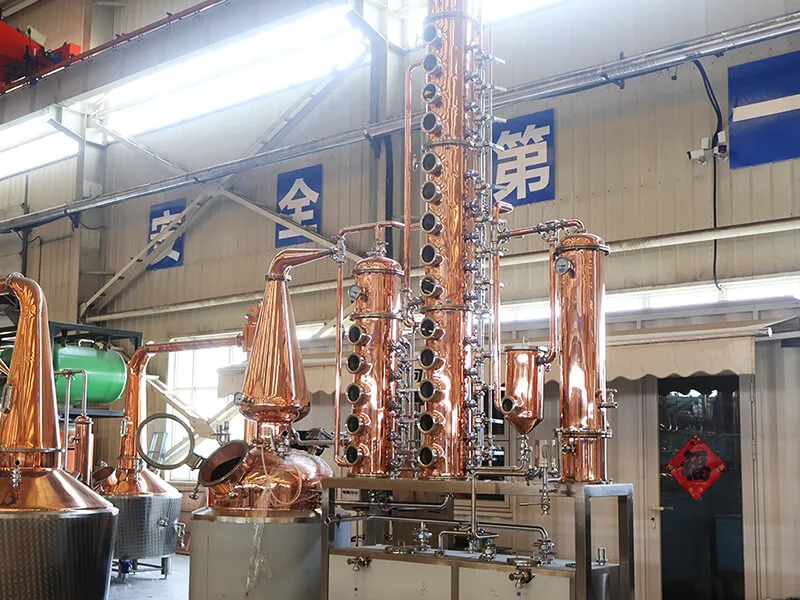
A modern 1000L distillation system is typically designed with a modular architecture, combining pot still and column still functionalities.
1. Pot Still Module
The pot still serves as the foundation of the distillation system. It is primarily used for flavor-rich spirits such as whiskey and rum.
Technical features:
- Large-volume kettle for stable batch distillation
- Copper contact surfaces to remove sulfur compounds
- Optional agitator to prevent scorching during thick mash distillation
- Designed for low reflux operation to retain congeners
In a distillation system, the pot still determines the depth and complexity of the final spirit.
2. Column Still Module
The column still is responsible for increasing alcohol purity through rectification. In a hybrid distillation system, it works in conjunction with the pot still.
Technical features:
- Multi-plate column design (bubble cap or sieve trays)
- Adjustable plate numbers for different purification levels
- High reflux capability for neutral spirit production
- Modular sections for flexible configuration
A column still allows the distillation system to produce high-ABV spirits such as vodka while maintaining efficiency and consistency.
3. Dephlegmator & Reflux Control System
The dephlegmator is a key component in any column still configuration. It directly controls the reflux ratio within the distillation system.
Technical functions:
- Partial condensation of rising vapor
- Precise control of reflux vs product take-off
- Stabilization of column temperature gradient
Efficient reflux control transforms a basic distillation system into a precision separation system.
4. Condenser System
The condenser converts alcohol vapor into liquid distillate. It is essential for both pot still and column still operations.
Technical features:
- Shell-and-tube heat exchange design
- High cooling efficiency with minimal water consumption
- Stable condensation under varying load conditions
A properly sized condenser ensures the distillation system operates safely and continuously.
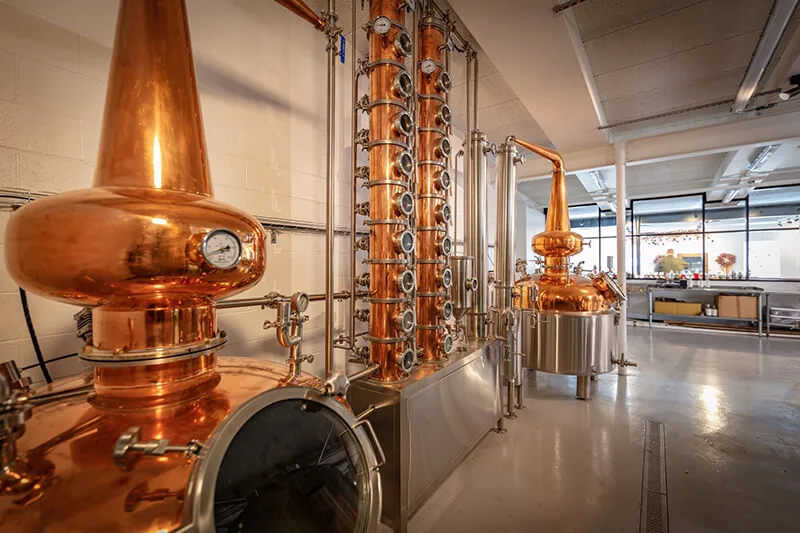
Modular Technical Advantages of a Hybrid Distillation System
One of the most important innovations in modern distillation system design is modularity. A 1000L system can switch between pot still and column still modes depending on production needs.
Hybrid Operation Modes
- Pot Still Mode
The distillation system bypasses the column still, operating as a traditional pot still for maximum flavor retention. - Column Still Mode
Full column engagement with high reflux allows the distillation system to produce neutral spirits above 95% ABV. - Partial Reflux Mode
A balanced mode where the distillation system retains some flavor while increasing purity.
This modular flexibility allows a single distillation system to replace multiple standalone units.
Heating System Design and Energy Efficiency
The heating method directly impacts the performance of both pot still and column still operations within the distillation system.
Steam Heating (Preferred)
- Uniform heat distribution across the pot still
- Reduced risk of burning solids
- Ideal for continuous and large-scale distillation system operation
Chauffage électrique
- Precise temperature control
- Suitable for smaller distillation system installations
- Higher operational cost in energy-intensive regions
Direct Fire Heating
- Traditional heating method for pot still systems
- Enhances certain flavor profiles
- Requires experienced operation and safety management
From a technical standpoint, steam heating provides the most stable and scalable solution for a professional distillation system.
Material Engineering: Copper vs Stainless Steel
Material selection is a critical factor in distillation system design, especially when balancing cost, durability, and flavor impact.
Copper in Pot Still and Column Still
- Removes sulfur compounds during distillation
- Improves aroma and mouthfeel
- Essential for whiskey and rum production
Stainless Steel in Distillation System Construction
- High corrosion resistance
- Easy cleaning and maintenance
- Long service life
Most modern distillation systems use a hybrid structure: stainless steel body with copper components in the pot still and column still contact areas.
Automation and Process Control in Distillation Systems
Advanced distillation systems integrate automation to improve repeatability and efficiency.
Key control features:
- PLC-based temperature and pressure control
- Automated reflux ratio adjustment in column still
- Digital monitoring of pot still and column still parameters
- Data logging for batch consistency
Automation transforms a traditional distillation system into a data-driven production unit.
Key Considerations When Choosing a Distillation System
When selecting a 1000L distillation system, distillers should evaluate:
- Whether a pot still, column still, or hybrid system is required
- Target spirit types and required ABV levels
- Energy supply (steam vs electric)
- Required level of automation
- Scalability of the distillation system
A well-designed distillation system should support both current production and future expansion.
Conclusion: Engineering a Future-Proof Distillation System
A 1000L distillation system combining pot still and column still capabilities offers unmatched flexibility for modern craft distilleries. By integrating modular design, efficient heating, and precise reflux control, today’s distillation systems go beyond traditional equipment—they become scalable production platforms.
For distillers aiming to compete in international markets, investing in a technically optimized distillation system ensures consistent quality, operational efficiency, and long-term adaptability.
👉 Contactez-nous dès aujourd'hui for a custom brewhouse system design tailored to your production goals, budget, and future expansion plans.